
Previous Episodes
- October 2026
- September 2026
- August 2026
- July 2026
- June 2026
- May 2026
- April 2026
- March 2026
- February 2026
- January 2026
- December 2025
- November 2025
- October 2025
- September 2025
- August 2025
- July 2025
- June 2025
- May 2025
- April 2025
- March 2025
- February 2025
- January 2025
- December 2024
- November 2024
- October 2024
- September 2024
- August 2024
- July 2024
- June 2024
- May 2024
- April 2024
- March 2024
- February 2024
- January 2024
- December 2023
- November 2023
- October 2023
- September 2023
- August 2023
- July 2023
- June 2023
- May 2023
- April 2023
- March 2023
- February 2023
- January 2023
- December 2022
- November 2022
- October 2022
- September 2022
- August 2022
- July 2022
- June 2022
- May 2022
- April 2022
- March 2022
- February 2022
- January 2022
- December 2021
- November 2021
- October 2021
- September 2021
- August 2021
- July 2021
- June 2021
- May 2021
- April 2021
- March 2021
- February 2021
- January 2021
- December 2020
- November 2020
- October 2020
- September 2020
- August 2020
- July 2020
- June 2020
- May 2020
- April 2020
- March 2020
- February 2020
- January 2020
- December 2019
- November 2019
- October 2019
- September 2019
New Video Option
As you may be able to see, we have a new way to listen—or watch—the podcast. We have been uploading audio to YouTube for some time, and that will continue, but we will also have SDCJ-Live episodes. This is mostly just going to be me speaking into a camera, though we will see where we can go with the medium over time, as our editing skills get better. You should never need to go to YouTube, however—everything will still be geared towards the audio version of the podcast, available wherever you can find it, as well as ad free and early on Patreon. Expect SDCJ-Live to release on the same schedule as the regular podcast, as well. Comments? Shoot us a note.
Board Games
We talk a lot about board games in this episode. They were quite popular in Yamato and on the mainland. We cover some of the roots of a few of the most famous and well-known types of games, as well as a precursor that may have never made it across, but whose presence still was felt in various ways.
Liubo 六博

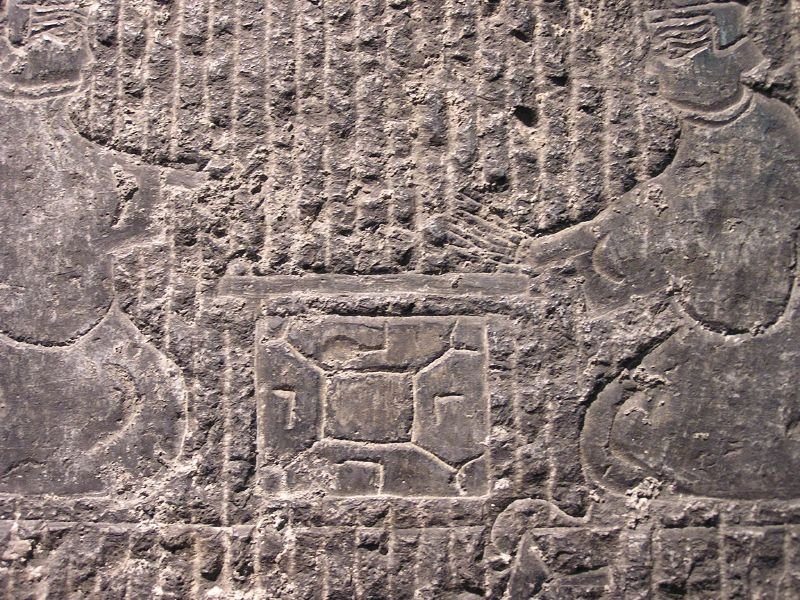


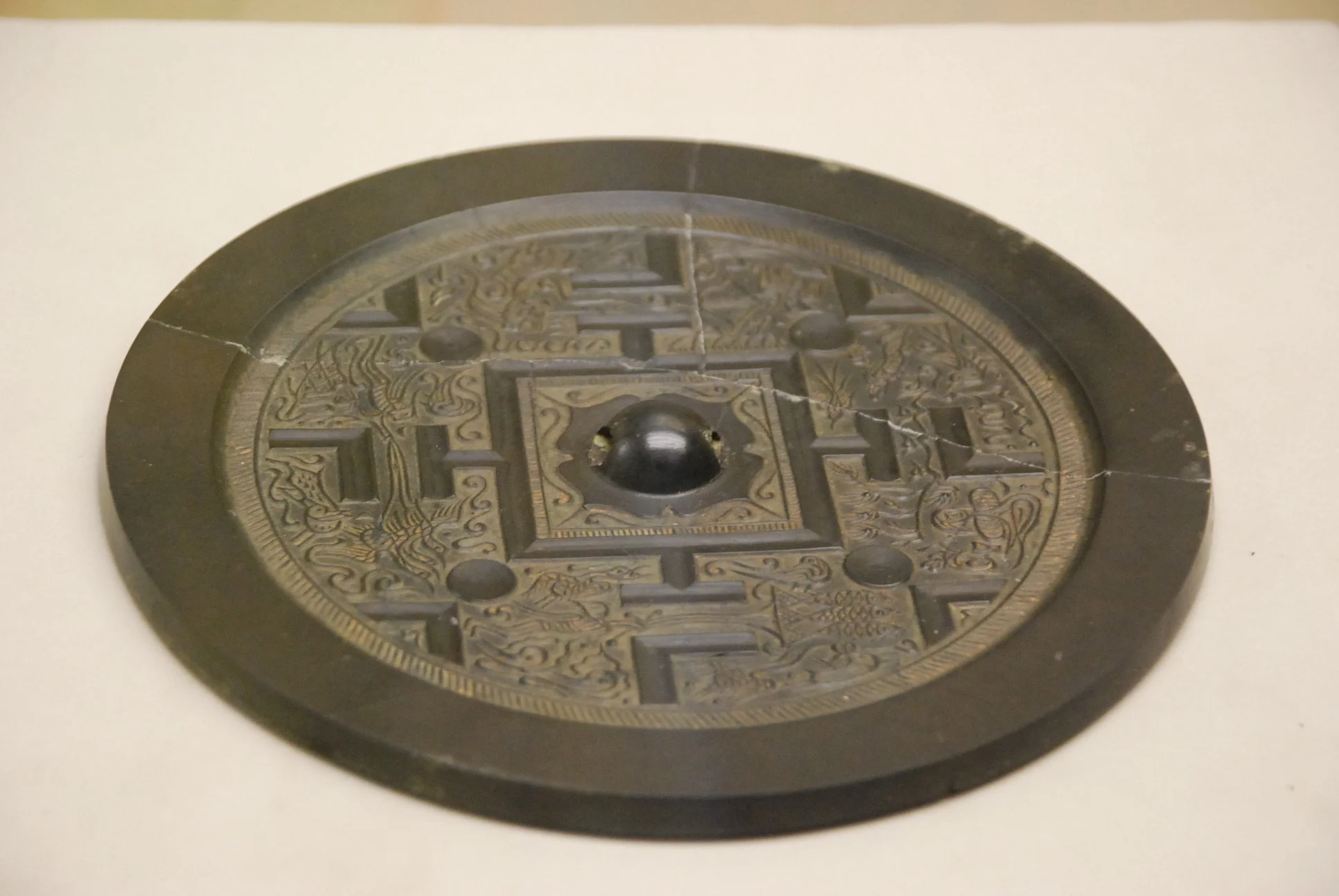
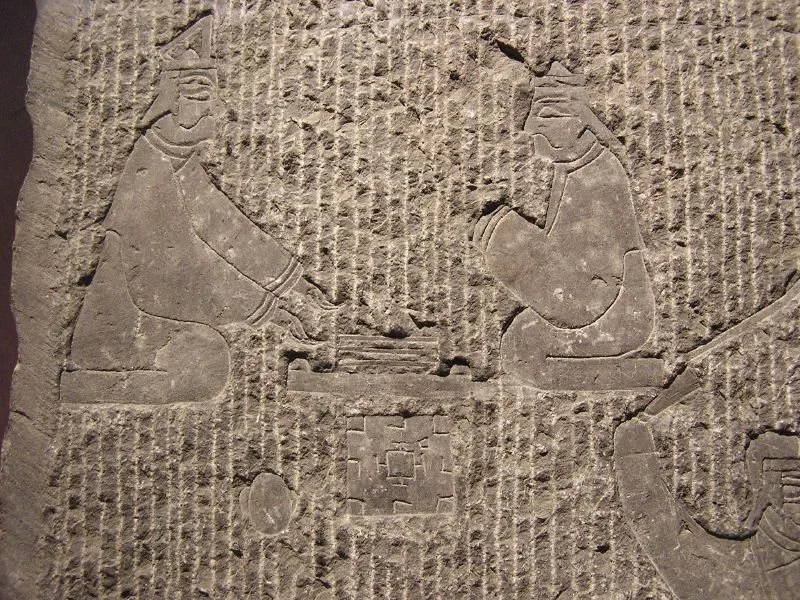
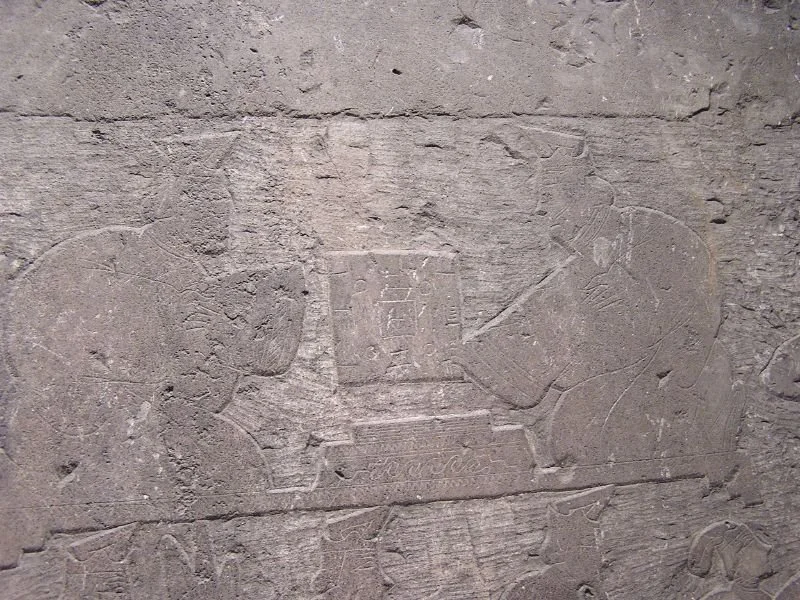
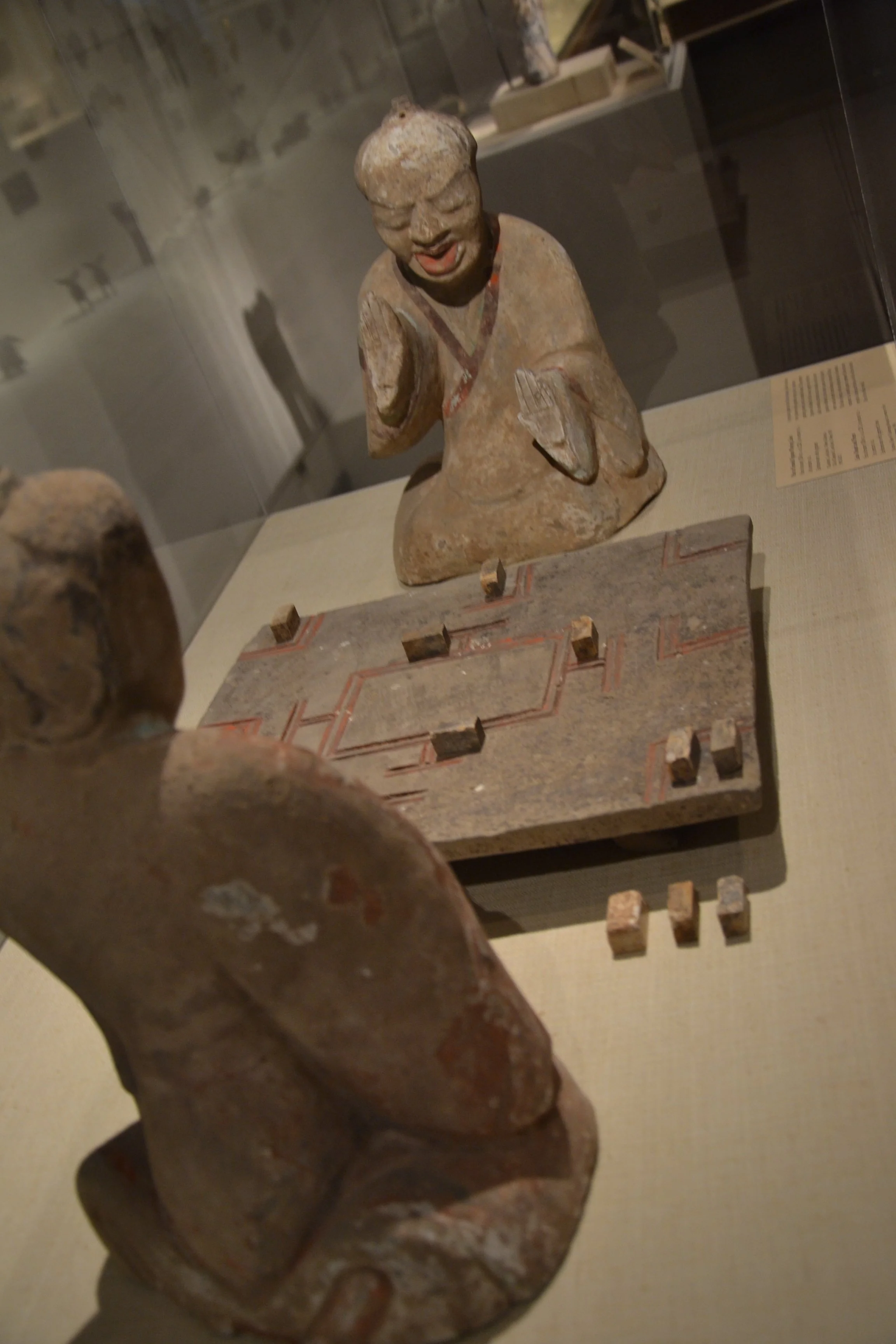
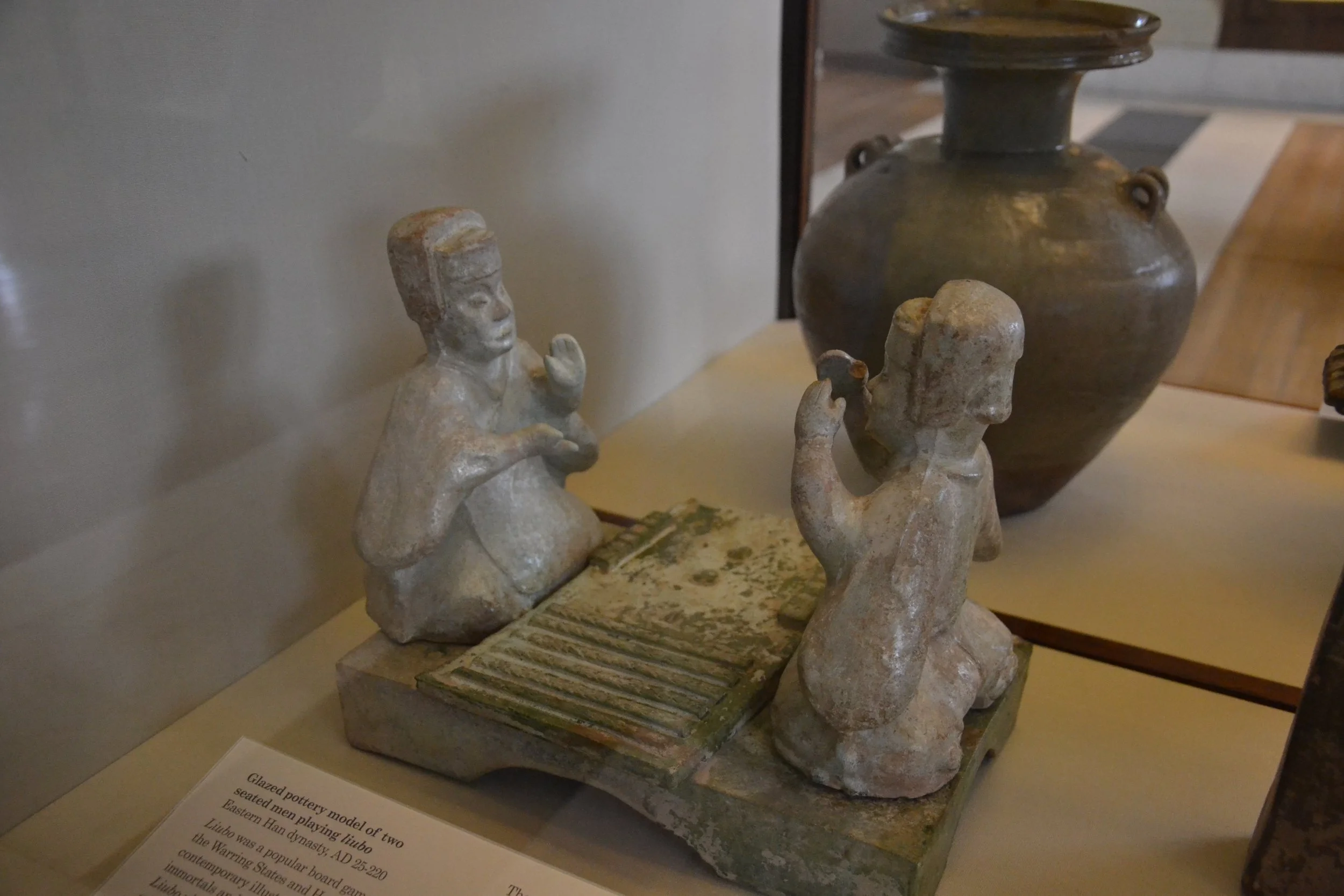
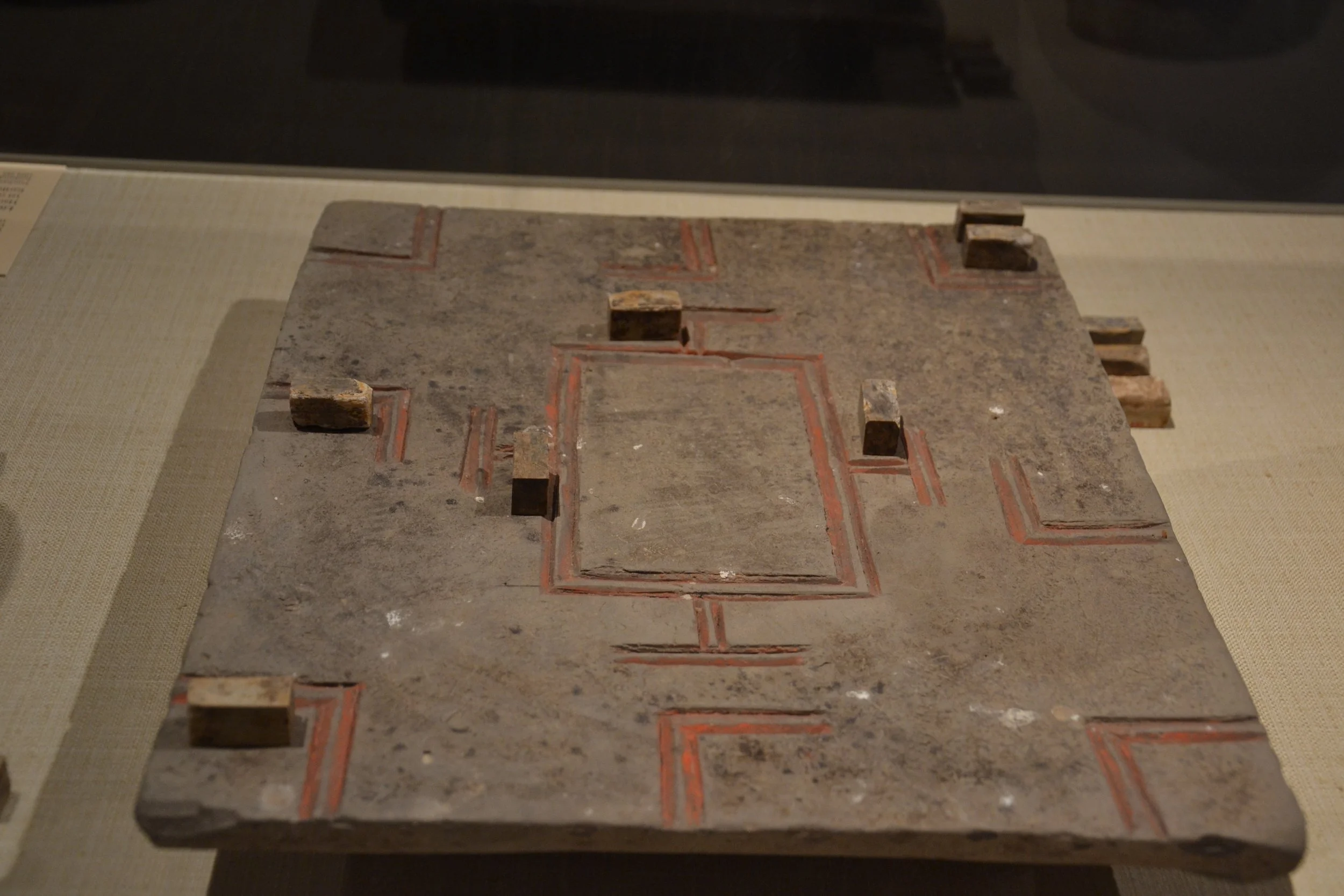
This is one of the older board games in Asia, possibly older than weiqi, (or “go”) and seems to have been quite popular up to the Han dynasty. Weiqi seems to have eventually taken over in terms of popularity, and liubo declined such that it is no longer played. Not only that, but we do not exactly have a clear idea of the rules. We have various descriptions of the game in poetry and similar, but nothing that clearly tells us how the game was played. In actuality, it may have had different rules depending on where and when you are talking about, but the game board itself and the pieces seem to be somewhat consistent, at least in what we see in the Han Dynasty.
Weiqi 囲碁
Weiqi is what we know in Japanese a “igo” or just “go”. It is played on a cross-hatch board with stones, usually black and white. Players take turns placing stones on the board in an attempt to capture territory.
You can read more about it here.
Sugoroku 双六・雙六
Today, this refers to a variety of games played with a pair of dice, hence the name. In the old days it was known as suguroku, and today it is often divided up into e-sugoroku (絵双六 - Picture Sugoroku) or ban-sugoroku (盤双六 - Board Sugoroku). Ban-sugoroku could refer to anything using a solid board but most often refers to the game we know in the west as Backgammon.
We have more, including how to play, here.
Shōgi 将棋
This game is a variant of chess. The pieces are typically flat and made of wood, usually in the shape of an elongated pentagon so that you can clearly see the direction it is pointed in, which is important to know which player owns the piece. Instead of the pieces being different shapes, as in other chess variants, each piece has a character indicating what it is, with most pieces having a character on the reverse side in case it gets “promoted”. This is a feature similar to xiangqi, another chess variant found on the mainland. However, in xiangqi the pieces are clearly marked—through color or through the use of different characters—as to which side they belong to. Shōgi has a unique rule, however.
In shōgi, when a piece is captured by the opponent it can be put in play on their side. They simply turn the piece around so that it is facing in the opposite direction, placing it in any legal square of the board as their move. So capturing pieces isn’t just about depleting your rival’s forces, but also about strengthening your own. This can lead to different tactical considerations compared to modern chess.
For more on shōgi, check out this page.
Ohajiki 御弾き
Ohajiki is a game similar to marbles. Today it uses flattened round glass pieces, though it may have used stones or similar pieces, originally. It is similar to marbles, and there are several boards in the Shōsōin that are thought to have been used for this or a similar game.
Poetry
Kaifūsō 懐風藻
Our oldest collection of Japanese court poetry. Specifically, this is poetry in the Sinitic style—more commonly called Classical Chinese Poetry, or kanshi (漢詩), in Japanese. It was completed in 751 CE, and includes poets’ names and information about them and the poems that we’ve already used in talking about figures like Prince Ōtomo, aka Kōbun Tennō, who took the reins of government after his father, Naka no Ōe (Tenji Tennō) passed away, only to perish in the ensuing conflict with his uncle, Ōama (Temmu Tennō). Compared to the official record in the Nihon Shoki, the Kaifūsō is much more sympathetic to Ōtomo, suggesting that the Nihon Shoki account may be more than a little biased.
Many of the kanshi poems were based on the number of kanji, or Sinitic characters, that they used. Pronounced in what we often know as Early Middle Chinese, these would have generally been one syllable per character, though in the on’yomi used in Japan, the syllable count often cannot be maintained. Even in modern Chinese dialects, the rhymes may not match up due to changes in pronunciation, but there are rhyming dictionaries which can help which also help us to better understand how at least some speakers of Early Middle Chinese likely pronounced things.
Man’yōshū 万葉集
In contrast to the Kaifūsō, the Man’yōshū is a collection of Japanese poetry, collectively known as waka (和歌). Waka is made up of “Wa” for Japan, and “Ka”, meaning “to sing”. Whereas kanshi are written in classical Sinitic, waka are meant to be read in Japanese. Since Japanese has particles and conjugations that just don’t exist in classical Sinitic, they needed ways of representing those. And since the specific sounds were also important, those likewise needed to be made clear.
The answer that they arrived at was to use a combination of various methods. Some words and phrases could be written in Sinitic characters and then read in Japanese—either on’yomi or kun’yomi readings, depending on what makes sense. Other times, the characters were used for their sound rather than their meaning. This is what we refer to as “man’yōgana”, or “man’yō characters”, though we see it in the Nihon Shoki and the Kojiki, well before the Man’yōshū was completed. On occasion one sees that the same word and sounds can be represented differently, even in the same poem.
The Man’yōshū could not have been finished before 759, as that is the date on the most recent poem listed in the collection. It spans some 20 books and contains over 4500 poems. Poems are often listed with their book and poem number to identify which ones they are. Below are the poems we referenced in this episode. I’m using the Man’yōhakka (万葉百科) from the Nara Prefectural Man’yō Cultural Center for the original text and pronunciation guides, though line breaks are my own—in many cases these are presented as just a string of characters and it isn’t always easy to determine where it is supposed to break:
巻1-1 Yūryaku Tennō
籠毛與 美籠母乳
布久思毛與 美夫君志持
此岳尒 菜採須兒
家吉閑 名告沙根
虚見津 山跡乃國者
押奈戸手 吾許曽居
師吉名倍手 吾己曽座
我許曽者告目
家呼毛名雄母
こもよ みこもち
ふくしもよ みぶくしもち
このをかに なつますこ
いへきかな なのらさね
そらみつ やまとのくには
おしなべて われこそをれ
しきなべて われこそませ
われこそはのらめ
いへをもなをも
KO MOYO / MI-KO MOTI
FUKUSI MOYO / MI-BUKUSI MOTI
KONO WOKA NI / NATUMASUKO
IHE KIKANA / NA NORASANE
SORAMITU / YAMATO NO KUNI HA
OSI NABETE / WARE KOSO WORE
SIKI NABETE / WARE KOSO MASE
WARE KOSO NORAME
IHE WOMO NA WOMO
Your Basket, your pretty basket,
Your Trowel, with your little trowel
Maiden, picking herbs on this hill-side
I would ask: Where is your home
Will you not tell me your name?
Over the spacious land of Yamato
It is I who reign so wide and far
It is I who rule so wide and far
I myself, as your lord, will tell you
Of my home, and my name.
- Nippon Gakujutsu Shinkokai translation
巻1-2 Attributed to Jomei Tennō
やまとには むらやまあれど
とりよろふ あまのかぐやま
のぼりたち くにみをすれば
くにはらは けぶりたちたつ
うなはらは かまめたちたつ
うましくにそ あきづしま
やまとのくには
山常庭 村山有等
取與呂布 天乃香具山
騰立 國見乎為者
國原波 煙立龍
海原波 加萬目立多都
怜𪫧國曽 蜻嶋
八間跡能國者
Countless are the mountains in Yamato
But perfect is the heavenly hill of Kagu
When I climb it and survey my realm,
Over the wide plain the smoke-wreaths rise and rise,
Over the wide lake the gulls are on the wing;
A beautiful land it is, the Land of Yamato!
- Nippon Gakujutsu Shinkokai translation
YAMATO NI HA MURA YAMA AREDO
TORIYOROFU AMA NO KAGUYAMA
NOBORITACHI KUNIMI WO SUREBA
KUNI HARA HA KEBURI TACHI TATSU
UNA HARA HA KAMAME TACHI TATU
UMASI KUNI SO AKI ZU SHIMA
YAMATO NO KUNI HA
巻3-236 Jitō Tennō
いなといへど
しふるしひのが
しひかたり
このころきかず
てわれこひにけり
不聴跡雖云
強流志斐能我
強語
比者不聞而
朕戀尒家里
“No more,” I say to her,
Yet Shihi insists on telling me her tales;
Lately I have not heard them
And I miss them now!
- Nippon Gakujutsu Shinkokai translation
“INA” TO IHEDO
SIFURU SIHI NO GA
SIHI KATARI
KONO KORO KIKAZUTE
WARE KOHI NI KERI
巻3-237 Shihi no Omina — Old Lady Shihi
いなといへど
かたれかたれと
のらせこそ
しひいはまをせ
しひかたりといふ
不聴雖謂
話礼〻〻常
詔許曽
志斐伊波奏
強話登言
“No more,” I say to you,
Yet you urge, “Tell me, tell me.”
So I continue; then you say,
“It is Shihi who insists.”
- Nippon Gakujutsu Shinkokai translation
“INA” TO IHEDO
KATARE KATARE TO
NORASE KOSO
SIHI IHAMAWOSE
SIHI KATARI TO IFU
巻16-3827 Naga no Imiki Okimaro
一二之目
耳不有
五六三
四佐倍有来
双六乃佐叡
いちにのめ
のみにはあらず
ごろくさむ
しさへありけり
すぐろくのさえ
ICHI NI NO ME
NOMI NI HA ARAZU
GO ROKU SAMU
SHI SAHE ARIKERI
SUGUROKU NO SAE
It doesn’t have just one or two eyes.
It has five, six, three,
Or even four eyes.
It is the die for sugoroku.
巻16-3838 Abe no Asomi no Kohoji
わぎもこが
ひたひにおふる
すぐろくの
ことひのうしの
くらのうへのかさ
吾妹児之
額尒生流
双六乃
事負乃牛之
倉上之瘡
My beloved (“younger sister”) has a lump
Growing upon her forehead
Like the swell on top of a saddle
Of the bull
Of suguroku
WA GIMOKO GA
HITAHI NI OFURU
SUGUROKU NO
KOTOHI NO USI NO
KURA NO UHE NO KASA
巻16-3839 Abe no Asomi no Kohoji
わがせこが
たふさきにする
つぶれしの
よしののやまに
ひをそさがれる
吾兄子之
犢鼻尒為流
都夫礼石之
吉野乃山尒
氷魚曽懸有
In the mountains of Yoshino,
Whence come the round rocks
I use as loincloth
Around my hips
Are hanging young sweet trout.
WAGA SEKO GA
TAFUSAKI NI SURU
TUBURESI NO
YOSHINO NO YAMA NI
HIWO SO SAGARERU
(One last thing about these two: “Wagimoko” and “Wagaseko” appear to also riff on the idea of “My Younger Sister” and “My Younger Brother” while also having other meanings)
-
Welcome to Sengoku Daimyo’s Chronicles of Japan. My name is Joshua and this is Episode 156: Ancient Pastimes of the Yamato Court
The walls of the newly erected mansion were stark and gleaming. The smells of freshly cut wood and new roof thatch were still thick in the air. Outside, workers continued to labor to erect the rest of the buildings as servants brought in various furnishings, setting up their lord’s new home as he—or perhaps more appropriately as his wife—had dictated.
The mansion was abuzz with activity, and so one may not have noticed the sound of dice being rolled in the back rooms of the building. They echoed in the cup, and clattered to the floor, the sound echoing even more loudly than usual without any of the soft furnishings and regular accoutrements to muffle it. As the sounds died down, one could then hear the clack-clack-clack of stones being moved.
Two men sat and looked down at the wooden board before them with the same intensity with which they viewed their rivals at court, with whom they were similarly used to playing games. They had finished their work, and while their servants bustled about, they were relaxing, but that didn’t mean there were no stakes. The two men were friends, perhaps—colleagues at least. The game was almost a distraction from the rest of the things they had to discuss.
There was so much going on, as the new state was being built—from stone and wood and ceramic tiles, yes, but also through laws and the machinations of those who had a seat at the table. It was a relief, in many ways, to be playing for stakes that were merely about money and reputation, and not something even more consequential.
We are clinging to the last remnants of the Nihon Shoki while also beginning to dip our toes into new waters with the Shoku Nihongi and other works—including the Man’yoshu, which we will start to get into this episode. I’m going to try to group various themes together as best I can over a reasonable period. I don’t want to jump too far forward and back, but I also want to be able to discuss individual things more in depth, using the chronicles as much as a launching point as anything else.
This episode, we are going to look at various courtly pastimes of the ancient elite of Yamato. This includes feasting, archery, poetry, and, one of my favorite topics: boardgames.
Yes, you heard that correctly. Apparently the court at this time were big board game fans. Don’t get me wrong, they also liked their archery and horse racing as well, so it isn’t like they were just staying at home all the time. But they definitely were fans of the games of their day—and those games could get quite cutthroat. Many games were accompanied by gambling, and all that gambling entailed—from the bad feelings it could engender in the loser to accusations of cheating and just plain gambling addictions.
This may be why we see a note that in the 12th month of 689, the court banned the game of “sugoroku”, or backgammon.
For many people in the west, Backgammon is not a game immediately associated with Japan, and yet it has a long history. In many areas of the world, backgammon and chess competed for supremacy as the game of choice. Backgammon, with its reliance on the roll of the dice, certainly has a higher reliance on chance to determine the outcome—though any wily player will no doubt attest to the fact that one’s strategy is at least part of what allows one to exploit good roles or mitigate poor ones. The game is still extremely popular in the middle east, and boards resembling backgammon go back over 5,000 years. We know it flourished in Sassanid Persia, around the time that Persia was a major trading partner on what we know as the Silk Road. That is likely the route that the game took to eventually get to the Japanese archipelago.
For those who don’t know the game, backgammon is typically played on a board with twenty-four spaces, usually depicted as triangular “spikes” of alternating colors, twelve on either side of the board. Each player has about 15 round pieces in one of two colors, typically black and white, to differentiate them. There are many variations on the rules. In the old Persian game, known as Nard, all 15 pieces are on a “starting” triangle at one end of the board. Two dice are rolled, and a piece can move a number of spaces—or spikes—as shown on the die. The goal is to be the first to get all of your pieces through all twenty-four spikes and off the board, bearing off from the spike opposite from which you started—which also happens to be where your opponent has their starting position. So you are effectively racing past each other.
A key element of the game turns on the fact that a piece may not land on a spike that is occupied by two or more of the opponent’s pieces. If there is only one of the opponent’s pieces on that position, then that piece is sent to the middle and must be brought back into play from the starting position with a roll of the die—assuming there is a place to put it. So there are tactics in how to move pieces so that they can both be safe from being sent back, to block areas of the board, and to otherwise try to get past the opponent.
Modern backgammon and sugoroku—or, more fully, ban-sugoroku—tend to start with pieces already placed on various positions as though coming into a game already in progress. This eliminates some of the early game and moves the pieces more directly into conflict with each other. The doubling cube, which helped track and systematize the betting system, wasn’t developed until much later, in the US. Up until that point you just had to keep track of your wagers, I guess.
The name in Japanese for the game, Sugoroku, appears to come from the kanji, which means double six, referring to the two six-sided dice used in the game. Eventually, Sugoroku would come to be used for just about any kind of board game utilizing dice. Ban-sugoroku was the name for games played on a board, like backgammon, while E-sugoroku would be played on a picture mat. Some of the earliest E-sugoroku were games similar to what we know of as Chutes and Ladders—or, in some areas, Snakes and Ladders. These were basic “chase” games where both players were trying to be the first to reach a goal. Certain spaces would contain advantages or disadvantages, however—the “chutes” taking you down and the “ladders” moving you forward. The earliest forms appear to come out of India, and they seem to have focused on the idea of karma, with the goal of ascending to rebirth in the heavens. Some Buddhist versions added features where rebirth in the Heavens was actually a lesser goal—being reborn as an immortal god effectively trapped you in this plane and would not allow you to ascend to Nirvana, the ultimate goal.
In bureaucratic China we see examples of the game focused on rising through the system of court rank. In Japan we see examples where you were passing through various stations on a pilgrimage or similar. The varieties were endless, and the game often changed based on the social values and conventions of the time. However, due to the nature of the paper boards on which these versions were played, we have less evidence for them. The oldest form of E-sugoroku that we have in Japan is a version called Jodo-sugoroku, from the 15th century, which taught Pure Land Buddhist morals and lessons.
That said, we see the terms for these kinds of games first appear in the 5th century. Theseearliest terms are translations of the Sanskrit “prāsaka”, meaning dice. The name changed over time, and we see the form “Sugoroku” first appearing in the Southern Court and the Tang dynasty. It appears that the original pronunciation in Japan was “Su-GU-roku”, but the name “Su-GO-roku” is common today.
In contrast to the paper E-sugoroku pictures, many of which would have had a hard time surviving, we have a number of examples of ban-sugoroku boards. In fact, there are a few housed in the Shosoin repository of Todaiji temple. The Shosoin repository was created in 756 and, over the course of several years, numerous objects related to the sovereign known as Shoumu Tennou were donated on his behalf, creating an incredible historical record. Many of the items were luxury goods from the silk road, and the conditions under which they’ve been preserved are truly remarkable, giving us examples of things that are otherwise no longer extant in the lands where they were originally produced.
Amongst this treasure trove are dice, game pieces, a dice cup, and various game boards, including several with markings indicative of some version of backgammon, or Persian nard, i.e. ban-sugoroku. There are also other boards identified as game boards that may have been more for a kind of marbles-like game called ohagi. There are also go-boards, as well. One of my favorites in the collection has two drawers for the stones that are shaped like turtles, but concealed under the board, and when you pull the turtle out there is a mechanism under the board to push the other drawer out as well so that they come out together.
Speaking of other games, we do know that other games existed and were played in the archipelago and on the continent. One of the oldest games we know of we only know by its name and from funerary examples, called “Liubo”, or “six sticks”. We have examples of people playing it from tomb figurines in the Han dynasty, and we know what the board looked like: A square in the center, surrounded by “T” and “L” shapes, with squares in the corner. This same design shows up on early bronze mirrors, known as “T-L-V” mirrors in English because of this game.
Liubo game sets have also been found in tombs, and they appear to have quite a bit of paraphernalia attached to them. Literary descriptions of playing the game differ, possibly because of different rules and methods of playing in different times and places—like trying to find two people who play Monopoly exactly the same way.
Liubo declined after the Han dynasty, and by the 6th century people had already forgotten how to play. This was probably because of the rise of another game: Weiqi, known to us as Go, or “I-go” in Japanese.
Compared to everything needed for Liubo, or even sugoroku, the game of Go is deceptively simple. You have a square board with a cross-hatched pattern and each player has a set of stones, typically black or white. Each turn, a player may place a stone on the board at the intersection of two lines, as long as, at the end of the turn, the player’s contiguous pieces are not completely surrounded by the opponent. If the placement of a piece fills in the last open space around one or more of the opponent’s pieces, those pieces are captured and removed from the board. This results in formations of stones that create fenced in territories. At its simplest, the winner is the one who, at the end of the game, has the most unoccupied space in their territories, minus the number of stones that were captured. As such, players may choose to pass rather than to play a stone that would not benefit them. If both players pass, the game is over and the board is scored.
From a relatively simple mechanic—placing stones on a board—enormously complex systems of play can emerge, and even today the game has a devoted following.
Traditionally, the introduction of go to the archipelago is often attributed to the famous poet, ambassador, and stateman, Kibi Makibi, who was born in 695 and at the height of his power and influence in mid to late 8th century. However, the game is referenced in the Taiho codes of the early 700s and is also mentioned in the Sui dynasty record of country of Wo, indicating that it was likely around for some time before Makibi came along.
Compared to Sugoroku, which relies on dice, and therefore a certain element of luck, every move in Go is the choice of the player and based on the condition of the board at the time. Therefore it is often seen as a more strategic game. It is similar to chess, in that there are ways to place pressure on the opponent and force them to move, and yet, with its simpler ruleset, it is said to outstrip even chess for the multiple variations that any one game can take. In early computer modeling, chess could generally be programmed by considering the totality of future moves, but it took some time before computers were able to play go at that same level. In 1997, IBM’s Deep Blue was able to defeat world chess champion Garry Kasparov in a match, but it wouldn’t be until 2015 and 2017 that the program “AlphaGo” would be able to defeat professional Go players without some sort of initial handicap, due to the nature of the game and the numerous possible outcomes and changes that could occur during play.
Speaking of chess, there were chess variants in East Asia and Japan as well. The earliest history of chess is not well documented, but it seems to trace its roots back to a game known in India as “chaturanga”. There is physical evidence of boards and pieces from earlier, but the rules are not entirely clear. However, from the numerous variations that were spawned, including chess in the West, Mak-ruk in Thailand, Xiangqi in China, and Shogi, in Japan, we can get an idea of the game. It was played on a board made with intersecting lines. Unlike backgammon or go, there were numerous types of pieces, each with their own rules on how they could move across the board. This is generally thought to represent a kind of army, with different units having different abilities—so in some ways this is the precursor to modern games like Warhammer with the painted miniatures and the like.
We see that by the Qin dynasty there is a game called “Xiangqi”. The characters reference an elephant and the word “qi”, which just means a game, as in “wei-qi”, the modern Chinese name for Go. That “Xiang” may refer to one of the pieces and the idea of using elephants in armies would not be out of place in south Asia, but that character has other meanings as well, including references to celestial or astronomical phenomena. So this could be the Elephant Game or the Celestial Game. It could also refer to ivory, which may have been what the early pieces were made out of.
Xiangqi differs from chess in that that field of play is not just a simple board of intersecting lines. In the middle of the board there is a section known as the river, which some pieces cannot cross and others gain different abilities once they do. There is also an area marked as the “Palace” where the king or general resides. Traditionally the board itself can just be drawn on a piece of paper, which may also explain why we don’t have as much evidence for the game, more generally.
In contrast to chess and other variants, Xiangqi pieces are usually flat disks that have the name of the piece written in red or black ink. To further distinguish the pieces, slightly different but similar characters are used for each side, so that even if you can’t tell the color you should be able to distinguish the pieces. The pieces are played on the intersection of the lines, much like the stones in go.
Some of this gets carried over into the Japanese version, known as Shogi, but there are plenty of differences, and there is some question of whether Shogi originates with Xiangqi or from another variant, possibly one out of Southeast Asia. The pieces in Shogi are traditionally made of wood in a pentagonal shape, which provides a clear directionality for the piece. Unlike in Xiangqi, Shogi characters use the same names for pieces on both sides, except for the king, or general. This is important for a key feature, which I’ll describe in a bit. The pieces are also double sided, except for the general, so that if they are “promoted” by reaching the last three rows of the board, they can be turned over, indicating their new status. Each piece promotes differently, with new movement typically associated in each case. The board itself is simply made of squares, like a modern chessboard, and pieces are played inside the squares rather than on the intersections.
A key feature of shogi is the fact that captured pieces can be brought back into play by the player who captured them. A captured piece can be put back into play—or dropped—on almost any spot on the board, with some limitations. This led our founder, Tony, to describe Shogi as “Zombie Paratrooper Chess”.
Unlike Sugoroku and Go, we have less evidence for when Shogi arrived in the archipelago. Some suggest that it arrived, in some form, around the same time as those other games, probably in the 6th century. Others say that it came in the Nara period. Our first real evidence of the game, however, seems to be from the Heian period, in the 11th century. It was likely around some time before that, but how long is uncertain. It is probably notable that there is no copy of a shogi, xiangqi, or chess board in the Shousouin collection.
We do, however, have evidence of other pastimes besides board games. For example, we have touko, the pitch-pot, which we briefly touched on in episode 112. There we talked about how much the court loved archery, and how Confucius even encouraged it. Archery, however, takes space and a certain amount of athletic skill. Touko, on the other hand, could be played indoors.
A touko, also known by its Chinese name of Touhu or the English name of “pitch-pot”, is based around a pot with a wide base and a narrow mouth. Typically, there are rings around the top of the pot, like handles. Contestants take small, blunted arrows and toss them, like lawn darts, with the goal of getting them in the pot. You get the most points for getting the arrow into the mouth of the pot itself, but there are also points for getting the arrow in one of the side rings or even just hitting the pot. In some versions, more points are scored for the first and fourth arrows thrown.
The origins of Touko, or Touhu, are unclear, but it probably originated among soldiers sitting around in the camps. It later came to be used as a drinking game for elites, and was considered a martial pursuit, along with archery.
Because the game was mentioned by Confucius, it has come to be closely associated with Confucian morality. A Confucian gentleman was supposed to cultivate both “wen” and “wu”—or “bun” and “bu” in Japanese—the civil and martial virtues. Likely due to this association, the game has continued to be a popular game in Korea, where it is known as Tuho and typically played during New Year’s celebrations. There are rules for playing online if you want to try.
While we are covering popular pastimes in the court, we shouldn’t forget banquets and poetry competitions. We’ve mentioned banquets in the past—food and drink were always a good excuse to get together. There were formal banquets held in the official palace buildings, but there was also an entire pond and garden complex built outside of the palace proper, which you know they were also using for large gatherings, which were likely a bit more informal than the official banquets held in the official buildings of the State government—perhaps somewhat like the difference between a party in the office and an office picnic, if your office was all the most wealthy and powerful people in the entire country.
Within the court, reputation was extremely important, and these gatherings and pastimes weren’t just fun opportunities to blow off steam, they were opportunities for people to demonstrate their skill, prowess, wit, and culture. Besides traditional games, another way to demonstrate one’s skills and wit was through the composition and performance of poetry. The term used here, “uta”, means “song” and doesn’t really differentiate between spoken poetry, folk songs, or similar. In fact, there are examples of poets being given a biwa to accompany their poetry.
For the most part, the poems we see mentioned are not necessarily long compositions that a poet slaved over, but there was a certain expectation of spontaneity. Most of the poetry can be divided into two different types: classical Chinese style poetry or kanshi, and native Japanese poetry or waka.
The first type, the Sinitic, or Classical Chinese, poetry, not only demonstrated the skill of the composer, but also their education. “Kanshi”, or “Han poetry”, and, at least by the Heian period, it would be the most popular form of poetry amongst the elite. This style of poetry came from the continent and was included in all of the written works that were being brought over and studied.
Kanshi style poetry was based on the pronunciation of the individual characters, using classical rhyme patterns and rhythms that were popular in the Tang dynasty. Because of all of this, there was a certain amount of training that was needed both to create and to understand it, but it still remained quite popular, up through the Edo period and even into modern times. The oldest compilation of kanshi that we have is the Kaifuusou, written in 751—it is in fact the oldest compilation of Japanese poetry, and includes poetry from a number of individuals, many of whom are mentioned in the histories.
Although classical Chinese poetry could have different character patterns, many of the kanshi poems from this era followed a pattern of 5 or 7 characters per line, with each character generally being a single syllable in the original pronunciation. Those were popular in the Tang court, and also in Japan, and it is very interesting that lines of 5 and 7 morae were also popular in the indigenous Japanese poetry, known as waka.
Morae and Syllables are similar, but differ slightly. Most English speakers are familiar with a syllable being some combination of a vowel or dipthong with optional consonants before and after. A mora is measured more in the time it takes to say it. For example, let’s take a look at the name of the poetry compilation, the Kaifuusou. In English, we would probably count it as three syllables: Kai, Fuu, Sou. In Japanese, however, it is broken into six morae: KA I FU U SO U. This may not seem like much, but the extra length of a vowel in Japanese has actual, lexical meaning. One example would be the following words: Tori, Toori, and Torii. The First is TO RI (Tori) and it means bird. Then TO O RI (Toori) and it means road or path. Then there is TO RI I (Torii), the name for the gates at the entrance to Shinto shrines. Another, more modern, example, might be “biru” versus “biiru”. “Biru” means “building”, coming from “birudingu”, while biiru means “beer”.
And this becomes important with most forms of Waka, or Japanese song, or poetry. Waka typically has alternating verses of 5 or 7 morae. At its most basic we have the tanka, the short poem, which has three lines of 5-7-5 followed by two lines of 7 morae each. The top three lines would eventually become known as a Haiku, but that was many centuries to come. Instead, it was more common to see some form of Chouka, or long poem, which would be composed of a number of lines, alternating between 5 and 7 morae per line and also ending with a pair of 7-morae lines.
This kind of poetry, tanka or choka, was the kind of thing that we are most likely to see when there is mention of a spontaneous composition in the moment. The form fits with the Japanese language and we already have plenty of examples of these kinds of compositions throughout the Nihon Shoki and the Kojiki. However, in the 8th century we get an even larger composition: the Man’yoshu. This is a compilation of over 4500 poems from various authors. We don’t know when it was compiled, and it may have actually been a project with multiple editors bringing together different poems and stories, but it is assumed to have been assembled during the Nara period. It may have even been a private work, originally.
While the Kaifuusou was using Sinitic characters to write down poetry in literary Sinitic, the Man’yoshu faced an issue: How to represent the sounds of the Japanese language using Sinitic characters. In many contexts, one could write a sentence in literary Sinitic and then read it out in Japanese—essentially translating it on the fly. That certainly gets across meaning, but it doesn’t necessarily help when you are trying to be precise, such as counting the number or morae in a poem. For certain words, such as nouns, that isn’t typically a problem, but there are many parts of Japanese that are not really represented in literary Sinitic, and so they had to come up with something else.
The answer was what became known as Man’yogana. We touched on this briefly back in episode 133, and during the recent interview with Dr. Ross Bender. Man’yogana are Sinitic characters, or kanji, which are chosen for their sound—effectively turning them from logograms to phonograms. The actual meaning of the character is ignored in favor of representing a particular sound. The Man’yoshu isn’t the first time we see this—they used Man’yogana in the various historical chronicles, both for names and poetry and anything else where they were transcribing sound instead of meaning.
The use of Man’yogana in the Man’yoshu are hardly consistent. Even within the same poem or song, the writer can vary the characters used to represent the same sound in the same word. Sometimes you see characters that are clearly meant to be read for their meaning—like the characters for “mountain” and “island” being read as “yama” and “shima”, respectively—while in other cases they are being used for the sound produced by the on’yomi, the Sino-Japanese reading of the character. And yet, in other cases, they are using the Japanese word represented by the character, but still using it for the sound it produces. For example, the word for garden is “niwa”—or “niha” or “nipa” in Old Japonic—and it is used as a stand-in for the particles “ni” and “ha”—or “wa”—that are commonly found together. Something-something-“ni wa” is a very common way of saying things, even today.
If this all sounds incredibly confusing, congratulations, it really is. We don’t have clear standards, but we do see some preferences in terms of certain manyo’gana that became popular for certain sounds. Fortunately for those of us, today, there are plenty of scholars who have worked out what these characters most likely meant, and so we can usually crib from the work of others—which is absolutely the route I’m going to be taking here.
Issues of pronunciation aside, the poems of the Man’yoshu are not all contemporary to the compilation. In fact, the poems of the Man’yoshu cover a period starting in about the 5th century and including poems all the way up to 759. Early poems are typically given with vague dates—in the reign of such-and-such sovereign—while many of those from the Nara period are given exact dates. The latest date given is 759, so the work could not have been completed before then.
The whole thing is also divided into 20 books. The first two are focused on the sovereigns and the royal institution, and may have even been part of some kind of official request. However, other books in the collection organize poems around different themes. The poems are not necessarily in strict chronological order, though some sections do tend that way. Early books tend to have poems from earlier in history, but not necessarily.
This has led to plenty of speculation about the nature of the work. Was it put together all at once or, as is generally thought, were different editors responsible for putting together different books, and this is just the final form of the compilation? Certain, more prolific authors, show up more in certain sections, likewise suggesting that there was some temporal component to putting it altogether, with the poet Ohotomo Yakamochi showing up most prominently in the last four books, including the poem dated to 759. Some suggest he may have been responsible for the current iteration of the composition as we have it today.
Unfortunately, for all of the writing that went into the Man’yoshu, one thing it lacks is a preface. There is nothing upfront to tell us who wrote it or even why. Instead, we get a collection of poems, with a brief explanation of each, which typically includes when it was written and on what occasion, as well as who wrote it, if known.
The very first poem is actually attributed to none other than Yuuryaku Tennou, aka Wakatakiru no Ohokimi, who is thought to have ruled Yamato in the 5th century. We covered that in episodes 60 through about Episode 64. This strikes me as an attempt to start the entire work off with something that plants its roots firmly in ancient traditions. And so it chooses a sovereign who is known to have been a powerful ruler. It then recounts what appears to be a song whose verses go as follows:
Ko moyo miko mochi
Fukushi moyo Mibukushi mochi
Kono oka ni Na tsumasu ko
Ie kikana Na Norasane
Soramitsu Yamato no Kuni wa
Oshi nabete Ware koso Ore
Shiki nabete Ware koso mase
Ware koso ha Norame
Ie wo mo na wo mo
Here is an English translation. All English translations are from the Nippon Gakujutsu Shinkoukai translation, unless stated otherwise.
Your Basket, your pretty basket,
Your Trowel, with your little trowel
Maiden, picking herbs on this hill-side
I would ask: Where is your home
Will you not tell me your name?
Over the spacious land of Yamato
It is I who reign so wide and far
It is I who rule so wide and far
I myself, as your lord, will tell you
Of my home, and my name.
Now some of you may already have figured out that this poem immediately seems to fail at several of the traditional hallmarks of Japanese poetry. It is certainly not sticking to the 5-7-5 style of court poetry. Instead, we see paired phrases. So “Your basket, your pretty basket” is followed by “Your trowel, with your little trowel”.
Ko moyo miko mochi
Fukushi moyo Mibukushi mochi
For a bit it seems to get into a more standard groove, but then you hit the “Soramitsu Yamato no Kuni ha”—Over the spacious land of Yamato. From there we see more repeats.
Oshi nabete Ware koso Ore
Shiki nabete Ware koso mase
It is I who reign so wide and far
It is I who rule so wide and far
And it ends mirroring the “Ware koso” of the last couple of lines, which count 8 morae and 7 morae—not quite the 14-morae ending pair we might expect:
Ware koso ha Norame
Ie wo mo na wo mo
I myself, as your lord, will tell you
Of my home, and my name.
One explanation is that this may have been a popular song about courtship. A man, running into a woman, complimenting her things, asking for her name, and perhaps a bit more.
That song was then attributed to an ancient figure because it seemed like something he might have said. It also mentions “Soramitsu Yamato no Kuni”, as though only a sovereign would think to mention the land that they were in. But really we are likely seeing the preservation of the lyrics to an old traditional song. Unfortunately, there is likely no way to ever know exactly how this song was sung—that part has been lost to time—but it does give us a glimpse into the past, or at least how the past was viewed by those in the 8th century.
So that is the first poem. The second poem likewise seems rather politically motivated. We jump from Wakatakiru no Ohokimi to the works of the sovereign who ruled from the Takechi Okamoto palace. This is clarified as Okinaga Tarashi Hi Hiro Nuka no Sumera no Mikoto, aka Jomei Tennou. We are further informed that it was when the sovereign climbed Mt. Kagu to view the land.
YAMATO NI HA MURA YAMA AREDO
TORIYOROFU AMA NO KAGUYAMA
NOBORITACHI KUNIMI WO SUREBA
KUNI HARA HA KEBURI TACHI TATSU
UNA HARA HA KAMAME TACHI TATSU
(U)MASHI KUNI SO AKI ZU SHIMA
YAMATO NO KUNI HA
山常庭 村山有等
取與呂布 天乃香具山
騰立 國見乎為者
國原波 煙立龍
海原波 加萬目立多都
怜𪫧國曽 蜻嶋
八間跡能國者
Countless are the mountains in Yamato
But perfect is the heavenly hill of Kagu
When I climb it and survey my realm,
Over the wide plain the smoke-wreaths rise and rise,
Over the wide lake the gulls are on the wing;
A beautiful land it is, the Land of Yamato!
Whether or not this was actually the former Prince Tamura, aka Jomei Tennou, or not, there is a lot here. For the most part it follows the general pattern of 5-7-5 with a single line of 7 morae at the end. It does have one line that sticks out for having one extra mora, though this is not uncommon in waka poetry, similarly to how English-language poets might cram an extra syllable into a line if needed. Still, this seems like a pretty straightforward chouka, or long poem.
The subject is Kaguyama, which would have been at the center of the landscape of the Asuka area and, eventually, the Fujiwara palace. From the top of Kaguyama, looking south, one does see the plain of the Yamato basin, set out before them. As for the smoke wreaths, those would have been from the various households across the plains. Compare this to the episode from the reign of Ohosazaki no Mikoto, aka Nintoku Tennou, where the lack of smoke—the lack of cooking fires—suggested that the realm was in trouble and so he declared an exemption from taxes for three years; we discussed this back in episode 51. Thus, in this case, we are seeing a prosperous land.
There is also some evidence that there was apparently a lake of some size at the foot of Kaguyama, known as Haniyasu Pond, situated between Kaguyama and the Fujiwara palace. That explains the reference to the lake and the gulls on the shore.
The concept of the sovereign surveying the realm appears frequently enough as “Kunimi” literally “country viewing”—it is the idea that a sovereign or a local ruler would go to some high place to survey their realm as an act of demonstrating their hegemony. In fact, as Dr. Torquil Duthie points out, this poem serves as the model of the “kunimi ritual”. It may have come from agricultural rituals of finding some high point to survey the land to see what was going on and help plan for planting and harvesting, but it seems, at least to me, that it had further connotations of declaring or reinforcing the ruler’s right to the land.
So our first poem we get a song that is attributed to a famous ruler from the past, anchoring the project in antiquity. The second poem we get a more recent sovereign—though one who was still likely beyond the reach of living memory at the time—and it is referencing both Yamato, the sacred geography laid out in the Nihon Shoki, and the rights of the royal family to sovereignty over the land, the cornerstone of the State’s authority.
This all complements the idea that the Man’yoshu reflects and even reinforces concepts of the new Japanese state—and by the time the Man’yoshu had come out, we have most certainly entered into the period where Yamato had become “Nihon”—or Japan. Dr. Torquil Duthie at UCLA literally wrote the book on the subject: Man’yoshu and the Imperial Imagination in Early Japan. There he goes into some depth on how one can read the poems of the Man’yoshu and see how the court was forming its ideas of Japan as a sovereign entity under an imperial system of rule, based on the continental style, though with a distinct cultural twist. However, he also points out that, unlike the Nihon Shoki and Kojiki, the Man’yoshu does not appear to be a project that the sovereign themselves commanded so much as it captures, through its choice and composition, concepts of imperial kingship that were being bandied about in the court at that time.
For example, just these first two poems that I read. We see how they start with Yuuryauku, aka Wakatakiru, who, in the Kojiki, at least, is linked through the maternal line with the Okinaga lineage, and thus with Tamura—which is to say Jomei Tennou. And Naka no Oe and Oama—Tenji and Temmu Tennou, respectively—are both descendants of Jomei, and thus, so are all later members of the royal family who sit on the throne. So whether deliberately planned or just reflecting the norms of the court at the time, the politics of the court shine through the works of the Man’yoshu.
There are many things that one can pull from the poetry of the Man’yoshu. The topics touch on many things, from plants and animals to locations and various activities. We can also see various relationships, sometimes mentioned in the poems and sometimes mentioned in the description of the occasion of the poem. We are not going to be going that far into this, but we may at least touch on poems as they are relevant to the narrative.
To that end, I would like to touch on a couple more poems. Many of the poems are poems to or between lovers—this would be a common motif for centuries, and even become de rigeur within the dating scene of the elite Nara and Heian world. However, there are other conversations that we get as well, such as these two poems between Uno no Sarara, aka Jitou Tennou, and someone known as “Old Lady Shihi”.
The first poem is from Uno no Sarara, and it goes like this:
“INA” TO IHEDO
SHIFURU SHIHI NO GA
SHIHI KATARI
KONO KORO KIKAZUTE
WARE KOHI NI KERI
“No more,” I say to her,
Yet Shihi insists on telling me her tales;
Lately I have not heard them
And I miss them now!
不聴跡雖云
強流志斐能我
強語
比者不聞而
朕戀尒家里
This is a fairly standard tanka, meant to be read in the style of a top section of 5-7-5 and a bottom section of 7-7, even though it technically breaks those numbers twice. Shihi’s name appears to be repeated as a pun “SHIHI KATARI”. “SHIFURU” is “strong”, and it comes back as “SHIHI” for “SHIHI NO KATARI”—strong tales, or, in this case, insistent.
We don’t know exactly who Lady Shihi is, but she is likely a lady in waiting working in the palace who seems to have gained Uno no Sarara’s favor for her stories. It has been suggested that she might be a storyteller, or kataribe, attached to the Nakatomi.
In this case we don’t just see Uno no Sarara’s lament, but we see Shihi’s response:
“INA” TO IHEDO
KATARE KATARE TO
NORASE KOSO
SHIHI IHAMAWOSE
SHIHI KATARI TO IFU
“No more,” I say to you,
Yet you urge, “Tell me, tell me.”
So I continue; then you say,
“It is Shihi who insists.”
不聴雖謂
話礼〻〻常
詔許曽
志斐伊波奏
強話登言
Again, we see the fairly straightforward tanka style. They continue to play fast and loose with the morae count, but it should be pretty apparent by now that those were really more like guidelines than strict rules. We can see that it very obviously plays off the language of the first poem, even copying its opening line, and reusing the same words, so there is no mistaking what is being said.
There is a certain playfulness in the exchange. Uno no Sarara is acting exasperated by Shihi’s constant stories; like that one friend in the friend group who always is always speaking up. And yet, when she does go quiet, Sarara admits she actually enjoyed them.
And Shihi comes back with a “No you didn’t” attitude. It was Sarara who was always insisting on stories, to the point that Shihi had to have a break. So what is all this about Shihi being “insistent”?
There is clearly a pun on Shihi’s name, here, and this whole thing feels like something between two close friends. This is despite the difference in rank that must have existed between them. We also don’t know when this happened, exactly, other than we are told that the “Sovereign” gave this poem to lady Shihi. For context, access to the private quarters of the sovereign and the royal family more generally was quite limited. It would have been restricted to those working in the royal household or to those of sufficient rank to be invited. Shihi, whose name appears to be a family designation, without a given name, other than “omina”, meaning “grown” or “old” woman, must have been someone of rank or talent—or both—to be in the sovereign’s company and on such good terms, but we don’t really know.
This kind of “slice of life” glimpse is also part of what makes the Man’yoshu interesting, to me. While it would be naïve to say that poetry was not political, it provides a different view of the world than what we get through the Chronicles. Much like looking into the other pasttimes of the court, such as the games they played.
Speaking of which, those games also appeared in the Man’yoshu, like this poem from Book 16, dedicated to the dice of Sugoroku, attributed to the poet Naga no Okimaro:
ICHI NI NO ME
NOMI NI HA ARAZU
GO ROKU SAMU
SHI SAHE ARIKERI
SUGUROKU NO SAE
一二之目
耳不有
五六三
四佐倍有来
双六乃佐叡
This one was not part of the Nippon Gakujutsu Shinkokai translation, so here is my rough approximation of what it is saying:
It doesn’t have just one or two eyes.
It has three, four, five, or also six eyes.
It is the die for sugoroku.
This poem perhaps is not quite as heavy or lofty a meaning as the others we’ve touched on. It is more like just a witty riddle wrapped in poetry. If this were riddles in the dark, Tolkein might have asked something similar: “In its head, not one or two eyes, but five, six, three, or even four? What is it?” It also gives “Suguroku” as the pronunciation for the game, at least by about the middle of the 8th century.
We have one more poem about the game, also in the 16th book. This is from Abe no Ason no Kohoji, and there is a note that says it was when Prince Toneri offered a prize for someone to make a poem about nothing at all. Kohoji apparently won with two poems, which I’ll try to provide, here. Again, these will be my own translation into English, based on various translations into modern Japanese, so forgive any crudeness or mistakes—though I don’t know if I can really make them more nonsensical than they already are:
WA GIMOKO GA
HITAHI NI OFURU
SUGUROKU NO
KOTOHI NO USHI NO
KURA NO UHE NO KASA
My beloved has a lump
Growing upon her forehead
Like the swell on top of a saddle
Of the bull
Of suguroku
And then:
WAGA SEKO GA
TAFUSAKI NI SURU
TSUBURESHI NO
YOSHINO NO YAMA NI
HIWO SO SAGARERU
In the mountains of Yoshino,
Whence come the round rocks
I use as loincloth
Around my hips
Are hanging young sweet trout.
These poems are meant to be humorous. In the first one, we are talking about one’s beloved as having a huge lump on her forehead, and then comparing that to the lump on the saddle of a bull. Here the nonsense strikes me as being why would a poem talk about a feature like a lump on someone’s head? And then comparing that to the lump on a bull’s saddle, but you don’t saddle a bull, you saddle a horse. And that bull is a bull—or “strong ox” some translate it, “Gouriki”—of Sugoroku. That last one I might be missing—if anyone knows the reference to a ‘gouriki’ or of a “strong ox” in sugoroku terms, I’d love to hear your ideas.
The second is likewise just as nonsensical. “Tafusaki” appears to be an old term of “fundoshi”, or loincloth. “Hiwo” is a fish, the young ayu, or sweet trout, found in Lake Biwa. So we have fish found hanging in the mountains of Yoshino where the round pebbles, the “tsubureshi” are used as the poet’s loincloth?
In both cases they are fairly ridiculous strings of words to form together, and yet they are just cohesive enough to seem like they make sense if you don’t look at them. As in, they grammatically make sense, AND they fit the requirements of tanka in terms of general morae count. But they are absolutely ridiculous, which seems to have made Prince Toneri laugh out loud.
And with that, I think we’ll close out this episode. I hope you enjoyed discussing ancient pastimes. We’ll keep working our way through more of the poems of the Man’yoshu as we touch on a few other things from this reign and into the larger period of the Fujiwara capital with the reigns of Prince Karu—aka Monmu Tennou—and his successor, the lady Abe, aka Genmei Tennou.
Until then if you like what we are doing, please tell your friends and feel free to rate us wherever you listen to podcasts. If you feel the need to do more, and want to help us keep this going, we have information about how you can donate on Patreon or through our KoFi site, ko-fi.com/sengokudaimyo, or find the links over at our main website, SengokuDaimyo.com/Podcast, where we will have some more discussion on topics from this episode.
Also, feel free to reach out to our Sengoku Daimyo Facebook page. You can also email us at the.sengoku.daimyo@gmail.com.
Thank you, also, to Ellen for their work editing the podcast.
And that’s all for now. Thank you again, and I’ll see you next episode on Sengoku Daimyo’s Chronicles of Japan.
References
Bender, Ross L. (2026). Emperors Monmu, Genmei, Genshō: Shoku Nihongi 697-724.
Bender, Ross L. (2025). SHOKU NIHONGI 697-791: A Translation of Maki 1-40.
Bentley, John R. (2025). Nihon Shoki: The Chronicles of Japan. ISBN 979-8-218634-67-4 pb
Duthie, T. (09 Jan. 2014). Man’yōshū and the Imperial Imagination in Early Japan. Leiden, The Netherlands: Brill. https://doi.org/10.1163/9789004264540
Anon. (2005). 1000 Poems from the Manyoshu: The Complete Nippon Gakujutsu Shinkokai Translation. Dover Publications. ISBN: 978-0486439594.
Finkel, Y. Irving., Mackenzie, C., (2004). Asian games: the art of contest. Smithsonian Institution. New York: Asia Society. ISBN: 9780878480999
Aston, W. G. (1972). Nihongi, chronicles of Japan from the earliest times to A.D. 697. London: Allen & Unwin. ISBN 0-80480984-4.
Websites
-, -. (last checked 9/29/2026). “万葉百科 万葉集関連情報検索システム”. 奈良県立万葉文化館. https://manyo-hyakka.pref.nara.jp/