• Home
    • Table of Contents
    • Introduction
    • 1. History of Armor
    • 2. Armour Parts
    • 3. Before Beginning
    • 4. The Kozane
    • 5. The Odoshi
    • 6. The Dō
    • 7. Making a Dō
    • 8. The Kabuto
    • 9. Making a Kabuto
    • 10. The Men Yoroi
    • 11. The Kote
    • 12. The Sode
    • 13. The Haidate
    • 14. The Suneate
    • 15. Misc. Armour
    • 16. Underneath It All
    • 17. Putting It On
    • 18. Chests and Stands
    • 19. Glossary
    • Bibliography
    • Introduction
    • Men's Garments
    • Men's Outfits
    • Men's Accessories
    • Men's Headgear
    • Women's Garments
    • Women's Outfits
    • Garment Construction
    • Fabric Colors
    • Kasane no Irome
    • Table of Contents
    • Introduction
    • About the Text
    • 1 - Fish of the Sea
    • 2- Shore Grass
    • 3 - Fish of the River
    • 4 - Birds
    • 5 - Beasts
    • 6 - Mushrooms
    • 7 - Vegetables
    • 8 - Dashi, Namare, Irizake
    • 9 - Broths (Shiru)
    • 10 - Namasu
    • 11 - Sashimi
    • 12 - Simmered Dishes
    • 13 - Grilled Food
    • 14 - Clear Broths
    • 15 - Savory Sakes
    • 16 - Snacks with Sake
    • 17 - Noodles, Etc.
    • 18 - Sweets
    • 19 - Teas
    • 20 - Misc. Advice
    • Introduction
    • A Brief History of Japan
    • Japanese in the SCA
    • Japanese Names
    • Modes of Address
    • Japanese Heraldry
    • Banners & Flags
    • Etiquette
    • Courts
    • The "Ninja" Thing
    • Calendar and Time
    • Poetry
    • Kai-awase
    • Card Games
    • Go
    • Shōgi
    • Sugoroku
    • Kemari
    • Japanese Campsites
    • Camp Curtains
    • Tents
    • Camp Furniture
    • Tate
    • Tatami
    • Dress & Accessories
    • Swords
    • Inrō
    • Dining
    • Books
    • Heian Estates
    • Forced Affection
    •  Divination, Astrology, and Magic in Ancient China and Japan
    • Introduction
    • Speaking Issues
    • Vocabulary Problems
    • Orthography
    • Stem Elements
    • Adjectives
    • Verbs
    • Paradigm Chart (PDF)
    • Copulas
    • Useful Particles
    • Expressing Concepts
    • Bibliography
  • Podcast
    • Links
    • Anthony J. Bryant
    • Joshua L. Badgley
    • Ko-Fi
    • Patreon
    • Direct Donation
Menu

Sengoku Daimyo

Street Address
City, State, Zip
Phone Number
A resource for Japanese historical studies

Your Custom Text Here

Sengoku Daimyo

  • Home
  • Armor Manual
    • Table of Contents
    • Introduction
    • 1. History of Armor
    • 2. Armour Parts
    • 3. Before Beginning
    • 4. The Kozane
    • 5. The Odoshi
    • 6. The Dō
    • 7. Making a Dō
    • 8. The Kabuto
    • 9. Making a Kabuto
    • 10. The Men Yoroi
    • 11. The Kote
    • 12. The Sode
    • 13. The Haidate
    • 14. The Suneate
    • 15. Misc. Armour
    • 16. Underneath It All
    • 17. Putting It On
    • 18. Chests and Stands
    • 19. Glossary
    • Bibliography
  • Clothing and Accessories
    • Introduction
    • Men's Garments
    • Men's Outfits
    • Men's Accessories
    • Men's Headgear
    • Women's Garments
    • Women's Outfits
    • Garment Construction
    • Fabric Colors
    • Kasane no Irome
  • Ryōri Monogatari
    • Table of Contents
    • Introduction
    • About the Text
    • 1 - Fish of the Sea
    • 2- Shore Grass
    • 3 - Fish of the River
    • 4 - Birds
    • 5 - Beasts
    • 6 - Mushrooms
    • 7 - Vegetables
    • 8 - Dashi, Namare, Irizake
    • 9 - Broths (Shiru)
    • 10 - Namasu
    • 11 - Sashimi
    • 12 - Simmered Dishes
    • 13 - Grilled Food
    • 14 - Clear Broths
    • 15 - Savory Sakes
    • 16 - Snacks with Sake
    • 17 - Noodles, Etc.
    • 18 - Sweets
    • 19 - Teas
    • 20 - Misc. Advice
  • Miscellany
    • Introduction
    • A Brief History of Japan
    • Japanese in the SCA
    • Japanese Names
    • Modes of Address
    • Japanese Heraldry
    • Banners & Flags
    • Etiquette
    • Courts
    • The "Ninja" Thing
    • Calendar and Time
    • Poetry
    • Kai-awase
    • Card Games
    • Go
    • Shōgi
    • Sugoroku
    • Kemari
    • Japanese Campsites
    • Camp Curtains
    • Tents
    • Camp Furniture
    • Tate
    • Tatami
    • Dress & Accessories
    • Swords
    • Inrō
    • Dining
    • Books
  • Essays
    • Heian Estates
    • Forced Affection
    •  Divination, Astrology, and Magic in Ancient China and Japan
  • Classical Japanese
    • Introduction
    • Speaking Issues
    • Vocabulary Problems
    • Orthography
    • Stem Elements
    • Adjectives
    • Verbs
    • Paradigm Chart (PDF)
    • Copulas
    • Useful Particles
    • Expressing Concepts
    • Bibliography
  • Podcast
  • Other
    • Links
    • Anthony J. Bryant
    • Joshua L. Badgley
  • Support Us
    • Ko-Fi
    • Patreon
    • Direct Donation

Temmu's New Year's Traditions

January 16, 2026 Joshua Badgley

A 6th century haniwa showing the circular “tomo”, an archer’s traditional wrist-guard that would continue to be used for somee time, eventually fading out of fashion in later periods but still used for ceremonial purposes. They were designed to wrap around the wrist holding the bow. Haniwa from the Tokyo National Museum, photo by author,

RSS
Previous Episodes
  • January 2026
  • December 2025
  • November 2025
  • October 2025
  • September 2025
  • August 2025
  • July 2025
  • June 2025
  • May 2025
  • April 2025
  • March 2025
  • February 2025
  • January 2025
  • December 2024
  • November 2024
  • October 2024
  • September 2024
  • August 2024
  • July 2024
  • June 2024
  • May 2024
  • April 2024
  • March 2024
  • February 2024
  • January 2024
  • December 2023
  • November 2023
  • October 2023
  • September 2023
  • August 2023
  • July 2023
  • June 2023
  • May 2023
  • April 2023
  • March 2023
  • February 2023
  • January 2023
  • December 2022
  • November 2022
  • October 2022
  • September 2022
  • August 2022
  • July 2022
  • June 2022
  • May 2022
  • April 2022
  • March 2022
  • February 2022
  • January 2022
  • December 2021
  • November 2021
  • October 2021
  • September 2021
  • August 2021
  • July 2021
  • June 2021
  • May 2021
  • April 2021
  • March 2021
  • February 2021
  • January 2021
  • December 2020
  • November 2020
  • October 2020
  • September 2020
  • August 2020
  • July 2020
  • June 2020
  • May 2020
  • April 2020
  • March 2020
  • February 2020
  • January 2020
  • December 2019
  • November 2019
  • October 2019
  • September 2019
Archives

Welcome back to your regularly scheduled podcast. This episode we are looking at the festivities around the New Year during the reign of the sovereign known as Temmu, aka Ōama. Much of this involved feasting, gift-giving, and a regular archery tournament.

We also discuss some of the reasons that reading in translation can be a pain, and we look at Ōama’s eventual illness and death. Though that doesn’t mean we are finished with this period.

On the Archery Tournament of the New Year

There are various things we touch on in this episode, but one of them is the archery tournament of the new year. This isn’t the first mention of an archery competition around New Year, but it is certainly one of the first times it is mentioned with such frequency. Later this would come to be specifically on the 17th day of the first month, with traditions around who competed, how, and any prizes. There was even a later competition the next day for any who didn’t get to shoot on the first day.

This would have been archery on foot, rather than the famous yabusame, or horsed archery, and it is unclear to me at this point just how traditions changed over time. Still, I think we can glean a few things just from what we know of what was going on, and of the period and layout of everything. They would have had targets set up at a sizeable distance from the archers, there would have been places for spectators to watch, and a specified shooting location.

This wasn’t kyudo, at least not how we think of it today. There is no indication that the traditions of modern kyudo had been developed just yet. I suspect it was a little more wild and individualistic—though still something that one would want to attempt with grace and poise, given the venue.

From what we can see of other such events in later periods, safety was likely not as high on the minds of those attending. It is very likely that spectators would have lined either side of the lanes, trusting the archers to keep their arrows at least somewhere in the vicinity of their target. There were probably those down near the targets who were prepared to swap them out, retrieve arrows, and the like, during pauses in shooting. It would no doubt have driven modern range or field captain nearly insane, but it made for good spectacle.

  • Welcome to Sengoku Daimyo’s Chronicles of Japan.  My name is Joshua and this is episode 141: Temmu’s New Year’s Traditions


    The chill winter air meant that most of the assembled crowd had donned multiple layers of robes.  Men and women had assembled together, upon the open, rock-covered courtyard, both to see and be seen.  To the north and east of the courtyard were the walls and gates of the buildings that made up the royal palace, the rooves of the buildings just visible beyond the gates.

    The onlookers stood arrayed around the open lanes that had been created for the event—at one end of the rocky field were targets, while at the other were archers, also arrayed in their finest outfits.  While technically they wore hunting robes, cut to allow greater movement in the arm, many of these fabrics had no business being anywhere near a moor or the dirt of open fields.  After all, this wasn’t just some hunt:  They were demonstrating their skills in the center of the State. 

    At the officials’ command, the archers let loose their arrows.  The crowd murmured at the soft crack of the bowstring, the faint whisper of arrow as the fletchings cut through the air, and the thud as the arrows struck their targets.  Looking downrange, approval bubbled through the crowd: the targets were well-struck.  Behind the archers on the field, another group awaited their turn.

    The events of the day would be the talk of the court, from the lowest clerk to the highest prince , for days to come.   Not just the well-placed shot, but also the grace and poise of the one who had let loose an arrow of particular note.  And heaven forbid an arrow miss its target.  Even kicking up stones or scraping the earth could have negative social consequences.  A particularly good showing could inspire poetry, and beyond the prizes being offered to the winner, could also bring notice to those from more obscure backgrounds.

    The new year had just started, and a good performance might be just what was needed to help put the rest of the year on a good footing.


    Welcome back!  This is the first episode of the new year, 2026, and we are still going through the reign of Ohoama, aka Temmu Tenno, covering the period from 672 to 686.

    Before we get started, though, a quick shout out to Suzuki for supporting us on Patreon.  It means a lot and helps us keep this thing going.  If you would like to support us or our efforts to maintain the website, where we also have the Armor manual, clothing, and a miscellany on various topics, we have information at Sengokudaimyo.com and we will have more information at the end of this and every episode.  Support is appreciated as I really do want to try and minimize ads—I don’t put any into the podcast myself, though some platforms may place ads around the podcast, which I cannot always control. 

    Now we’ve covered a lot this reign, but this episode we are going to cover three things in particular.  First off, and perhaps a bit of a tangent, we’ll talk about some of the issues with the Chronicles when it comes to reading it,especially in translation.  It seems quite clear to me that even the sources that the Chroniclers were using weren’t always in agreement with each other on how they spelled certain things or even in properly recording when things happened.

    After that we’ll cover the major topics of this episode, focusing primarily on the New Year traditions of the court—we’ll look at the major events of the first month for each year in the reign, allowing us to see some of the similarities, and differences.

    Finally, we’ll look at the last year of Ohoama’s reign, particularly as he grew ill, because it can be a fascinating question:  What did people do when disease struck before we had modern medicine?  Here the Chronicles reveal a lot about not only the beliefs of the time, but of their syncretism: how people were willing to reach out to whatever power they could in order to cure disease.  Whether it was Yin-yang divination, beseeching the local kami, or attempting to make merit, all of these things were on the table when it came to illness and mortality.

    And so, let’s get into it.

    One of the first things I want to talk about is the problem that we have in trying to read the Chronicles, both in the way they are written and then the translation issue on top of that.  Even in Japanese the Chronicles have to be translated out of an ancient form of kanbun—basically a Japanese version of Chinese, using Sinitic characters. 

    Like any document written by non-native speakers, the Chronicles have their idiosyncrasies that make it different from what someone in Chang’an might be writing at the same time.  There are times and places where it is clear that something is meant to be read in the Japanese pronunciation, which itself was different from modern Japanese.  Add to this the fact that there are many times that different Sinitic characters sound alike in Japanese—especially in modern Japanese.  So any English translation of the Chronicles which doesn’t give the actual characters in the source text can add to the confusion. 

    This is why I like to consult either the Japanese Historical Text Initiative or an electronic version of the National History series text—though even those have issues at times when the characters used in the text don’t exist in modern character sets, though that seems to be less and less of a problem.

    One example I want to give of the complexities of reading the Chronicles, and the need to dive deeper into the original language and consult multiple versions, is a set of records for Ki no Omi no Abemaro and others.  He is our first mention of a member of the Ki family: on the 9th day of the 8th month of 673, the first year since Ohoama’s ascension and one year after the Jinshin no Ran, we are told that Ki no Omi no Abemaro and others were given favors and rewards for their service during the war in Iga province.  Indeed, Ki no Omi no Abemaro is listed prominently in the records of the Jinshin no Ran and appears to have been one of the generals for Ohoama and the Yoshino faction in general.  Less than a year later, on the 28th day of the 2nd month, Ki no Omi no Abemaro died and was posthumously awarded the rank of Daishi, which was 5th from the top in the old system of 26 ranks.  A rather respectable rank, to be sure.

    Later that same year we get a note that Ki no Omi no KATAmaro—another member of the family, apparently--was appointed, along with a “Prince Mino” as a commissioner for the erection of the Great Temple of Takechi.

    Two years later, however, we get a record on the 22nd day of the 4th month of 676 that the sovereign, Ohoama, sent an order to the Governor of Mino telling him to let the children of Ki no Omi no Abemaro, resident in the district of Toki, be removed to the East country and become peasants in that country.  On the face of it, this appears to be an incredible fall from grace.  Ki no Omi no Abemaro is basically one of the top generals and heroes of the Jinshin no Ran, but his children are so unruly that they are banished to the East and stripped of their noble status?  There has to be a story there, right?

    Then in 679, on the 3rd day of the 2nd month, we are told that Ki no Omi no Katamaro died.  For his service in the Jinshin War he received the posthumous rank of Upper Daikin.  That would have been roughly the 7th rank—two below Ki no Abemaro.  So was the Ki family back in the good graces of the court?  What is going on?

    First off, when we go to the original text, we see that Aston, whose translation of the Nihon Shoki we’ve been working on Ihas made an apparent error in translation.  Remember, Aston was translating the Chronicles back in 1896, without the aid of modern computers, along with a lot of other research that has happened since then, and I can hardly fault him for missing things here and there.  This is why, if you cannot check the original, you may want to also look at the new translation from John Bentley.  Here we can see that he translates the name not as “Ki no Omi no Abemaro”, but rather that of “Ki no Omi no KASAmaro”.  And if we compare Ki no Omi no KaSAmaro with the previous entry on Ki no Omi no KaTAmaro we can see that these are actually the exact same names except for a single character. 

    Which leads us to the question:  Are these the same person, and the scribes simply miswrote one of the characters in the name?  It may not even be on the Chroniclers so much as whatever texts they were, themselves, working on.  This isn’t helped by the fact that we later on see another entry for Ki no KATAmaro, but that one uses character for “KATA”, meaning “hard”, using the kun’yomi, or Japanese reading, rather than using two phonetic characters in the on’yomi reading.  So is this just another way to write “KATAmaro” or is this a different person altogether?

    Ultimately, we cannot be entirely sure.  It does seem wild that there would be two “Ki no Omi no Katamaro” at court at the same time and nobody otherwise distinguished the two.  The question about KaSAmaro and KaTAmaro, and whose kids were sent into exile, is a bit harder to untangle.

    And, truth be told, it is ultimately a minor point.  We have only a couple of lines here, and maybe these passages will help illuminate something later in the histories, but for now, they are just fragments of the story of what was happening.  Parts of the tattered tapestry from which the royal history was ripped out and restitched together, the rest of the story largely discarded, unless it made its way to us through other means.

    The Chronicles may be flawed, but they are still our main source for the period, and while we might challenge individual items, we still get a glimpse at how things operated back at this time.  For instance, if we look at the events happening around the New Year, we can see some common threads.

    The New Year is an important tradition in many cultures.  Whether it was a solar or lunar cycle—or some combination—the new year indicated a new cycle, and was often accompanied by associated symbols and rituals.  Today in the US it is often celebrated with fireworks and champagne, followed by making resolutions for the new year.  In Japan, people will often go to their local shrine or temple for an important first visit, and temple bells will ring out 108 times.

    Another tradition is the osechi-ryori, the  traditional new years foods.  This has grown over time from a tradition of eating a large bowl of rice to various other foods that are seen as auspicious or having special properties, such as the hardening of teeth—a major concern before the era of modern dental hygiene!  Then there are traditions such as the Kagami Biraki, or opening of the mirror, and the creation of special mochi, or rice cakes for the purpose. 

    Of course all of these traditions started somewhere and have evolved over time, so what do we know about the New Year celebrations during the late 7th century? One caveat: in the Chronicles, we only really see what was happening in the court, and the Yamato court at that.  There may have been local traditions that others were following that, unless we find documentation about them, we likely would never know.  But many of the court traditions were passed down to later generations. These traditions appear to include the giving of gifts; large, celebratory banquets; and the annual archery tournament.

    Banquets are some of the first and most common things we see.  We see a banquet as Ohoama assumed the throne in 673—which probably was the event that overshadowed anything else they might have done that year.  The following year, 674, there doesn’t seem to have been much recorded, and I wonder if they were still pulling everything together after the turmoil of Ohoama’s ascension.  And so it is that in the first month of 675 we really get to see the annual new year’s events in their full form. 

    On the second day of that year, from the Royal Princes on down, all of the public functionaries presented their respects to the sovereign.  I suspect that this was a large ceremony, where everyone gathered in the courtyard of the palace together or something similar, not that each person individually went up and presented their respects—I doubt Ohoama would have wanted to sit through all of that.  Also, as we’ve already seen, there were limits on what parts of the palace different functionaries were allowed to enter.  So some of these well-wishers may have been “outside”, others in the courtyard, and others in the palace building itself, depending on their rank and importance in the bureaucratic hierarchy.

    On the following day, all public functionaries, from the initial rank upwards, presented firewood.  Aston notes that this is the first mention of what would become a yearly practice.  Firewood may not seem like much, but it would have likely been important to keeping things running, especially given how early people were supposed to arrive at the palace and administrative complex each day.  This wasn’t firewood for a fireplace—they didn’t have those—but probably would have been used either for cooking or, I suspect, for the large braziers that burned with wood and pitch to light the darkness, particularly in the winter months.  Firewood could also be processed into smaller pieces of coal for other uses. 

    It is interesting that for the first ceremony, the Chronicles describe the court from the Royal Princes on down, while for the giving of firewood the order is from the initial—which is to say the lowest—ranks upwards.  This could indicate the order in which things progressed in these cases.

    Several days after that, on the 7th day of the first month, a banquet was given at court for the Ministers—so only the higher ranking functionaries.  But ten days later, on the 17th, everyone of rank—the Ministers of State; the Daibu, or high officials; and all of the public functionaries from the initial rank upwards had an archery meeting in the Court of the Western Gate.

    Archery and archery contests had been important to the Yamato people for ages—and the same on the continent.  Confucius, in his day, suggested that archery was a martial skill that even nobles should cultivate.  I believe we’ve noted before how archery could be used both for warfare and for just feeding your family.  As such, it was considered a particularly useful skill for just about everyone to have.  It probably also helped that it was a martial skill that noblemen and others could use to show off without actually risking any injury to themselves in the process.  I’m just saying.  And as we described at the top of the episode, this particular archery contest would, for both participants and spectators, likely have been a chance to show off the top of their game, whether in martial prowess, clothing, or behavior.

    And since we are looking at the new year’s celebrations, let’s keep this going and look at later years in Ohoama’s reign. As I go through these you’ll start to see the patterns, where the events I’ve just described will generally recur year after year, but not identically, sometimes with a shuffle in the schedule.

    In 676, we see that the Ministers and public functionaries pay their respects on the first day of the new year.  On the 4th day, the sovereign granted gifts to the higher level officials, from Royal Prince Takechi, down to the high officials, or Daibu, of Shoukin rank.  Their not so secret Santa gifts included robes, hakama, lined garments, obi for their waist, leg straps, and staves, or walking sticks.  We are also told that everyone above the rank of Shoukin also got an armrest thrown in, as well.  Further gifts or grants were given out several days later, on the 7th, to everyone from Shoukin on up, based on their individual circumstances.  Then, on the 15th, we again see all of the functionaries present firewood and then they were all entertained at a court banquet.

    The following day they held the annual new year’s archery contest, with prizes, at the court of the western gate.  Those who hit the target received prizes of different values.  In his recent translation of the Nihon Shoki, Bentley references Kuroita on Article 41 of Miscellaneous Statutes, saying that this archery event was apparently a regular new year’s occurrence, and even the prizes were noted as varying over time.

    The same day they held the archery contest, that year, Ohoama held a banquet at the Shima Palace.  Shima was the name given to the Soga Prime Minister, back in the day, so I assume that this was at or near the site of the old Soga residence?

    In 677, by comparison, we don’t see nearly as much referenced.  There is archery at the South Gate, vice the west gate, but that is it.  The festivities in 678 similarly only talk about the archery at the south gate.  There is also mention of a preparation for worshipping the kami of heaven and earth, for which a purification was held throughout the state.  In addition, an abstinence palace, or saiguu, was erected on the bank of the Kurahashi river.  Kurahashi appears to refer to a tributary of the Ohara river, in Sakurai.  This feels less like a New Year’s celebration, however, and more like a sign of merit-making.  The Saiguu would have likely been to prepare for a trip to Ise shrine, and three months later Ohoama was preparing to go to the Saiguu, but that is when Princess Towochi suddenly died, and they scuttled the plans.

    In 679, the court greeted the New Year with a new decree.  Ohoama declared that Princes, Ministers, and public functionaries—anyone in service to the government, basically, were to refrain from paying respects during New Years or other ceremonies to anyone except relatives of the grade of elder brother, elder sister, and above, or to the senior members of the Houses.  Princes weren’t even to pay respects to their own mothers unless they were, themselves, princesses.  Ministers were likewise not to pay respects to their mothers if they were of “mean” rank.  In other words, if they were commoners.

    These kinds of statutes are interesting.  First of all, you ask yourself why?  In all likelihood, there were various local traditions and individuals paid respects to their parents as well as to others to whom they owed respect for one reason or another.  Here the State is ordering society such that there is a clear hierarchy, at least among the members of the court.   Since women often found advancement by marrying up, it was usual for one’s mother to have been born a lower rank in society than oneself.  And so we see them enforcing the social order. That new order was based on Confucian concepts of hierarchy, and this seems to go along with those same ideas.

    What we don’t really see is how this was enforced—if at all. 

    The day after that, the yearly archery competition took place at the West Gate of the palace.

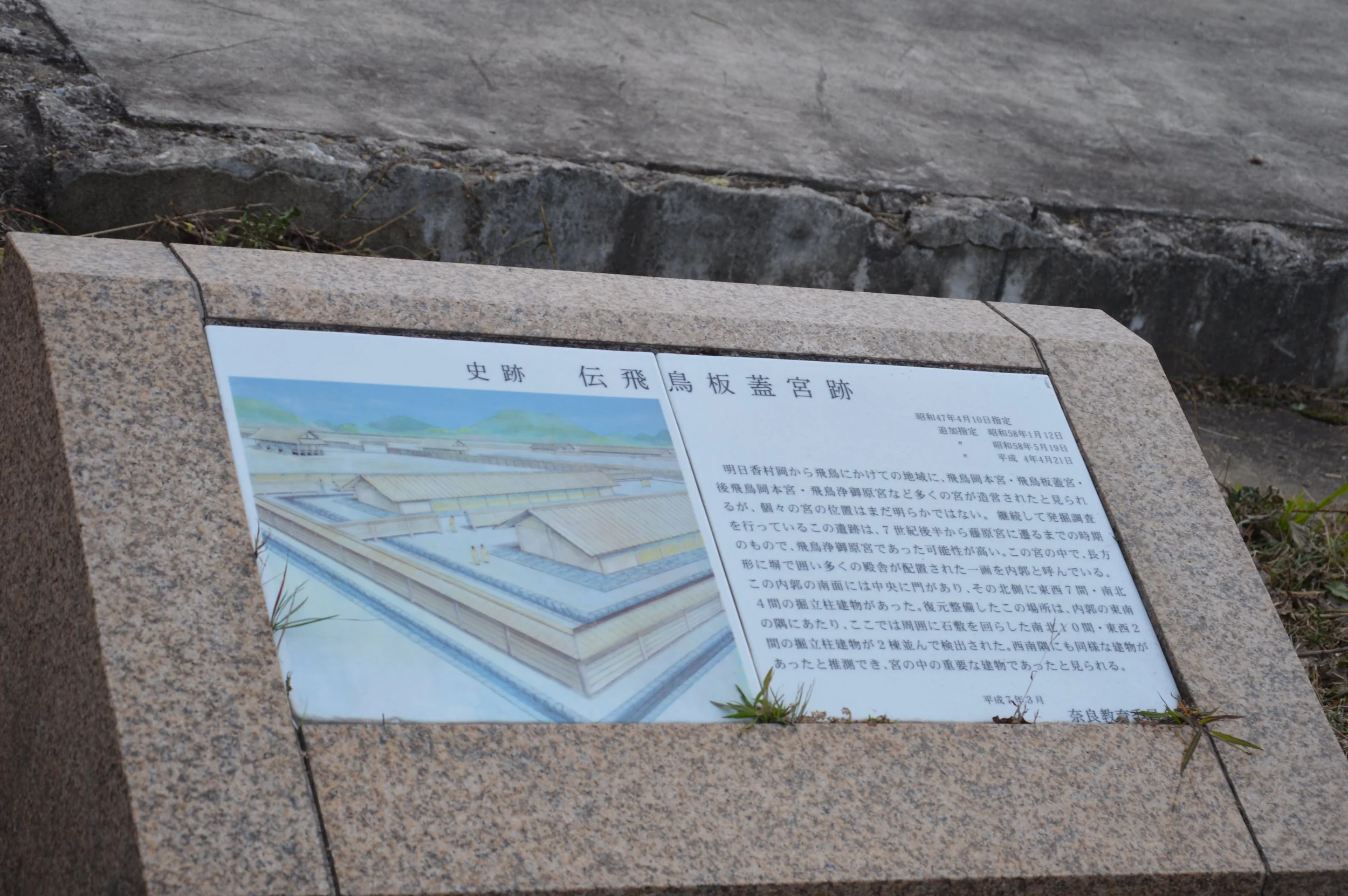
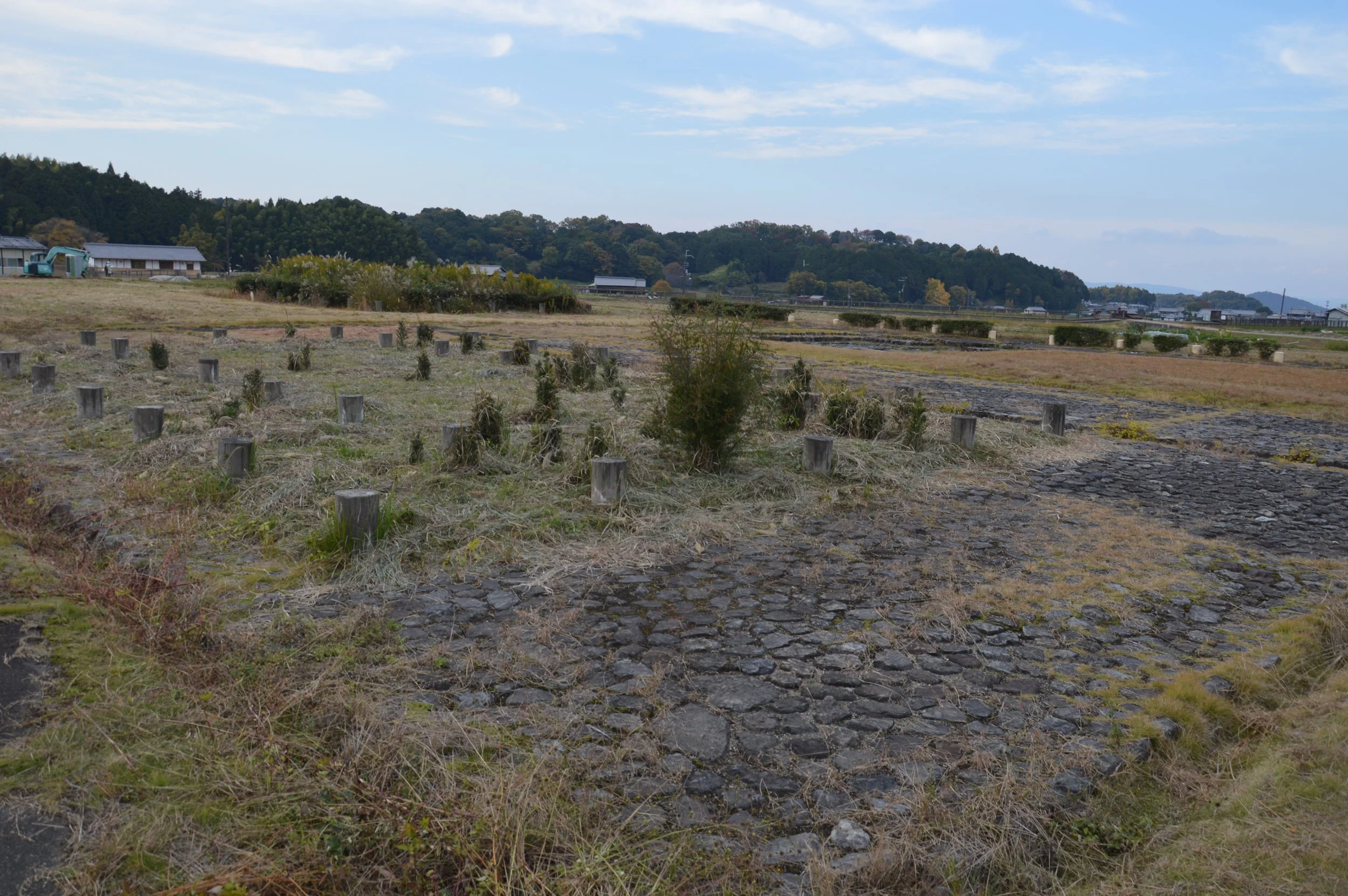
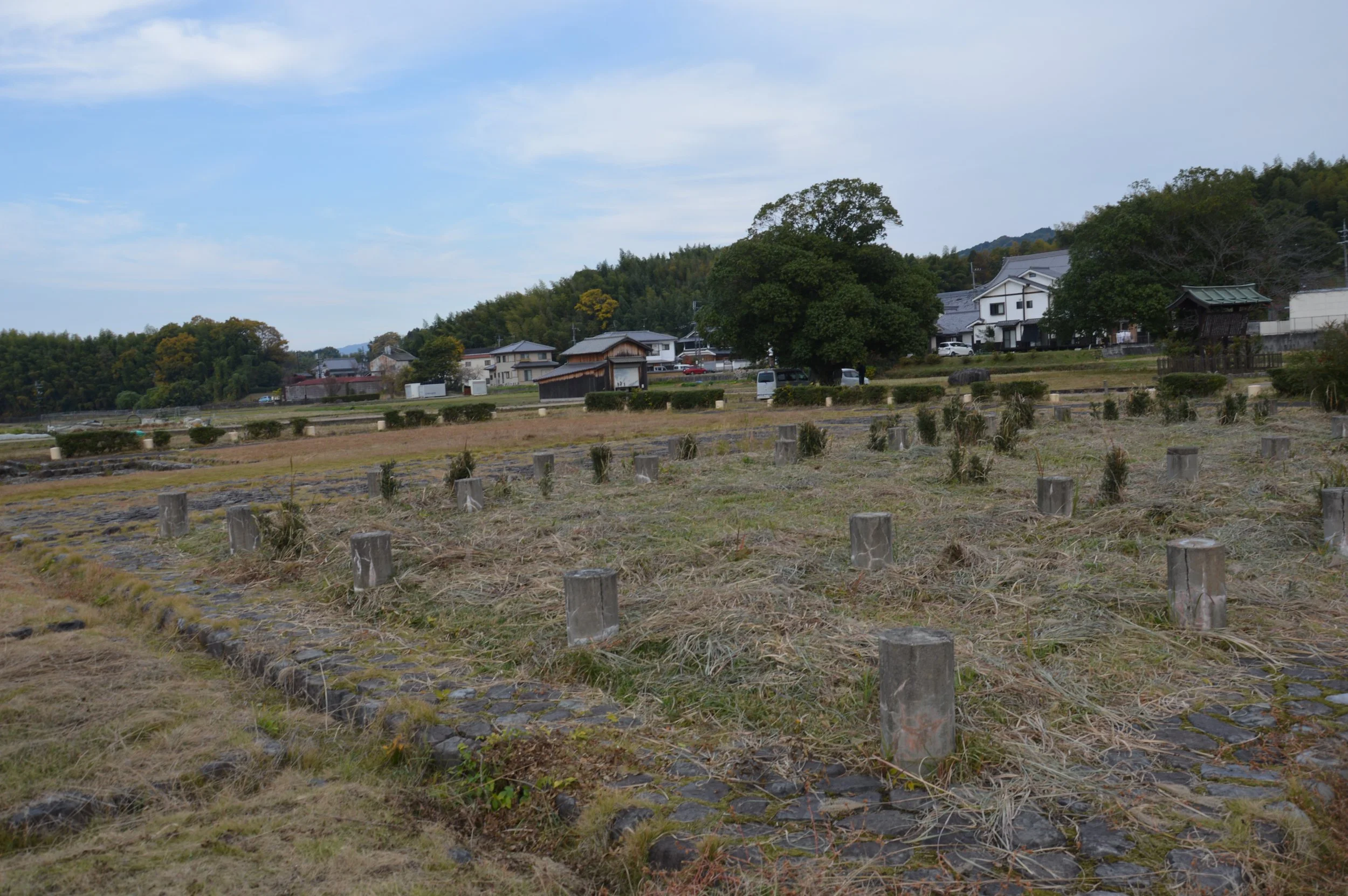
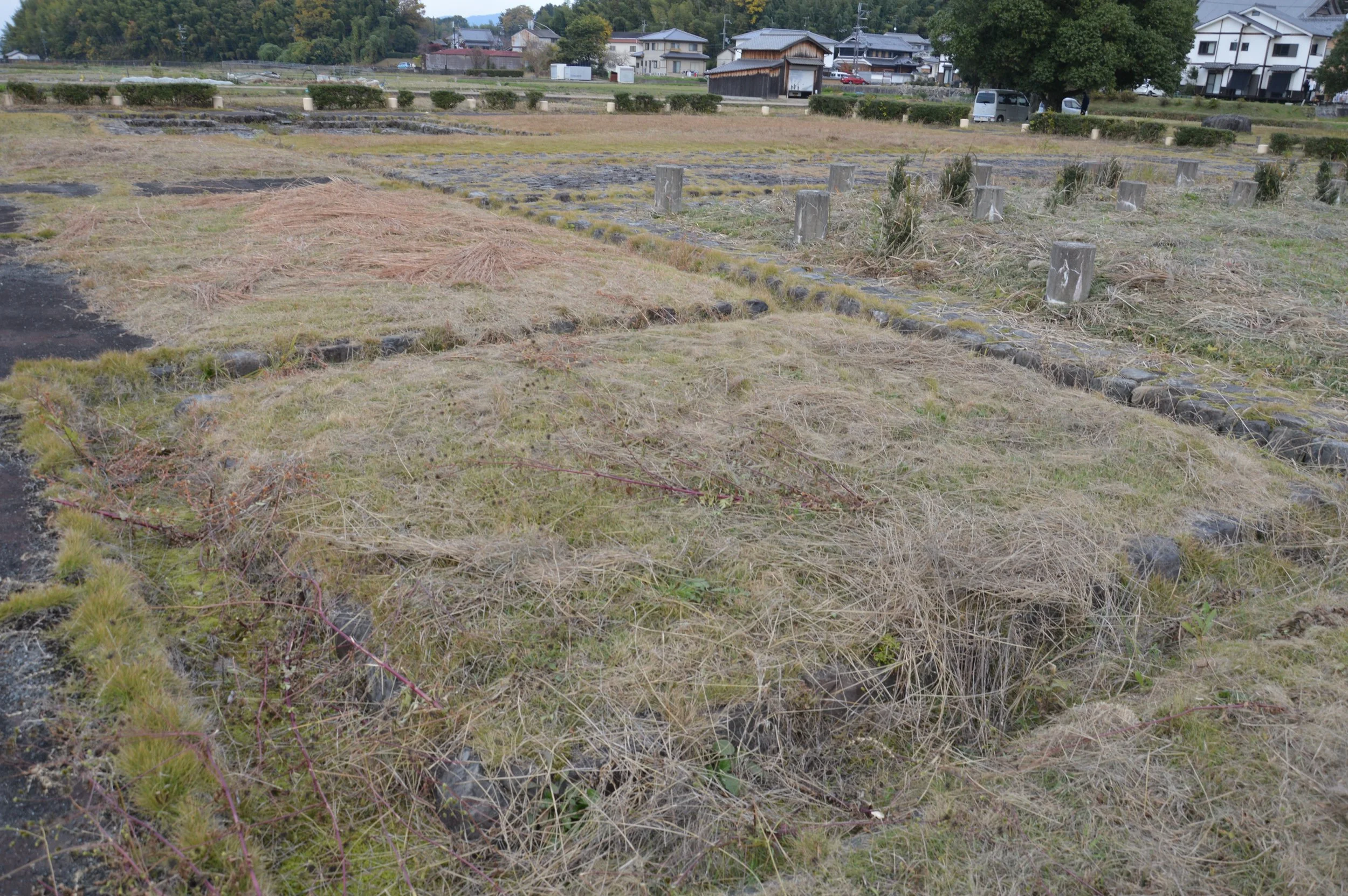
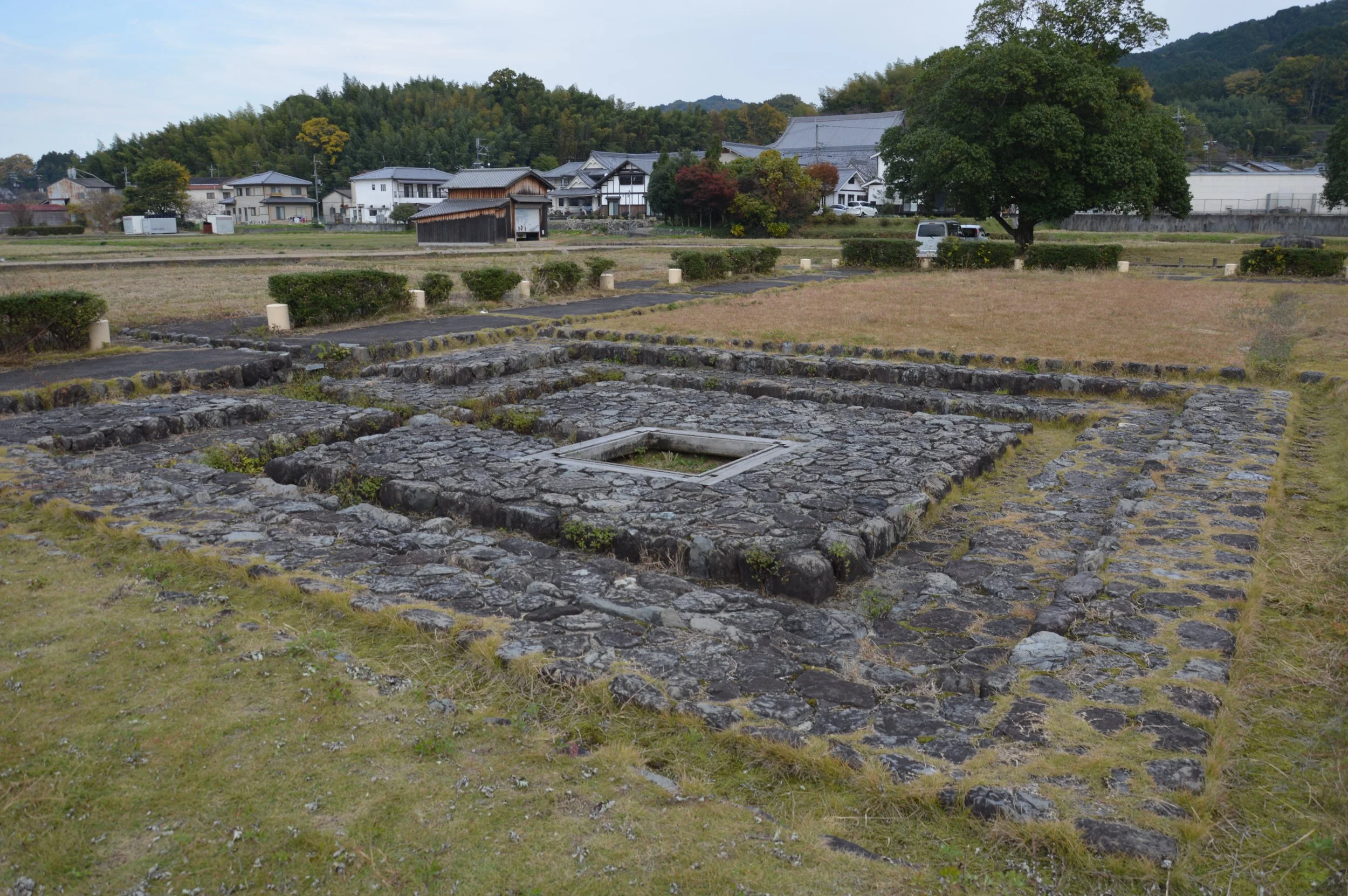
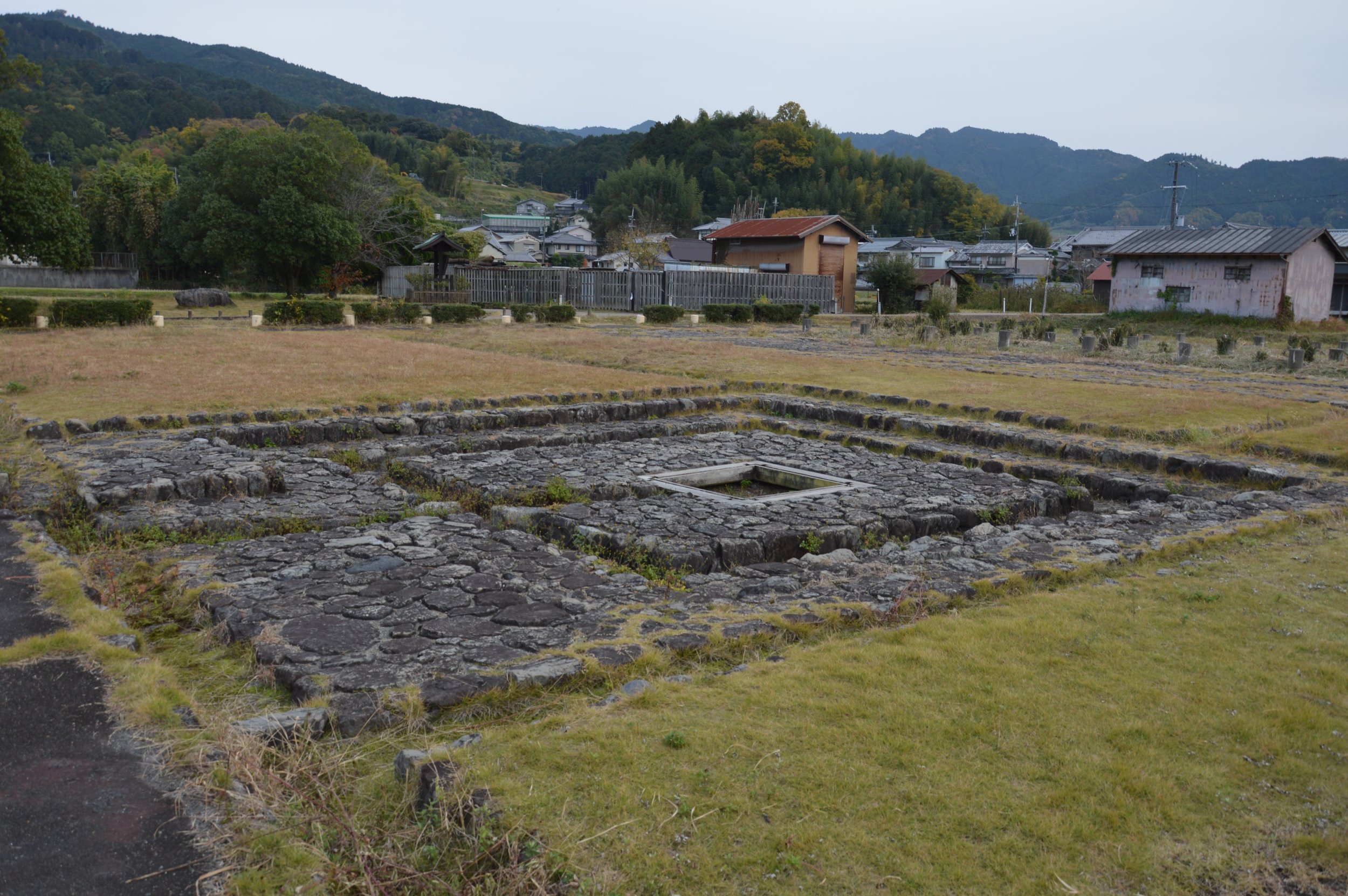
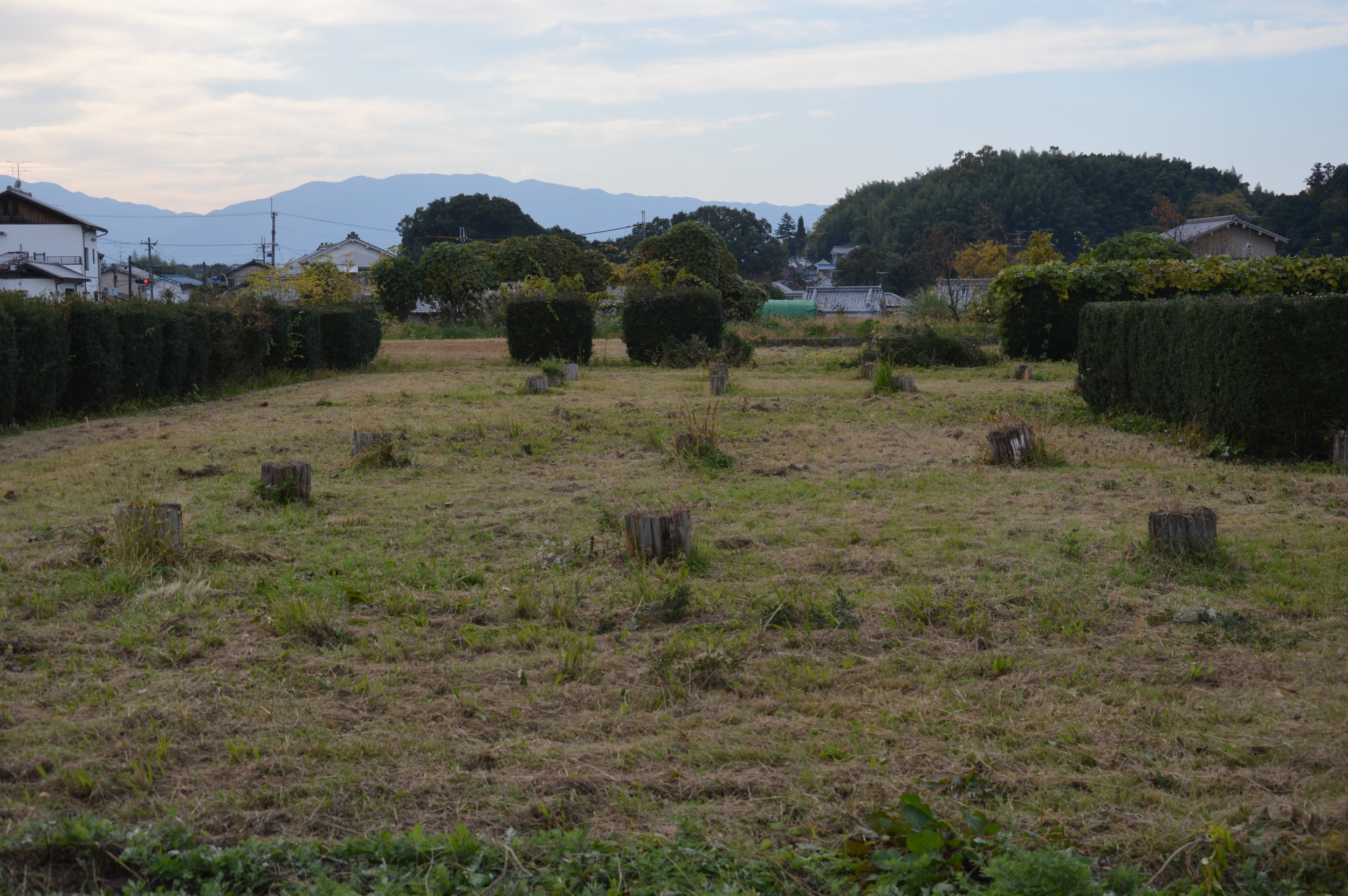
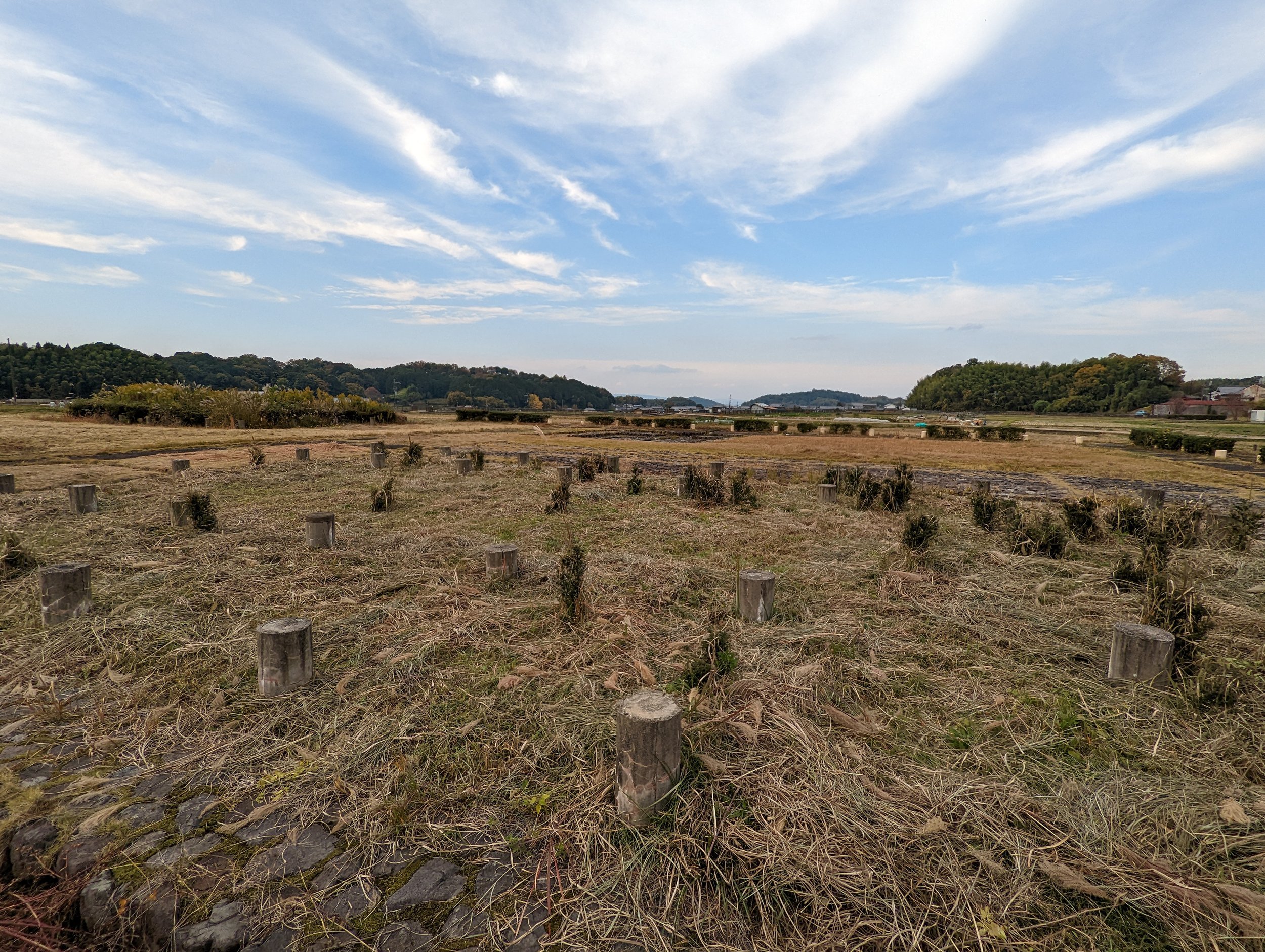
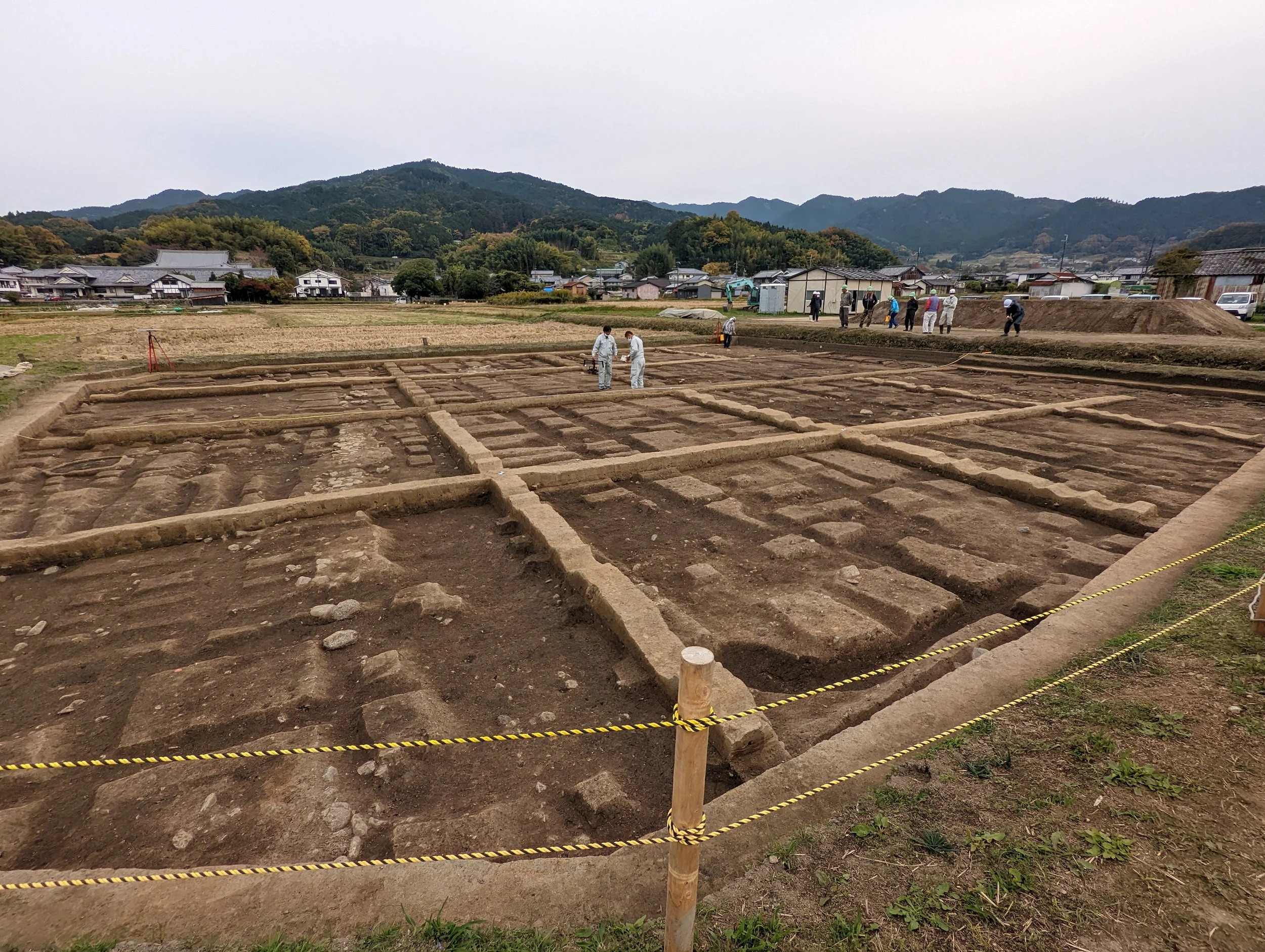
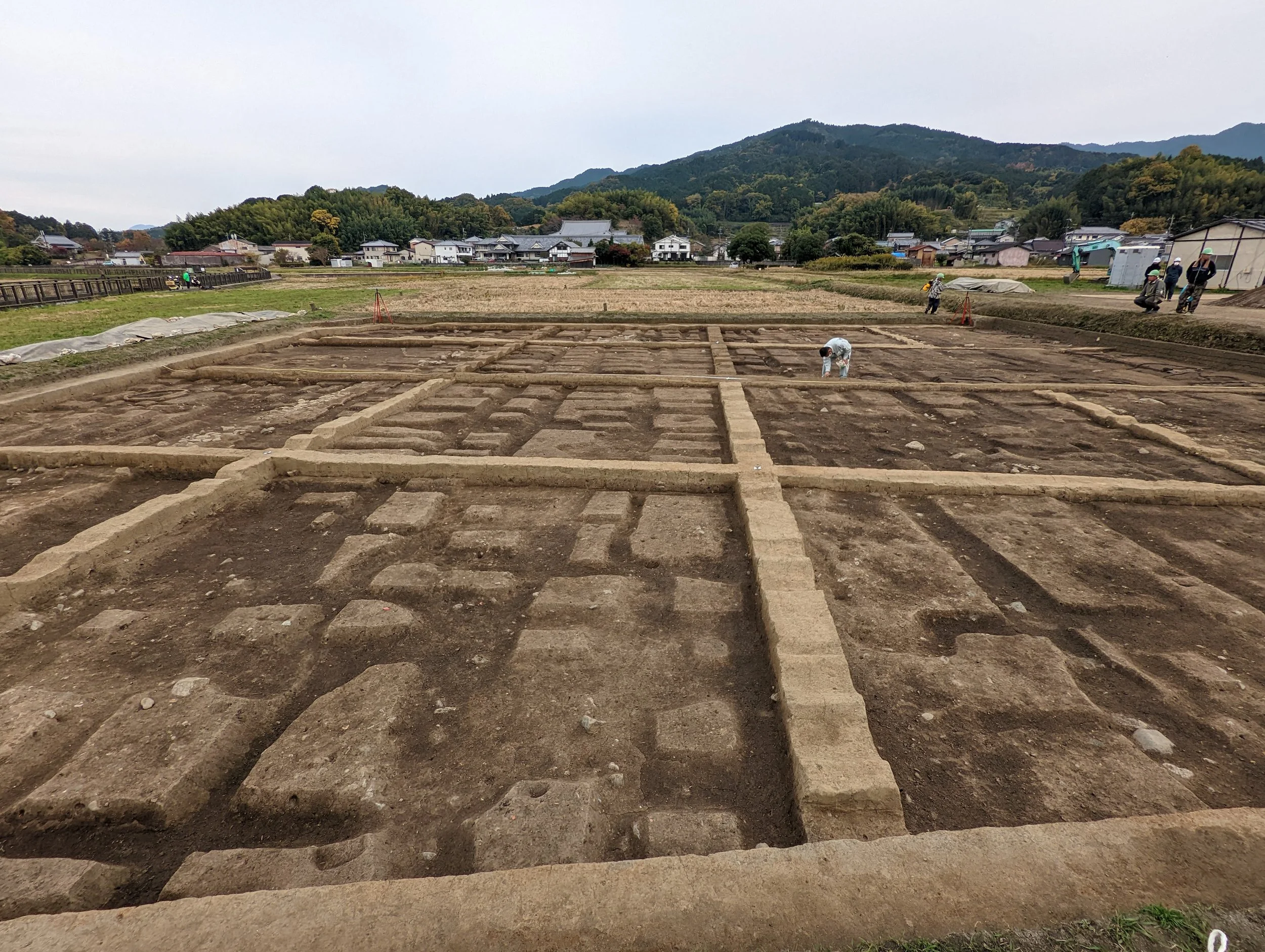
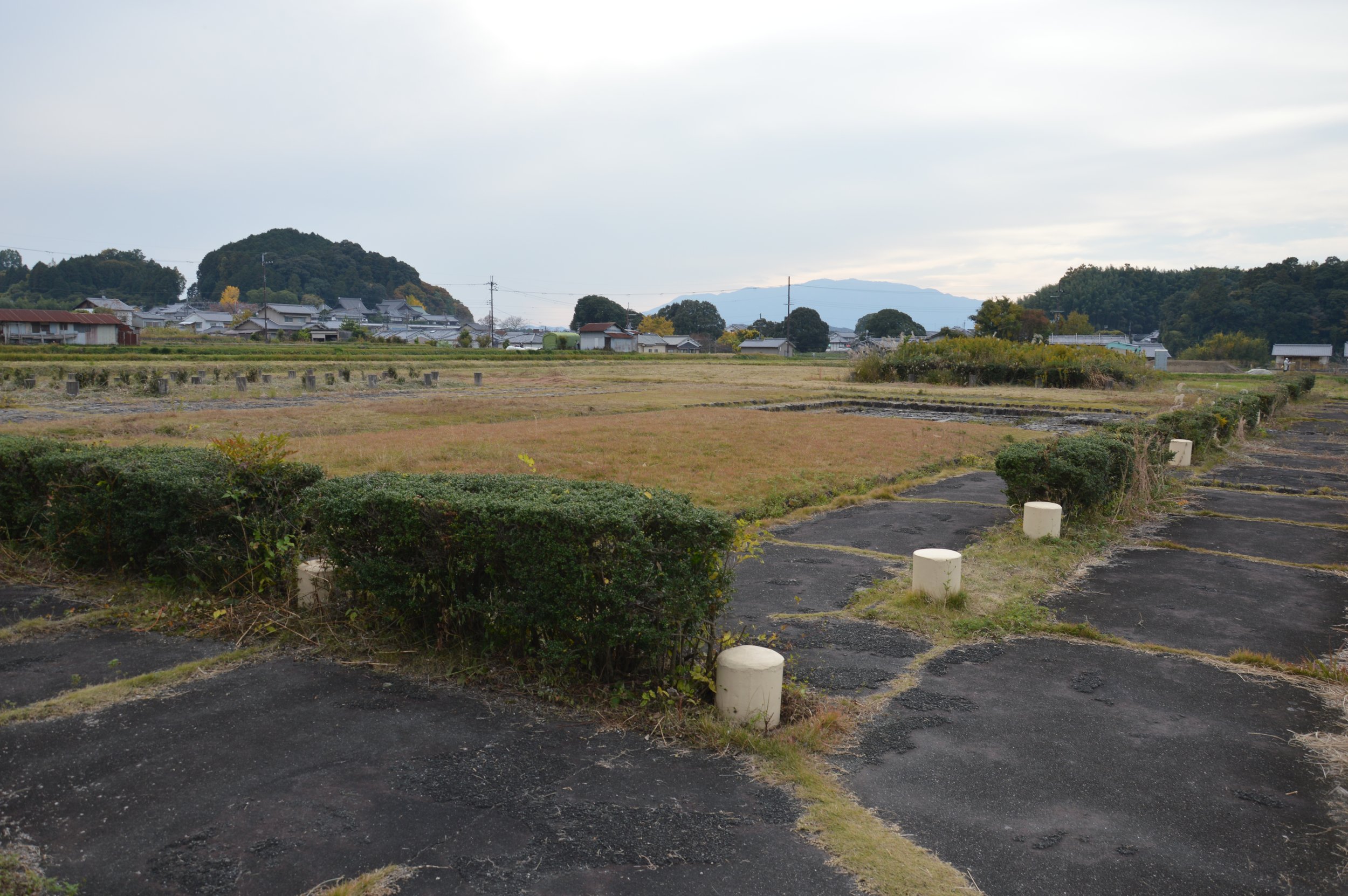
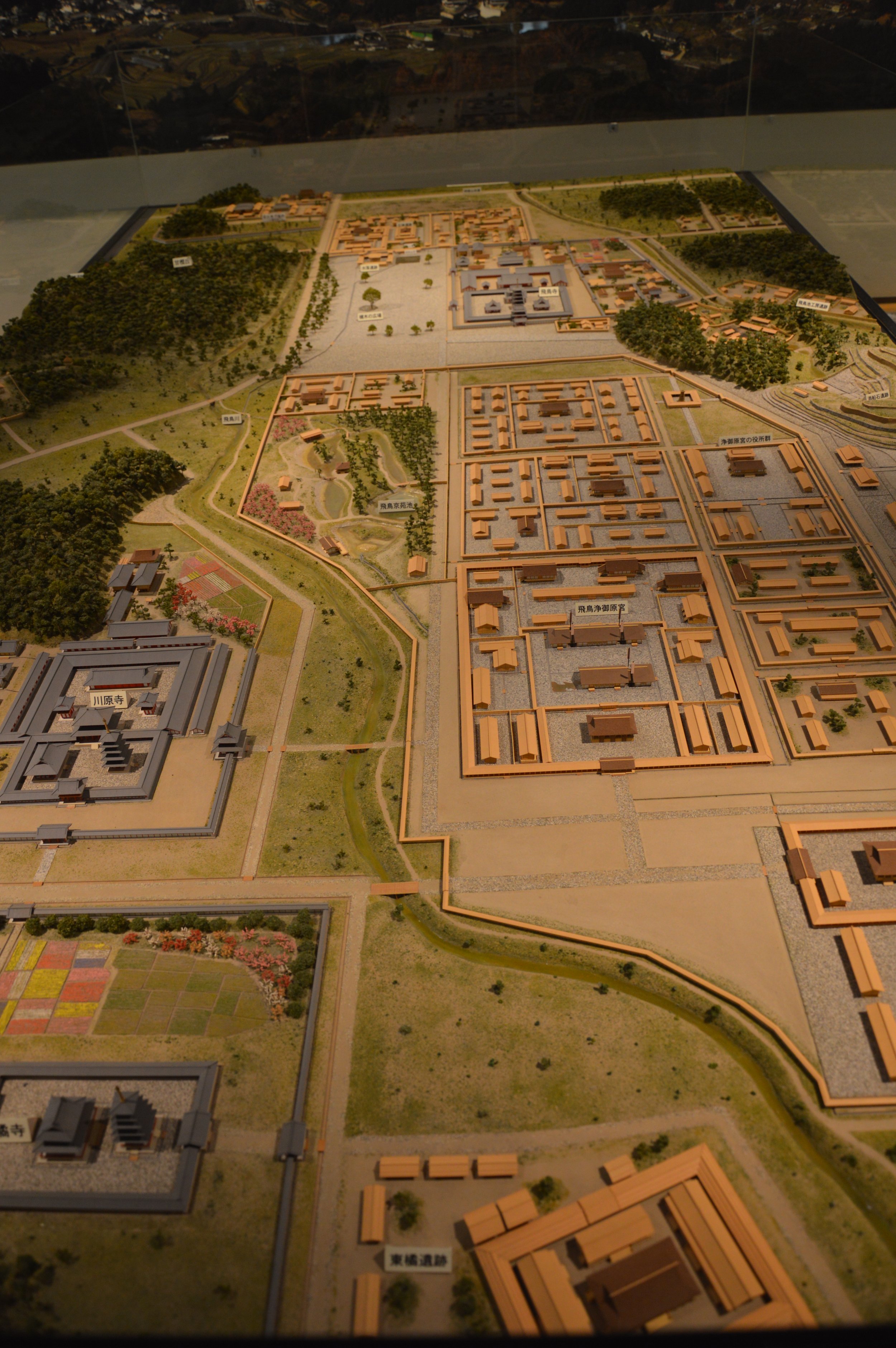
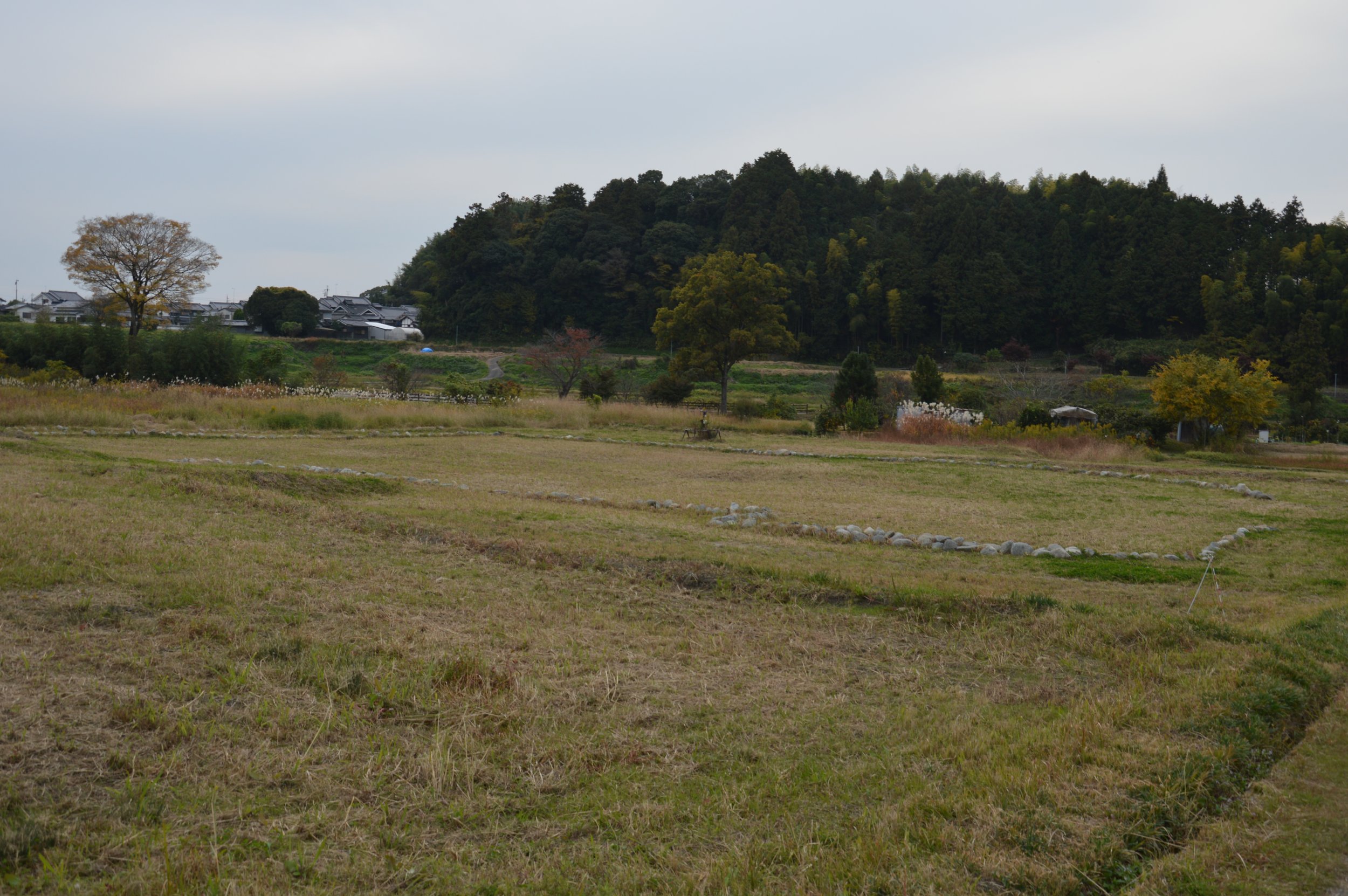
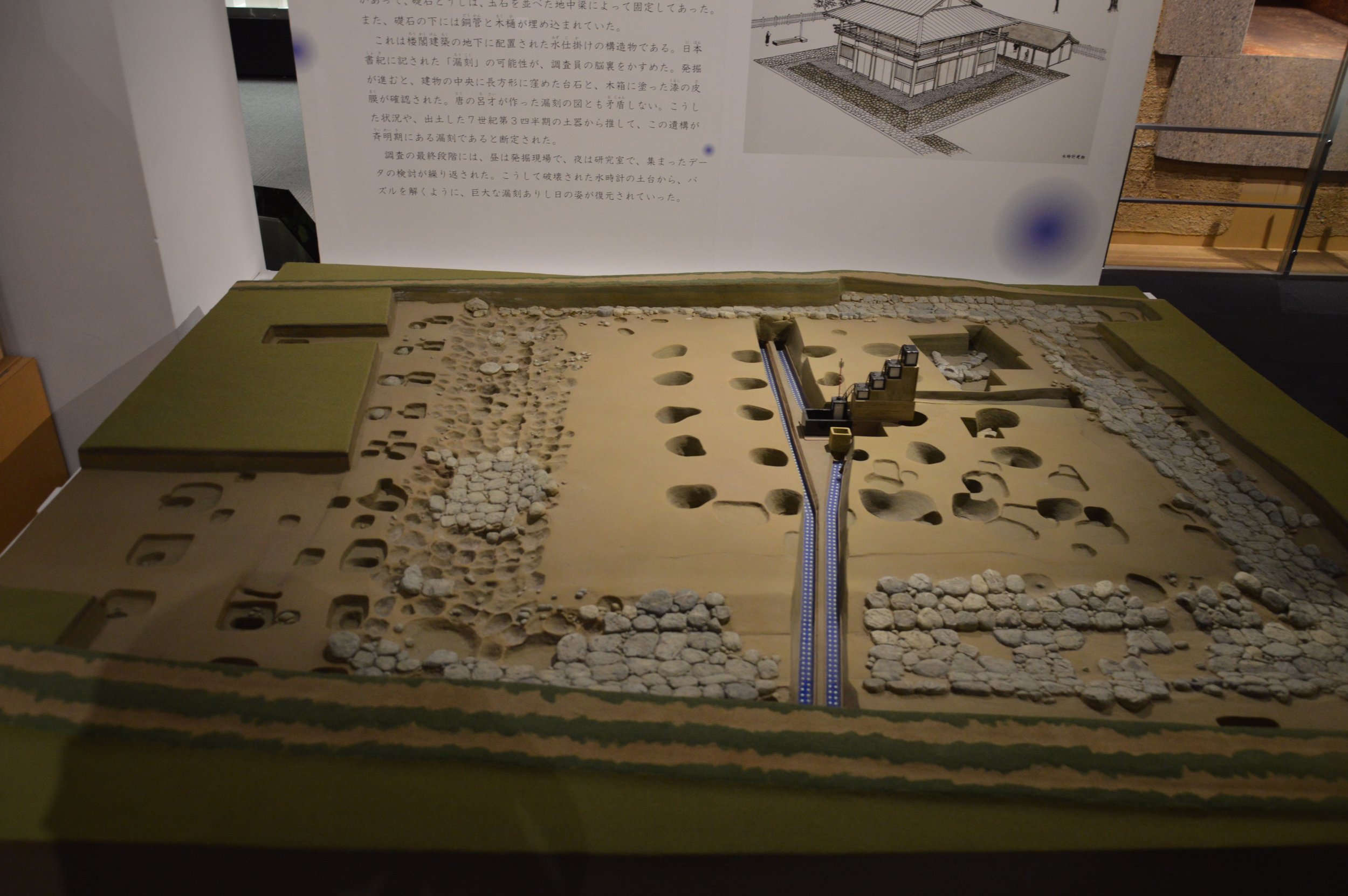
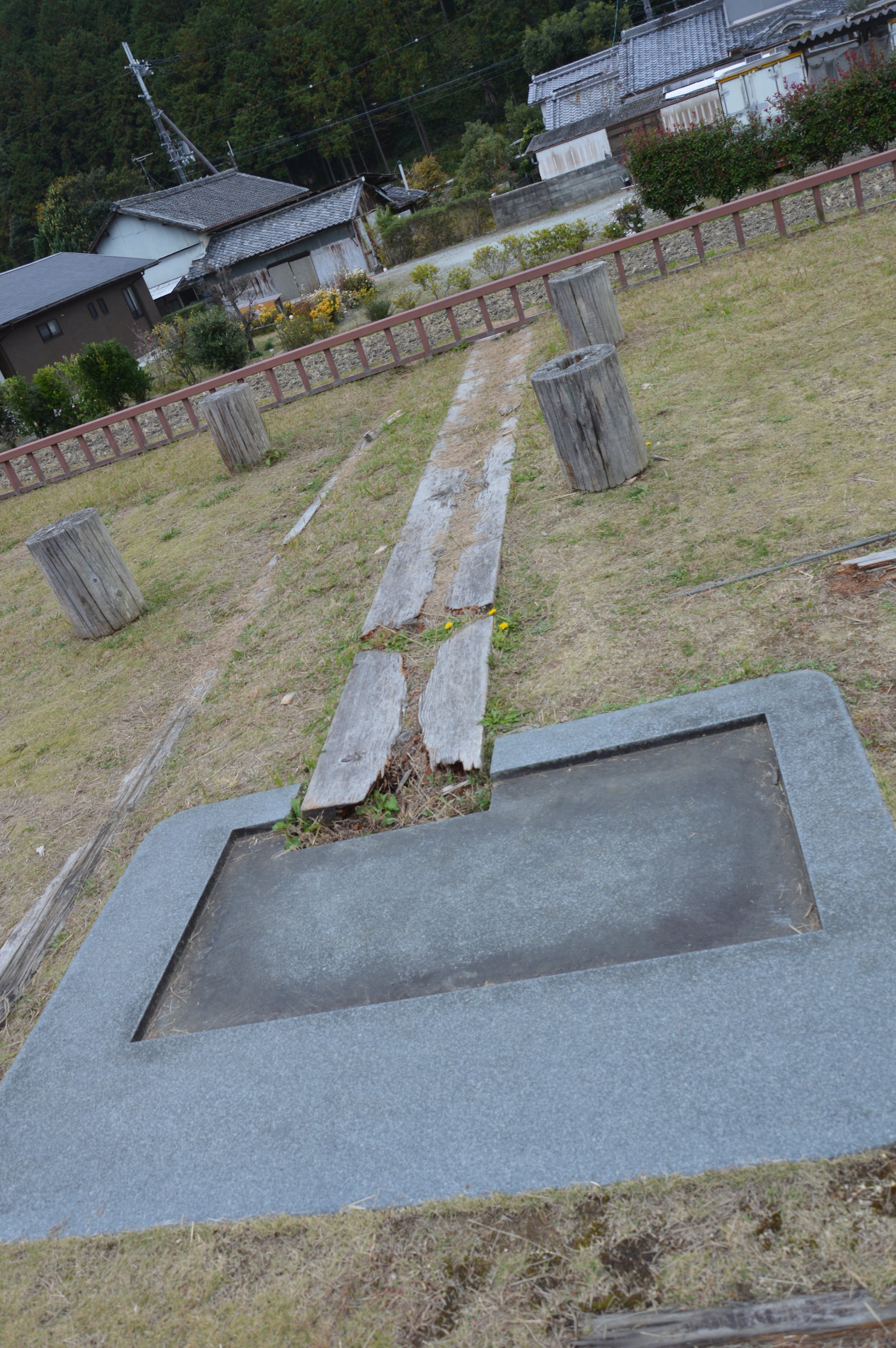
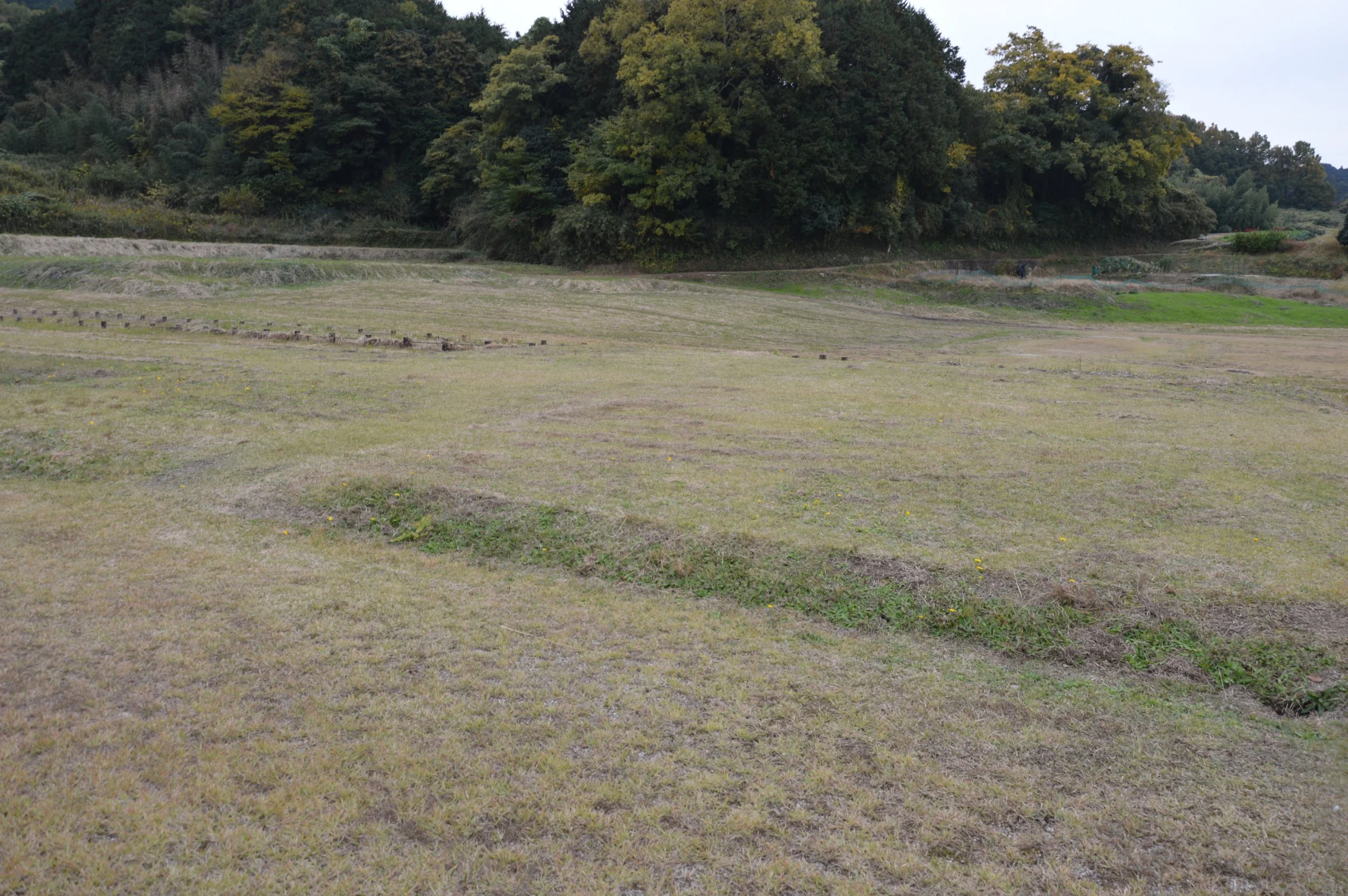
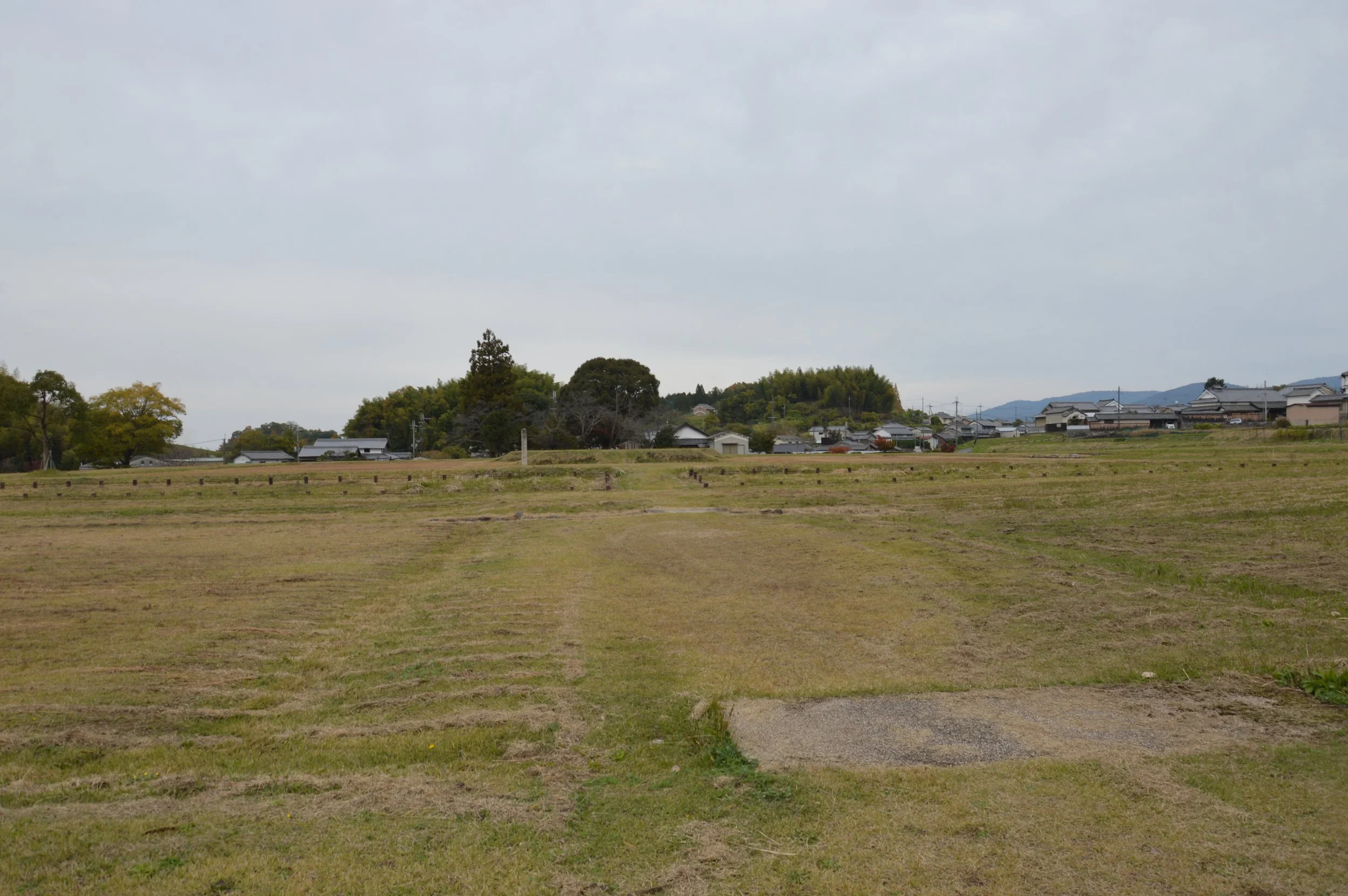
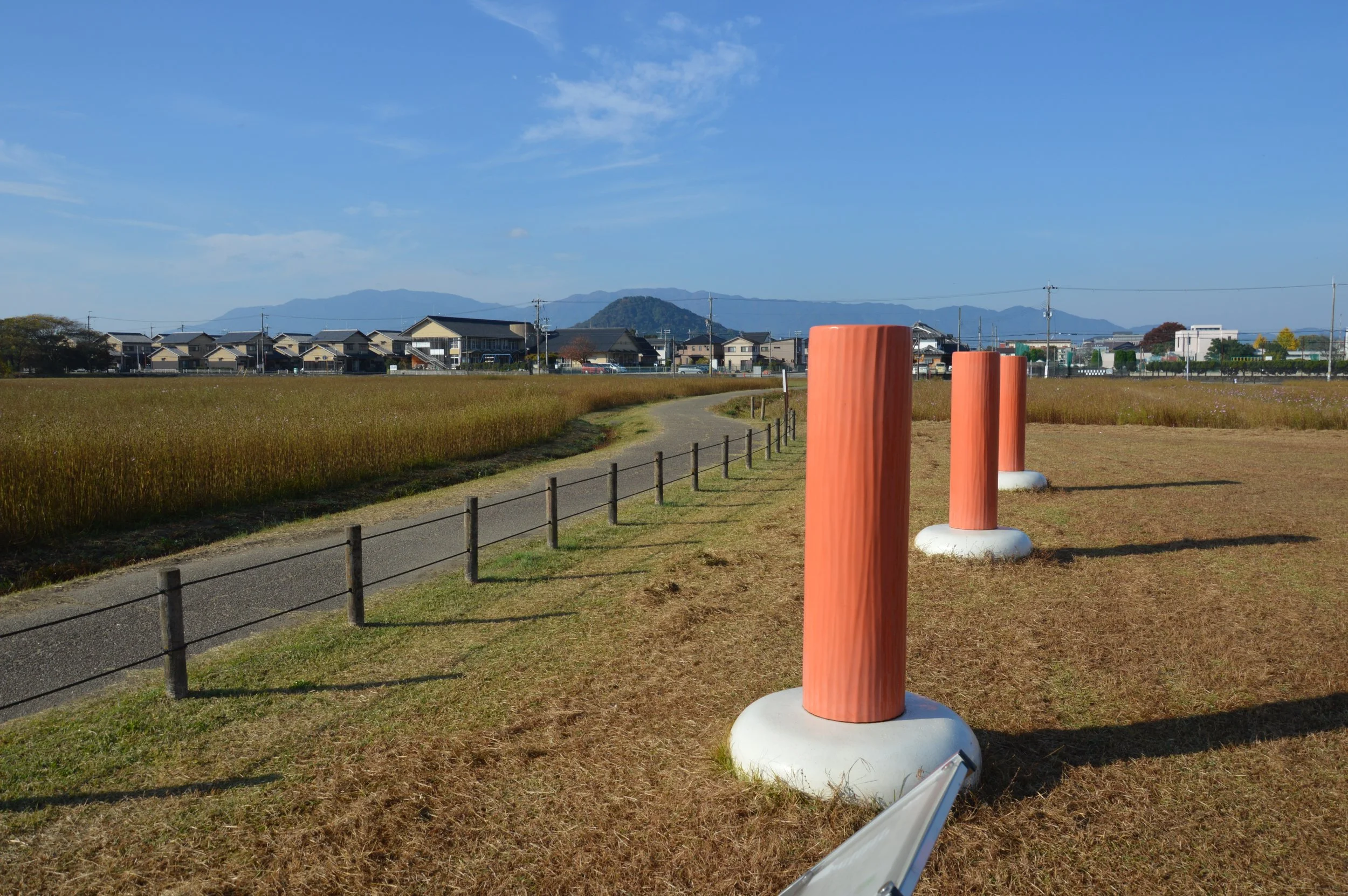
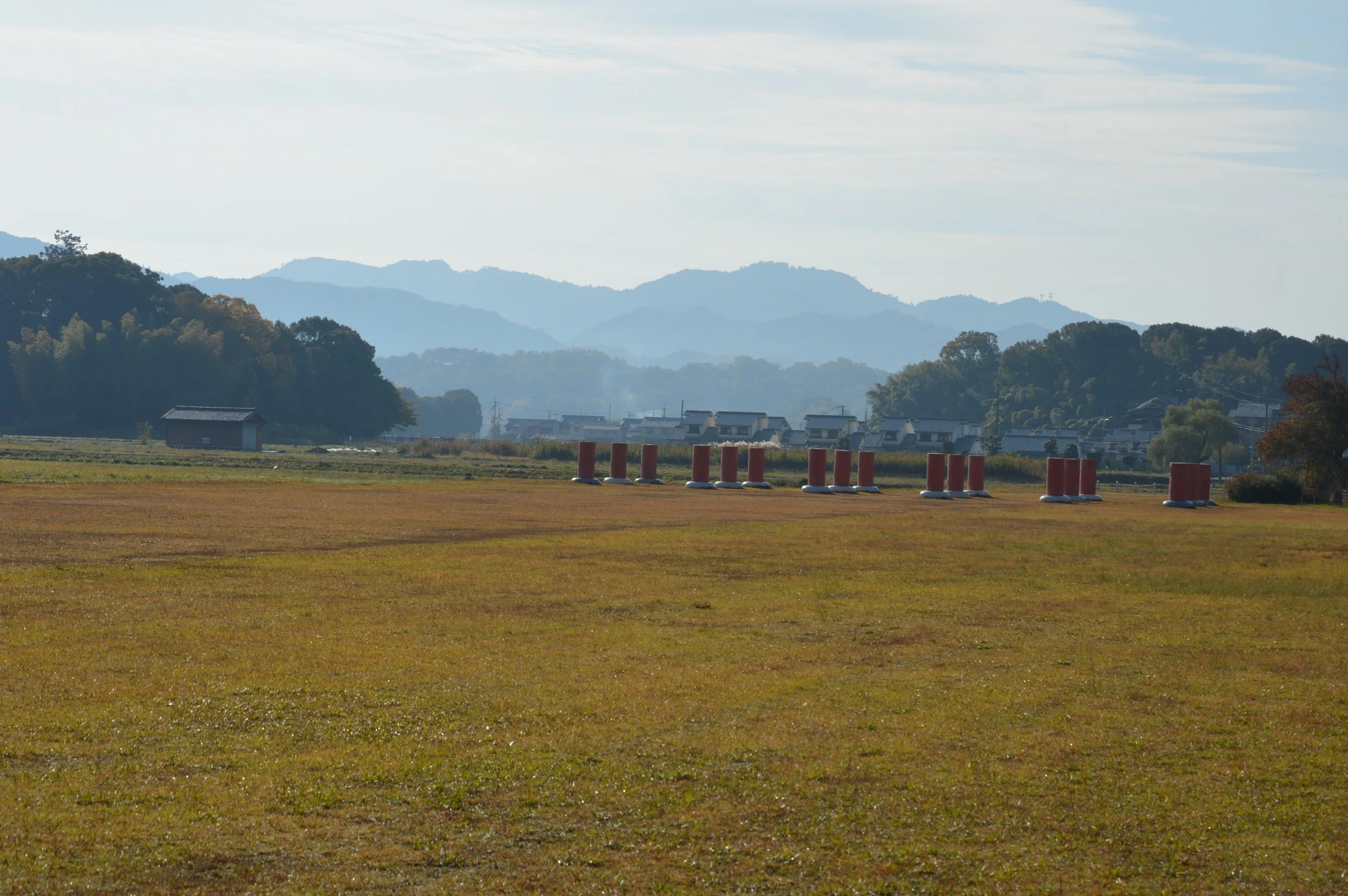
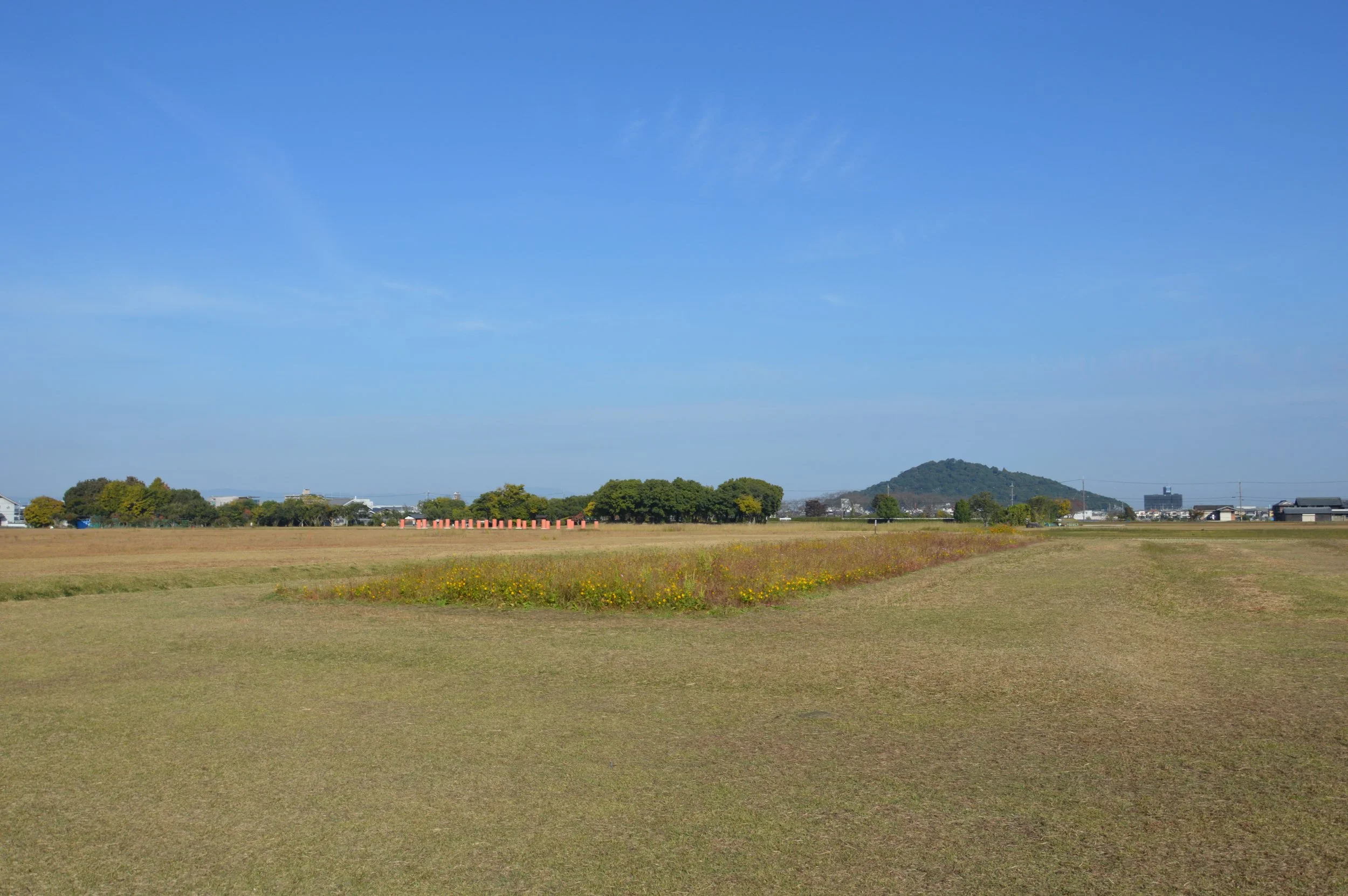
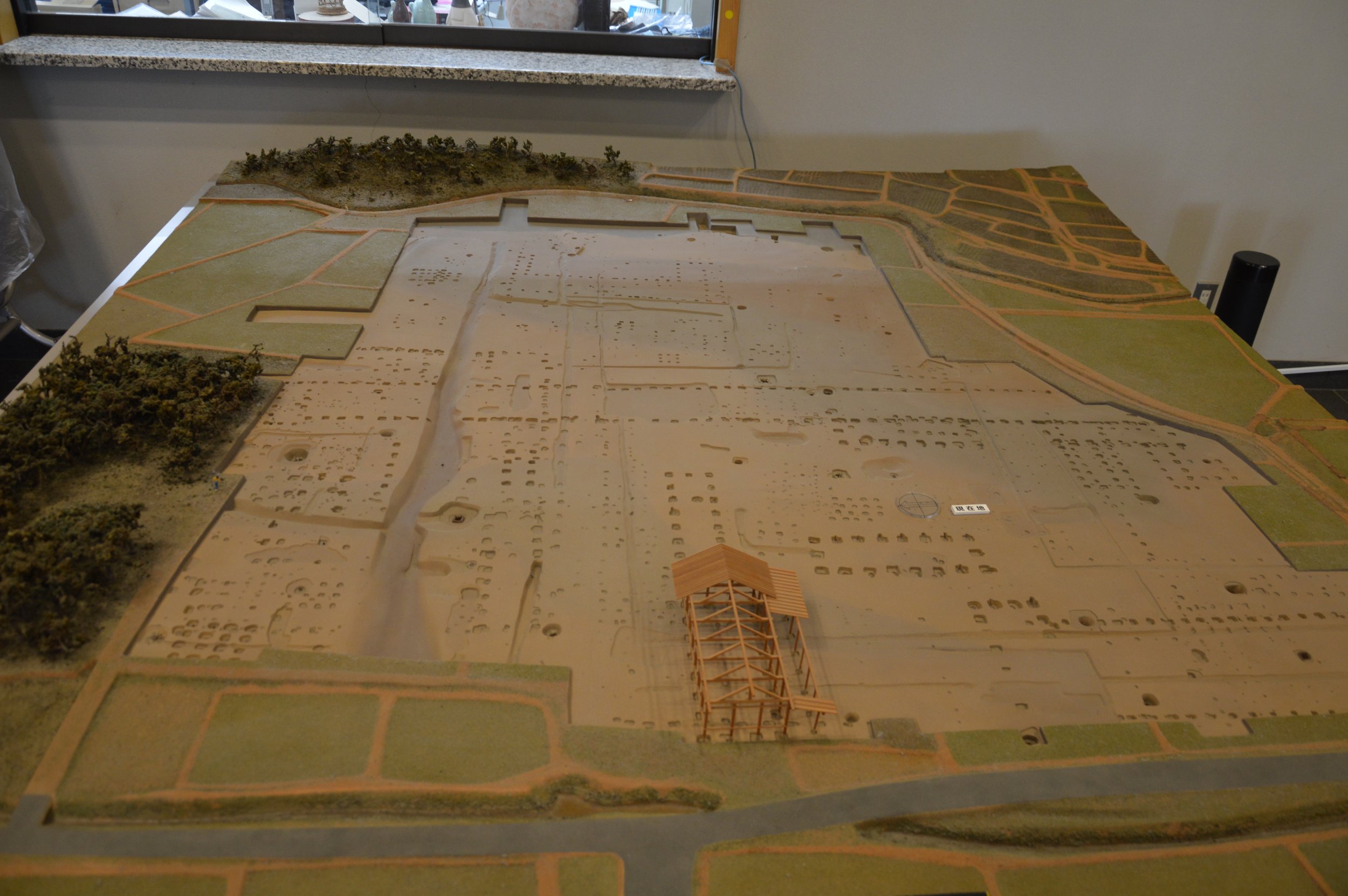
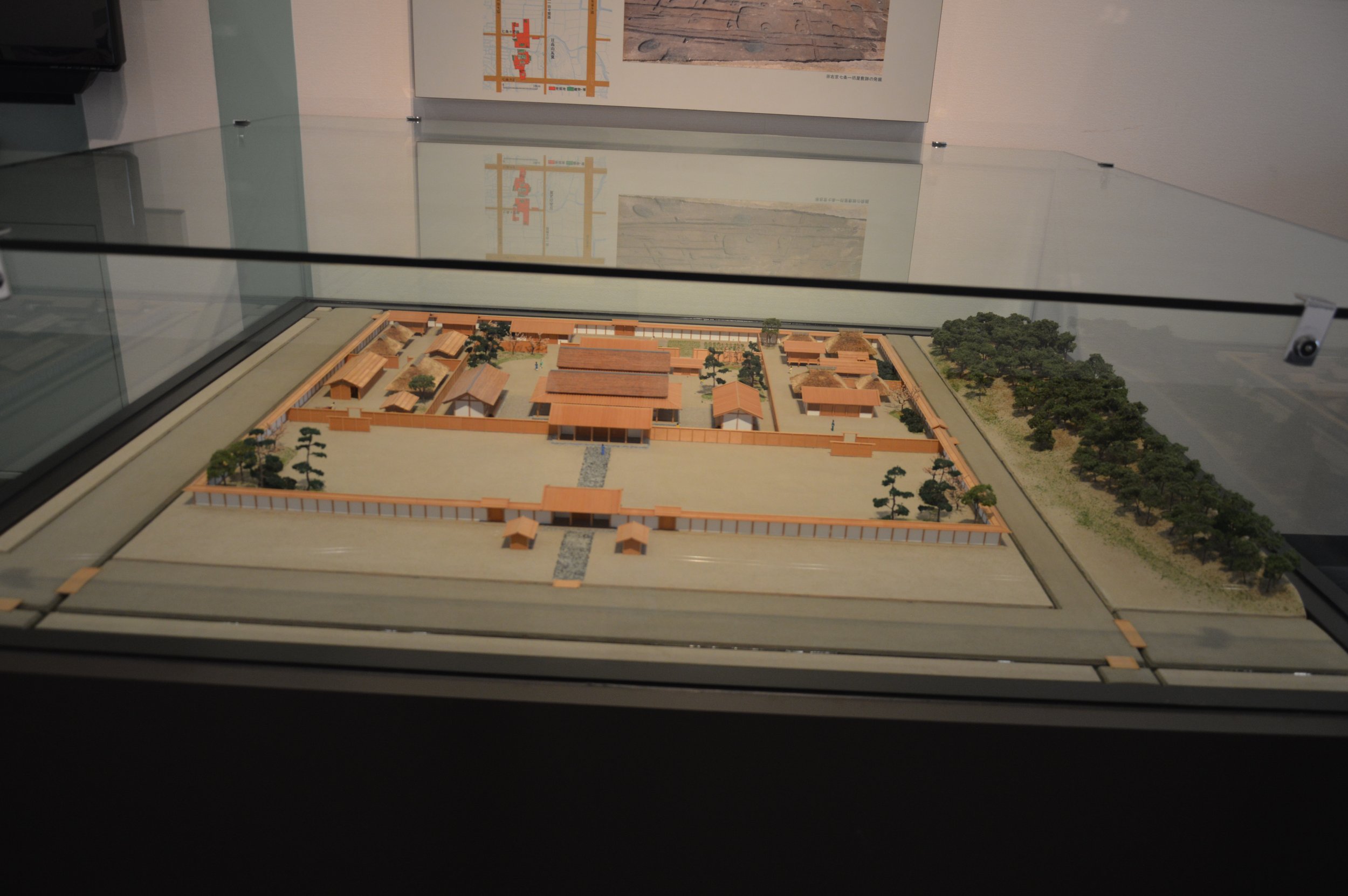
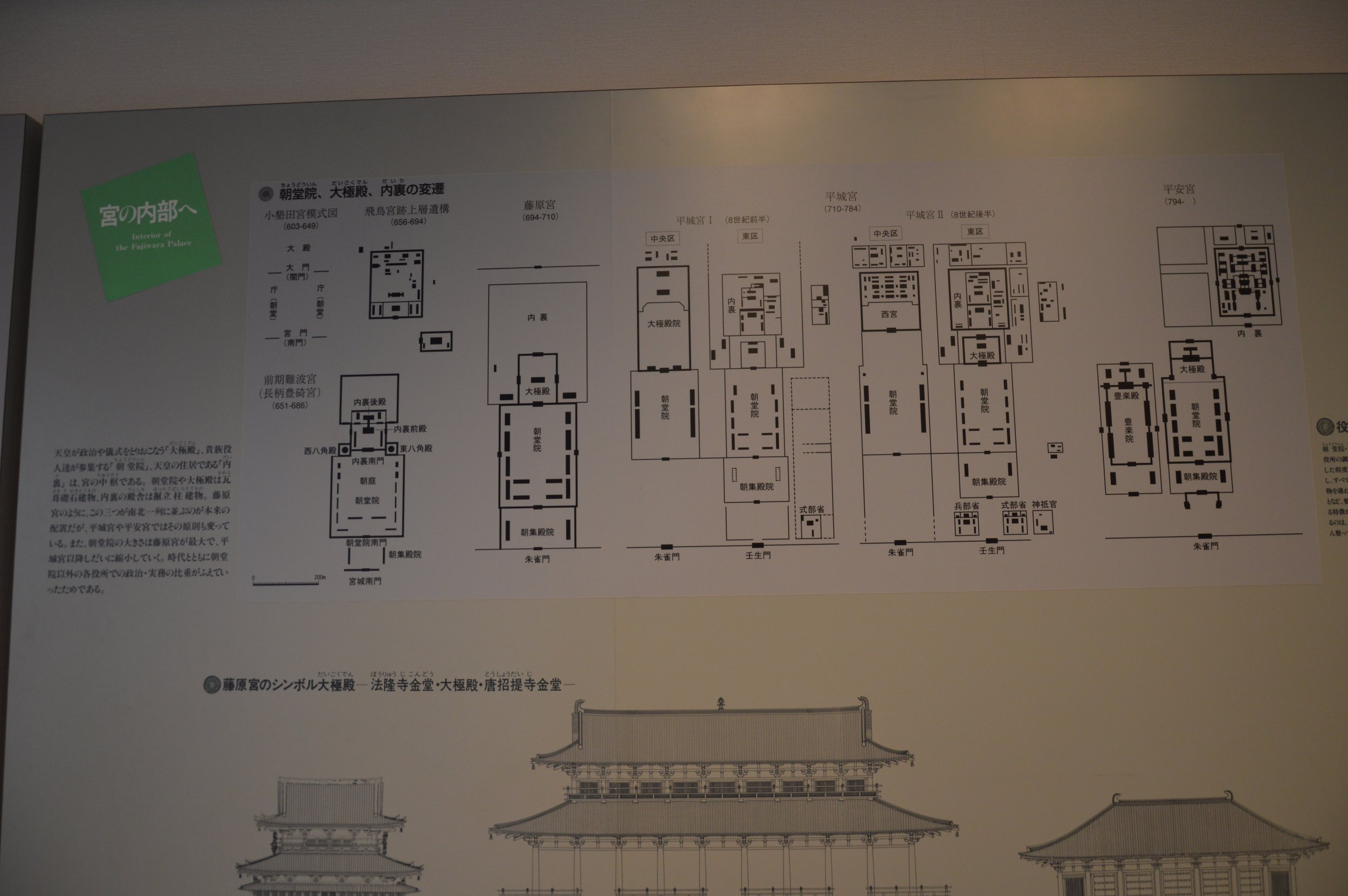
    The next year, 680, we see a New Year’s Banquet at the Court of the Great Hall.  Ohoama himself occupied the Mukai-kodono, which appears to refer to one of the smaller wings.  Based on the palace layout that we see in the posthole remains, this probably means that he was set up in the smaller wing, likely in a more intimate space, while most of the other guests were in the large hall, maintaining that crucial separation of sovereign and subjects.

    This New Year’s archery event included Princes of the Blood all the way down to the rank of Shouken—the very lowest rank in the court—and it was held at the South Gate.

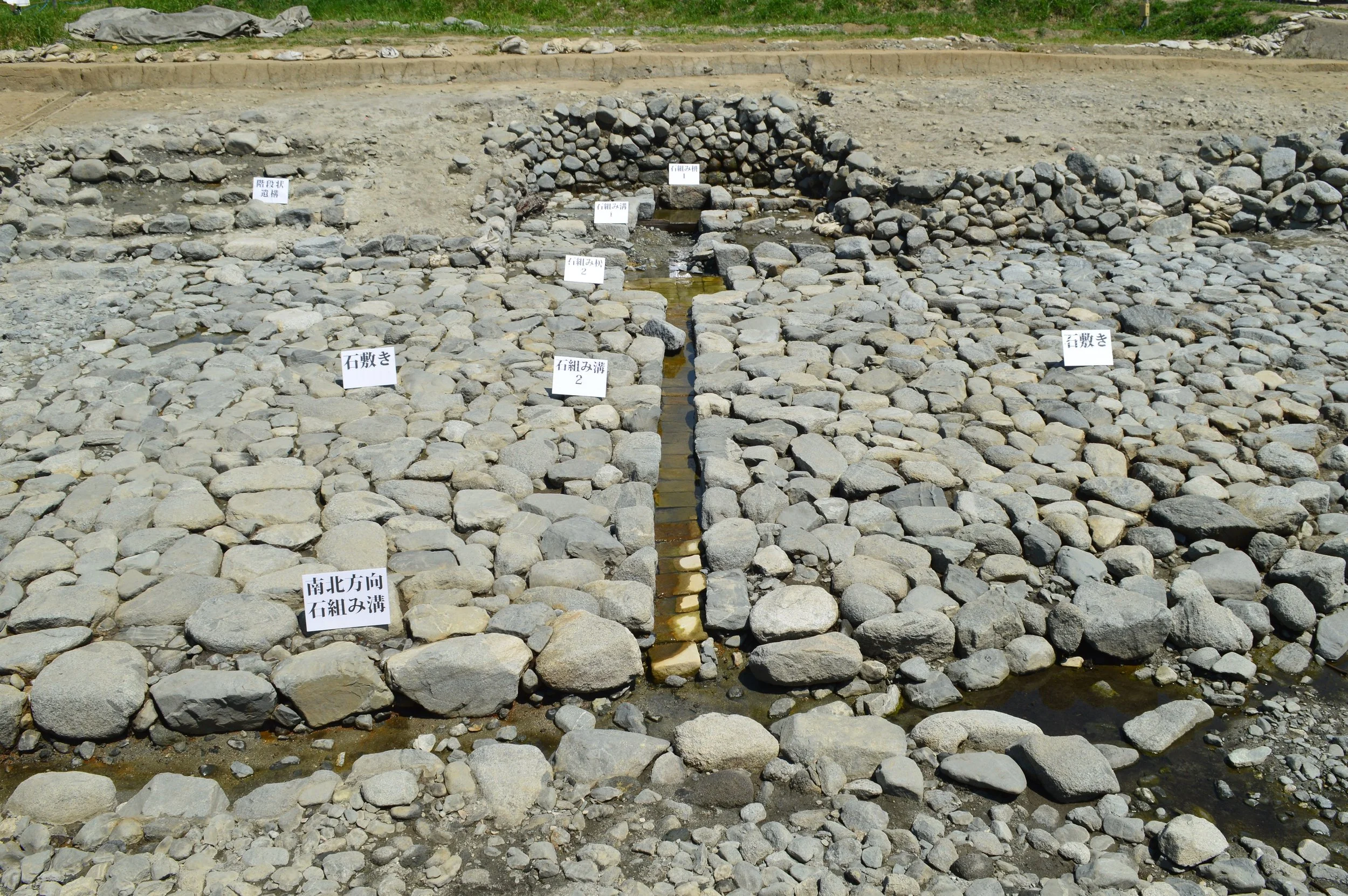
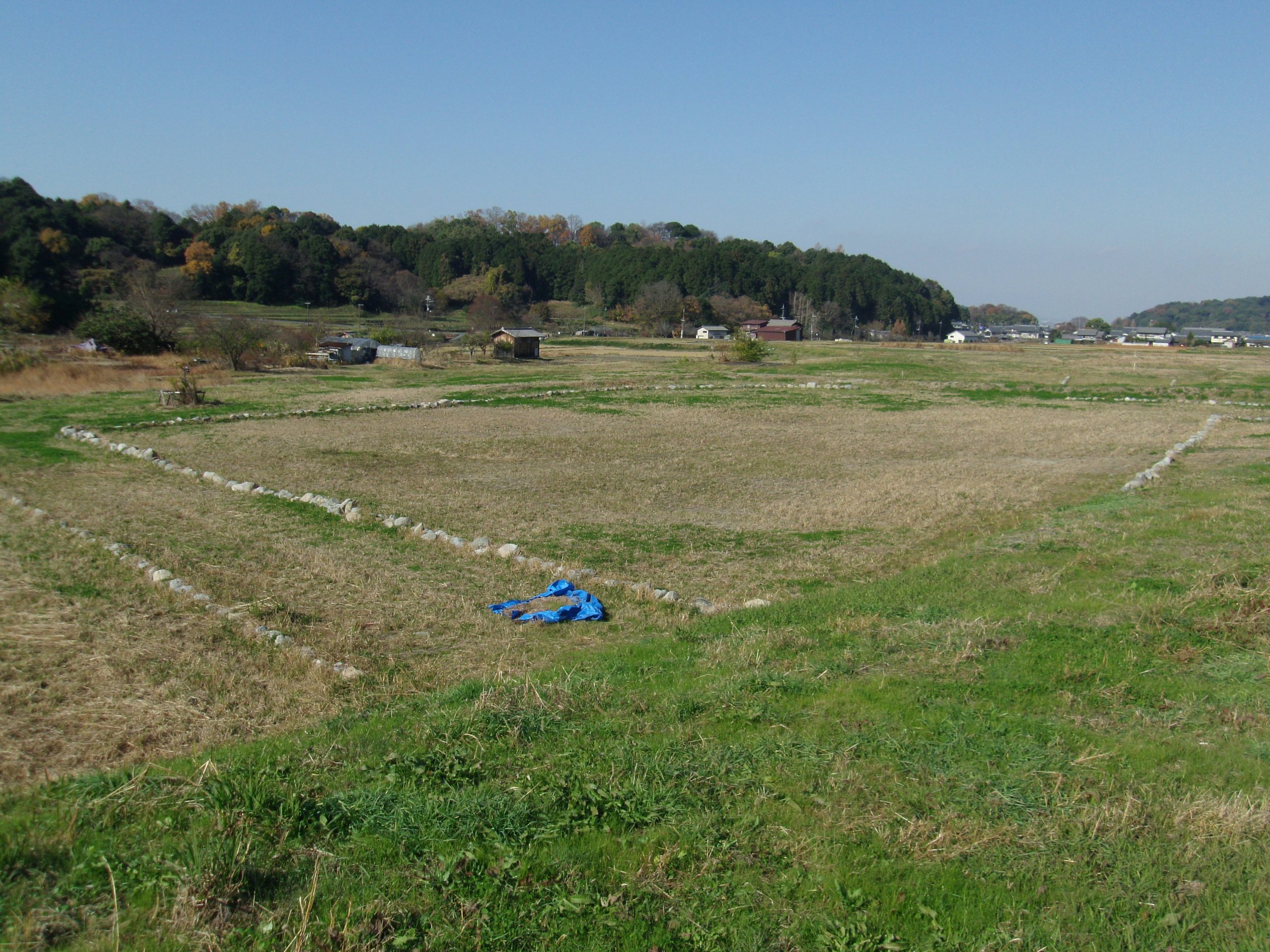
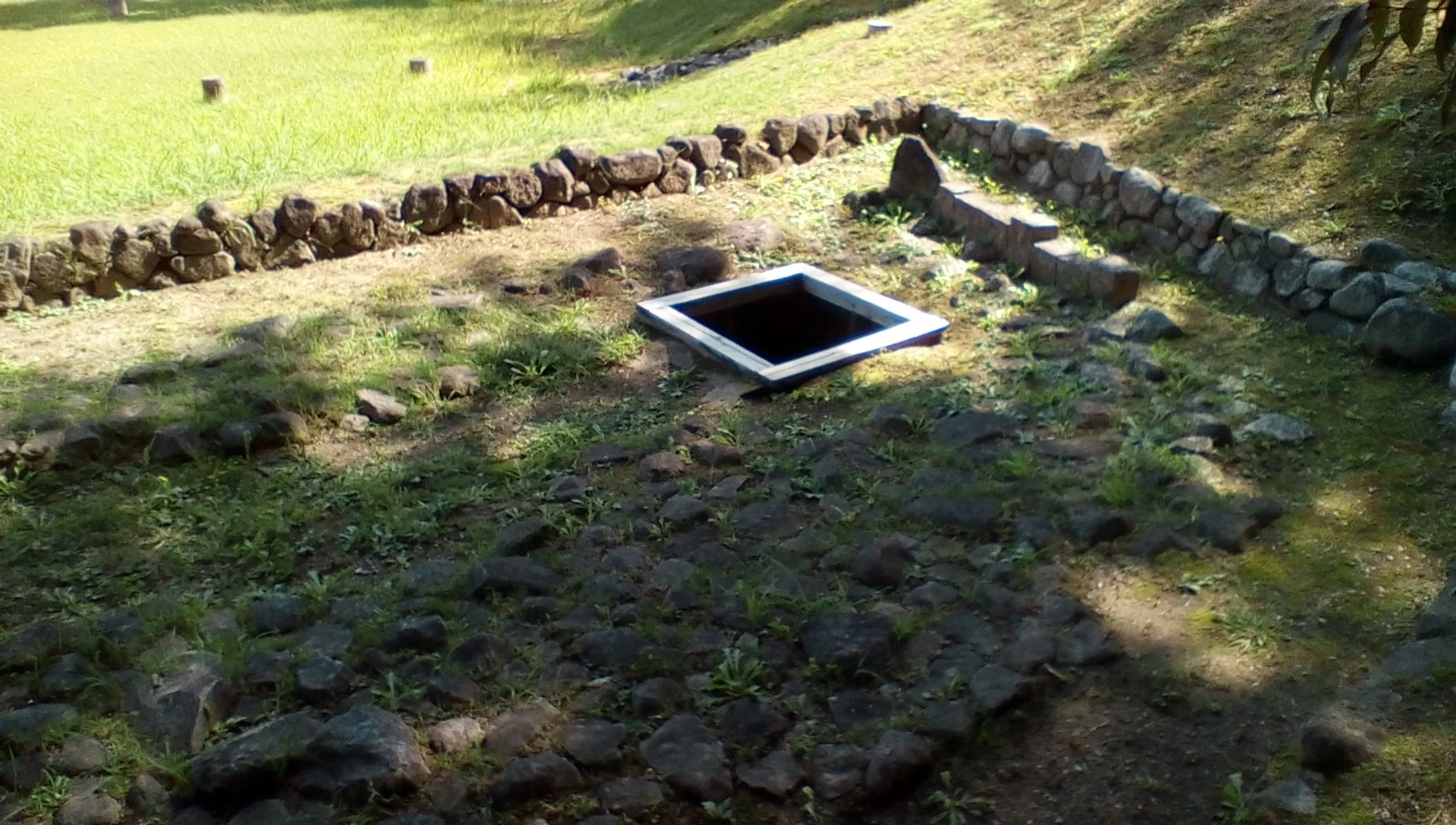
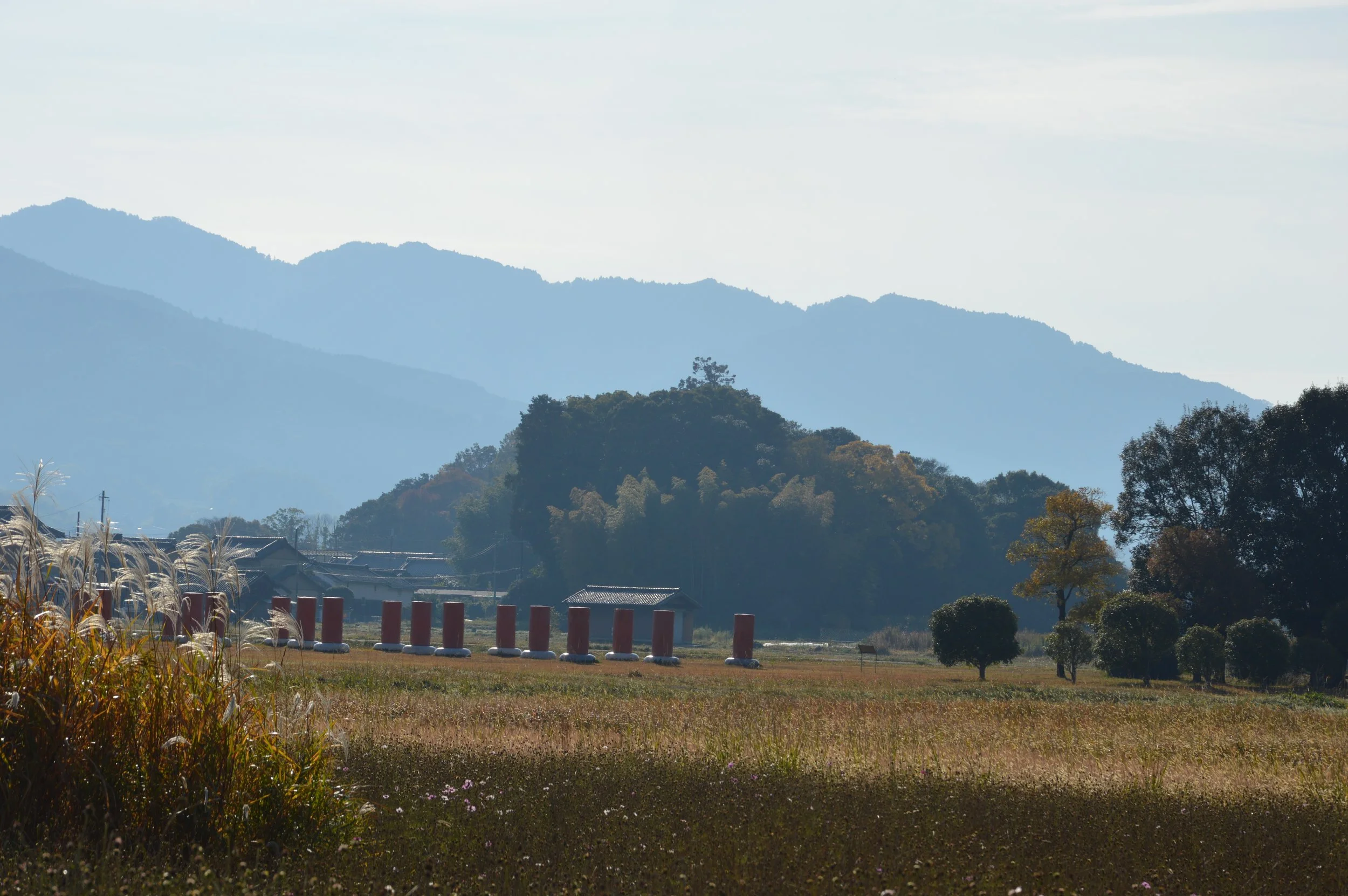
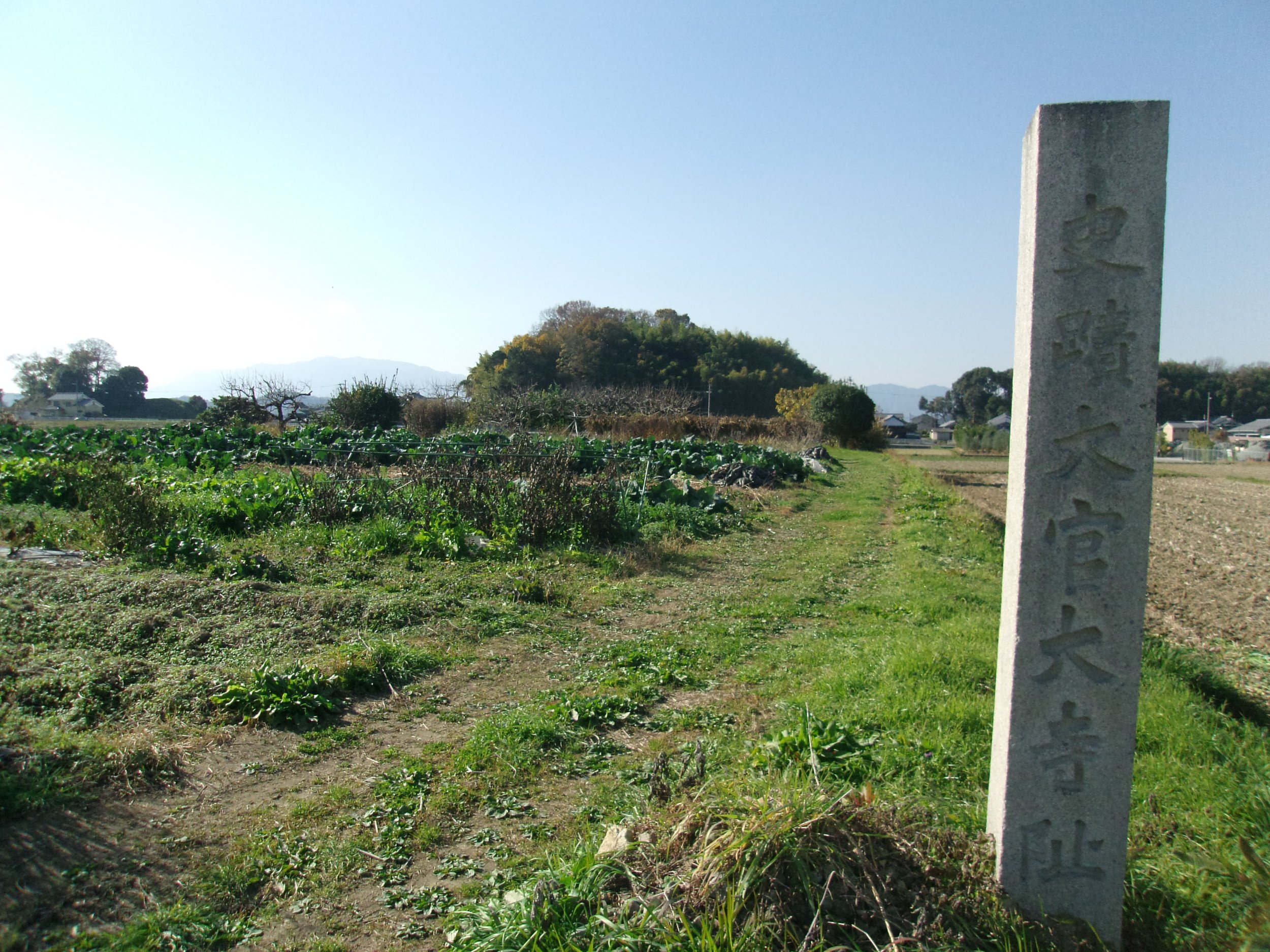
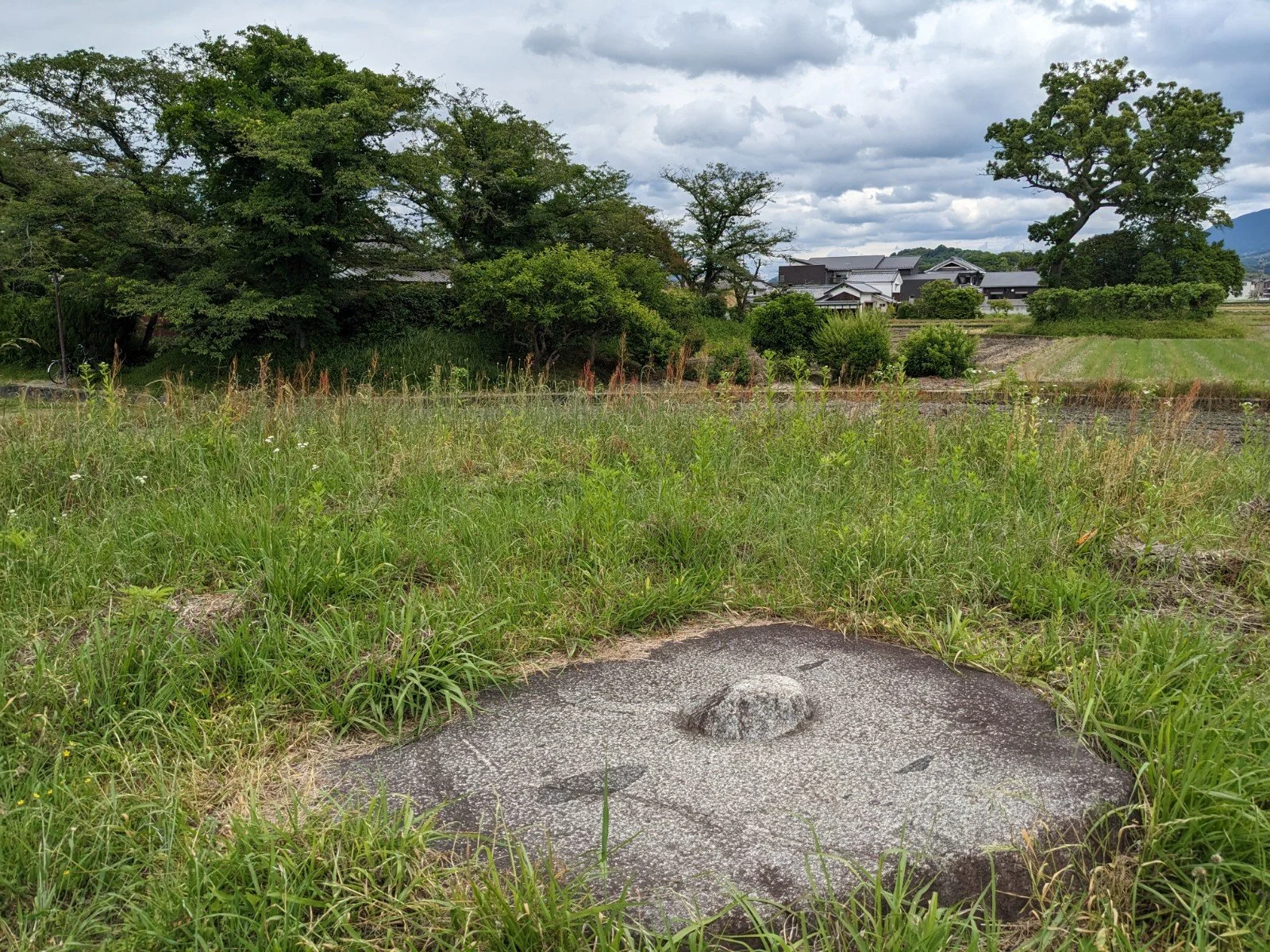
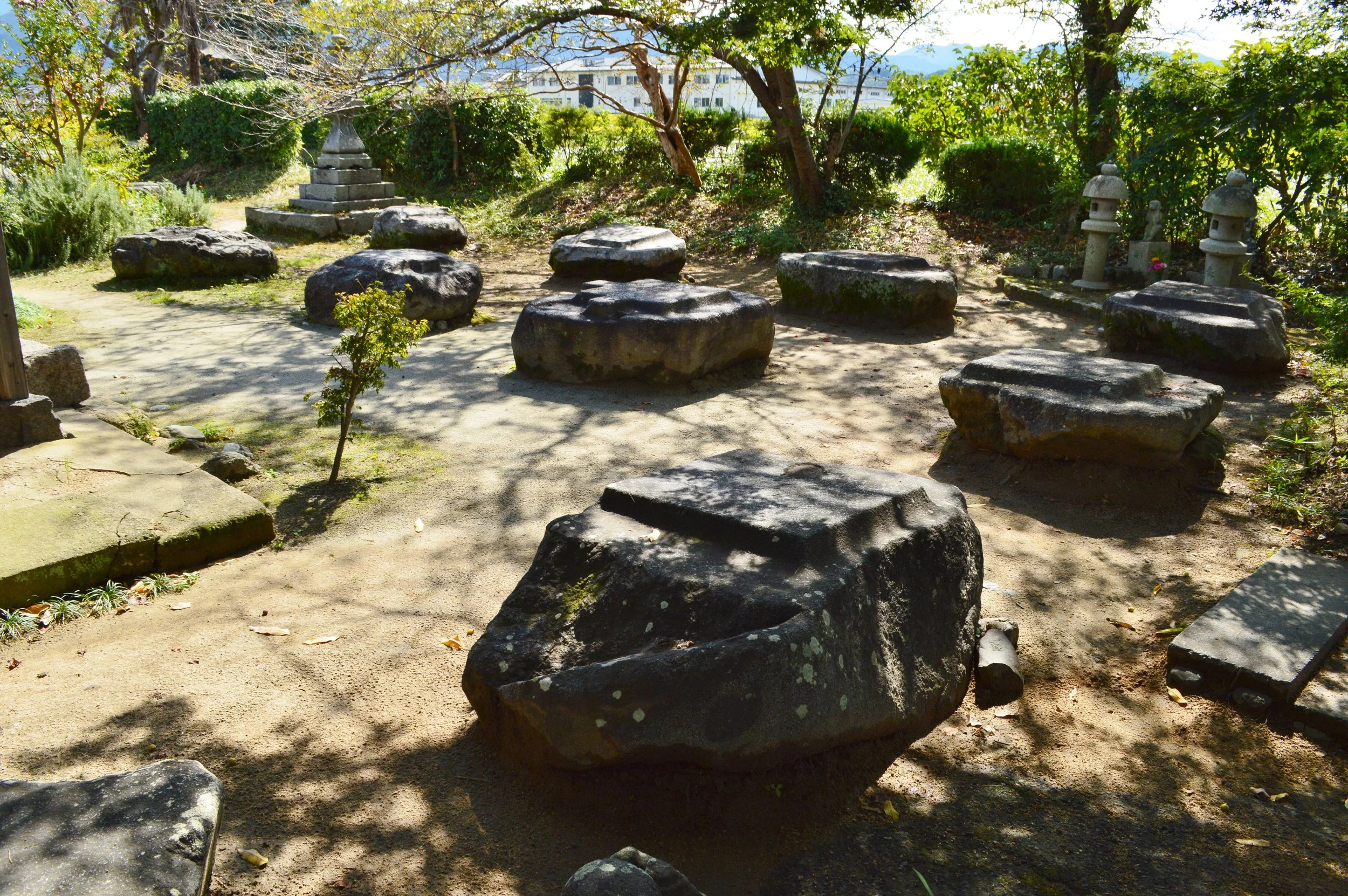
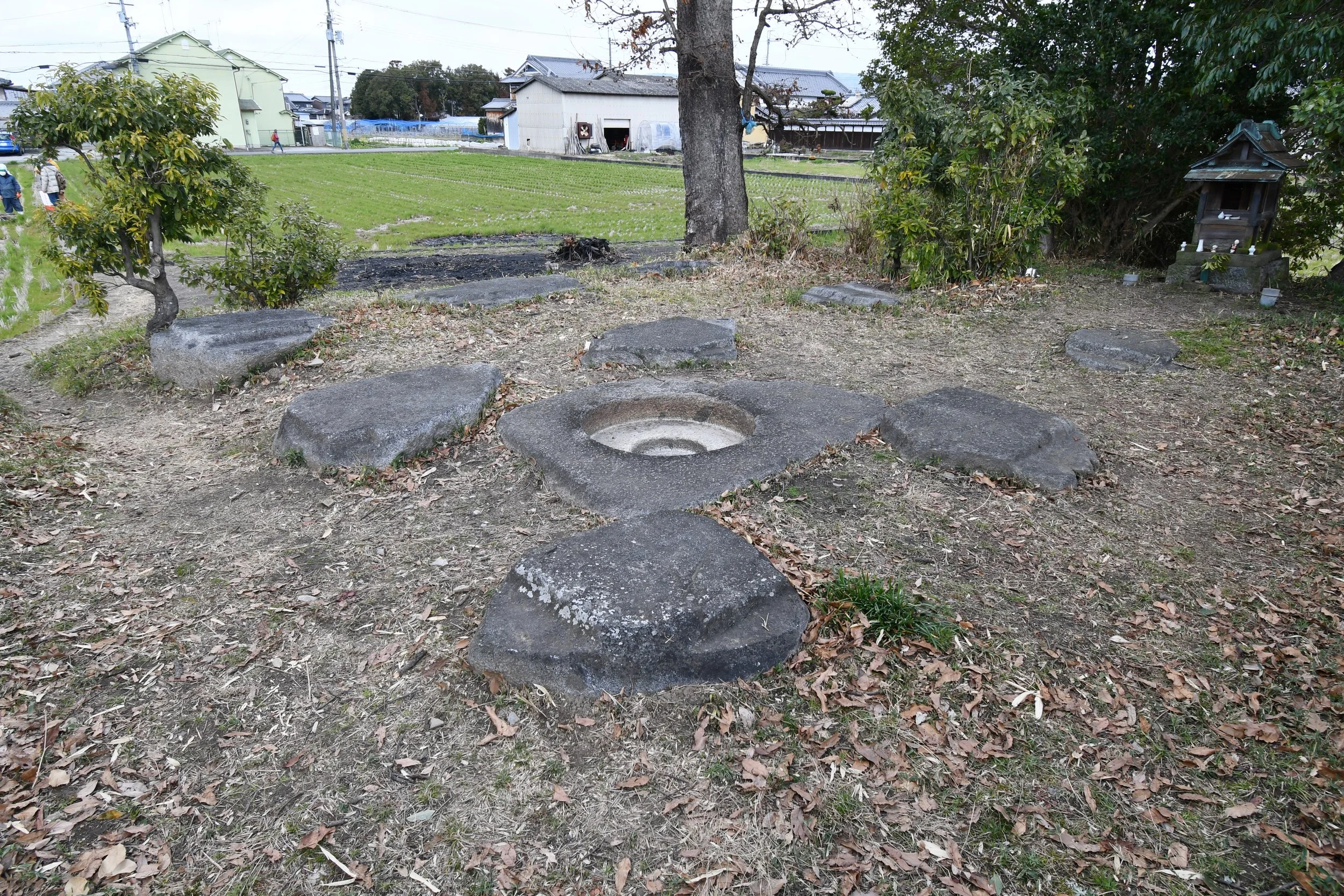
    You may be noticing a pattern, that the archery competition is listed as being held at either the south or west gates.  The south gate probably refers to the main gate of the later Okamoto—aka the Kiyomihara—palace.  The West gate refers to the west gate of the Ebinoko enclosure.   We talked about these and the general layout of the palace back in Episode 134, and you can check out that podcast blog post for some images of what things looked like, as well. 

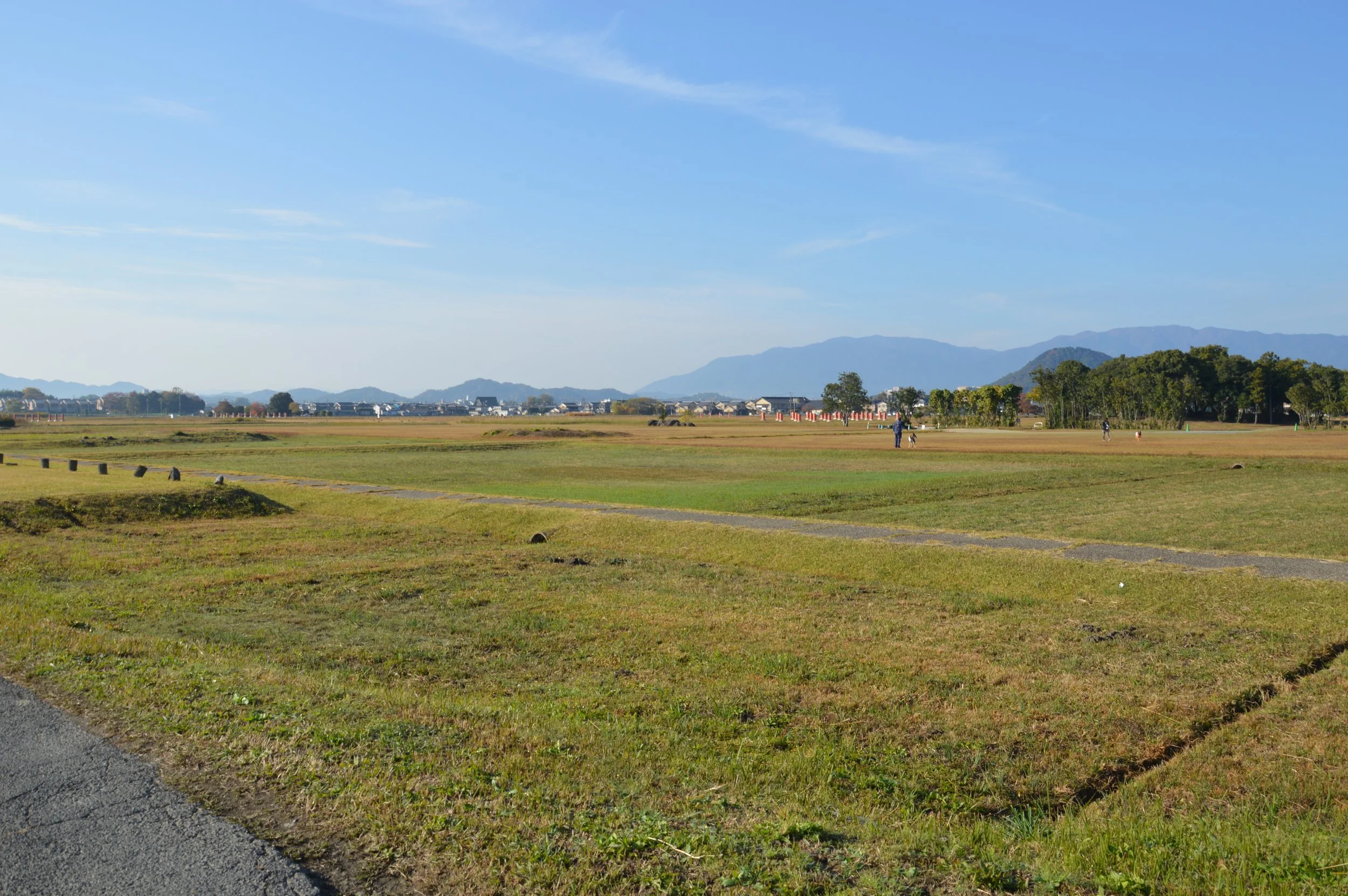
    These gates were on the north and east sides of a large, rectangular courtyard, which was likely the actual event location.  So it isn’t as if these were separate areas, just a difference of where things were set up in what was otherwise the same relative space.

    The following year, 681, we see similar ceremonies.  We see offerings made to the kami of Heaven and Earth, and we once again see a note about various functionaries paying their respects at court.  Even though this wasn’t mentioned every year, it could have been an annual thing and just wasn’t always recorded so the Chroniclers just wrote down what they had records for.  There are certainly other things we don’t necessarily witness in the records, such as the annual promotions and promulgations.  We see irregular promotions, of course, such as on someone’s passing, but the regular administration of the government and promotions of people to new positions is not something we really see regularly documented, since it doesn’t really shed much light on the sovereign and the royal household.  And so we sometimes see things if they get mentioned, but otherwise we only see glimpses.  That would change as records became more administrative and the histories were more about simply recording what was happening—though still from a particular angle.  At this point, however, we aren’t dealing with a single court record, but rather with numerous records, stories, and recollections.

     That same year, 681, we also see another banquet, with Ohoama situated in the Mukai no Kodono, while the Princes of the Blood and non-royal Princes were both introduced into the inner reception chamber.  Ministers attended in the outer reception chamber.  They all received sake and musical performances, and rank advancements were given out.  Kusakabe no Kihi no Ohogata was graduated from the rank of Upper Daisen to Lower Daikin, and given the title of Naniwa no Muraji.  A few days later, Sakahibe no Muraji no Iwazumi was granted a fief with 60 horses and received presents of coarse silk, floss silk, cloth, and one hundred mattocks—the last one being a rather interesting gift, I have to admit.  Of course, in true Chronicles fashion, we have no idea why these gifts were made—we don’t even have another reference to Iwazumi around there, but he must have done something.

    We are later told that there was the annual archery shoot, and then a decree, possibly unrelated to New Years, that the various provinces were ordered to repair the shrines to the kami of heaven and earth.

    The year 682 is an anomaly.  There is no mention of a banquet, nor of an archery tournament.  I wonder if this may have to do with some of the sad events of that first month.  While it started fine—Toneri no Miyatsuko no Nukamushi was raised from Daisen to Lower Shoukin—we are told that on the 18th, Lady Higami, one of Ohoama’s consorts, died in the palace.  The next day there was an earthquake, and she was buried on the 27th.  A prominent illness and death may have put a pall on the ceremonies, and could explain why we don’t see any mention of them for that year.

    It is also possible that some of this New Year tradition had become so routine that people were no longer commenting on it, and therefore the Chroniclers weren’t including references to it.

    The following year, in 683, we again see the functionaries paying their respects.  We also see the presentation of a three legged sparrow by the Viceroy of Tsukushi, Tajihi no Mabito no Shima, along with others.  A three legged sparrow would have been something: it is reminiscent of the three legged crow, often depicted in the sun.  It is unclear if it was still alive, but that wasn’t the point.  They invited the Princes of the Blood down to the Ministers to great hall, the Daigokuden, for a banquet, where the three legged sparrow was displayed.

    . 

    Later that month, Ohoama issued a decree in regards to all of the auspicious omens and made presents to everyone, from Shouken rank upwards.  There was also a general amnesty—all crimes were pardoned, from capital offenses on down, and all forced labor was remitted, so that people didn’t have to provide the normal service.  The phrasing for this particular entry is intriguing.  Ohoama is mentioned as Yamato Neko Sumera no Mikoto and is specifically called a “God Incarnate”.  This is one of the rare times that we see the Chronicles explicitly call out the sovereign as a living deity.  Of course, they trace the royal lineage back to Amaterasu, but there isn’t a lot suggesting that the sovereign is necessarily a deity.

    And in reality, this was probably something that was more honorific than anything else.  Heck, at times in Japanese history we would see sovereigns selling their calligraphy to help keep the royal palace funded while warriors went around actually being in charge of things.  However, this divine language did show up in the 19th and 20th century, especially as the Tennou, now called Emperor in English terminology, once again was recognized as the Head of State, and people would actually pray to him.  Not necessarily like praying at a shrine, but out of respect.  And remember, a lot of time the Tennou was kept out of sight of regular people and hidden, much like the way that the kami were treated.  The concept of the Emperor’s divinity was very much tied up in the elevation of the State and the general sense of Nationalism that had gripped Japan in the early half of the 20th century.  And so the allies quite explicitly had Emperor Showa renounce his divinity after Japan  World War II.

    Those studying Japanese history have probably heard of this concept, and so it is interesting to see evidence of it here, as well as the nature of the royal house, where the sovereign is kept at a distance from those of lower rank, unless they are directly serving him.  But it was not as though the sovereign was a god in the sense of being all powerful.  Even if he were considered a living, visible kami, the kami were not omnipotent, and there was no getting over the fact that our particular sovereign, Ohoama, was getting older.  Only a year or so earlier, he had suffered a rather bad illness, so he clearly was not invincible.  And it is of course possible that this language was simply royal exaggeration, rather than any attempt to define the sovereign as something more than he was.  Still, that concept would continue to play a part throughout Japanese history.

    The same day in 683 that Ohoama issued the pardons, we are told that there was a special performance at the Woharida Court of dance and music from Goguryeo, Baekje, and Silla—the “Three Countries” of the Korean peninsula, even if only one of them was still going strong.  The Woharida palace is thought to have been north, along the banks of the Asuka River.  It may have been moved over time—there appears to have been a palace in the Furumiya area, near Toyoura, but there is also evidence of a palace by a shared name over by Ikazuchi-no-oka, on the other side of the river.  Excavations at Ikazuchi no oka revealed pottery with the name of the palace, suggesting that this was the site, but even then, that pottery was from the later Tempyo era.  Regardless, it seems that the Asuka valley was just chock full of palaces, new and old, though the older ones were not as regularly used for government functions, one assumes.

    The following year, 684, we again get told about the annual archery shoot.  It took place in the Eastern court this time, with Ministers in attendance.  Apparently they had men skilled in archery shooting alongside palace attendants and little people—the word used in Japanese is “Shuju” or “Hikihito”.  This word is often translated as “dwarf”; it appears to be a derogatory term for anyone considered short of stature, though it is also used to refer more generally to those seen as either lacking wit or to actors and performers.

    This isn’t the first time we see the term.  Back in 675, about 9 years prior, Ohoama had sent orders to a number of regions near the capital, from Awaji to Tamba, to Afumi and to Mino and Wohari, among others, to send as tribute common people who could sing, shuju—or dwarfs—and jugglers.  More generally they seem to be referring to entertainers, and it strikes me that could be what is meant here.  Either way, the entertainment industry was hardly a lucrative one, and we can see that performers are almost more of a commodity, to be “paid” as tribute, rather than a professional who is “hired” to work.  I suspect that, as in many other times and places, individuals who were shorter than average often found work as entertainers in this sense—whether they wished it or not.

    The year 685 we don’t see any mention of archery, though it probably still happened.  Instead the Chronicles focus on the various government officials paying their respects to their sovereign.  The rest of the entries for the month are largely concerned with changes to the rank system as of that year.

    The year 686, we get the last records of various new years festivals—four months later, the sovereign would grow terribly ill, and he would eventually pass away later that year.  However, for those still celebrating the new year in 686, that was all in the future.

    The last year of Ohoama’s reign started out relatively like others. Ohoama went to the Daigokuden, the Great Hall of Audience, and gave a banquet to the Princes and High Officials.  There he decided to have something of a riddle challenge.  He would ask riddles, and then offer prizes for the correct answer.

    And no, unfortunately we don’t have any of the riddles, at least that I have seen.  Aston calls these “conundrums” and notes that they are specifically nonsensical questions, and provides examples such as “Why does a horse, after a rapid run, listen to the earth? Why does a dog, when he goes slowly, raise his leg?” 

    Ohoama’s son, Prince Takechi, answered correctly, and so did Prince Ise.  Their prizes differed in content, but in both cases were pretty extensive.  The winners received ceremonial robes, brocade or purple hakama, numerous bolts of coarse silk, many pounds of thread, hundreds of pounds of flossed Silk, and hundreds of bolts of cloth. I think that makes it quite a bit more lucrative than any of the quiz nights I’ve ever been to.

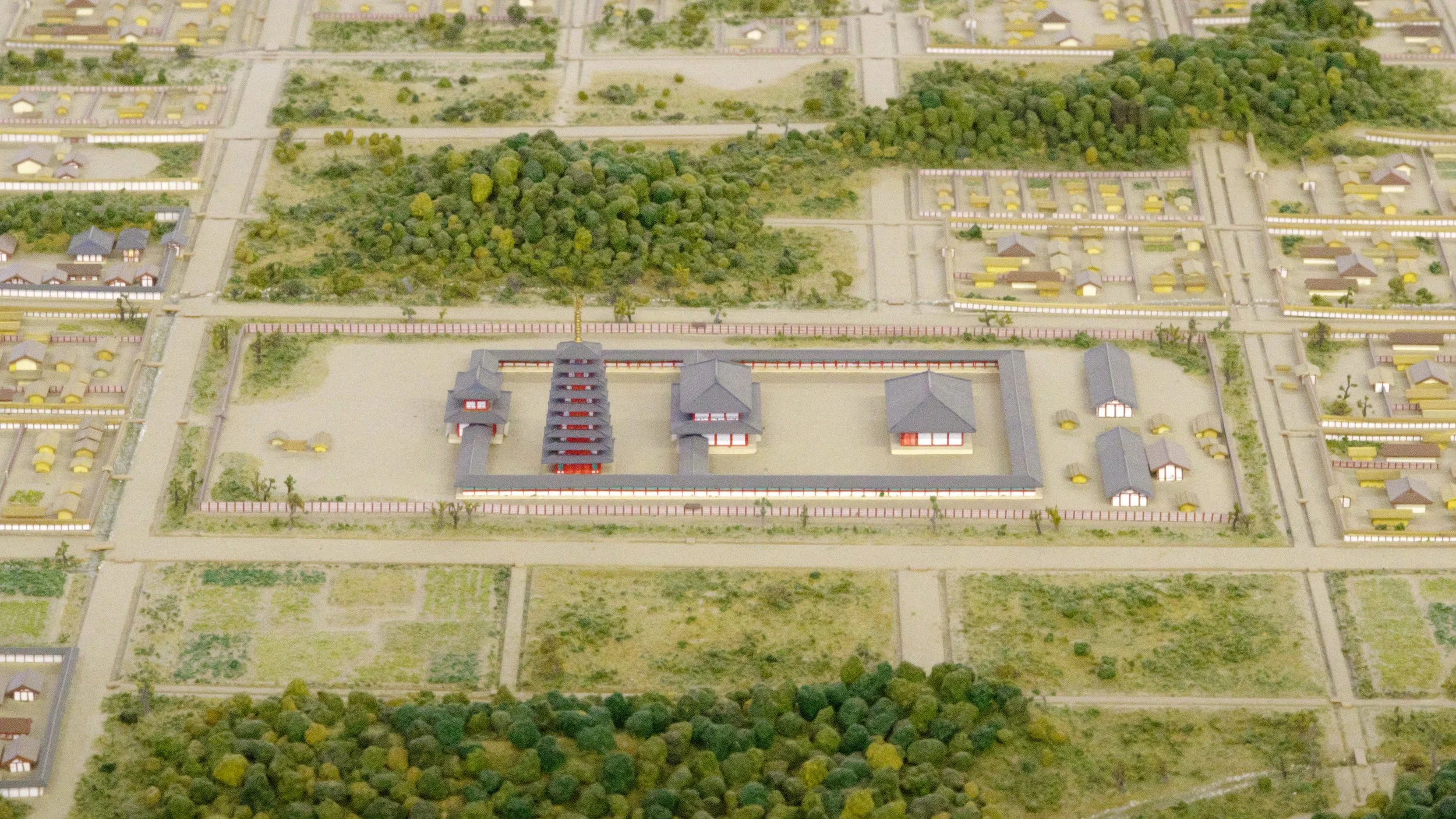
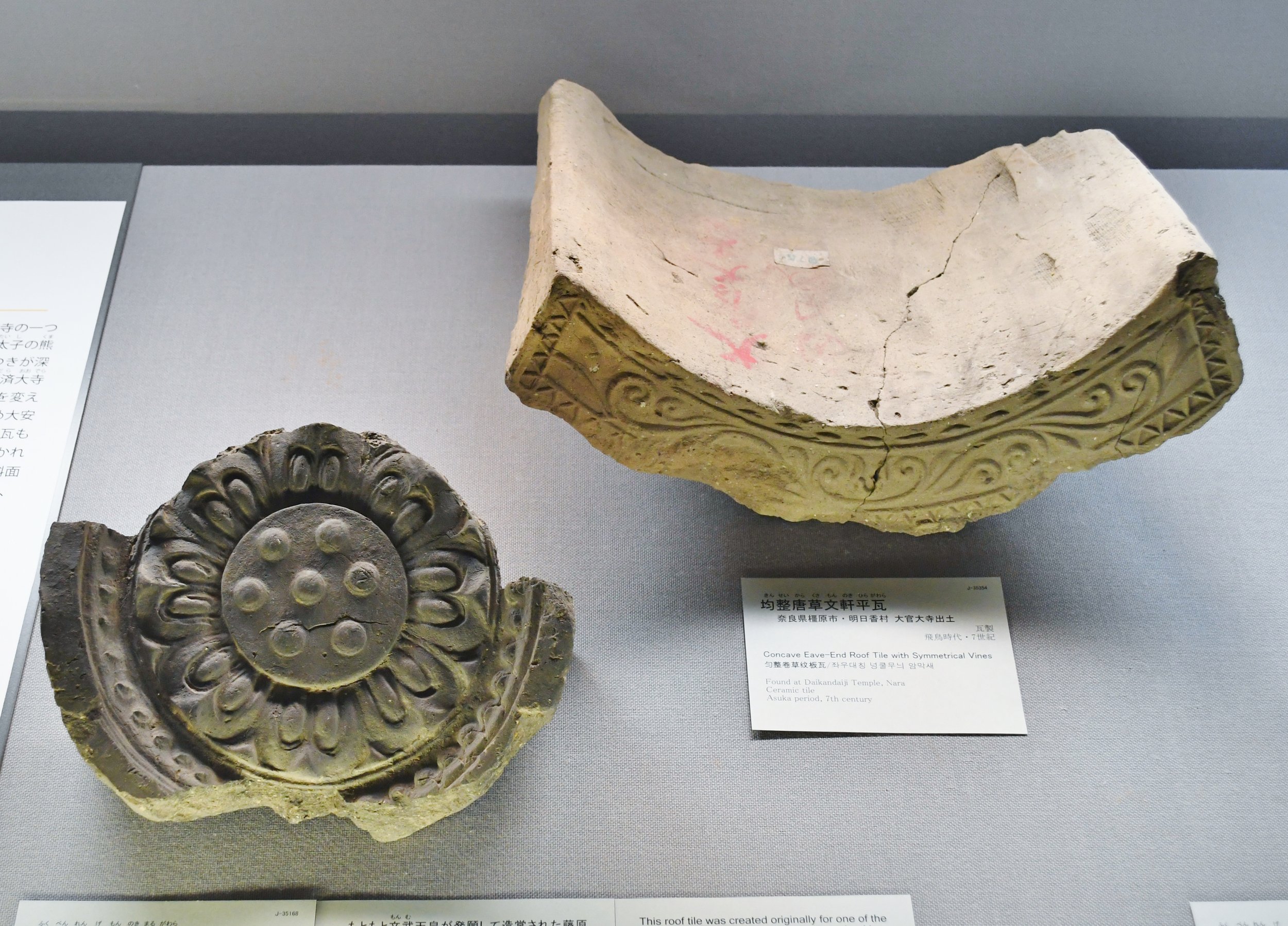
    Later that month, there was another banquet, this time for nine Buddhist monks of Daikan-daiji. Besides its status as a national temple, this may have also been related to the year before, when Ohoama had fallen ill, and prayers had been offered at Daikandaiji for his recovery.  The courthad likewise provided gifts to the temple in the last month of the previous year, and then, at the banquet, gave to the attending monks silk and cloth, based on their rank.

    But that wasn’t the end of the gifts.  The following day the Princes and High Officials all received upper garments and hakama—likely referring to official garments—each getting one suit, each. Then, on the 13th day of the new year, the court invited 20 exceptional individuals to a banquet.  These were talented people, professors, divination specialists, and physicians.  They were also wined and dined and presented various gifts. On the 16th day, the Princes and High Officials were then invited to a banquet in the Daigokuden.  They were given gifts of silk and cloth, based on their rank.  Then they held another riddle competition, with correct answers rewarded with gifts of coarse and flossed silk.

    This was only a short time after disaster had struck, though a bit removed—two days earlier, in the evening, the royal storehouse at Naniwa had caught fire, eventually burning the entire Toyosaki palace complex to the ground.  Some claimed that it was actually started at a private residence,  that of Ato no Muraji no Kusuri, and then spread to the Palace.  In the end, only the military storehouse was spared.

    This would have been quite the tragedy for the government, but it did not halt the festivities happening down in Asuka.  The Naniwa Palace appears to have been a major government center for the administration of the state, but it was not the royal court which had been in Asuka for over a decade.  Indeed, I imagine that the news probably reached Asuka around the time of the Banquet itself.

    And yet, rather than putting a damper on the festivities, they continued another couple of days – presumably everything was already prepared and there was no point in canceling.  On the 17th, the court sponsored a banquet in the rear palace, presumably for the Queen and members of the imperial family.  Then the following day there was a great revel at the palace.  Ohoama took his place in front of the royal muro and made presents to performers, as well as to the singers.  As before everything varied according to rank.

    Asuka wasn’t the only place to get in on the festivities.  The same month, the court also sponsored a banquet for the Silla envoys in Tsukushi, sending Prince Kawachi and others.

    Regrettably, that would be the last new year that Ohoama would see.  In the fifth month, he grew ill, and what we see in the Chronicles after that is an interesting look into how people of the time dealt with sickness.

    First, the court had the Sutra of Yakushi expounded at Kawaradera and held a Buddhist retreat in the palace, inviting monks to come and expound Buddhist teachings.  Yakushi, or Yakushi Nyorai—Bhaisajyaguru in Sanskrit—was known as the Medicine Buddha, and his name in Sinitic characters was basically “Master of Medicine”.  It is said that he was responsible for the Eastern Pure Land, and that, as a Bodhisattva, he had made 12 great vows to cure the illnesses of all living beings in the world.  For that reason, Yakushi Nyorai was often called upon to cure illness. 

    In fact, six years earlier, when the Queen, Uno no Sarara Hime, had taken ill, Ohoama erected an entire temple to Yakushi Nyorai, known as Yakushiji.  He then had 100 people take vows as priests, and they attributed her recovery to this effort.

    In this case, however, it seems that it didn’t have quite such an effect, and Ohoama remained under the weather.  We are also told that the court sent Palace Attendants, the Oho-toneri, to clean the pagodas of various temples and that a general amnesty was announced for all under heaven, emptying the prisons.  All of this points to the idea of making merit in the hope of bringing good karma, and thus healing.

    But the following month, Ohoama was still ill.  Divination was performed by the Onmyoji, the court diviners, and they claimed that there was a curse from Kusanagi, the sword that is considered one of the three main royal symbols.  This is the sword that was said to have been found by Susanowo in the tale of Yamata no Worochi, and which gained its name, Kusanagi, when used by Yamato Takeru, cutting down the grass to save him when his enemies tried to catch him by setting fire to the field where he was hunting.  For more on that, check out Episodes 34 and 35.

    Given the importance of Kusanagi, I suspect that the idea of destroying it to remove the curse was out of the question, and so it was sent to Atsuta Shrine, where it was enshrined and would largely stay except when needed for enthronement ceremonies. 

    And yet, even after the sword was taken away, the illness remained.  Six days later, on the 16th day of the 6th month, the court sent Prince Ise and officials to Asukadera and asked the monks there to make and oath with the Buddha to make Ohoama whole through the power of the Three Treasures of Buddhism.   For their work, the three Buddhist Officers, the Master of the Law, and the Upadhyaya and temple directors, as well as those monks with the rank of “master” each received a donation of one robe and one cover, or “Ohi”.

    Three days later, the court ordered the hundred officials to go to Kawaradera and perfom the ceremony of lighting lanterns and giving offerings to Buddha.  Then they held a great feast and offered repentance for their transgressions.  All of this sounds like a continued attempt to make merit for the state, and thus for Ohoama.

    We then see the court granting the monks Hounin and Gishou 30 stipend-households to provide for them in their old age, which may be more merit-making, or possibly was related to some of the many other activities so far.  There are a few issues with this entry, and Aston and Bentley don’t seem to agree on the actual date.  Bentley has it on the 28th, but that seems odd as it comes before the entry for the 22nd of the same month.  Aston has it as the 20th, but then claimes that there is something odd about the date of the 22nd.

    On the 22nd, we are simply told that the district kitchen of Nabari caught fire.  Aston notes that this would have been the official government arm in the district gathering food to supply the royal household—rather than being a kitchen in terms of a place to prepare food.

    Merit-making continued into the 7th month.  We see the Soujou and Soudzu, the primary and secondary prelates of the Asukadera, performing ritual repentance.  The following day there is another general amnesty, and Aston specifically mentions performing a Oho-harai, or cleansing.

    The day after taxes were halved from the provinces and corvee labor with local conscripted labor was exempted for the year.  Then we see the court presenting paper offerings to the Kunikasu Kami in Ki provinces, as well as the four shrines in Asuka and the Great Suminoe—aka Sumiyoshi—shrine.

    On the 8th day of the 7th month, 100 monks were invited to the court to read the Golden Light Sutra—Konkoymyou kyou.  And on the 15th there was another court issued amnesty.

    Despite all of these attempts to make merit and intercede with the Buddha or with various kami, Ohoama’s illness continued.  We see that the court issued a decree that all things that should occur, great or small, should be reported to the queen and the crown prince—presumably because Ohoama was no longer in a state to be able to do so.

    Continuing with their efforts, the court declared that destitute commoners who had been forced to borrow rice seed or money before the 12th month of the previous year would be exempted from repayment.  And then the court changed the name of the year to Akami-tori, or Shuuchou.  They also renamed the palace in Asuka to “Kiyomihara”—again, go check Episode 134 for more on the palace.  “Shuuchou” is the Red Bird, likely referring to Suzaku, though Aston also points out that “Asuka” here is given as “flying bird”, as well, and there had been numerous bird-related omens reported throughout the reign.

    Although these names would not have been used prior to this point—the 7th month of the final year of the reign—the Chroniclers applied the nengo, Shuuchou, to all of the entries for this year, and the name of the palace is often given as “Kiyomihara” is given to distinguish it from the Later Okamoto Palace, even though it was simply the latter palace with the addition of the Ebinoko enclosure.

    The changing of the era name was likely another attempt to change the seemingly inauspicious year, along with all of the merit-making that the court had been undergoing.

    And yet they kept going.

    The court selected 70 people who were diligent in keeping Buddhist laws and had them take the tonsure, and they sponsored a feast—or festival—in the Royal Muro of the Palace.

    At the same time the various princes had a statue of the Boddhisatva of Compassion, Kannon, made for the sovereign and had the Lotus sutra—the sutra where Kannon is first mentioned—read out at Daikandaiji.

    Kannon, or Avalokitesvara, was originally seen as a male Boddhisatva, but is often depicted as a woman.  They are also known as Guanyin, from which we get Kannon in Japanese.  Guanyin is also seen as Goddess of Mercy, and is one of the most popular figures across multiple sects of Buddhism and even outside of the Buddhist faith, where she is still seen as a goddess.  In this case, however, it seems clear that the princes were seeking compassion to relieve the sovereign of his affliction.

    And yet it persisted.

    They had 80 more people take the tonsure, and then 100 more men and women, placed 100 statues of the Boddhisatva, Kannon, in the palace, and then read out 200 volumes of the Lotus Sutra.

    And then they made prayers to the kami of Heaven and Earth.  And they dispatched Hata no Imiki no Iwakatsu to present paper offerings to the Tosa great shrine.  Nothing seemed to be working.

    In the 9th month, we see the royal princes and others, down to the various ministers, all gathered at Kawaradera making oaths for the health of the sovereigns.  This last ditch effort would go unrewarded.  Five days later, and Ohoama would pass away.  Of course, they couldn’t just say that he died:  The Chronicles actually say that he divinely departed.  After all, didn’t they call him an incarnate kami?

    Two days later, the court began the ritual of mourning, raising voices in lamentation, and setting up a temporary palace of interment in the courtyard, south of the palace.  Ohoama’s body was placed there some thirteen days later, and people mourned his passing.

    For the rituals, we see monks and nuns performing ritual lamentation in the courtyard between 3 and 5 am, around the time that court officials would normally be waiting at the gates.  Over the next several days, various ceremonies were held and eulogies given.  We are told that the court presented offerings of food for the dead for the first time, and over the next several days monks and nuns would offer their laments and then various individuals would provide their eulogies.  Finally, on the last day of the ninth month, the eulogies concluded with Nyang-u, a Baekje prince, who pronounced a eulogy on behalf of his father, and then the Miyatsuko of various provinces came and did likewise.  There were also performances of all manner of singing and dancing.

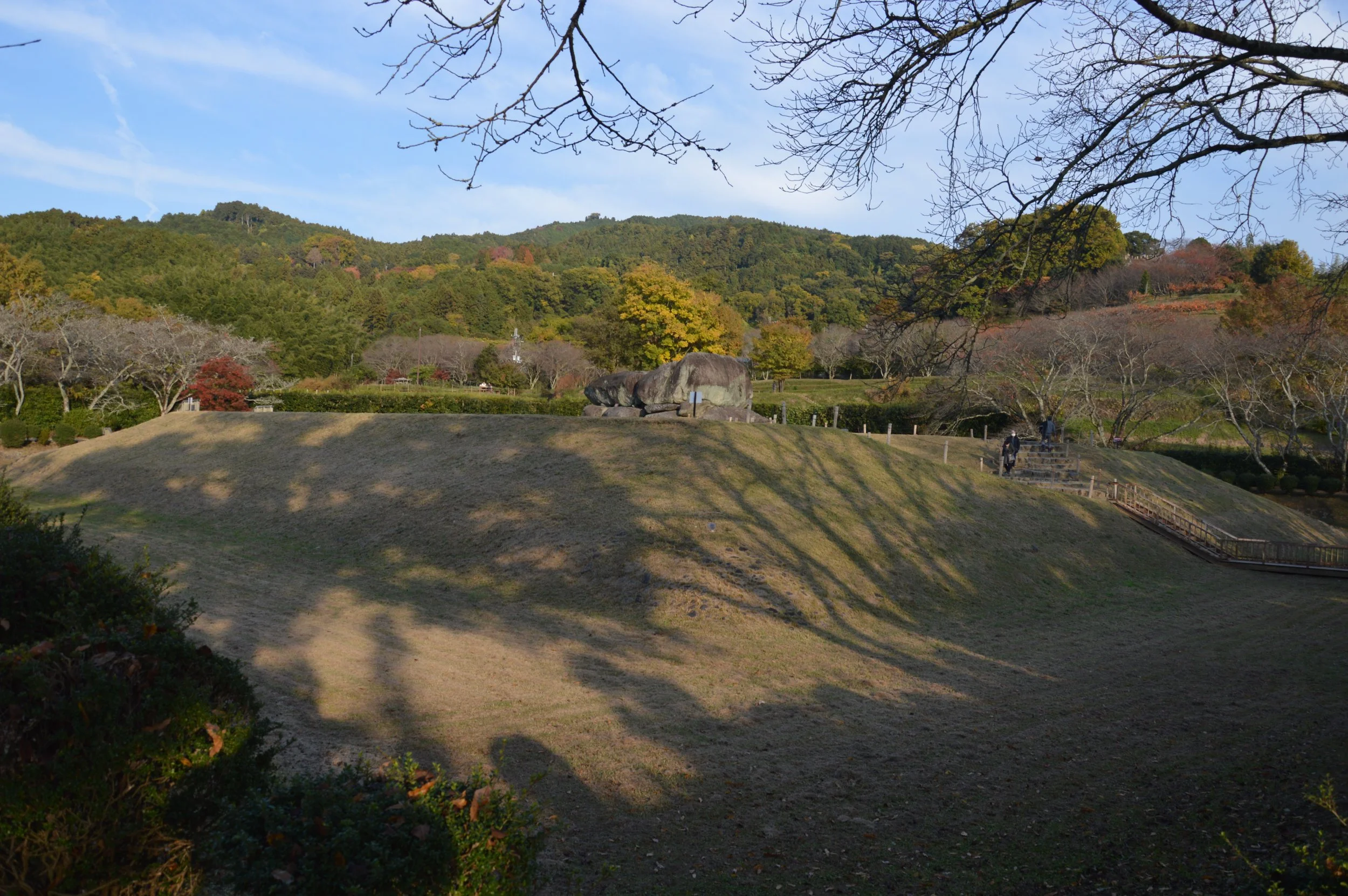
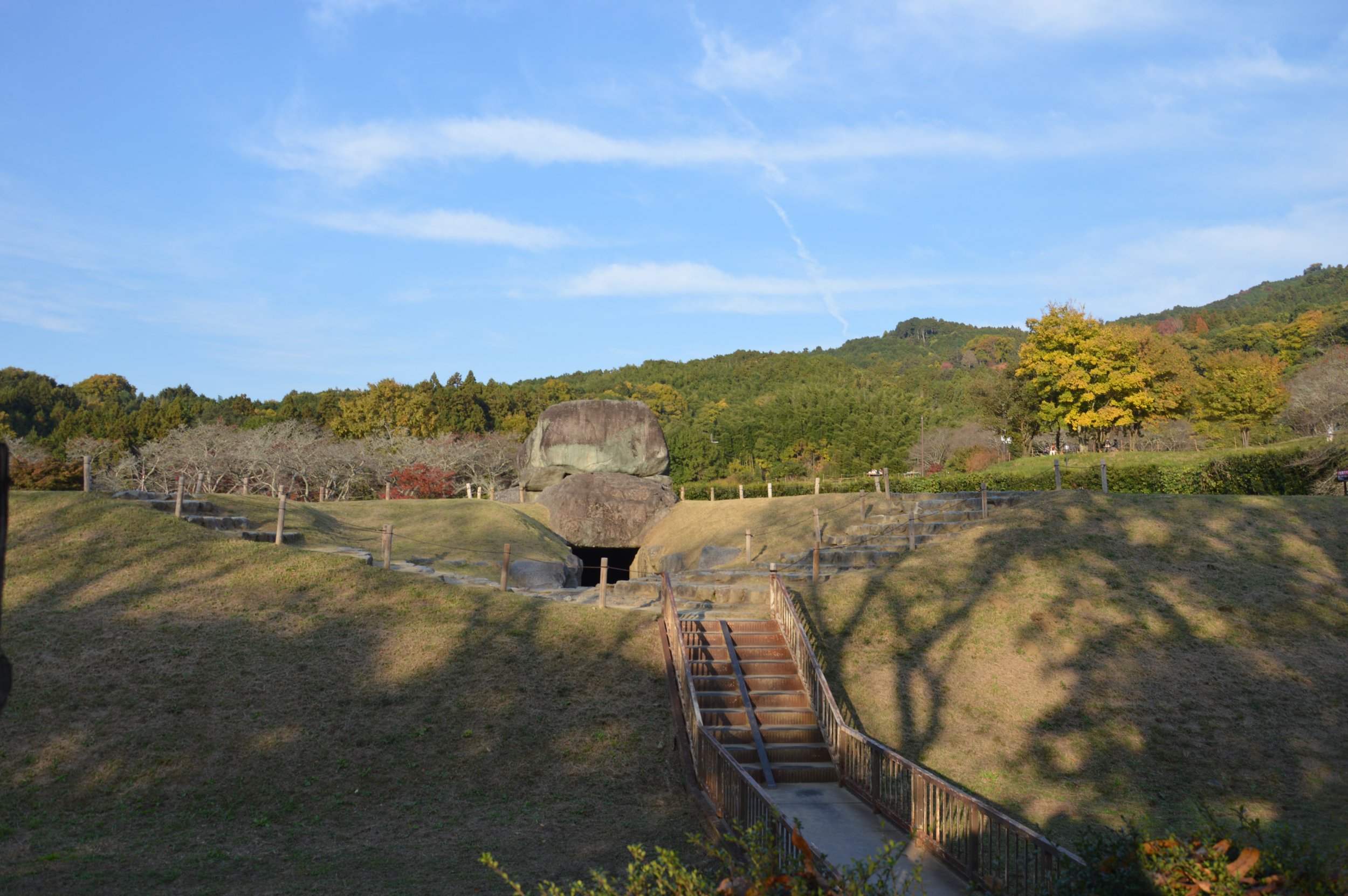
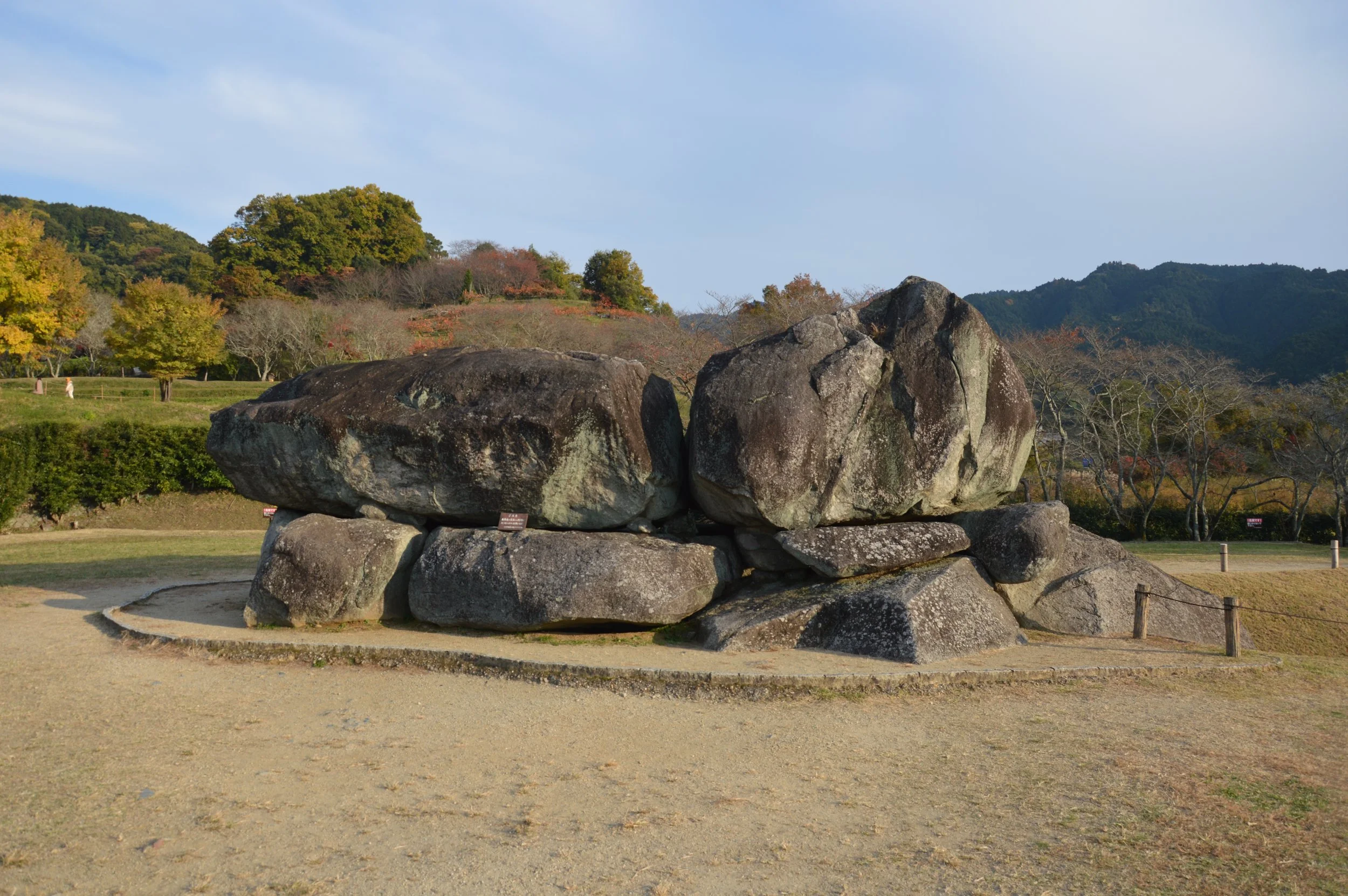
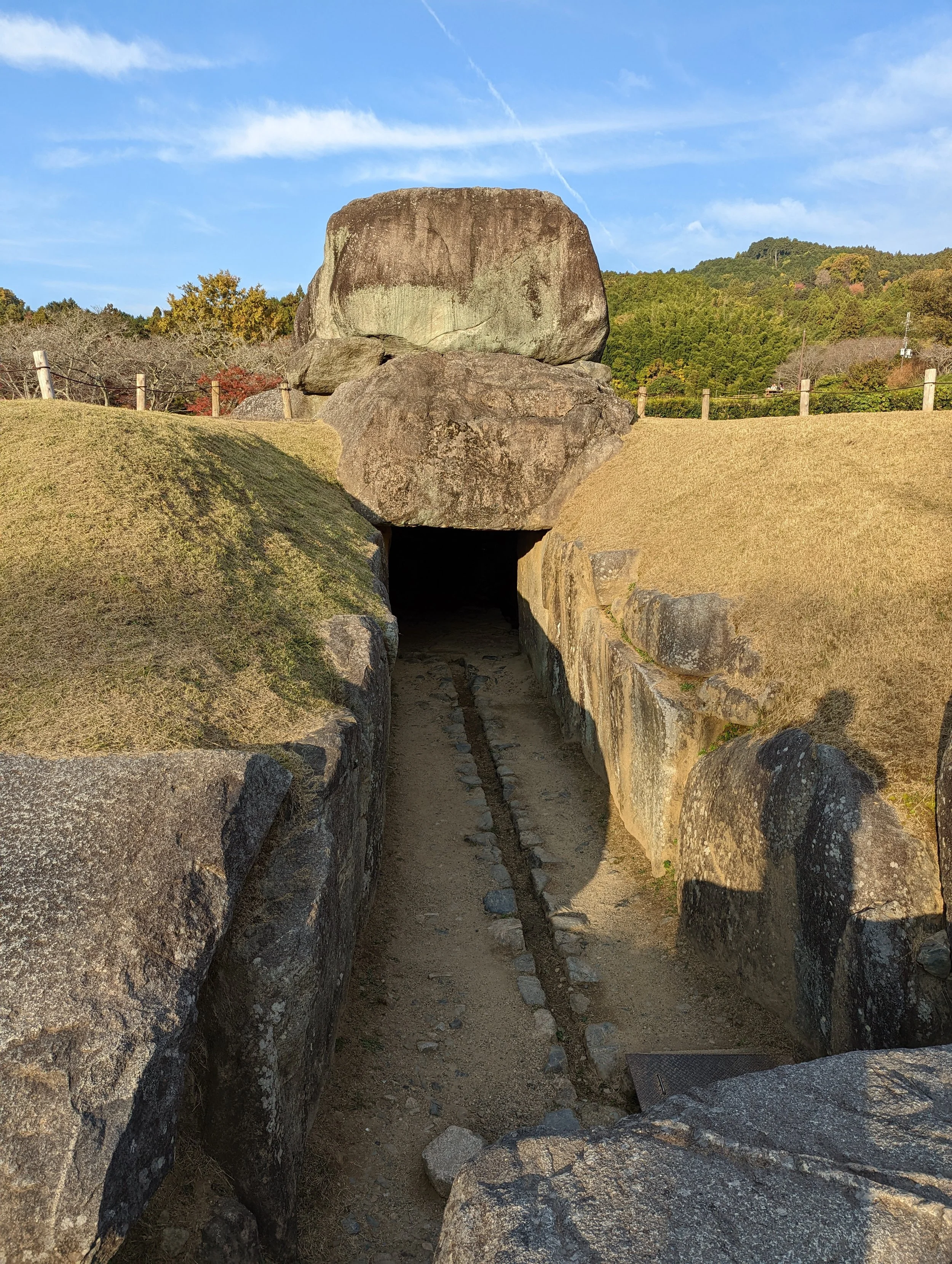
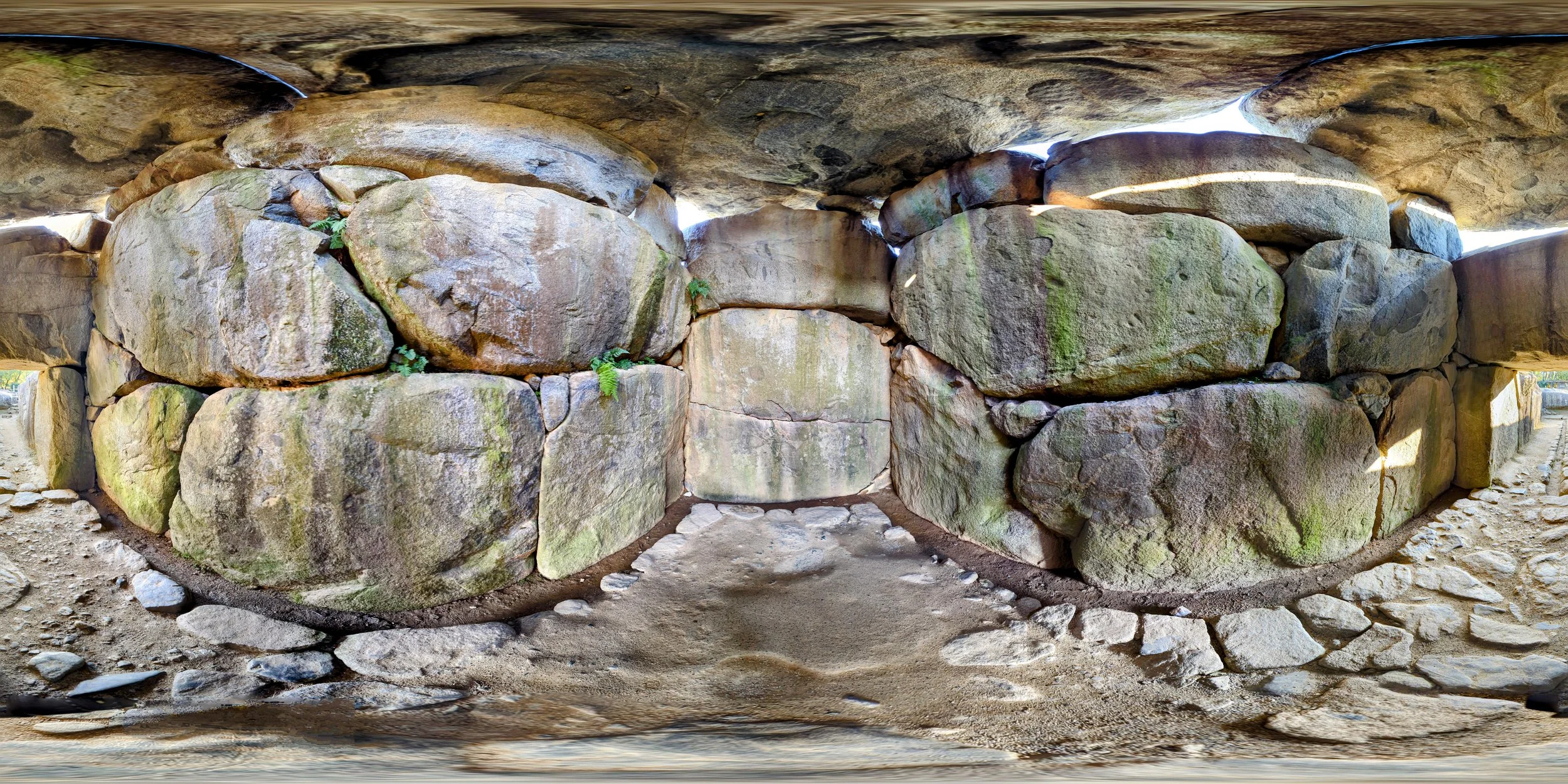
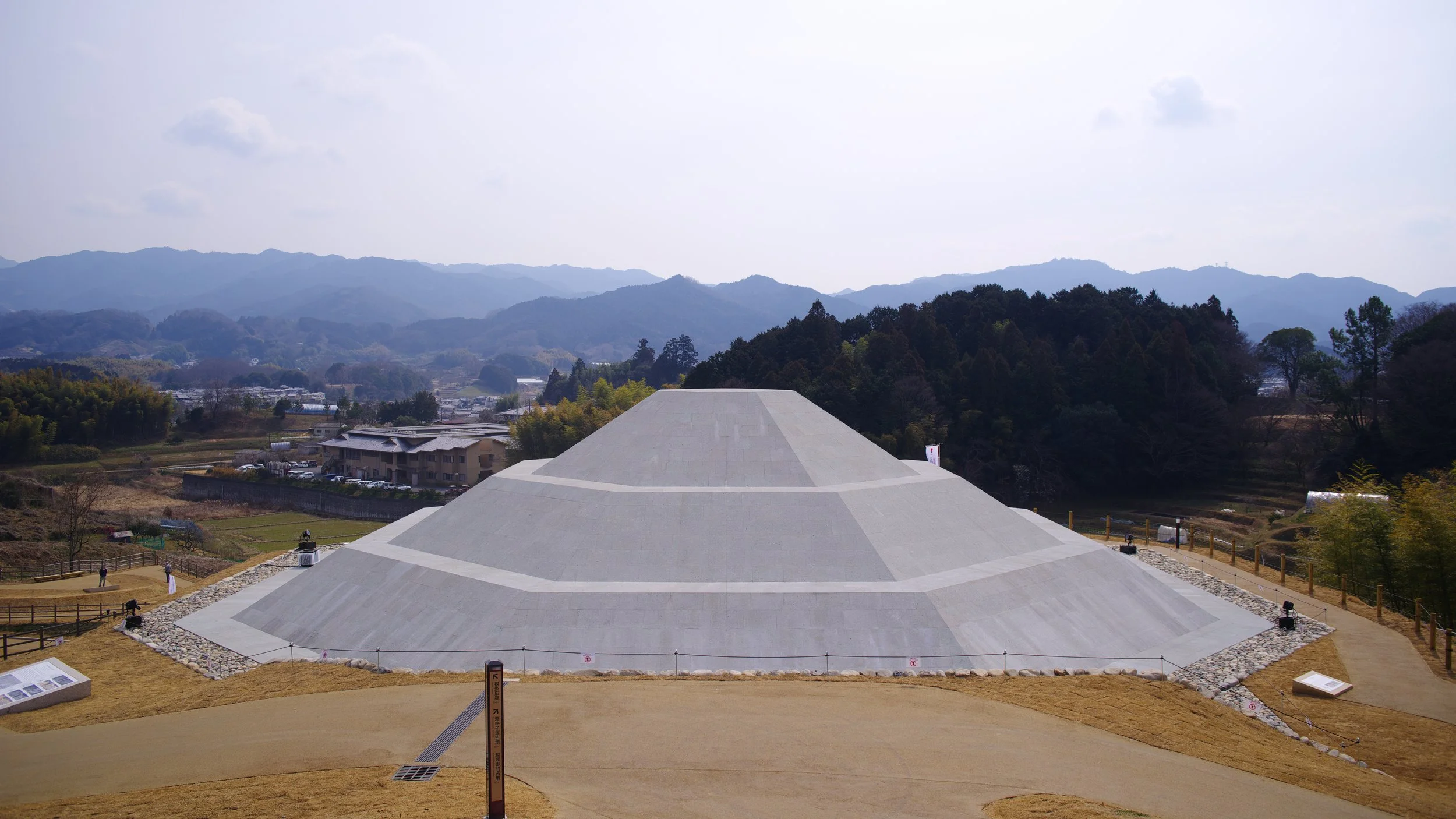
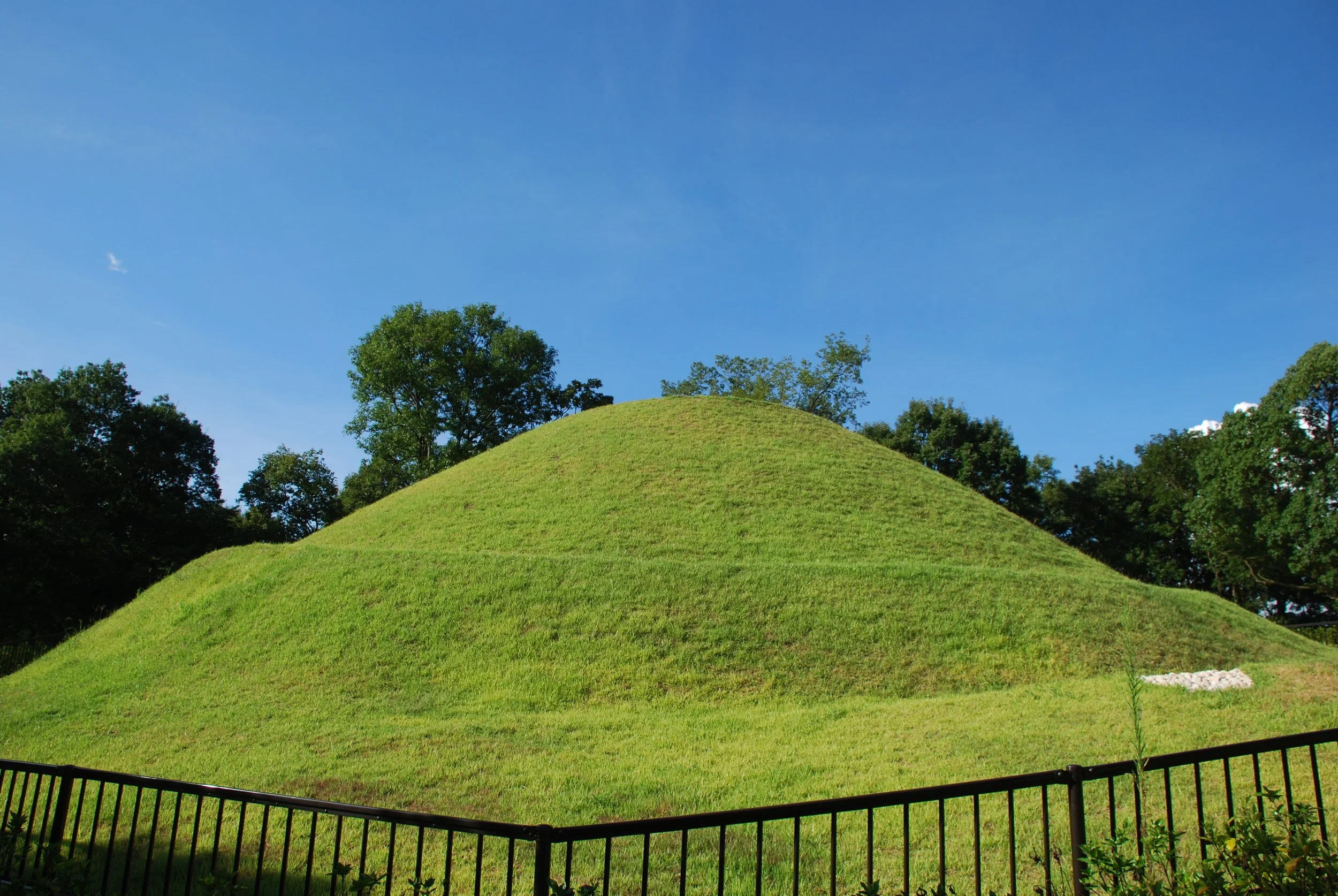
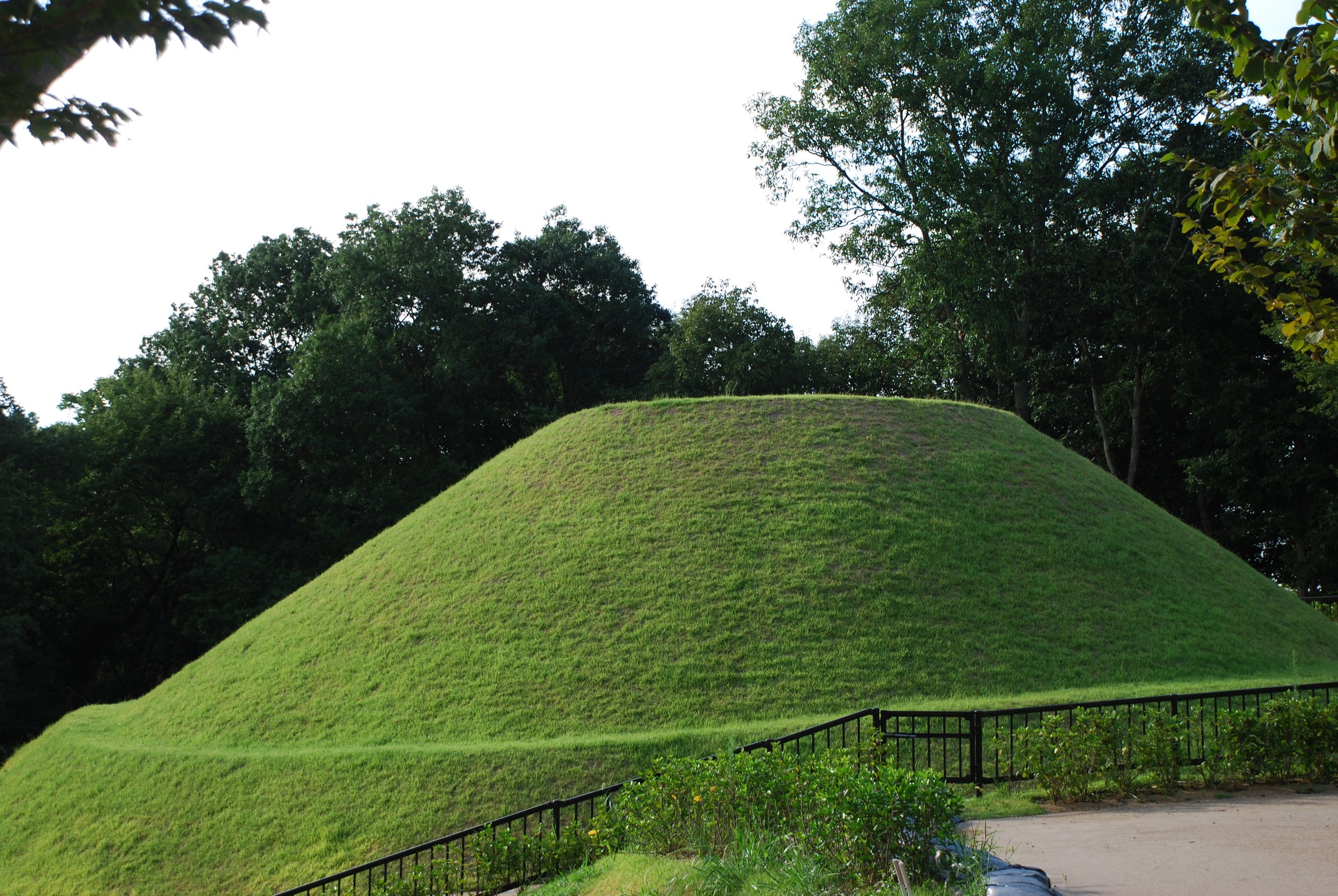
    With that, the reign of Ohoama would come to an end.  The government would continue under his wife, the Queen, and Crown Prince.  We’ll get into the succession in a later episode.  For now I’ll just say that he was eventually buried in a large tomb in the modern Noguchi area of Asuka, and you can still go see it.

    And while that does bring us to the end of the reign, we still have a few more things that I want to discuss.   This episode just seemed a good time to talk about all of the various new years ceremonies, and that seemed to lead naturally into the very last year, but there is still more to discuss.  For one thing, we still haven’t quite covered the spread of Buddhism and the changes in the structure.  There are also various laws and punishments that are worth covering.  Finally, there are the Chronicles themselves: we’ve talked about it all along, but the Nihon Shoki and the Kojiki are attributed to this era, as is the start of what would become the capital of Fujiwara-kyo—many works that Ohoama would not live to see to the end, but is largely held responsible for starting.

    But until then, if you like what we are doing, please tell your friends and feel free to rate us wherever you listen to podcasts.  If you feel the need to do more, and want to help us keep this going, we have information about how you can donate on Patreon or through our KoFi site, ko-fi.com/sengokudaimyo, or find the links over at our main website,  SengokuDaimyo.com/Podcast, where we will have some more discussion on topics from this episode.

    Also, feel free to reach out to our Sengoku Daimyo Facebook page.  You can also email us at the.sengoku.daimyo@gmail.com. 

    Thank you, also, to Ellen for their work editing the podcast.

    And that’s all for now.  Thank you again, and I’ll see you next episode on Sengoku Daimyo’s Chronicles of Japan.


References

  • Bentley, John R. (2025). Nihon Shoki: The Chronicles of Japan. ISBN 979-8-218634-67-4 pb

  • Suzuki, Hiroyuki (2010). 日本古代の弓矢行事 ~特に歩射行事に関して~ On the Shooting Ritual of Ancient Japan ~About Shooting Ritual where it walks~. https://static1.squarespace.com/static/58124ac8579fb3f8ea46dc1b/t/587c1e10e3df288ed10be9d9/1484529173995/2010_Suzuki.pdf

  • Aston, W. G. (1972). Nihongi, chronicles of Japan from the earliest times to A.D. 697. London: Allen & Unwin. ISBN0-80480984-4.

In Podcast Tags Yamato, Japan, Japanese History
Comment

New Year's Recap 2026

January 1, 2026 Joshua Badgley

Kinojo - The demon’s castle. Built in the 7th century in the land of Kibi (modern Okayama). While not mentioned in the record, it is the kind of Baekje style fortress that was being erected in Japan following the naval defeat at the Battle of Baekgang River. Photo of the modern reconstruction by author.

RSS
Previous Episodes
  • January 2026
  • December 2025
  • November 2025
  • October 2025
  • September 2025
  • August 2025
  • July 2025
  • June 2025
  • May 2025
  • April 2025
  • March 2025
  • February 2025
  • January 2025
  • December 2024
  • November 2024
  • October 2024
  • September 2024
  • August 2024
  • July 2024
  • June 2024
  • May 2024
  • April 2024
  • March 2024
  • February 2024
  • January 2024
  • December 2023
  • November 2023
  • October 2023
  • September 2023
  • August 2023
  • July 2023
  • June 2023
  • May 2023
  • April 2023
  • March 2023
  • February 2023
  • January 2023
  • December 2022
  • November 2022
  • October 2022
  • September 2022
  • August 2022
  • July 2022
  • June 2022
  • May 2022
  • April 2022
  • March 2022
  • February 2022
  • January 2022
  • December 2021
  • November 2021
  • October 2021
  • September 2021
  • August 2021
  • July 2021
  • June 2021
  • May 2021
  • April 2021
  • March 2021
  • February 2021
  • January 2021
  • December 2020
  • November 2020
  • October 2020
  • September 2020
  • August 2020
  • July 2020
  • June 2020
  • May 2020
  • April 2020
  • March 2020
  • February 2020
  • January 2020
  • December 2019
  • November 2019
  • October 2019
  • September 2019
Archives

Happy New Year!

Welcome to our 2026 recap. This episode we look back on the past year, but also try to make sure that we prepare for the next year. We’ll cover the big events and then go into some of the major themes that we’ve seen over the year. For that, we’ll also cover some of the previous history that has led up to the start of things this year.

This year we’ve covered the end of the reign of Takara Hime (Saimei Tennō), through the reigns of Naka no Ōe (Tenji Tennō) and into the reign of Ōama (Temmu Tennō)—not to mention the possible (if short) reign of Ōtomo (Kōbun Tennō). We saw an expanded contact with the continent—and an expanded international world, in general. We saw students from the archipelago studying with the famous monk Xuanzang, who traveled all the way to India.

But then war came. Iki no Hakatoko and others in the same embassy were held under house arrest in the Tang court while they attacked Yamato’s ally, Baekje. They deposed king Wicha of Baekje, and Yamato was drawn into the conflict. At the Battle of Baekgang river, Yamato forces suffered a tremendous defeat. Yamato and those Baekje allies that could join them fled to the archipelago, where the government built fortresses and set up a defensive posture should the Tang and Silla attack them next.

But the attack never came. The capital was moved to Afumi, but that was anything but a popular move. After the Jinshin War, which put Ōama on the throne, they moved back to Asuka. There, Ōama had been continuing the work of his brother, shaping the Ritsuryō state.

In the coming year we’ll see through the end of Ōama’s reign as we continue to march towards the end of the Nihon Shoki. After that, we’ll have to see, but I expect we’ll want to talk about the Nihon Shoki some and then look at the Shoku Nihongi—the continuing court chronicles.

  • Shinnen Akemashite!  Happy New Year and Welcome to Sengoku Daimyo’s Chronicles of Japan.  My name is Joshua, and this is the New Year’s Recap episode for 2026!

    Here’s hoping that everyone has had a great new year.  I’m not sure about everyone else, but this past year seemed particularly long, and yet what we have covered on this podcast is only a relatively small part of the history of Yamato, so let’s get into it.

    And in case anyone is wondering, this is covering episodes 118 to episode 140, though we will likely dip a little bit into the past as well, just to ensure we have context, where needed.

    We started last year in the 650’s, in the second reign of Takara Hime, where we know her as Saimei Tennou.  We discussed Yamato’s place in the larger world, especially in connection with the Silk Road.  In fact, we spent several episodes focused on the wider world, which Yamato was learning about through students, ambassadors, and visitors from far off lands.  Of course, that all came to a head at the Battle of Baekgang, when Yamato and their ally, Baekje, were defeated by a coalition of Tang and Silla forces, putting an end to the Kingdom of Baekje and driving Yamato to fall back and reinforce the archipelago.

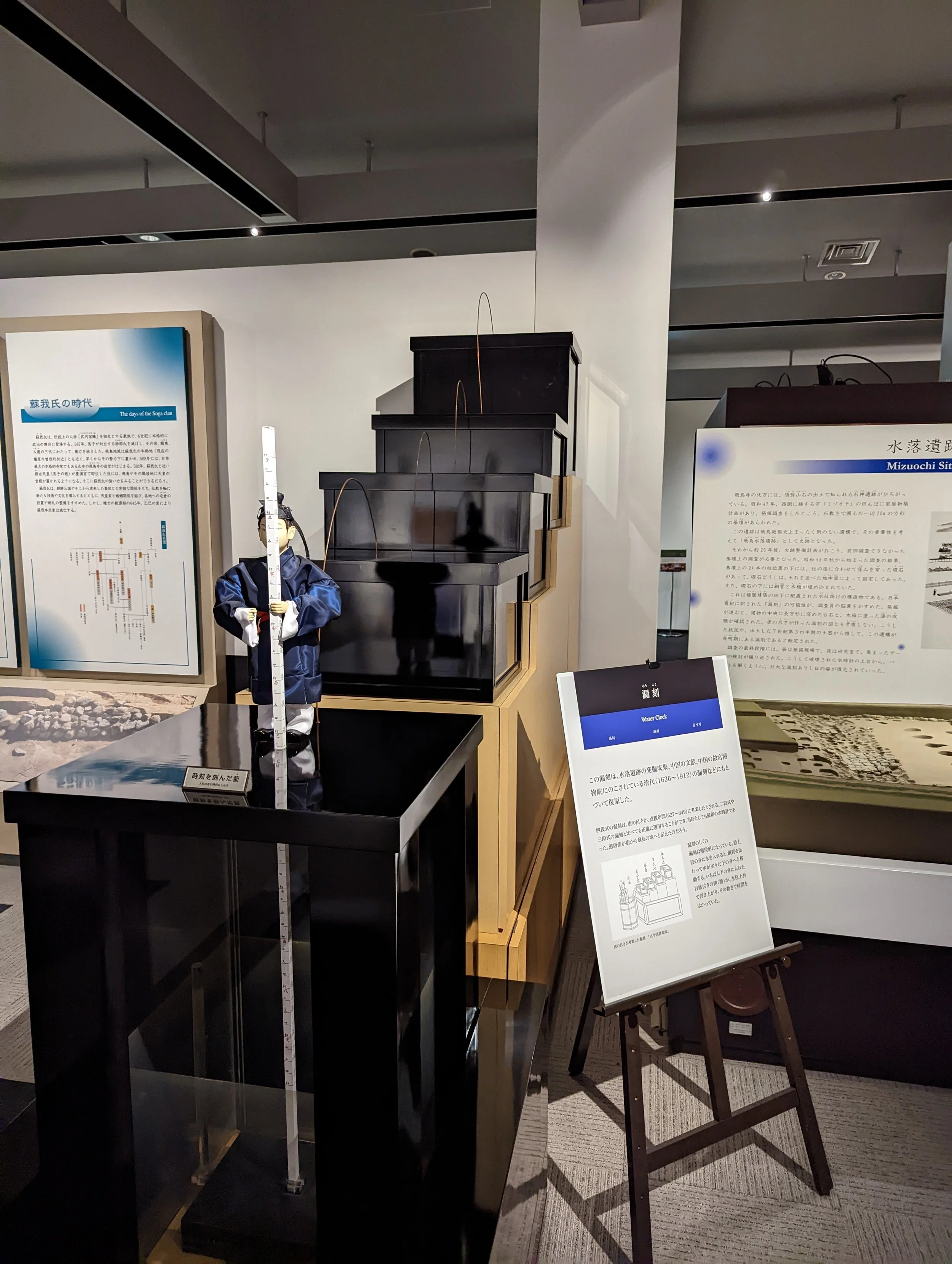
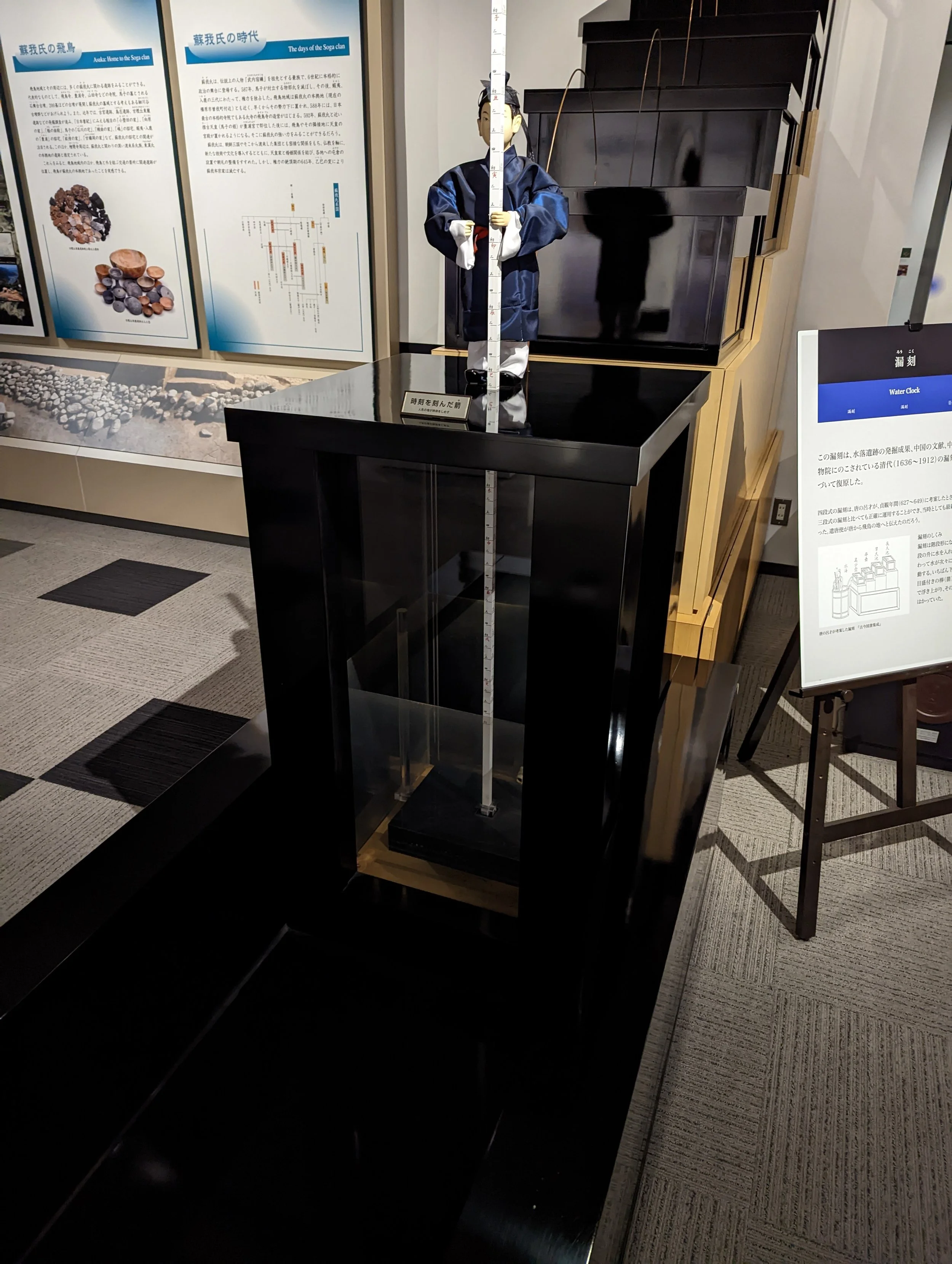
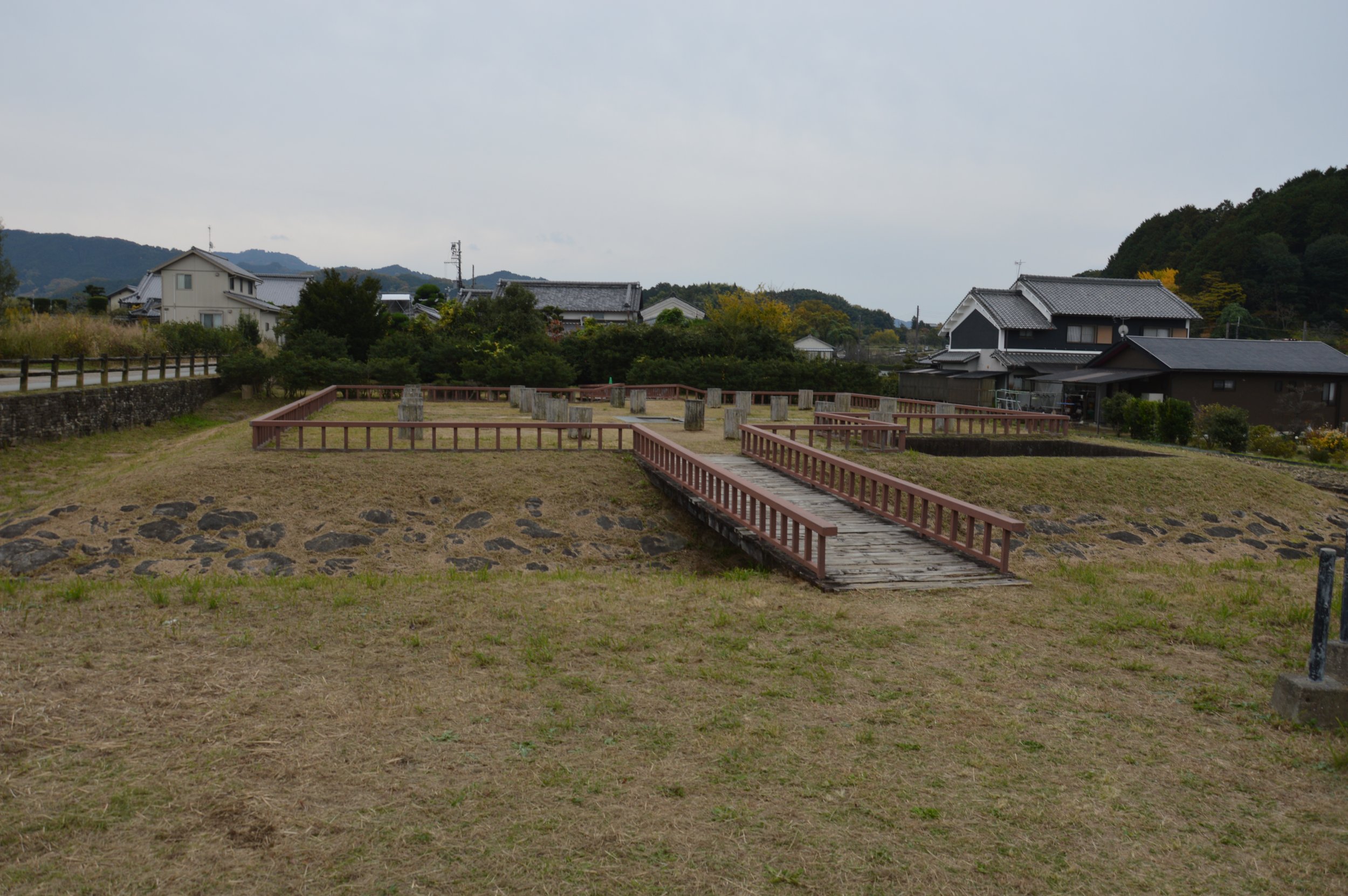
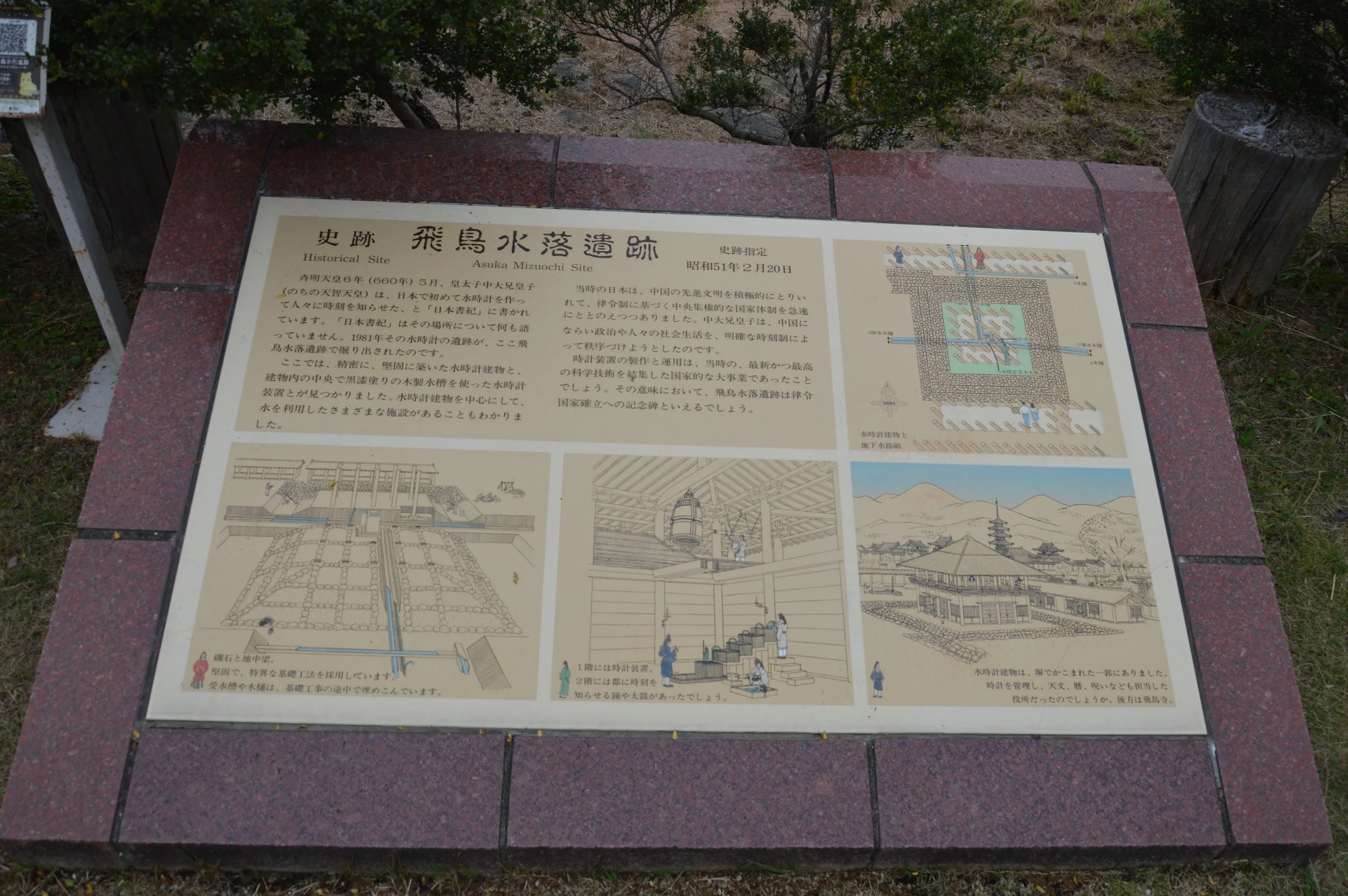
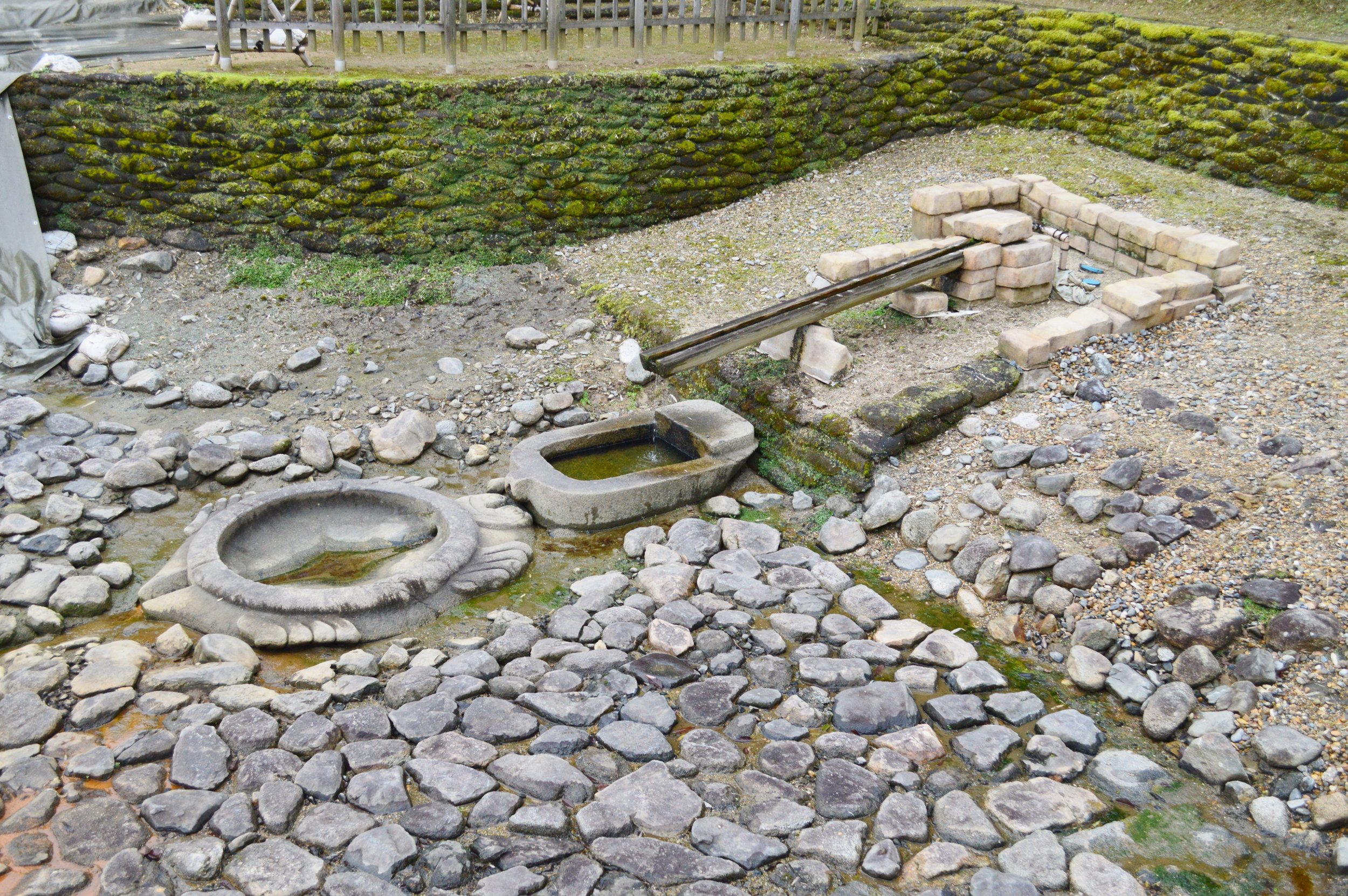
    This was also the start of the formal reign of Naka no Oe, who would go on to be known as Tenji Tennou.  Naka no Oe would be a major proponent of substantial reforms to the Yamato government, as well as moving the capital to a new, more defensible location called Ohotsu, on the shores of Lake Biwa, in the land of Afumi.  He also introduced new concepts of time through water clocks both in Asuka and in the Afumi capital.

    Upon Naka no Oe’s death, almost immediately, violence broke out between the Yamato court’s ruling council led by Naka no Oe’s son, Prince Ohotomo, and Naka no Oe’s brother, Prince Ohoama.  Ohoama would emerge victorious and ascend the throne, being known as Temmu Tennou.   During his reign he took his brother’s government and placed upon it his own stamp.  He reinvigorated Shinto rites while also patronizing Buddhism.  Meanwhile, relations with the continent appear to be improving.

    So that is the summary, let’s take a look at what we discussed in more detail.

    First off, back to the reign of Takara Hime, aka Saimei Tennou—as opposed to her first reign, where she is known as Kougyoku Tennou.  Takara Hime came back to the throne in 654 after a nine-year hiatus, having abdicated in 645 when her son, Prince Naka no Oe, had killed Soga no Iruka in front of her at court, violently assassinating one of the most powerful men in Yamato. Naka no Oe had then gone on to take out Soga no Iruka’s father, Soga no Emishi, a few days later.  Upon abdicating, Taka Hime’s brother, Prince Karu, aka Koutoku Tennou, took the throne, but there are many that suggest that the real power in court was Naka no Oe and his allies—men such as the famous Nakatomi no Kamatari.  When Karu passed away, Naka no Oe still did not take the throne, officially, and instead it reverted back to his mother.

    Takara Hime is interesting in that she is officially recognized as a sovereign and yet she came to the throne when her husband, known as Jomei Tenno, passed away, even though neither of her parents were sovereigns themselves.  This may have something to do with the fact that much of the actual power at the time was being executed by individuals other than the reigning sovereign.  First it was the Soga family—Soga no Emishi and Soga no Iruka—but then it was Naka no Oe and his gaggle of officials.  This makes it hard to gauge Takara Hime’s own agency versus that of her son’s.

    Still, the archipelago flourished during her reign.  This was due, in no small part, to the growing connectivity between the Japanese archipelago and the continent—and from there to the rest of the world.  And that world was expanding.

    We see mention of the men from “Tukara” and a woman—or women—from Shravastri.  Of course it is possible, even likely, that these were a misunderstanding—it is most likely that these were individuals from the Ryukyuan archipelago and that the Chroniclers bungled the transcription, using known toponyms from the Sinitic lexicon rather than creating new ones for these places.  However, it speaks to the fact that there were toponyms to pull from because the court had at least the idea of these other places.  And remember, we had Wa students studying with the famous monk Xuanzang, who, himself, had traveled the silk road all the way out to Gandhara and around to India, the birthplace of Buddhism.  The accounts and stories of other lands and peoples were available—at least to those with access to the continent.  This helped firm up the Japanese archipelago’s location at the end of a vast trading network, which we know as the Silk Road.  Indeed, we find various material goods showing up in the islands, as well as the artisans that were imported to help build Buddhist temples.

    And just as all of this is happening, we hit a rough patch in relations between Yamato and the Tang dynasty.  In fact, in one of our most detailed accounts of an embassy to date, thanks to the writings of one Iki no Hakatoko.  Because the fateful embassy of 659 saw the Tang take the odd step of refusing to let the embassy return to Yamato. 

    It turns out that the Tang, who had, for some time now, been in contact with Silla, had entered into an alliance and were about to invade Baekje.  It was presumed that if the Yamato embassy left the Tang court they might alert Baekje, their ally, that something was up.  And so it was safer to place them under house arrest until the invasion popped off.

    Sure enough, the invasion was launched and in less than a year King Wicha of Baekje and much of the Baekje court had been captured.  With the initial invasion successful, the Yamato embassy was released, but that is hardly the end of the story.  Baekje had sent a request to Yamato for support, but it came too late for Yamato to muster the forces necessary.  That said, some factions of the Baekje court remained, and one of their Princes was still in Yamato.  And so, as they had done in the past, Yamato sailed across the strait with the goal of restoring a royal heir to the throne.

    Unfortunately, this was not quite as simple as it had been, previously.  For one thing, the Tang forces were still in Baekje, and the fight became long and drawn out.  Things finally came to a head in the early months of 663, at the mouth of the Baekgang river—known in Japanese as Hakusuki-no-e.  This was a naval battle, and Yamato had more ships and was also likely more skilled on the water.  After all, much of the Tang fighting was on land or rivers, while the Wa, an island nation, had been crossing the straits and raiding the peninsula for centuries.  Even with all of the resources of the Tang empire, there was still every reason to think that the forces from the archipelago could pull off a victory.  However, it was not to be.  The Tang forces stayed near the head of the river, limiting the Wa and Baekje forces’ ability to manuever, drawing them in and then counterattacking.  Eventually the Tang ended up destroying so much of the fleet that the remaining Wa ships had no choice but to turn and flee.

    This defeat had profound consequences for the region.  First and foremost was the fall of Baekje.  In addition, Yamato forces pulled back from the continent altogether.  Along with those Baekje refugees who had made it with them back to the archipelago they began to build up their islands’ defenses.  Baekje engineers were enlisted to design and build fortresses at key points, from Tsushima all the way to the home countries.  These fortresses included massive earthworks, some of which can still be seen.  In fact, parts of the ancient fortifications on Tsushima would be reused as recently as World War II to create modern defenses and gun placements.

    Even the capital was moved.  While many of the government offices were possibly operating out of the Toyosaki palace in Naniwa, the royal residence was moved from Asuka up to Ohotsu, on the shores of Lake Biwa.  This put it farther inland, and behind a series of mountains and passes that would have provided natural defenses.  Fortresses were also set up along the ridgelines leading to the Afumi and Nara basins.

    And all of this was being done under a somewhat provisional government.  The sovereign, Takara Hime, had passed away at the most inconvenient time—just as the Yamato forces were being deployed across to the peninsula.  A funerary boat was sent back to Naniwa, and Naka no Oe took charge of the government.  That there was little fanfare perhaps suggests that there wasn’t much that actually changed.  Still, it was a few years before the capital in Ohotsu was completed and Naka no Oe formally ascended the throne, becoming known to future generations as Tenji Tennou. 

    Naka no Oe’s rule may have only formally started in the 660s, but his influence in the government goes all the way back to 645.  He assassinated the Soga family heads, and then appears to have been largely responsible for organizing the governmental reforms that led that era to be known as the Taika, or era of great change.  He served as Crown Prince under Karu and Takara Hime, and from that office he ensured his supporters were in positions of authority and instituted broad changes across the board.

    He continued in this position under the reign of his mother, Takara Hime, and so the transition upon her death was probably more smooth than most.  This also explains how things kept running for about three years before he took the throne.

    In officially stepping up as sovereign, however, Naka no Oe continued to solidify the work that he had done, focused largely on consolidating power and control over the rest of the archipelago.  There were tweaks here and there—perhaps most notably changes to the ranking system, which allowed for a more granular level of control over the stipends and privileges afforded to different individuals as part of the new government.  This work was presumably being done with the help of various ministers and of his brother, Ohoama.  Ohoama only really shows up in the Chronicle around this time, other than a brief mention of his birth along with a list of other royal progeny of the sovereign known as Jomei Tennou.

    We also see the death of the Naidaijin, Nakatomi no Kamatari—and supposedly the head of what would become known as the Fujiwara family.  His position as Inner Great Minister was not backfilled, but rather Naka no Oe’s son, Ohotomo, was eventually named as Dajo Daijin, the head minister of the Council of State, the Dajokan, placing a young 20 year old man above the ministers of the left and right and in effective control of the government under his father—though his uncle, Prince Ohoama, maintained his position as Crown Prince.

    However, even that wasn’t for long.  As Naka no Oe became gravely ill, he began to think of succession.  Ohoama, having been warned that something was afoot, offered to retire from his position as Crown Prince and take up religious orders down in Yoshino, theoretically clearing the line of succession and indicating his willingness to let someone else inherit.  His actual suggestion was that Naka no Oe turn the government over to his wife, who could act as a regent for Ohotomo.  What actually happened, however, was that the movers and shakers in the Council of State pledged their loyalty to the Dajo Daijin, Prince Ohotomo, who was named Crown Prince and ascended the throne when his father passed away.

    Here there is a bit of a wobble in the historical record.  The Chronicles never mention Prince Ohotomo formally assuming the throne and therefore the Chroniclers never provide him a regnal name.  It isn’t until more modern times that we get the name “Kobun Tennou” for his short-lived reign.

    And it was short-lived because early on Ohoama raised an army, and after several months of fighting, took the throne for himself.  Because the year this happened was known by its sexagenary term as “Jinshin”, often colloquially known as a Water Monkey year, the conflict is known as the Jinshin no Ran.  “Ran” can mean disturbance, or chaos, and so is often translated as “Jinshin Disturbance”, “Jinshin Revolution”, or the “Jinshin War”.  The entirety of the fighting is given its own chapter in the Chronicles, known as either the first year of Temmu or sometimes as the record of the Jinshin War.  This chapter actually shows some stylistic differences with the chapter on Tenji Tennou, just before it, and tells the story of the events slightly differently, in a light generally favorable to Ohoama, who would go on to become Temmu Tennou.  As such, while the broad strokes and military actions are likely correct, there are a lot of questions around the details, especially around the motivating factors.

    Regardless, what is known is that Ohoama was able to quickly move from his quarters in Yoshino eastward towards Owari and Mino, where he was able to cut off the capital from support and gather troops from the eastern lands.  The Court tried to take the Nara Basin—a huge symbolic and strategic point—as well as cut off his supply lines, but these actions were thwarted by those loyal to Ohoama.  Attempts to gather troops from the west had mixed results, with several allies of Ohoama resisting the Court—most notably Prince Kurikuma, who at that time was the head of the government presence in Kyushu, where a large number of troops had been stationed to defend against a possible Tang invasion. 

    Eventually, Ohoama’s troops defeated those of the Court.  Ohotomo was killed, and those running the government, including Soga no Akae, Nakatomi no Kane, Soga no Hatayasu, Kose no Hito, and Ki no Ushi, were either executed or exiled.

    Ohoama then swept into power.  He moved the court back to Asuka—the move to Ohotsu had not been a popular one in the first place—and took up residence in his mother’s old palace, renovating it.  It would eventually be known as the Kiyomihara palace.  From there Ohoama continued his brother’s reforms, though with his own spin.

    First off was a reform to the ceremonies around royal ascension.  Taking the existing feast of first fruits, the Niiname-sai, Ohoama made it into a new public and private ceremony known as the Daijo-sai, which is still practiced today upon the elevation of a new sovereign.  He reformed the government court rank system and also instituted reforms around the ancient kabane system—the ancient rank system that contained both clan and individual titles. These old kabane titles had certain social cachet, but were otherwise being made obsolete by the new court ranks, which were, at least on paper, based on merit rather than just familial connections.  Of course, the truth was that family still mattered, and in many ways the new kabane system of 8 ranks simply merged the reality of the new court with the traditions of the older system.

    And this was something of a trend in Ohoama’s reign.  The court seems to have taken pains to incorporate more kami-based ritual back into the court, with regular offerings, especially to gods associated with food, harvest, and weather.  There is also a clear focus on the shrine at Ise.  The Chroniclers claim that Ise was established and important since the time of Mimaki Iribiko, but it is only rarely mentioned, and while its founding story might be tied to that era, the Chroniclers, who appear to have started their work this reign, appear to have done their best to bolster that connection.

    As for actual governance, we see another change from the government of Naka no Oe.   The former sovereign relied heavily on noble families to run the government, granting them positions of responsibility.  In the Ohoama court, however, most of those positions appear to lay dormant.  Instead we see copious mention of princes—royal and otherwise—being delegated to do the work of the throne.

    Indeed, Ohoama seemed to want to reinstate the majesty of the royal society, including both the royal family, but also others with royal titles as well.  Still, there were plenty of ways that the noble families continued to have an influence in various spheres of government, they just weren’t handed the kind of prime ministerial powers that previous generations had achieved.

    Within the royal family, itself, Ohoama attempted to head off future succession disputes.  He had been through one himself, and history was littered with the violent conflicts that followed on the heels of a sovereign’s death.  So Ohoama gathered his family together, to include sons and nephews of consequence, and he had them swear an oath to support each other and the Crown Prince.  After doing so, he seems to have utilized them to help run the country, as well.

    Of course, we’ve seen how such pledges played out in the past, so we’ll have to wait to see how it all plays out, eventually.  I’m sure it will be fine…

    Whilst the archipelago was going through all of this transition—from the death of Takara Hime, and then the reign and death of her son, Naka no Oe, along with the Jinshin no Ran that followed-- we have a glimpse of what was happening on the peninsula.  Yamato had fortified against a combined Silla-Tang invasion, but it seems they needn’t have done so. 

    First off, that alliance’s attention was turned northwards, to Goguryeo.  With the death of the belligerent tyrant and perpetual-thorn-in-the-side-of-the-Tang-Court, Yeon Gaesomun, the Tang armies were finally able to capture the Goguryeo court.  However, for years afterwards they were dealing with rebellions from those who had not gone quite so quietly.  And to make matters worse it turns out that these Goguryeo recalcitrants were apparently being funded by none other than Silla, the Tang’s supposed ally.

    From the Yamato perspective this manifested, initially, as embassies from both the Tang court and the Silla court.  While the content of the embassies’ messages are not fully recorded, we can imagine that both the Tang dynasty and Silla were looking for support.  At one point there was a direct request for military support, but Yamato offered a half-hearted reply along the lines of the fact that they didn’t have as many able-bodied men as they once did—not after the fighting in Korea.   And that might have even been true.

    Either way, the Tang embassies petered out, as the Silla influence came to dominate the embassies and trade more generally.  The Tang attempted to push back against Silla, militarily—their alliance now long since dead.  Silla took some initial losses, but ultimately was able to push the Tang off of the peninsula, uniting everything from Pyongyang south.  North of Pyongyang, though still nominally under Tang dynasty control, a rebel Goguryeo court continued to act as though they were still a going concern.  They hitched a ride on Silla ships and traveled to Yamato for regular missions, maintaining diplomatic ties.

    As such, Yamato itself relaxed, to a certain extent, its defensive posture—but not entirely.  They continued to maintain the fortresses and there were several edicts addressing military preparedness, so as to ensure that Yamato would be ready should anything occur.

    And though the missions to the Tang court themselves may have been stymied in this period, it doesn’t mean that Yamato lost interest in continental learning.  They had acquired numerous texts, and appear to have been devouring them, as well as generating their own observational data.  They were recording a variety of phenomena, some more clearly consequential than others.  Some of that was practical, but, in a time where there was very little dividing the natural and the supernatural in the minds of the people, they were just as likely to record a storm or an earthquake as they were the finding of a white or albino animal that is not normally that color.  Science, myth, and legend often clashed and intermingled.  Regardless, they carried on, figuring out what they could and filling in the gaps where they had to do so.

    And I believe that catches us up for the year.  If I were to add anything, it would probably be a short note on Ohoama’s wife, Uno no Sarara hime.  Uno no Hime is only mentioned occasionally during Ohoama’s reign, and yet those few times are more than many others appear to have been mentioned.  She is explicitly said to have traveled with him when he went on campaign, and is said to have been there when he made his prayers to Ise shrine.  She was also there when the family was gathered to swear to assist each other in the smooth running of the government.

    There is plenty to suggest that, especially with many of the Great Minister roles left empty, that Uno Hime had a much greater role in the administration of the government than is otherwise assumed.  This may have also been the case with Naka no Oe’s wife.  Both women are mentioned in ways that suggest they were considered to have some amount of political clout and savvy, and had greater agency than one might otherwise conclude.  Remember, Takara Hime had twice reigned in her own right, and we aren’t so many generations removed that people wouldn’t know the name of Kashikiya Hime, aka Suiko Tennou.  We also know that there was a lot more going on, but the focus of the Chronicles is pretty firmly on the sovereign, and it is only with the greatest  of reluctance that the Chroniclers turn that lens on anyone else except the sovereign who was reigning at the time.  So I think it is safe to say that Uno likely played a large role in the court, and we will see even more of that in the coming year.

    But first, there is going to be more to say about the reign of Ohoama.  After all, we aren’t entirely through with his reign.  We have only barely touched on the various Buddhist records in the Nihon Shoki, nor some of the various court events, as well as some sign of how the government enforced these new laws and punishments—the Ritsuryo system.  Finally, we’ll talk about Ohoama’s dream and vision for a new capital—a permanent capital city unlike anything that had yet been seen.  Ohoama would not see that through to completion, but we can talk about what it meant, the first permanent capital city in the archipelago:  Fujiwara-kyo.

    Until then, I hope that everyone had a wonderful holiday season.   As usual, thank you for listening and for all of your support.  Thanks also to my lovely spouse, Ellen, for their continued work at helping to edit these episodes!

    Remember, if you like what we are doing, please tell your friends and feel free to rate us wherever you listen to podcasts.  If you feel the need to do more, and want to help us keep this going, we have information about how you can donate on Patreon or through our KoFi site, ko-fi.com/sengokudaimyo, or find the links over at our main website, SengokuDaimyo.com/Podcast, where we will have some more discussion on topics from this episode.

    Also, feel free to Tweet at us at @SengokuPodcast, or reach out to our Sengoku Daimyo Facebook page.  You can also email us at the.sengoku.daimyo@gmail.com. 

    And that’s all for now.  Thank you again, and I’ll see you next episode on Sengoku Daimyo’s Chronicles of Japan.


References

  • -,- (last checked 30 Nov 2025). 「南海トラフ地震について」. Japan Meteorological Agency. https://www.jma.go.jp/jma/index.html .

  • Izutsu, Yohei; et al (Last Reviewed 2025). The Kyoto Costume Museum Website. https://www.iz2.or.jp.

  • Bentley, John R. (2025). Nihon Shoki: The Chronicles of Japan. ISBN 979-8-218634-67-4 pb

  • Dischner, Matthew Z. (—). “Xuanzang”. The Sogdians: Influencers on the Silk Roads. Online exhibit of Smithsonian’s National Museum of Asian Art. https://sogdians.si.edu/sidebars/xuanzang/ (last accessed 15 March 2025).
  • M. Meyer, G.W. Kronk. (2025). THE GREAT COMET C/1743 X1: POSSIBLE IDENTIFICATION IN HISTORIC RECORDS OF 1402, 1032, 676, AND 336 (J/OL). Journal of Astronomical History and Heritage, 2025, 28 (1): 29-49. 2025-04-28. 2025-12-01. https://www.sciengine.com/doi/10.3724/SP.J.140-2807.2025.01.02.

  • 宮崎, 健司. (2025). 地図でスッと頭に入る飛鳥・奈良時代. 株式会社昭文社.

  • Zhang, F., Ning, C., Scott, A. et al. The genomic origins of the Bronze Age Tarim Basin mummies. Nature 599, 256–261 (2021). https://doi.org/10.1038/s41586-021-04052-7

  • Bauer, M. (2020). The History of the Fujiwara House: A Study and Annotated Translation of the Tōshi Kaden. Amsterdam University Press.
    https://doi.org/10.1017/9781912961191.

  • Wu, Guo. (2020). From Chang'an to Nālandā: The Life and Legacy of the Chinese Buddhist Monk Xuanzang (602?-664) From Chang'an to Nālandā: The Life and Legacy of the Chinese Buddhist Monk Xuanzang (602?-664). Proceedings of the First International Conference on Xuanzang and Silk Road Culture.

  • Teeuwen, Mark and Breen, John. (2017). A social history of the Ise shrines: divine capital. Bloomsbury Academic.

  • Duthie, T. (09 Jan. 2014). Man’yōshū and the Imperial Imagination in Early Japan. Leiden, The Netherlands: Brill. https://doi.org/10.1163/9789004264540

  • Kim, P., & Shultz, E. J. (2013). The 'Silla annals' of the 'Samguk Sagi'. Gyeonggi-do: Academy of Korean Studies Press.

  • Hansen, V. (2012). The Silk Road: a new history. Oxford ; New York, Oxford University Press.

  • Kim, P., Shultz, E. J., Kang, H. H. W., & Han'guk Chŏngsin Munhwa Yŏn'guwŏn. (2012). The Koguryo annals of the Samguk sagi. Seongnam-si, Korea: Academy of Korean Studies Press.

  • Beckwith, C.I. (2009) Empires of the Silk Road: A History of Central Eurasia from the Bronze Age to the Present. Princeton University Press, Princeton/Oxford. ISBN 978-0-691-13589-2.

  • Como, M. (2009). Weaving and binding : immigrant gods and female immortals in ancient Japan. University of Hawaiʻi Press.

  • Lewis, Mark Edward (2009). China’s Cosmopolitan Empire: The Tang Dynasty. The Belknap Press of Harvard University Press, Cambridge, Massachusetts / London, England. ISBN 978-0-674-03306-1
  • McCallum, D. F. (2009). The Four Great Temples: Buddhist Art, Archaeology, and Icons of Seventy-Century Japan. University of Hawai’i Press. http://www.jstor.org/stable/j.ctt6wqtwv

  • Ooms, H. (2009). Imperial Politics and Symbolics in Ancient Japan: The Tenmu Dynasty, 650-800. Honolulu: University of Hawai'i Press. https://muse.jhu.edu/book/8316.

  • Kuramoto, Kazuhiro (2007). 壬申の乱. 吉川弘文館. ISBN 978-4-642-06312-8.

  • Bentley, J. (29 May. 2006). The Authenticity of Sendai Kuji Hongi. Leiden, The Netherlands: Brill. https://doi.org/10.1163/9789047418191.

  • Best, J. (2006). A History of the Early Korean Kingdom of Paekche, together with an annotated translation of The Paekche Annals of the Samguk sagi. Cambridge (Massachusetts); London: Harvard University Asia Center. doi:10.2307/j.ctt1tg5q8p

  • Yoshida, Yutaka (2006). “Personal Names, Sogdian i. in Chinese Sources” Encyclopædia Iranica; available online at https://iranicaonline.org/articles/personal-names-sogdian-1-in-chinese-sources (accessed online at 10 February 2025).

  • Boulnois, Luce (2005). Silk Road: Monks, Warriors & Merchants. Hong Kong: Odyssey Books & Guides. pp. 311–335. ISBN 962-217-721-2.

  • Michael, Thomas, PhD. (2005, February 12th). “I-Ching”. Lecture--Smithsonian Residents Associate, Washington, D.C.

  • Mallory, J. P., & Mair, V. H. (2000). The Tarim Mummies: Ancient China and the Mystery of the Earliest Peoples from the West. London: Thames & Hudson

  • ed. Minford, John and LAU, Joseph S. M. (2000). “An Anthology of Translations: Classical Chinese Literature: Volume I: From Antiquity to the Tang Dynasty”. The Chinese University Press, Hong Kong.

  • Barber, E. J. W. (1999). The mummies of Urumchi. New York, W.W. Norton & Company.

  • Huang, Alfred (1998) “The Complete I Ching: The definitive translation from the Taoist Master Alfred Huang.”. Lake Book Manufacturing, U.S.

  • Piggott, Joan R. (1997). The Emergence of Japanese Kingship. Stanford, Calif : Stanford University Press. ISBN9780804728324

  • Frye, R. N. 1. (1996). The heritage of Central Asia from antiquity to the Turkish expansion. Princeton, Markus Wiener Publishers.

  • Xuanzang, tr. Li Rongji (1996). The Great Tang Dynasty Record of the Western Regions. Berkeley, Calif. Numata Center for Buddhist Translation and Research.

  • tr. Bock, Felicia G. (1995) “Classical Learning and Taoist Practices in Early Japan: with a Translation of Books XVI and XX of the Engi-Shiki”. Arizona State University, Tempe, Arizona.

  • Huili, Yancong, & Li, R. (1995). A Biography of the Tripiṭaka Master of the Great Ci’en Monastery of the Great Tang Dynasty. Berkeley, Calif. Numata Center for Buddhist Translation and Research.

  • ed. Mair, Victor H. et al (1994). “The Columbia Anthology of Traditional Chinese Literature”. Columbia University Press, New York.

  • Major, J. S. (1994). The Trail of Time: Time Measurement with Incense Clocks in East Asia. By Silvio A. Bedini. Cambridge: Cambridge University Press, 1994. The Journal of Asian Studies, 53(4), 1206–1207. doi:10.2307/2059241

  • Brown, Rober L.; MacDonnell, Anna M. (1989), "The Pong Tuk Lamp: A Reconsideration". The Journal of the Siam Society, vol. 77, pt. 2, 1989. pp. 9-20.

  • Lee, K. (1988). A New History of Korea. Translated by E. W. Wagner & E. J. Schutz. Harvard University Press.

  • Chamberlain, B. H. (1981). The Kojiki: Records of ancient matters. Rutland, Vt: C.E. Tuttle Co.  ISBN4-8053-0794-3

  • Ellwood, R. S. (1973). The Feast of Kingship: Accession Ceremonies in Ancient Japan. Japan: Sophia University.

  • Miller, Richard J. (1973). Ancient Japanese Nobility: The Kabane Ranking System. University of California Press. ISBN 0-320-09494-8.

  • Aston, W. G. (1972). Nihongi, chronicles of Japan from the earliest times to A.D. 697. London: Allen & Unwin. ISBN0-80480984-4.

  • Philippi, D. L. (1968). Kojiki. Princeton, N.J.: Princeton University Press. ISBN4-13-087004-1.

  • Nakayama, Shigeru (1969). “A History of Japanese Astronomy: Chinese Background and Western Impact”; Harvard University Press, Cambridge, Massachusetts.

  • Werner, E. T. C. (1961). “A Dictionary of Chinese Mythology”. The Julian Press, Inc. Publishers, New York.

  • Frank, Bernard (1958). “Kata-imi et Kata-tagae: Etude sur les Interdits de direction a l'epoque Heian”. Presses Universitaires de France, Paris.

  • Asakawa, K. (1903). The Early Institutional Life of Japan: A Study in the Reform of 645 AD. Tokyo Shueisha. Reprint (1963): Paragon Book Reprint Corp., New York, N.Y. 10016

  • Kaempfer, Engelbert (1727) / tr. BODART-BAILEY, Beatrice M. (1999). “Kaempfer's Japan”. University of Hawai'i Press, Honolulu, Hawai'i.

  • Iryon, (1206-1289) & Ha, Tae Hung & Mintz, Grafton K. (1972). Samguk yusa : legends and history of the three kingdoms of ancient Korea / written by Ilyon ; translated by Tae-Hung Ha [and] Grafton K. Mintz. Seoul : Yonsei University Press

In Podcast Tags Yamato, Japan, Japanese History, Suiko, Kashikiya Hime, Rank, Shotoku Taishi, Legal Codes, Kinmei, Buddhism, Uji-kabane, Sui, Silla, Baekje, Goguryeo, New Year's, Soga, Mononobe, Sujun, Bidatsu
Comment

New Year's Recap 2025

January 1, 2025 Joshua Badgley

Mt. Fuji from Miho Matsubara. Photo by author.

RSS
Previous Episodes
  • January 2026
  • December 2025
  • November 2025
  • October 2025
  • September 2025
  • August 2025
  • July 2025
  • June 2025
  • May 2025
  • April 2025
  • March 2025
  • February 2025
  • January 2025
  • December 2024
  • November 2024
  • October 2024
  • September 2024
  • August 2024
  • July 2024
  • June 2024
  • May 2024
  • April 2024
  • March 2024
  • February 2024
  • January 2024
  • December 2023
  • November 2023
  • October 2023
  • September 2023
  • August 2023
  • July 2023
  • June 2023
  • May 2023
  • April 2023
  • March 2023
  • February 2023
  • January 2023
  • December 2022
  • November 2022
  • October 2022
  • September 2022
  • August 2022
  • July 2022
  • June 2022
  • May 2022
  • April 2022
  • March 2022
  • February 2022
  • January 2022
  • December 2021
  • November 2021
  • October 2021
  • September 2021
  • August 2021
  • July 2021
  • June 2021
  • May 2021
  • April 2021
  • March 2021
  • February 2021
  • January 2021
  • December 2020
  • November 2020
  • October 2020
  • September 2020
  • August 2020
  • July 2020
  • June 2020
  • May 2020
  • April 2020
  • March 2020
  • February 2020
  • January 2020
  • December 2019
  • November 2019
  • October 2019
  • September 2019
Archives

Happy New Year!

Welcome to our 2025 recap. This episode we look back on the past year, but also try to make sure that we prepare for the next year. We’ll cover the big events and then go into some of the major themes that we’ve seen over the year. For that, we’ll also cover some of the previous history that has led up to the start of things this year.

One of the biggest things we’ll do is look at the various forms of power and influence used in the archipelago, based on what we can see in the archaeological record, but also on what we are told by the histories. There is still much that we don’t know, and one of the largest debates between the Chronicles and modern scholarly interpretations of events seems to be just how much control Yamato actually held prior to this period. However, from about the 7th century onwards, there appears to be enough correlation with other events that we have some idea of what was actually happening.

A key fact to remember is that we are in the middle of the 7th century, and the Nihon Shoki’s account ends in 697 CE—about twenty-three years earlier than the date it was published, in 720 CE. So these latter events would have been the ones with the most sources and the most people who probably remembered something about them—or had at least heard stories. In fact, we can imagine that someone who was 80 years old in 720 CE would have been born in 640, and would have been in the prime of their life by 660. So we are now within the period where people actually remembered the events the Chroniclers were writing about.

Chart showing the various lineages with bold outline around those referenced most heavily this year

Isshi Incident and the Taika Era

The majority of this year was focused on the changes that stemmed from the Isshi Incident, which spawned the Taika era—the era of “Great Change.” This is the start of the Ritsuryo era, and the birth of the bureaucratic state that would be used for some time to govern Yamato—and eventually Nihon, aka Japan.

Though it wouldn’t necessarily take a direct path—after building a grand palace in Naniwa, they moved back to Asuka. Still, they had expanded control throughout the archipelago, or so it seemed.

And now here we are: Takara hime is back on the throne, but Prince Naka no Oe is still Crown Prince and still has a lot of influence on the court.

  • Shinnen Akemashite!  Happy New Year and Welcome to Sengoku Daimyo’s Chronicles of Japan.  My name is Joshua, and this is the New Year’s Recap episode for 2025!

    It’s that time again:  we are going to look back at what happened in the episodes this year.  That was only episodes 101 to 117—we’ll skip the travelogue episodes for the time being.  This covered the years of the early to mid-7th century, from roughly 613 to 659.  That is easily within the lifetime of a single individual, and yet a lot was going on.

    At the start of this year, we were at the height of Soga power. In 2023, we covered how back in 587, Soga no Umako had wrested power away from the powerful Mononobe clan, defeating Mononobe no Moriya.  As you may recall, the sovereign known to posterity as Jimmu Tennou was the descendant of the Heavenly Grandchild known as Ninigi no Mikoto, at least according to the Nihon Shoki.  The Mononobe clan claimed descent from none other than Nigi Hayahi, the Other Heavenly Grandchild, whose offspring were said to have been defeated by Jimmu.

    You may recall that scholars generally consider the story of Jimmu, and the nine sovereigns that immediately followed him, as almost certainly a later addition to the story of the royal lineage. So when did the story of Nigi no Hayahi’s defeat enter the picture? And was its inclusion perhaps related to the defeat of the Mononobe by the Soga family?  A family that successfully intermarried with the Royal House, themselves, such that all later sovereigns would trace their ancestry back to the Soga house?

    Of course, under Soga dominance we saw the rise of figures like the Soga descended Kashikiya Hime, aka Suiko Tenno.  During her reign, major reforms were carried out, Buddhism became fully established by the State, and ties with the continent were strengthened. 

    Politics would continue to be dominated by Soga, even after the death of Soga no Umako and Kashikiya Hime, with Soga no Emishi taking up the mantle of Prime Minister, working closely with his son, Soga no Iruka.  The Soga family was so entwined with the politics of rulership that the main rivals of the Soga were… the Soga.  That is to say different Soga-descended lineages, like that of the Prince Umayado, aka Prince Shotoku. Rather than supporting Umayado’s son, Prince Yamashiro no Oe, Soga no Emishi backed another candidate to the throne, Prince Tamura.  , of the royal Okinaga lineage. Tamura came to power as Jomei Tenno, but there is little doubt that Soga no Emishi was the one in control.

    Later, when Tamura passed away in 641, Yamashiro no Oe continued to be passed over.  In fact, Soga no Emishi supported the ascension of Tamura’s wife, Takara hime, over Yamashiro no Oe, and there is evidence that he supported a prince known as Furubito no Oe as the Crown Prince and eventual successor.  All of the evidence—which, to be honest, is rather biased—suggests that the Soga family were setting up a series of puppet rulers who would do their bidding, or at least be pliable to their suggestions.

    There must have been some pushback, though, especially when one considers how strong the cult of Prince Shotoku, aka Umayado, would eventually become.  One imagines that Prince Yamashiro was another pole around which those who opposed the Soga family could rally.  After all, he was the son of Crown Prince Umayado, and likely had just as much of a claim as Tamura and his children.  And so, to counter this threat, Soga no Emishi’s son and successor, Soga no Iruka, took matters into his own hands.

    In a brazen display of the violence of court politics, Soga no Iruka had Yamashiro no Oe accused of plotting against the throne and took an army to arrest him—no doubt in the hope that the prince would resist.  Eventually they cornered Yamashiro and his family, who committed suicide rather than submit.

    This attack was likely targeted to take out the rival to the Soga family’s preferred Crown Prince, Prince Furubito no Oe, but rather than quell any dissent, the move seems to have enflamed the passions of those who wanted to see an end to the Soga house.  Those passions took particular root in none other than Furubito no Oe’s younger brother, Prince Naka no Oe.  Together with the support of his uncle, Prince Karu; the head of the Nakatomi house, Nakatomi no Kamatari; as well as another scion of the Soga house, Soga no Kuroyamada, Prince Naka no Oe staged a coup d’etat.  Using the death of Prince Yamashiro no Oe as an excuse, they engineered a plot to assassinate Soga no Iruka in court, in front of Naka no Oe’s own mother, Takara Hime no Oho-kimi.  After Iruka’s death, Naka no Oe and his supporters then took the fight to Soga no Emishi, who committed suicide and set his own house on fire in what came to be known as the Isshi Incident.

    This shocking assassination caused Takara hime to step down.  The Soga-backed Prince Furubito no Oe, rather than stepping up and taking the throne, retreated to a Buddhist temple and took holy orders, effectively retiring and theoretically taking himself out of court politics.  That left Prince Naka no Oe and his uncle, Prince Karu, as possible candidates.

    We are told that Prince Naka no Oe declined to take the throne himself, instead supporting his uncle, Prince Karu.  Prince Karu took the throne, and is known to us as Kotoku Tenno, today.  Prince Naka no Oe stepped up as the Crown Prince, and with the help of his co-conspirators, such as Nakatomi no Kamatari, Soga no Kurayamada, and others, they began a project to remake the Yamato government, using continental models—specifically the Sui and Tang courts, which were also influencing the governments of the Korean peninsula, such as those of Baekje and Silla.

    This is known as the Taika, or Great Change, era.    There had been previous movements to adopt some of the continental trends, but nothing to this extent, which culminated in a tremendous palace complex built in Naniwa—modern Ohosaka.  Governors were sent out to the east of the country. The old, decentralized system was being replaced by a centralized bureaucracy.

    And yet this wasn’t entirely a smooth transition.  Early on there was a threat by supporters of the previous Crown Prince, Furubito no Oe.  He was killed to put down any possible revolt.  Later, Naka no Oe was hoodwinked into going after his own co-conspirator, Soga no Kurayamada, resulting in Kurayamada’s death and the punishment of his entire family.  A few years later, Naka no Oe moved back to Asuka, taking most of the royal family and the court with him, abandoning the grand government complex that they had built in Naniwa for reasons that remain unclear.

    Shortly thereafter, Karu, aka Kotoku Tenno, passed away.  But rather than Naka no Oe taking the throne—or even Karu’s son, Prince Arima—the throne went back to Naka no Oe’s mother, Takara Hime.  This is the only case we have of a single sovereign reigning twice, and the Chroniclers gave her two separate regnal names—Kogyoku Tenno to refer to her first reign and Saimei Tenno to refer to her second.

    And this is the reign that we are going to start the new year with.

    Beyond what was going on on the archipelago, there was also plenty that we covered on the continent.  We started the year with the Sui dynasty having consolidated control and working to continue to expand their territory north, south, and west, while also connecting the economic areas of the Yangzi and Yellow rivers.

    Unfortunately, through their wars and public works projects they overextended themselves, and the dynasty fell, replaced, in 619, with the Tang dynasty.  The Tang continued to expand, taking control of important points on the Silk Road and becoming a hub of trade and commerce.  At the same time, they were contesting their borders with the Goguryeo, who, themselves, had come under the control of Yeon Gaesomun, an infamous noble and anti-Tang hard-liner, who had staged a coup, murdered the Goguryeo king and any who stood against him, and who had installed a puppet king on the throne.  It is little wonder that the Tang dynasty was courting Goguryeo’s enemy, Silla, to pressure them from the other side.  This eventually kicked off the Tang-Goguryeo war, with the loosely allied Tang and Silla fighting on and off with Goguryeo and their ally, Baekje, who was also invested in stifling Silla’s ambitions on the peninsula.

    So that’s where we are:  The Korean peninsula is currently embroiled in conflict between the three kingdoms on the peninsula and the nearby superpower, the Tang Dynasty.  Meanwhile, Yamato, on the archipelago, is going through a whole… thing.  What that is, we’ll try to get into over the next year.

    Given all of this, let’s go over some of the themes from the past year.  To start with, let’s talk about expanding Yamato influence.

    From what we can tell, Yamato’s influence in the archipelago had peaked around the 5th century, between the creation of giant Daisen Ryo kofun and the reign of Wakatake no Ohokimi, aka Yuryaku Tenno.  Wakatake no Ohokimi had courtiers from as far away as Kyushu and the Kanto plain.  However, from what I can tell, Yamato’s influence appears to have temporarily waned, possibly coinciding with the end of Wakatake’s own dynasty, with a new dynasty coming to power in the 6th century.

    It is possible that Wakatake was simply never quite as powerful as the Chronicles make out, but there are a few other things that make me think that the end of the 5th and early half of the 6th century were a low point in Yamato’s power.  For one thing, we see a drop off in interactions with the continent after 479—or at least anything beyond the tip of the Korean peninsula.  In addition, we see smaller rooms built in the region of the Nara Basin and the Kawachi plain, while more “royal” tombs continue to appear elsewhere in the archipelago.  It isn’t that they stopped, but the size decreased, suggesting that Yamato didn’t have the same labor pool it used to.

    On top of that, we have the dynastic change.  We are told that the line related to Wakatake died out and they had to bring in someone from Afumi and Koshi, who traced their lineage back to the legendary Homuda-wake, aka Ōjin tennō, some five generations back.  Many scholars suggest that this connection was a later merging of the lineages, suggesting that, in reality, an entirely new branch of sovereigns had come to power.

    Finally, we can see the Chronicles focusing more and more on the areas near to Yamato, the area known as the Home Provinces, possibly because Yamato only held direct control over these areas, while control beyond that was only nominal.  Local elites in those regions had a lot of autonomy, and if Yamato did not have anything in particular to offer them, they would not have a reason to necessarily go along with Yamato’s requests.

    This may have even been part of the impetus for the so-called “rebellion” by Iwai, in Kyushu.  As you may recall, in the early 6th century Iwai attempted to ally with Silla against Yamato and Baekje, with the idea of cutting off Yamato’s access to the continent.  This ultimately failed, and Yamato ended up creating what would become the Dazaifu near modern Fukuoka, but the fact that Iwai could contemplate it and gather such support would suggest that Yamato was at least perceived as vulnerable.

    Now up to this point, we see several different policies that were used for increasing the court’s control.  Early on, this was done by doling out various elite goods.  We also see Yamato soft power in the form of spiritual authority and the expansion of local Yamato cultic practices out into the other lands of the archipelago.  There was also the tradition of monumental tombs, and especially the royal keyhole style tombs, which spread out from Yamato and was likely as much an indication that those regions saw Yamato practices as worthy of emulation, at the least, and perhaps saw Yamato as a cultural nexus on the archipelago.

    To all of this, they eventually added the “Be” system.  This appears to have been copied from systems being used on the Korean peninsula, and it focused on creating familial units to organize various industries, with family heads responsible for reporting and funneling necessary goods up to the court.  This eventually included the noble “uji” clans, with their power bases in various geographic regions.

    Yamato extended its influence through a variety of methods, including various public works projects.  These included things like the building of ponds, or reservoirs, which would have been critical to the wet-rice paddy agriculture that was the economic backbone of the Yamato government. 

    Another means of extending government control was the “miyake”, or Royal Granaries.  Originally we see these set up in the Nara basin, but during the current dynasty they had been extended all the way out to Kyushu. Ostensibly, they were there to collect rice for taxes, but they appear to have acted as government offices, providing a presence for Yamato even out in the hinterlands.  Eventually they would turn the area in Kyushu, the Dazai, into its own, semi-autonomous extension of the Yamato government, as well.

    In the past year of the podcast, we’ve seen many of those older forms of government control replaced with a new bureaucratic system.  This included an upgrade to the rank system, which was a way for the government to both organize the bureaucracy while also creating a means to award individuals.  Early rank systems had initially been granted at the family level, but following a continental model meant that the new system was based solely on the individual.  Thus they could hand out rank to various kings and chieftains across the archipelago and entice them into the Yamato orbit, a trick they had been doing previously as well with various types of recognition.  Those that took the titles and rank that Yamato handed out gained a certain amount of legitimacy, locally, but since that legitimacy was tied to the Yamato court, it also helped solidify Yamato’s own influence on those areas.

    That doesn’t mean that all expansion was peaceful.  Yamato contested on their eastern and northern border with the people referred to as the Emishi, which eventually included contests as far north as the island of Hokkaido with the Mishihase people.

    There was another form of soft power used by the court in the way that it supported Buddhism, which was still a new religion at this point, having arrived in the early part of the 6th century.  Patronage of Buddhism would lead to the building of temples and otherwise claiming some authority in the spiritual realm, beyond simply the court’s control of the Mt. Miwa site.  Furthermore, the state itself took particular interest in Buddhist institutions, and cracked down heavily on the clergy, ensuring that they reported up to the court, formally solidifying the connection between temples and the State.

    But then they went a bit further and instituted actual governors.  They were appointed by the Yamato government, and they were particularly installed in the Eastern lands—referred to as provinces.  These governors reported to the court, and appear to have initially been separate from locally recognized elites, who were known as the Kuni no Miyatsuko.  The governors were to take stock of the areas under their authority and report up information such as a summary of the lands and local census information.  This meant that Yamato did not need to rely on local elites to administer an area, they would have greater insight into what was actually going on.

    This was all combined with the institution of new laws on taxes, corvee labor, and more, while eliminating traditional practices such as the Miyake and even royal tomb-building.  The latter was likely affected by the various public works projects, but also the fact that more work was going into the building of things like Buddhist temples.

    As we noted back in the previous year, Buddhist temple building appears to have had a hand in the end of the prolific kofun building, at least in Yamato proper.  Kofun were memorials—meant to carry on the memory of an individuals well after their death.  They were ritual sites, and families were set up to care for them.

    Temples, likewise, were erected with certain memorial qualities.  Donating to build a temple was thought to increase one’s karma, and thus do wonders for your next life.  Temple patrons would be remembered, and services were carried out, but temples also had a certain public aspect to them, as well.  On top of that, they were new, and no doubt exotic, with their tiled rooves, intricate carvings, and colorful buildings.  Much of the labor that would have built tombs appears to have been co-opted, instead, to build temples.

    Some of the temples founded in this period include Asuka dera, aka Hokoji, built on or near the Soga family compound, as well as other Asuka temples, such as Yamadadera, Kawaradera, Toyouradera, and Kudaradera.  There was also Houryuji, erected by Prince Umayado near his house, and the ancient temple of Shitennouji, erected in Naniwa.  Of these, both Horyuji and Shitennoji continue, today, at or near their original with some of the oldest extant buildings in Japan.  Asukadera was moved to its modern site of Gangoji, in Nara city proper, but there is still a smaller Asukadera on the original site, with what may be one of the original images, though the buildings have been rebuilt after numerous fires and disasters over the years.

    Of course, a big part of all of these foreign ideas, such as Buddhism but also Confucian thought as well, was the growing influence of the continent, whether in the form of Baekje, Silla, Goguryeo, or beyond.  While there had been influence ever since the Yayoi period—and arguably even during the Jomon, in some instances—there seems to have been an acceleration once Yamato began to import Buddhism, which was likely connected with all of the learning and texts that were also being imported around that time.  Then, during the Sui and Tang dynasties—both of which the Chronicles simply label as the “Great Tang”—the court sent several embassies to the Sui and Tang emperors, bringing back individuals with actual experience in the way things were happening outside of the archipelago.

    And we should not discount the various embassies to and from the Korean peninsula.  Yamato was increasing its involvement in peninsular affairs.  They continued to be concerned with the state of Nimna, also known as Imna or Mimana, which had been assimilated by Silla, along with the rest of Gaya, or Kara, by the early to mid-6th century, with many accounts dealing with attempts to reinstate Nimna as a separate and sovereign entity. Along with this, Yamato continued their relationship with Baekje, who sent Prince Pung to reside at the Yamato court.  This continued a long-standing tradition that is portrayed as a type of diplomatic hostage, though there have been several times that princes at the Yamato court came back to Baekje to rule after the king died or was killed. 

    All of this to say that not only did ambassadors from Yamato go to these countries, but ambassadors also traveled to Yamato, while various immigrants from these areas of Baekje, Silla, and even Goguryeo occasionally settled in Yamato.  This further increased the number of individuals with knowledge and experience of continental concepts and technology, and we can see their influence in numerous different ways.

    This was all part of what led to the Yamato government’s adoption of Tang style law codes, though it should be noted that the law codes were not taken wholecloth.  Rather, they were adapted specifically to the issues of the archipelago.  This was the beginning of what came to be known as the Ritsuryo system, literally the system of laws and punishments.

    Under this system, the government went from a single Oho-omi, or great minister, to two Great ministers, one of the left and one of the right.  These would come to be known as the Sadaijin and the Udaijin.  Nakatomi no Kamatari was afforded a special place as the third minister, the minister of the center, or Naidaijin, possibly referring to his responsibilities with the interior of the royal household, while the ministers of the left and right would have had particular ministries beneath them - eight ministries in total, with various departments underneath them.  They would be assigned to report either to the Minister of the Left or the Minister of the Right, each one overseeing, effectively, half of the government portfolio.

    This system, combined with the governors and the Tomo no Miyatsuko in the provinces, meant that Yamato had much more granular control over the workers and the means of production.  They organized households into villages, and villages into districts.  There were lower level officials who reported up the chain all the way to the great ministers, the Daijin, or Oho-omi.  This meant that they effectively abolished the Be and Uji system, at least as it had been set up.  These familial groups continued to operate as families, or perhaps more appropriately as “clans”, given how the groups had come to be.

    These officials were granted rank and, more importantly, stipends from the government.  A portion of taxes, which were paid in rice, went to various officials.  This meant that officials not only relied on the government for their status, but for their incomes as well.

    This went along with an attempt to implement something known as the “equal field system”, imported, again, from the continent.  This determined who would work what fields, and was another way that the government was involved down to the actual labor producing the rice that was the economic engine of the State.

    And that covers most of what we’ve been up to this past year.  There have been individual accomplishments that we didn’t get into, but there is plenty there if you want to listen to it.

    So that covers the past year in the podcast—a little over half of the 7th century.  It really was a time of dramatic change—whether or not “Taika” was the name given to part of it, it certainly feels appropriate.  Even though the court eventually moved to Naniwa, this is the height of the Asuka period, and the start of the Ritsuryo state.  It would form the foundations for what was to come, and themes from this period will continue to show up again and again.

    In this next year, we are going to continue to look at Takara Hime’s reign and beyond.  We’ll see the resolution of the Tang-Goguryeo war, and the impact of all the continental fighting on the archipelago.  We’ll also see continued developments within the archipelago itself, hopefully getting through to the end of the 7th century.

    We are actually reaching the end of the material in the Nihon Shoki.  This does not mean that we are running out of material, though.  The Chronicles end in 697—less than 40 years out from our current place in the Chronicles.  From there, we have the Shoku Nihongi, which covers 95 years, until 797 CE.  Translation of much of the Shoku Nihongi is available through the work of Dr. Ross Bender, and you can find his work online if you want to get a leg up on the reading, though that is a ways out.  For now, we can still comfortably continue with the Nihon Shoki, at least through the reign of Temmu Tennou.

    Until then, Happy New Year!  As usual, thank you for listening and for all of your support.  Thanks also to my lovely wife, Ellen, for her continued work at helping to edit these episodes!

    Remember, if you like what we are doing, please tell your friends and feel free to rate us wherever you listen to podcasts.  If you feel the need to do more, and want to help us keep this going, we have information about how you can donate on Patreon or through our KoFi site, ko-fi.com/sengokudaimyo, or find the links over at our main website, SengokuDaimyo.com/Podcast, where we will have some more discussion on topics from this episode.

    Also, feel free to Tweet at us at @SengokuPodcast, or reach out to our Sengoku Daimyo Facebook page.  You can also email us at the.sengoku.daimyo@gmail.com. 

    And that’s all for now.  Thank you again, and I’ll see you next episode on Sengoku Daimyo’s Chronicles of Japan.  


References

  • Zaman, M., Charbonneau, L., & Maruyama H. (2022). Critiquing the Colonialist Origins of the New National Museum Upopoy. FOCUS Asia-Pacific, March 2022 Vol 107. 9-12. https://www.hurights.or.jp/archives/focus/section1/focus107.pdf

  • Bauer, M. (2020). The History of the Fujiwara House: A Study and Annotated Translation of the Toshi Kaden. Amsterdam University Press. https://doi.org/10.2307/j.ctv125jv4q

  • Hudson, M. J., lewallen, ann-elise, & Watson, M. K. (Eds.). (2014). Beyond Ainu Studies: Changing Academic and Public Perspectives. University of Hawai’i Press. http://www.jstor.org/stable/j.ctt6wqw7k

  • Kim, P., & Shultz, E. J. (2013). The 'Silla annals' of the 'Samguk Sagi'. Gyeonggi-do: Academy of Korean Studies Press.

  • Kim, P., Shultz, E. J., Kang, H. H. W., & Han'guk Chŏngsin Munhwa Yŏn'guwŏn. (2012). The Koguryo annals of the Samguk sagi. Seongnam-si, Korea: Academy of Korean Studies Press.

  • Lewis, Mark Edward (2009). China’s Cosmopolitan Empire: The Tang Dynasty. The Belknap Press of Harvard University Press, Cambridge, Massachusetts / London, England. ISBN 978-0-674-03306-1

  • Van Goethem, E. E. M. A. (2009). Capital and Countryside in Japan, 300-1180: Japanese Historians Interpreted in English (Joan R. Piggott, ed.). Journal of Asian Studies, 68(3), 988–90.

  • Como, Michael (2008). Shōtoku: Ethnicity, Ritual, and Violence in the Japanese Buddhist Tradition. ISBN 978-0-19-518861-5

  • Matsuo, K. (13 Dec. 2007). A History of Japanese Buddhism. Leiden, The Netherlands: Brill. doi: https://doi.org/10.1163/ej.9781905246410.i-280

  • Best, J. (2006). A History of the Early Korean Kingdom of Paekche, together with an annotated translation of The Paekche Annals of the Samguk sagi. Cambridge (Massachusetts); London: Harvard University Asia Center. doi:10.2307/j.ctt1tg5q8p

  • Kiyotaka Tanikawa, Mitsuru Sōma (2004). On the Totality of the Eclipse in AD 628 in the Nihongi. Publications of the Astronomical Society of Japan. Vol. 56, Issue 1, 25 February 2004. pp. 215–224. https://doi.org/10.1093/pasj/56.1.215

  • Benn, Charles (2002). China’s Golden Age: Everyday Life in the Tang Dynasty. Oxford University Press. ISBN 0-19-517665-0

  • Hudson, M. J. (1999). Ainu Ethnogenesis and the Northern Fujiwara. Arctic Anthropology, 36(1/2), 73-83. http://www.jstor.org/stable/40316506

  • Yamaura, K. (1998). The Sea Mammal Hunting Cultures of the Okhotsk Sea with Special Reference to Hokkaido Prehistory. Arctic Anthropology, 35(1), 321-334. http://www.jstor.org/stable/40316472

  • Piggott, Joan R. (1997). The Emergence of Japanese Kingship. Stanford, Calif : Stanford University Press. ISBN9780804728324

  • Hanihara, K. (1990). Emishi, Ezo and Ainu: An Anthropological Perspective. Japan Review, 1, 35-48. http://www.jstor.org/stable/25790886

  • Kracke, E. A. (1976). Early Visions of Justice for the Humble in East and West. Journal of the American Oriental Society, 96(4), 492–498. https://doi.org/10.2307/600081

  • Kiley, C. J. (1973). State and Dynasty in Archaic Yamato. The Journal of Asian Studies, 33(1), 25–49. https://doi.org/10.2307/2052884

  • Aston, W. G. (1972). Nihongi, chronicles of Japan from the earliest times to A.D. 697. London: Allen & Unwin. ISBN0-80480984-4

  • Philippi, D. L. (1968). Kojiki. Princeton, N.J.: Princeton University Press. ISBN4-13-087004-1

  • Befu, H., & Chard, C. S. (1964). A Prehistoric Maritime Culture of the Okhotsk Sea. American Antiquity, 30(1), 1-18. https://doi.org/10.2307/277625

  • Kitagawa, J.M. (1961). Ainu bear Festival (Iyomante). History of Religions, 1(1), 95-151. http://www.jstor.org/stable/1061972

  • Knox, George William (1903). The Early Institutional Life of Japan, a Study in the Reform of 645 A. D. By K. ASAKAWA, Ph.D. The American Historical Review, Volume 11, Issue 1, October 1905, Pages 128–129

In Podcast Tags Yamato, Japan, Japanese History, Suiko, Kashikiya Hime, Rank, Shotoku Taishi, Legal Codes, Ankan, Senka, Yomei, Kinmei, Buddhism, Uji-kabane, Sui, Silla, Baekje, Goguryeo, New Year's, Soga, Mononobe, Sujun, Bidatsu
Comment

Traveling Through the Ancient Nara Basin, Part 2

March 2, 2024 Joshua Badgley
Two weathered stone figures, or saru-ishi,

Two saru-ishi, or monkey stones, sit at the tomb of Kibi Hime, in Asuka.

RSS
Previous Episodes
  • January 2026
  • December 2025
  • November 2025
  • October 2025
  • September 2025
  • August 2025
  • July 2025
  • June 2025
  • May 2025
  • April 2025
  • March 2025
  • February 2025
  • January 2025
  • December 2024
  • November 2024
  • October 2024
  • September 2024
  • August 2024
  • July 2024
  • June 2024
  • May 2024
  • April 2024
  • March 2024
  • February 2024
  • January 2024
  • December 2023
  • November 2023
  • October 2023
  • September 2023
  • August 2023
  • July 2023
  • June 2023
  • May 2023
  • April 2023
  • March 2023
  • February 2023
  • January 2023
  • December 2022
  • November 2022
  • October 2022
  • September 2022
  • August 2022
  • July 2022
  • June 2022
  • May 2022
  • April 2022
  • March 2022
  • February 2022
  • January 2022
  • December 2021
  • November 2021
  • October 2021
  • September 2021
  • August 2021
  • July 2021
  • June 2021
  • May 2021
  • April 2021
  • March 2021
  • February 2021
  • January 2021
  • December 2020
  • November 2020
  • October 2020
  • September 2020
  • August 2020
  • July 2020
  • June 2020
  • May 2020
  • April 2020
  • March 2020
  • February 2020
  • January 2020
  • December 2019
  • November 2019
  • October 2019
  • September 2019
Archives
 

This blog post took a bit longer than the episode, so apologies for getting it up late.

Here are photos from Asuka from my various trips there, if you want to look at all of them. Otherwise, check out the gallery, below, for specific highlights:

https://www.flickr.com/photos/tatsushu/albums/72157624920460502/

Ikatsuchi Gion Castle Ruins

Not every earthwork is a kofun (though many are). Here is a part of the old Ikazuchi-Gion Castle, a small fortification north of the ruins of Ikazuchi castle. It is unclear when the castle was built (but not Asuka Period). Also a great example of how people live right next to these old ruins.

Asuka today
Asuka today

Much of Asuka today is this: various rice fields and small clusters of houses at the base of various hills—where it is less conducive to farming. A far cry from the days of the ancient capital.

7th century Asuka
7th century Asuka

An example of Asuka in the late 7th century, looking south, from Ishigami no Miya to Asukadera and the royal palace beyond. From the Nara Historical Museum.

Entrance to Okayama Castle ruins

Here on Okayama, there are earthworks for the old Okayama castle ruins. Similar to Ikazuchi castle, it is unclear when it was built.

Old houses
Old houses

Walking through Asuka there are buildings from many different periods, with their own charm.

Genbu (玄武)
Genbu (玄武)

The black turtle of the north, one of four directional animals. This is a reproduction from the Kitora Kofun at the Asuka History Museum.

Courtiers
Courtiers

Asuka era painting of courtiers in clothing reminiscent of Goguryeo garb found in Takamatsuzuka kofun. Reproduction at the Asuka History Museum.

Takamatsuzuka
Takamatsuzuka

Takamatsuzuka kofun from the outside. Without seeing the inside, it is a relatively unassuming tomb.

Yamadadera Gallery Wall

The preserved gallery wall of Yamadadera. It had collapsed into the ground and apparently been covered up and (mostly) protected from the elements, allowing archaeologists to put it back together again (with some assistance). From the Asuka History Museum.

Yamadaera depiction
Yamadaera depiction

A depiction of Yamadadera from the Asuka History Museum, showing how it may have looked back in its heyday.

Yamadera ruins
Yamadera ruins

The Yamadadera site, today. There are earthworks demonstrating where the various buildings sat.

Asuka Exhibition Room of Archaeological Artifacts

A small, one-room museum in an old Meiji era schoolhouse.

Model octagonal kofun

A model of the octagonal kofun of Saimei (aka Kōgyoku) Tennō. This appears to have gained some popularity in the Asuka period before they ditched kofun entirely.

Soga memorial
Soga memorial

Memorial to the Soga family outside Asukadera.

Asuka Daibutsu
Asuka Daibutsu

The “giant” Buddha image of Asukadera in its modern hall.

Asuka palace diagrams

A diagram from the Asuka History Museum showing the layouts of several of the later 7th century palaces based on archaeological findings.

Mizuochi site
Mizuochi site

Plaque outside the Mizuochi site demonstrating what is known and conjecture about how the “falling water” location may have housed an ancient water clock mentioned in the Nihon Shoki.

Palace excavations
Palace excavations

An archaeological dig that was being conducted in the area of the old Asuka palaces.

Palace postholes
Palace postholes

A few areas have been preserved with the postholes shown, which give an idea of the size of the building, though often all we have are the holes, perhaps with the base stones that the pillars would have sat upon.

Asuka palace sites
Asuka palace sites

A map demonstrating the various palace sites in Asuka, showing how the palace moved, but not nearly as far as in previous periods. From the Asuka HIstory Museum.

Ishibutai kofun
Ishibutai kofun

Possibly the kofun of Soga no Umako. It was a large, square shaped kofun with a horizontal entrance to a stone burial chamber. Much of the upper dirt has been removed, exposing the structure of the stone chamber, making it quite spectacular.

Kameishi (replica)
Kameishi (replica)

A replica of the Kame-ishi at the Asuka History Museum. This may have been a border marker between two temples, Kawaradera and Tachibanadera. Or it may have simply been a decorative element, perhaps in a garden.

Kameishi
Kameishi

Here is the actual kameishi, now nestled between modern houses. It is said that when people aren’t watching it occasionally changes directions, and if it faces the wrong way, disaster will soon follow.

Kawaradera
Kawaradera

A model of Kawaradera as it may have looked when it was first built. From the Asuka History Museum.

Kawaradera ruins
Kawaradera ruins

The ruins of Kawaradera. You can see the size in comparison to the smaller Gufuku-ji that now sits there.

Tachibanadera
Tachibanadera

Said to be situated on the birthplace of Shotoku Taishi himself, Tachibanadera may have started life as a nunnery. Today it is a Tendai temple

Noguchi no Ō no Haka

The tomb of Temmu Tennō and his wife and successor, JItō Tennō. There are some orchards along the lower slopes, but the upper part of the tomb is fenced off. This is an octagonal shaped kofun—not that you could tell in its modern, overgrown shape.

Oni no Manaita
Oni no Manaita

The “demon’s cutting board”. The bottom of a stone burial chamber.

Oni no Setchin
Oni no Setchin

The “demon’s toilet”. Actually the top of a stone burial chamber that was uncovered and then somehow fell down the adjacent hillside, landing upside down.

Umeyama kofun
Umeyama kofun

A large, keyhole shaped kofun said to be the burial place of Kimmei Tennō.

The grave of Kibi Hime

A small, round kofun outside of Umeyama Kofun is said to be that of Kibi Hime. Whether or not this is actually her tomb is perhaps in question. Today, you can see various saruishi statues that were discovered and moved here in later periods.

Ikatsuchi Gion Castle Ruins Asuka today 7th century Asuka Entrance to Okayama Castle ruins Old houses Genbu (玄武) Courtiers Takamatsuzuka Yamadadera Gallery Wall Yamadaera depiction Yamadera ruins Asuka Exhibition Room of Archaeological Artifacts Model octagonal kofun Soga memorial Asuka Daibutsu Asuka palace diagrams Mizuochi site Palace excavations Palace postholes Asuka palace sites Ishibutai kofun Kameishi (replica) Kameishi Kawaradera Kawaradera ruins Tachibanadera Noguchi no Ō no Haka Oni no Manaita Oni no Setchin Umeyama kofun The grave of Kibi Hime
  • Welcome to Sengoku Daimyo’s Chronicles of Japan! My name is Joshua and this is Traveling Through the Nara Basin, Part II

    This episode, I’d like to pause in our narrative to take you on a journey through the modern landscape of Asuka. This is a continuation from episode I did last year covering travels around the southeastern edge of the Nara Basin, from Tenri down to Miwa. I’m going to skip over some of the sites in Kashihara—we may save that for a discussion of the Fujiwara palace that was there—and head straight to Asuka.

    Standing at the southern end of Asuka, at the site of the ruins of the Itabuki palace, looking north, with the hills at your back the view is rather bucolic. Between the hills on either side of the valley, one can see rice fields spreading out. Along the western edge, the narrow Asuka-gawa winds along the base of the hills on its way north, joining with the Yamato river in the heart of the Nara Plain, far from view. Along the eastern hills are various houses, heading out to a cluster around the current precincts of Asukadera.

    It is a far cry from the ancient capital it once was. The large mansions and palaces that once filled the landscape are gone, their traces often lying beneath the rice paddies. Amongst the hills, ancient tumuli still look down over the valley below, some with their contents ripped open—whether by man or nature—for all to see. At the end of the Asuka period, the capital would move—first just a short hop away to the plains of Kashihara, to the north, but eventually up to Heijo-kyo, in modern Nara city. A century later the capital would move north, settling in Heian-kyo, aka modern Kyoto city.

    Asuka, in turn, remained largely untouched by the urbanization that would take place in many of the large cities. As the capital moved farther away—to Kashihara, then Nara, then Kyoto—Asuka was left behind. The temples and buildings succumbed to time, and no great settlement sprung up in its place. There were castles built on strategic hills by local lords, but much of the land remained rural Asuka would never be quite the same, a fact that would be of some relief to archaeologists and students of history in later centuries. The lack of urbanization meant that traces of those ancient times—at least those underneath the layers of soil overturned by farming—do remain.

    Asuka is believed to have been a stronghold for the powerful Soga clan. By rising through the ranks, marrying into the royal family, and supporting the winning side in various succession crises—not to mention their ties to the exotic Buddhist religion—they were able to make themselves into the most powerful family in Yamato, second only to the sovereign, and their stronghold of Asuka became the site of the palace building for at least four sovereigns. It was also the home to some of the first permanent Buddhist temples, so it is the stage for much of what plays out in the late 6th to 7th centuries.

    For anyone planning a visit, the first thing you should know is that Asuka is still quite rural. There are a few train lines that you can take nearby—the Kintetsu line Asuka station is probably the closest for most things, but since I was also visiting the Fujiwara palace ruins I rode into Kaguyama station on the JR line early in the morning.

    And so I entered Asuka from the north, passing by Kaguyama, one of the three sacred mountains of Kashihara. Near Ikatsuchi, I followed a small road that cut across rice paddies just north of the presumed site of Kashikiya Hime’s Oharida palace. This is the palace she moved to in the latter part of her reign, giving over the site of Toyoura, to the southwest, for a nunnery.

    Making my way through the open rice paddies, I reached a small neighborhood on the other side. The buildings were a mix of new and old, but nothing quite as old as what I was looking for. I continued on, making my way to the Asuka Historical Museum. This is an excellent museum for anyone interested in the area, with examinations of various temple ruins, kofun, and more. Outside, there are numerous copies of the various stone figures that dot the landscape here in Asuka, such as the Saruishi, or Monkey stones.

    These stones are a bit enigmatic. There is no clear relationship between the origin of most of the stones and any particular event that I could see in the Nihon Shoki or elsewhere. The saruishi were discovered by farmers in their fields in 1702, near Umeyama kofun, and eventually moved to their current location at the site of Kibi Hime’s tomb, outside of the giant keyhole shaped tomb for Amekunioshi, aka Kinmei Tennou. They are called “monkey” stones, or Saru-ishi, because people thought they resembled monkeys, but in truth they are probably just carvings meant to represent people. Scholars believe that they probably date back to the latter half of the 7th century, and may have been carved by immigrant Baekje artisans, based on their similarity to statues found on the Korean peninsula, but this is all conjecture. The originals are viewable from behind a fence, but at the Asuka Historical Museum you can get up close and personal to them and really see the details—at least what hasn’t eroded away.

    There is also the Kameishi, or turtle stone, which you can go see, but which also has a replica at the museum. There are stories about this giant stone, carved to look like a turtle, but its exact purpose is unknown.

    There are also reconstructions of various kofun stone chambers, so you can see what is inside some of the large mounds, as well as stone fountains and water works, demonstrating not just the skill of the artisans of that era, but also their ability to harness the flow of water back in that time.

    Inside, much of the information in the museum is in Japanese, but there are English descriptions of artifacts and some contextualization, but if you don’t read Japanese and are interested in what they have to say about the palace and temple ruins then a translation app is your friend. In fact, it is generally recommended for any travel where you may be in need of translation, these days.

    Inside the museum, they go over the layouts of some of the later palaces, especially the Okamoto, Itabuki, and Kiyomihara palace sites, for which at least the inner court area is fairly well defined. They also take a look at temple structures and the various continental influences, as well as a reconstruction of a water clock described by the Nihon Shoki during the reign of the sovereign known as Saimei Tennou—rest assured we will talk more about that at a later date.

    They also have a good look at the inside of the Kitora tomb’s burial chamber, recreated for you. The Kitora kofun and the Takamatsuzuka kofun are two of the most famous kofun in the area, but not necessarily for who was buried there. Both of them have been opened, and inside it wasn’t just grave goods, but they found painted chambers. In the Kitora kofun we find the directional guardian animals. These are four mythical beasts that represented North, South, East, and West, and they were Genbu, the Black Turtle of the North; Suzaku, the Red Bird of the South; Seiryuu, the Blue—or Green—Dragon of the East; and Byakkou, the White Tiger of the West. In this case, since the tomb was opened from the south, only three of the paintings were visible, and the east and west walls were not in great shape, but it was still legible. They are doing their best to preserve these paintings, and the museum only has copies, but it still helps to understand the time period. The burial probably took place in the 7th or 8th century, and has been suggested that it was a high ranking noble or royal prince—or possibly even a high ranking person from the continent.

    Takamatsuzuka, on the other hand, has even more detailed murals from the late 7th or early 8th century. The murals include the directional animals, but also pictures of courtiers dressed in the continental fashion. The murals resemble those found in Goguryeo, and again, there are still many questions about just who was buried there. Both the Kitora and Takamatsuzuka kofun are round kofun, and not especially large or prominent compared to some of the giant keyhole shaped kofun or previous eras, but the decoration and grave goods suggest people of status in both cases. Also, since Takamatsuzuka gives us some of our only clothing evidence from this period, and it holds similarities to what we know of Nara and later Heian era clothing, it is often used as a key reference point when looking at the clothing and culture of this time. The Takamatsuzuka kofun is only a short distance from the Asuka train station, but I did not visit this trip as I had been there many years prior, and I do recommend it if you get the chance. Kitora kofun is a little more out of the way, but still doable, especially if you have more than a day to wander around the area.

    In addition to the tombs, the museum has a large exhibit on Asuka era temples, including a section of wooden wall from a building at nearby Yamadadera. This section was found in 1980—apparently it had collapsed onto the ground and been covered up, as much of the wood was still preserved. The section is dated to be even older than the oldest extant buildings of Houryuuji, and it gives a great example of the construction techniques of the time. Since they didn’t have glass windows, we see them using vertical wooden bars. You can still see this on old style buildings and galleries, where a pole with a square cross-section will be tilted like a diamond and placed in the windows, creating a series of wooden bars that let in light, but still act as a barrier to entry. This only really works on external walls, unless you have another kind of shutter to put over them, but it is effective. We also have other items from the temple, including the head of a bronze Buddha statue.

    From what we can tell, this was another Soga family temple. It is mentioned in the “Joguuki”, the biography of Shotoku Taishi, as well as in the Nihon Shoki.

    It is also a short walk from the museum, and an easy visit. Warning, though, there isn’t a lot to see on the site. The outline of the temple and the various buildings is visible, and you can see how they lined up and get a sense of the approach, but it is fairly sparse. There is a modern temple on the site—Yamadaji, or, read another way, Yamadadera. It is not nearly as grand as the original, and is more like a rural, neighborhood temple. During the Asuka period, Yamadadera likely attracted attention from far and wide as one of the chief temples of the capital.

    Speaking of temples, I next turned back down the road and headed towards Asukadera. On the way isare the Ishigami site an theand Mizuochi sites, next to the Asuka district Exhibition Room of Archaeological Cultural Assets. The Ishigami site is a section of the stone pathways near an ancient guesthouse. Nearby is the Mizuochi site, which has been speculated to be the site of the water clock I mentioned earlier. There was a moat for catching and holding water, as well as various pipes for getting the water up to the clock. The clock itself contained several different buckets at different levels, so that a hole poked in the top bucket drained into the one below and then the one below that. The idea was that the water would flow at a fairly constant rate, and that could be used to tell the time. At the bottom was a float with an image of an official who held a ruler. The ruler would rise with the float and thus indicate the time. This was a great innovation as it would work even when the sun was not out, but it would need to be reset each day at a specific time to ensure that it was accurate.

    As for the nearby Exhibition Room—it is free, and so worth a look around. Much of what is there is the same as the Asuka Historical Museum, but there are a few differences. It is only a single room, so an easy in and out, and you can grab a bite or something to drink before you head on, so worth the stop if you are passing by, but if you are short on time you could easily give it a miss, as well.

    Continuing up the valley, to the south, I next stopped at Asukadera. I approached from the west, though the parking lot and main entrance is to the east. At the western edge there was a memorial for the Soga family members—more on that as we get back to the episodes. You can also see where the gates and walls used to be, though now the temple itself is much reduced. You no longer have the original footprint of the temple—when the capital moved to Heijo-kyo, the temple formally moved as well. It was rebuilt in Heijo-kyo as Gankouji, but it wasn’t like they could just move all the buildings—though that was sometimes done. Over time things were dilapidated or destroyed by fire, and Asukadera itself shrank. They did find and preserve the giant Buddha statue believed to have been installed in the reign of Kashikiya Hime, though the statue had been repaired extensively, such that only parts of the statue are thought to be original. You can come into the worship hall for a fee and the monks there will tell you the history of that and other images at the temple—in Japanese, of course—and you are allowed to take pictures.

    While the temple is reduced, it is still an incredible experience to stand there and imagine what it once was. In addition, you can look up the valley and picture the ancient palaces that once stood there as well.

    And that was my next stop. I headed up the roads towards the ancient palace sites. I noticed that there was some work going on near the Itabuki Palace site, and so I headed over that way. This means I did skip the Nara Prefectural Complex of Man’yo Culture, which looks to have some excellent depictions of life during Asuka and Nara periods, focusing on the period of the Man’yoshu, the book of ten thousand leaves, our earliest collection of Japanese language poetry written with “man’yogana”—sinitic characters used primarily for their sound to represent the Japanese language of that era. This is only one of many reasons that I will be returning to Asuka on a future visit.

    Still, I only had so much time in the day, and so I wandered over the old palace sites. There was an excavation underway, and I admit I still need to look into if there was a site report for the work—this was in November of 2022. I don’t know if there were any major changes in our understanding at the time, but always great to see people in the field doing the work that helps us map and understand the past. While Tthere is a small rest area there, but you should be aware that after excavation, the site has largely been covered back up. There is a small display on the eastern side of the valley where you can see some post holes, but largely you have to use your imagination to see the palace and where it was. I still just like to be there and experience the site and get an idea for even just the topography of the place, which I really believe puts things in perspective.

    From the Asuka palace site, I headed up the road and a little bit into the hills to see Ishibutai kofun. This is a famous kofun and is extremely impressive in its presentation, despite the fact that it has no grave goods and we don’t really know who was buried there. You see, though it was apparently a square shaped kofun, all of that dirt has been removed—likely by erosion or other factors—but that means that the stone chamber inside has been exposed. With that you can see the enormous stones that people moved into place to create the burial chamber. This was not a simple matter of making a brick enclosure, but rather it was massive boulders that were found and placed in such a way that I’m sure the builders of the pyramids or Stonehenge would have appreciated. As it was open to the elements, anything that was inside was either stolen or rotted away, but it is still impressive to see the construction. It is thought that this may have been the tomb of none other than Soga no Umako, that powerful Oho-omi that lead the Soga family to greatness, and some have suggested that with the Soga’s downfall, that could explain why the earth was removed from the tomb in the first place, to disgrace him and his family.

    From Ishibutai, I headed west, taking the road between Tachibana dera and the ruins of Kawara dera. We don’t know exactly when they were founded, but it was likely in the 7th century. Tachibana dera claims to have been founded by Shotoku Taishi, and is said to have been built on the site of his birthplace. What we know is that it was mentioned in the Nihon Shoki by about 680, and it appears to have been a nunnery. To the north is the site of Kawara dera, and you can see the ruins in the field around the current temple of Gufukuji, which was established there after Kawara dera itself had fallen to ruin. Kawara dera and Tachibana dera may have been built as a pair of temples, and rooftiles have been found at each site that appear to be of a similar age.

    However, neither temple has any of the original buildings left. There are some ancient stone statues, however: a stone with two people carved into it, facing away from each other, and, nearby, the Kameishi, or turtle stone, which some claim marked a boundary point between the two temples. That isn’t to say that the current temples don’t have anything worth seeing, and if I had more time I would have definitely looked into it, but I had my sights set a bit farther afield, because continuing down the road will take you to several notable kofun.

    First off is the kofun of Temmu and his wife Jitou—I’ll stick with the regnal names for now, as they haven’t really come up in our story, but we’ll definitely have a lot to talk about when we get there. This is an octagonal kofun, likely representing Buddhist influence and the importance of the number “eight” at the same time that kofun themselves were starting to fall out of fashion. The shape isn’t easy to make out, given that it is overgrown with trees and other vegetation, and you aren’t allowed on the kofun itself. Still, it is something to visit it and give some thought to history.

    Next along the path, following a trail that cuts along the hillside, is the Demon’s Cutting Board and the Demon’s Toilet. Yeah, you heard that right. These are two large stones, one up on the hill, and one a little farther down. A local story tells of an oni—a demon or ogre—that would catch passersby and eat them. The oni would chop them up on their cutting board, the Oni no Manaita, and would then relieve himself in the toilet, the Oni no Setchin. In reality, they appear to be two parts of a stone chamber for a kofun that was likely on top of the hill, but which was dug up or the top eroded away and then the top portion, the “Setchin” stone, fell down, possibly due to some kind of local event—a landslide or earthquake, or something similar. Needless to say, there is nothing left of the grave other than these two giant stones, with any goods having long been taken.

    Continuing on along the path past that is the giant keyhole shaped kofun designated as that of Kinmei Tennou, aka Ame Kunioshi Hiraki Hiro Niwa. The tomb is large, and impressive, and a good example of the kind of royal tomb that was the norm up to that point. Perhaps more intriguing is something I mentioned, earlier, because there are satellite kofun nearby. Satellite kofun are often assumed to be people related to the main kofun in some way—it could be family members, consorts, or even special courtiers who served them well. In this case, the tomb has been identified as that of Kibi Hime, and, unrelated to that as far as we can tell, it has become the home of the saruishi, the monkey stones I mentioned earlier. They are behind a barrier, so you can’t get too close, but it is neat to see them there, bearing silent witness to an age long past.

    At that point, the sun was setting behind the mountains. I followed the road back to the Asuka train station and from there headed on to my next destination. I left nearby Takamatsuzuka, which, as I said, I had seen on a previous trip, as well as many other sights. After all, just to the west is Katsuraki, and to the north is Kashihara, which is not only home to Temmu’s Fujiwara capital, but also to the three sacred mountains and numerous other kofun dotting the landscape. Farther north still and you can visit Houryuuji Temple, and the nearby Chuuguuji temple, both of which have treasures from the Asuka and Nara periods, including the oldest extant wooden buildings in the world. I highly recommend it.

    There is also more to explore. There are old castle ruins—mostly just earthworks—and other temples and buildings from ages to come after the Asuka period. While it was never exactly built up, that doesn’t mean that Asuka remained completely untouched throughout the centuries.

    I’ll put up some photos on the podcast webpage so that you can see things for yourself, and I hope that one day you all get a chance to visit Asuka. It truly is a beautiful place, nestled amongst the hills and looking out into the Nara Basin. There is a feeling as if, despite the roads and modern vehicles, time still moves a bit slower there. And though the ancient buildings that once marked the capital of Yamato are no longer there, the traces and their presence can still be felt.

    Next episode we’ll get back into the narrative. I want to dive a little deeper into what was going on over on the continent before we start to unravel everything happening in Yamato, as the Tang dynasty had come to power, and it was just beginning a period that would come to be known as its golden age.

    Until then, thank you for listening and for all of your support.

    If you like what we are doing, tell your friends and feel free to rate us wherever you listen to podcasts. If you feel the need to do more, and want to help us keep this going, we have information about how you can donate on Patreon or through our KoFi site, ko-fi.com/sengokudaimyo, or find the links over at our main website, SengokuDaimyo.com/Podcast, where we will have some more discussion on topics from this episode.

    Also, feel free to Tweet at us at @SengokuPodcast, or reach out to our Sengoku Daimyo Facebook page. You can also email us at the.sengoku.daimyo@gmail.com.

    Thank you, also, to Ellen for her work editing the podcast.

    And that’s all for now. Thank you again, and I’ll see you next episode on Sengoku Daimyo’s Chronicles of Japan.

In Podcast Tags Yamato, Japan, Japanese History, Bonus, Nara, Asuka
1 Comment

Episode 103: The Queen is Dead...

February 16, 2024 Joshua Badgley

An 18th century artist’s interpretation of Kashikiya Hime, aka Suiko Tennō. Original by Tosa Mitsuyoshi in 1726, in the collection of Eifukuji temple. Public domain image found at Wikimedia Commons.

RSS
Previous Episodes
  • January 2026
  • December 2025
  • November 2025
  • October 2025
  • September 2025
  • August 2025
  • July 2025
  • June 2025
  • May 2025
  • April 2025
  • March 2025
  • February 2025
  • January 2025
  • December 2024
  • November 2024
  • October 2024
  • September 2024
  • August 2024
  • July 2024
  • June 2024
  • May 2024
  • April 2024
  • March 2024
  • February 2024
  • January 2024
  • December 2023
  • November 2023
  • October 2023
  • September 2023
  • August 2023
  • July 2023
  • June 2023
  • May 2023
  • April 2023
  • March 2023
  • February 2023
  • January 2023
  • December 2022
  • November 2022
  • October 2022
  • September 2022
  • August 2022
  • July 2022
  • June 2022
  • May 2022
  • April 2022
  • March 2022
  • February 2022
  • January 2022
  • December 2021
  • November 2021
  • October 2021
  • September 2021
  • August 2021
  • July 2021
  • June 2021
  • May 2021
  • April 2021
  • March 2021
  • February 2021
  • January 2021
  • December 2020
  • November 2020
  • October 2020
  • September 2020
  • August 2020
  • July 2020
  • June 2020
  • May 2020
  • April 2020
  • March 2020
  • February 2020
  • January 2020
  • December 2019
  • November 2019
  • October 2019
  • September 2019
Archives

This episode there is definitely a need to help sort out some names. We’ll start right up front with a lineage chart so that you can see how some of the

So let’s go through some of the Who’s Who here:

Kashikiya Hime

The sovereign, Suiko Tennō. She was the daughter of Amekunioshi and Kitashi Hime. Kitashi Hime was the daughter of Soga no Iname. She then married her half-brother, Nunakura Futodamashiki (Bidatsu Tennō). She was likely just another consort, but when Nunakura’s designated queen, Okinaga no Hirohime, passed away, Kashikiya Hime was raised up in her place—or so we are told. After Nunakura’s death, his son and presumptive heir, Prince Hikobito, was killed in the chaos during the next several reigns. Kashikiya Hime’s brother, Tachibana, came to the throne as Yōmei Tennō, and later her half-brother, Anahobe no Hasebe, as Sujun Tennō. Tachibana died early into his reign, assuming he did actually reign, and Hasebe was killed by Soga no Umako, the “great minister” (ōmi) and uncle to both Hasebe and Kashikiya Hime. Kashikiya Hime was eventually put on the throne and became known to us as Suiko Tennō. Her son, Prince Takeda, passed away at some point—possibly before she came to the throne. And so she made her nephew, Prince Umayado, aka Shōtoku Taishi, the heir and Crown Prince.

In the end, she outlived both Umayado and Umako, passing away in 628 CE, having reigned for about 35 years or so.

A wooded hillock under a blue sky.  An earthen wall appears to surround it.  In the lower left corner is a torii gate, indicating  the hill as sacred. The tumulus is surrounded by

Yamada Takatsuka kofun, traditionally believed to be the resting place of Kashikiya Hime and her son, Prince Takeda. Image public domain from Wikimedia Commons.

Prince Takeda

Prince Takeda was the son of Kashikiya Hime and Nunakura Futodamashiki. His position as a possible heir is evidence through the fact that he was targeted by Nakatomi no Katsumi along with Prince Hikobito during the Soga-Mononobe conflict that was part of the larger struggle for the throne at the end of the 6th century. He must have passed away at some point—the last we see of him in the Nihon Shoki is in 587, during the assault on the Mononobe. We know that he predeceased his mother as she was buried in his tomb. This is traditionally believed to be Yamada Takatsuka kofun, but may refer to another nearby kofun. Both of these are rectangular kofun. In the case of Takatsuka, it may have originally been square and then had the shape changed at a later point, which might indicate Kashikiya Hime’s burial and modifications made to the tomb. This could also help explain why Kashikiya Hime’s burial took so long.

Soga no Ōmi no Umako

Umako was the son of Soga no Iname, the scion of the Soga household, and the “great minister”—the chief position of the court, especially after he led the Soga family and allies against the formerly powerful Mononobe. He is depicted helping Kashikiya Hime rule, but predeceased his niece by several years. His position as Ōmi and head of the Soga house passed to his son, Soga no Emishi.

Soga no Sakaibe no Omi no Marise

Marise is a somewhat enigmatic figure. The Chronicles do not clearly give his relationship to Soga no Emishi and Soga no Umako, but they do indicate that he is a member of their family. Current understanding is that he was brother to Soga no Umako, and uncle to Soga no Emishi. The name “Sakaibe” (or Sakahibe) first shows up during this reign, and Marise is mentioned several times throughout the reign, including as a general fighting on the Korean peninsula and providing a eulogy at Kitashi Hime’s burial.

Soga no Ōmi no Emishi

Son of Soga no Umako. He took over the role of Ōmi after his father passed away. He was the head of the Soga family, but he doesn’t seem to be very active prior to the events of 628, at which point he appears to have been trying to gain an even stronger position. Although he likely inherited the position from his father, in 628, Soga no Emishi, he didn’t have the string of political victories behind him that his father had.

Copy of an 8th century image of Prince Shōtoku Taishi surrounded by his younger brother, Prince Eguri, on the left, and his son, Prince Yamashiro, on the right. Image public domain, from the treasury of Hōryūji via Wikimedia Commons

Prince Yamashiro no Ōe

Yamashiro no Ōe was the son of Prince Umayado and Tojiko no Iratsume. Tojiko herself was the daughter of Soga no Umako, and thus sister to Soga no Emishi, making Emishi the uncle to Prince Yamashiro. As the son of Umayado, living at the palace at Ikaruga, it would be logical to think that he would be the heir, since had Umayado come to the throne then Prince Yamashiro would have naturally been next in line, especially given his direct maternal connection to the powerful Soga family.

Prince Hase

Aka Prince “Hatsuse” was another son of Prince Umayado, and half-brother to Prince Yamashiro. His mother was Kashiwade no Hokikimi no Iratsume. We are given very little about him, other than he seems to have lived in Ikaruga with his half-brother, and was one of his brother’s supporters for the throne.

Prince Tamura

Prince Tamura is the son of Prince Hikobito, the apparent heir presumptive under Nunakura Futodamashiki by his wife, Okinaga no Hirohime. That name “Okinaga” shows up in the royal lineage at least back to Okinaga no Tarashi Hime, aka Jingū Tennō. If we take the position that every sovereign is supposed to be descended from a “royal” lineage, then it may be that Hirohime’s children had a stronger claim to the throne than any of the Soga descended lines. In addition, Prince Tamura’s mother was Nukade Hime, a daughter of Tachibana, aka Yōmei Tennō, and a half-sister to Prince Umayado. That all gave Prince Tamura a fairly strong claim to the throne. Whereas previous challenges have come from individuals that we are told are bothers, here we have two competing lineages, both tracing all the way back to Amekunioshi Hiraki Hiro Niwa, aka Kinmei Tennō.

  • Welcome to Sengoku Daimyo’s Chronicles of Japan. My name is Joshua, and this is episode 103: The Queen is Dead.

    Quick content warning up front, while most of this is just politics, there is mention of some violence and even suicide towards the end of the episode. I have attempted to keep it mostly to the facts, but if that is something that concerns you, please be aware.

    The year is 628, and the mood in the inner chambers of the palace is somber. The court is no stranger to illness; after all, when the Oho-omi, Soga no Umako, had grown ill, a thousand individuals had entered religion to pray for his recovery. He had recovered from that, indeed, only to pass away two years ago. His son, Soga no Emishi, had taken his place at court and at the head of the powerful Soga family.

    This time, though, it is different. The sovereign, Kashikiya Hime’s illness affects the entire court. After more than 30 years of her rulership, it seems that the Great Queen of Yamato will not recover, this time. A handful of maids and selected members of the royal family are called into the inner chambers of the palace, tending to her in her final moments. The mood is tense, not just because of the impending death, but also because of the uncertainty for the future. After all, the Crown Prince, Umayado, had passed away approximately six year earlier, and nobody has been named as his replacement. Kashikiya Hime’s own son, Prince Takeda, had passed away some time earlier and is already buried.

    Now the inner circle wonders if she will name he successor, or will she pass on without doing so, leaving the throne empty, and setting up yet another bloody power struggle like the ones at the end of Nunakura Futodamashiki’s, aka Bidatsu Tennou’s, reign. Many people still remember what had happened then—they had possibly even lived through it, recalling the Soga and the Mononobe raising up armies, the fighting across the land, and the accusations and repercussions that followed, and forced many on the losing side into hiding.

    And they know there are several candidates waiting in the wings. For example, there is Prince Tamura, son of Prince Hikobito, who had been slain in the succession disputes that eventually ended up putting Kashikiya Hime on the throne. That made him a grandson of Nunakura Futodamashiki no Ohokimi and his first wife, Hirohime. His mother is the royal princess Nukade, daughter of Tachibana no Ohokimi and sister to Prince Umayado, aka Shotoku Taishi, giving him a full royal pedigree to draw from.

    There is also prince Yamashiro, the eldest son of Prince Umayado and Tojiko no Iratsume, one of the daughters of the late Soga no Umako, the powerful Oho-omi who had raised up the Soga family. Umayado’s fame is well known as the saintly Shotoku Taishi, the previous Crown Prince. He is known to be close to the queen, Kashikiya Hime, and there is not a little bit of speculation as to whether or not she will name him to take up his father’s mantle. He has, after all, succeeded his father in his own household, living in his father’s palace at Ikaruga, near the family temple of Houryuuji.

    Both candidates, Tamura and Yamashiro, are called to Kashikiya Hime’s bedside, and there she gives each of them instructions as to what to do upon her demise.

    Not too long after that, Kashikiya Hime passes away.

    The Queen is dead. Long live the… well, who, exactly?

    --------------

    So we have been covering Yamato during the reign of Kashikiya Hime, from 593 right up to 628, and what a reign it has been. The Soga family had married into the royal line and then, with the death of Nunakura Futodamashiki , placed princes of Soga descent on the throne. And if you want to go back and listen to all of that, then probably go back to about episode 90 or so. During this period, we’ve seen the building of Buddhist temples—at least 46, we are told—and we see Yamato explicitly adopting certain concepts of statecraft and kingship from the continent. I say explicitly because there are certain things, like the Uji and Be system of clans and the accompanying kabane ranking system that appear to have come over as well, but the Chroniclers never really acknowledge that, treating it as though they were always a thing. We see the rise of the Sui and transition over to the Tang dynasty on the continent, and Silla continue to expand and solidify their control on the peninsula.

    We are now towards the end of the reign. As noted before, Prince Umayado, aka the Crown Prince, Shotoku Taishi, passed away in about 622, and after he died, no other Crown Prince appears to have been selected. Umayado was one of the three people seen as holding the reins of state at this time, with the other two being Kashikiya Hime, of course, and her uncle, Soga no Umako.

    There are some who even suggest that Soga no Umako, as Oho-omi, was actually in control, and Kashikiya Hime was simply a puppet figure. That seems to be countered by something that happened about 623 or 624, two years after Umayado passed away, when Soga no Umako sent Adzumi no Muraji and Abe no Omi no Maro to Kashikiya Hime to request that he be given the district of Katsuraki, as that is where he was from and where he took his name. Beyond the fact that this gives us some insight into the origins of the Soga family—or at least the origins they claimed for themselves—it is interesting for us now because of Kashikiya Hime’s response. She first noted her close ties to her Soga uncle, and went on to say that, under normal circumstances she would do anything she could to fulfill his requests, but in this case, it was a little bit too much, even for her. If she said yes and gave him and the Soga family the entire district of Katsuraki, what would future generations say about her?

    Now it is difficult to say if this actually happened, or if it was part of what appears to be a smear campaign against the Soga family, who, spoiler alert, would eventually be accused of trying to usurp the power of even the sovereigns themselves. That said, it seems like the kind of thing that is just plausible, though possibly using a bit more justification to back up the request. Still, the Chroniclers at least were providing agency to Kashikiya Hime.

    Soga no Umako, who had been Oho-omi for some time, would pass away a few years later. That year, we are told that peach and plum trees blossomed, and that the third month of the year, probably late March or April, it was particularly cold, and a hoar frost fell across Yamato. Two months later, Soga no Umako died.

    He was buried at Momohara, probably at the place known as Ishibutai Kofun. This was a large, square shaped kofun, but today it has all but worn away, so that you can see the giant stones that once made up the internal structure of the tumulus. Unfortunately, this means that any grave goods have long since been taken and any organic material has probably completely disappeared, but it is an amazing tomb to get an idea of what inside of a 7th century kofun looks like.

    Soga no Umako lived in the family mansion on the banks of the Asuka river. We know roughly where it was, since Houkouji Temple used part of the Soga land for its own founding, and so would have been right next to Umako’s mansion. We also know that it had a water feature, a kind of pond, with an island, or “Shima”. Sometimes Soga no Umako would be known as Soga no Shima. I suspect that his son, Soga no Emishi, who took up Soga no Umako’s post as Oho-omi, also took up residence here, as the Sendai Kuji Hongi also references him as Soga no Shima at one point, though that could just be a mistake of some kind.

    The next month after Soga no Umako’s death was also pretty bad—we are told that snow fell in the sixth month, and then there were continual rains from the 3rd to the 7th month. This led to famine, and both the old and young died of starvation or disease. People were eating whatever weeds and herbs they could find, and banditry and thievery increased as people grew more and more desperate.

    It didn’t get any better the next year, which saw more omens and strange reports. Apparently a badger up in Michinoku, referring to the Tohoku region, turned into a man—possibly a reference to similar stories about tanuki and the belief in other shape-changing animals, but definitely a weird thing to occur. And then, there was a huge swarm of flies, we are told, that gathered together and flew east over the Shinano pass. Reports said they were as loud as thunder, and they dispersed when they reached the land of Kamitsukenu. Aston suggests this probably refers to Usui Toge, a pass between modern Yamanashi and Gunma prefectures, near Karuizawa.

    I don’t have any explanation for either event to give you. I’m sure it meant something to the people of the time, but looking back, I suspect they were interpreted as stormclouds on the horizon. And that is because, in the 2nd month of 628, Kashikiya Hime took ill. On the second day of the following month the Chronicles record that there was a total eclipse of the sun, and four days later, Kashikiya Hime took a turn for the worse.

    Fun fact in this morbid narrative: that total eclipse of the sun might just give us a verifiable date, here, because we can calculate astronomical phenomena like eclipses. In fact, given the impact of the events around this particular one, it has been specifically studied, and you can check out the work of Tanikawa Kiyotaka and Souma Mitsuru, titled “On the Totality of the Eclipse in AD 628 in the Nihongi”, published in 2004 in “Publications of the Astronomical Society of Japan”, and I’ll provide a link in the blog post. TL:DR – There was an eclipse on April 10, 628, and based on the work of Tanikawa and Souma it was likely visible from the archipelago. There is some question as to whether or not it was a “total” eclipse when viewed from the Nara basin, and specifically from the palace at Asuka, and it is even possible that the Chroniclers were using continental records to verify the actual dates and conditions—not to mention the way that stories can grow in the telling of them. However, it is highly likely that they did witness an eclipse of some sort, and this gives us some solid dates for everything else.

    That means that Kashikiya Hime likely took ill in late March of 628, and then her illness took a turn for the worse on the 14th of April, at least according to our modern calendar.

    And yes, there is some discrepancy in those. We would say that April 14th is the 14th day of the fourth month, not the sixth day of the third. However, we are dealing with the conversion of ancient, lunar calendar dates into a modern, western, solar calendar dates. Even now, just a few days before this episode airs, we just went through the Lunar New Year in much of Asia, based on the descendant of that same lunar calendar. That New Year happened February 10, 2024, but for the Lunar calendar, that would be the first day of the first month. And that isn’t even going into all the various corrections that both calendars have gone through over the centuries—don’t get me started on Julian versus Gregorian dates, or how that affects various lunar festivals that are now tied to a solar calendar. However, I think that putting the date in a modern, solar calendar context can help people get a better appreciation of the seasons and what was going on. As Kashikiya Hima took ill, spring had sprung in the Nara basin, and the cherry blossoms were likely in full bloom. And yet, even as that was happening, the mood in the palace was dire.

    It’s fitting, perhaps, because today, cherry blossoms, for all their beauty and the fact that they are blooming at a time that life is seemingly returning, are often considered a metaphor for the all too fleeting impermanence of this mortal existence. They blossom in beautiful and spectacular color, but all too quickly they are gone.

    And so, too, did it seem that Kashikiya Hime’s time was coming to a close. She was 75 years old, and she had ruled the realm since 592, about 36 years, not including the time before that spent as a consort or the two short reigns in between. She had been the sovereign over some of the most influential periods of Yamato history, including the spread of Buddhism and the introduction of new, continental styles of learning and governance.

    Now, she was on her deathbed. Surrounded by her maids and various royal princes and princesses, she called two of those princes, in particular, to her bedside. Specifically, she called Prince Tamura and she also called Yamashiro no Ohoye. As previously noted, they were the two most likely candidates for succession. Kashikiya Hime provided instructions to each of them in relative privacy, and those appear to have been her last words, as she passed away the next day.

    As was customary, she was temporarily placed in the southern hall of the palace while arrangements were made for her funeral.

    Preparations for here burial would take some time, and so it was on the 20th day of the ninth month—over 6 months later—that the rites to officially mourn the deceased sovereign were held. A shrine was erected at the southern court of the old palace, which served as her temporary burial place, and each minister pronounced a funeral eulogy. Four days later, she was buried, in accordance with her wishes, in the tomb of her son, Prince Takeda, who had passed away before her. She had requested this, instead of building her own tomb mound, to avoid placing a burden on the country given the famine that people had been going through, or so we are told. Traditionally, she is believed to have been buried at Yamada Takatsuka Kofun, aka Takamatsu Kofun, in Yamada, in the Taishi-cho area of the Southern Kawachi district in modern Osaka, though some have suggested nearby Ueyama Kofun. Both are rectangular kofun, rather than the keyhole shaped tombs of previous rulers, but that makes sense if she was buried in the kofun that had been built for her son, who never sat on the throne. It also may just speak to the changing norms of the time, where keyhole shaped tombs seemed to no longer be the done thing.

    Regardless of where she was buried, her death left a power vacuum, as there was no clearly designated heir to the throne. There were at least two candidates, and we’ve seen where that has led in the past—warfare and bloodshed. No doubt there was a palpable feeling of anticipation and anxiety around Kashikiya Hime’s death. Would rival camps start feuding, once again, over who should sit on the throne? Would there be another deadly fight for power?

    In addition to the existential threat, whoever the new sovereign was that came to power could have huge effects on the court. They could appoint new families to take the Oho-omi or Oho-muraji positions, and they would no doubt reward those who supported them in helping to come to the throne. Those on the losing side could find themselves on the political outs—or worse.

    Soga no Emishi was the most powerful member of the court at that time. He was the current head of the powerful Soga family, the son of Soga no Umako, and the Oho-omi, the most powerful position in the court. He had his own thoughts on who should be sovereign, and if he could have, no doubt he would have simply appointed someone and made it a fait accompli. However, even his power had limits, and he knew that if he put someone on the throne unilaterally he would likely be opposed by the other ministers, if only because they didn’t want to cede him that much power. Therefore, he would need to get them to go along with it.

    And so, one of the first things he did was to press his uncle, Sakahibe no Marise no Omi, asking him his thoughts about whom the new sovereign should be. Marise told Emishi that he believed Prince Yamashiro would be the best candidate. Remember, Prince Yamashiro was the son of the Crown Prince, the late Umayado, aka Shotoku Taishi. His father had been well respected and deeply involved in all aspects of the government, and Prince Yamashiro had largely taken his place, living as he was in his father’s old compound in Ikaruga, where Umayado had erected the temple of Houryuuji. On top of that, he was a royal prince of Soga descent—with multiple connections to Soga no Iname as well as his mother’s own descent from Soga no Umako. One might assume that he would have some loyalties to his extended family.

    However, this answer didn’t sit so well with Soga no Emishi, who had his own preference for Prince Tamura. Prince Tamura was not so directly a Soga descendant, but rather more directly descended through what some have referred to as the “Okinaga” line of the royal family. At first glance it might seem odd that he would support someone from outside of his family, but consider this: if Prince Yamashiro were to take the throne, then he becomes the most powerful “Soga” descendant. Those with ties to the Soga could easily support him over Soga no Emishi, especially with the addition of royal blood. Often we see that when it comes to “family” loyalty, the divisions within a family can often be more brutal than external feuds. This is a theme that will echo through the centuries.

    Prince Tamura, on the other hand, was a relative outsider. If Soga no Emishi helped him to the throne, then Prince Tamura’s own power and authority would be thanks to Emishi’s work, and at least somewhat dependent upon him and the rest of the powerful Soga family. Furthermore, he was married to Hotei no Iratsume, another daughter of Soga no Umako and thus Soga no Emishi’s sister. Soga no Emishi may have felt that his connection to his sister and brother-in-law was better than that to Prince Yamashiro.

    I’d also note that if Sakahibe no Marise really was Emishi’s uncle, that meant that he was also a rival for the head of the Soga house, since, as we’ve seen, inheritance often went to siblings before it made its way down to the next generation. I mention that only to further demonstrate the complicated familial politics of the time, where traditions of inheritance were not strictly laid out.

    Seeing as how there was not a consensus even within the Soga family, Emishi decided he would need to win people to his side if he wanted to do this pick this —and how better to do that than to throw a party? Emishi conspired with Abe no Maro no Omi, and they invited everyone over to the Soga mansion for a feast.

    Soga no Emishi wined and dined the who’s who of the Yamato court. They ate and drank their fill and, by all accounts, had a great time, likely putting aside the tensions of everything going on outside. As the party began winding down, Emishi had Abe no Maro broach the subject of succession. And so, Abe no Maro addressed the crowd. He started with what was likely on everyone’s mind: the fact that the sovereign was dead, and there was no clear successor. If they, the ministers of the court, didn’t figure something out soon then they were likely to see civil disturbances. So whom should they agree to succeed her?

    He then recounted what people had heard regarding her majesty’s final wishes; although the conversations had been held in the relative seclusion of her own private quarters, to which only a handful of people were typically invited, there were still attendants who had been there, and as such word had leaked out. According to that game of ancient telephone, Kashikiya Hime had called in Prince Tamura and told him that “The Realm is a great charge, and, of course, not to be lightly spoken of. Be watchful and observant, Prince Tamura, and not remiss.” Then, to Prince Yamashiro she said, “Avoid your own brawling speech and make sure to follow what everyone else has to say. Be self-restrained and not contentious.”

    And so, Abe no Maro asked, who should we make the new sovereign?

    At that point, he was met with an awkward silence. Things had been going great, but Abe no Maro had just committed a party foul and brought up politics. So much for the fun and games.

    Finally, Ohotomo no Kujira no Muraji spoke up. “Why don’t we simply obey her majesty’s final commands?” he suggested, “There is no need to go out and seek a general consensus.”

    Challenged by Abe no Maro to expound on this, Kujira continued to explain his thoughts. Since Kashikiya Hime had said to Prince Tamura that the realm is a great charge and he should “be not remiss”, wasn’t it clear that she had made up her mind to hand it over to him? Who were they to say otherwise?

    At that point, four other ministers spoke up. They were Uneme no Omi no Mareshi, Takamuku no Omi no Uma, Nakatomi no Omi no Mike, and Naniwa no Kishi no Musashi. They all agreed with Ohotomo no Kujira and agreed that they should end discussion, essentially casting their votes for Prince Tamura.

    However, not everyone agreed with this. On the other side of the aisle were Kose no Omi no Ohomaro, Saheki no Muraji no Adzumoudo, and Ki no Omi no Shihote, who all threw their support behind Prince Yamashiro.

    That’s roughly five ministers vocally for Prince Tamura, not including Abe no Maro and Soga no Emishi, but there were at least three on the other side, as well as Sakahibe no Marise, Emishi’s uncle. There may have been others that are not mentioned.

    That left one person who hadn’t spoken up: Soga no Kuramaro no Omi, aka Soga no Womasa, Soga no Emishi’s own brother. He was on the fence about the whole thing, and asked for time to think it over. Given all of this debate, it was clear to Soga no Emishi that there was no unanimous decision—at least nothing with unanimity, or at least approaching it. If so many of the nobles were on the other side, then a decision risked splitting court, and therefore bringing more chaos to the land. Furthermore, a split decision could risk a split in the Soga family itself. And so he retired and sent everyone home from the party.

    Of course the court was hardly a place for secrets, and pretty soon Prince Yamashiro got word of the discussions that were taking place. And so he sent a private message to Emishi, by way of the royal Prince Mikuni and Sakurawi no Omi no Wajiko. He basically asked what’s up, and why Emishi would want to put Prince Tamura on the throne instead of him.

    This was apparently a bit awkward. Prince Yamashiro was asking Emishi as his uncle—distant though that relationship may have been. Rather than going to Prince Yamashiro to reply in person, Emishi instead gathered a bunch of the ministers who had been at the feast and sent them—including members of both the Pro Tamura and Pro Yamashiro factions. At Emishi’s direction, they went to Yamashiro’s palace at Ikaruga and delivered Emishi’s message. Through them he asked how they should be so rash as to decide the succession all by themselves? All that was done was that her majesty’s dying commands had been conveyed to the ministers. Then the ministers had said, with one voice, that Prince Tamura was that, based on her majesty’s words, was the natural heir to the throne, and were there any objections? This was all the words of the various ministers, not any specific sentiments of Soga no Emishi, who claimed that though he had an opinion he refrained from communicating it until he could talk with Prince Yamashiro face to face.

    And here we get an inkling of the way these communiques were happening. Because it wasn’t like the ministers just went up to Prince Yamashiro directly. They went to his mansion, but, much like in the palace, they offered their communications via intermediaries. In this case they told Prince Mikuni and Sakurawi no Omi, who were apparently attending on Prince Yamashiro, and then those two passed the words on to Prince Yamashiro. The implication seems to be that should Soga no Emishi have come himself, I suspect that they would have talked in private. As it was, the words were apparently public, which also means that both sides had to choose their words carefully. It also allowed Emishi to have some amount of deniability.

    And so after Prince Yamashiro had heard what his intermediaries reported, he asked them to go back out to ask the ministers just what they knew of the dying wishes of Kashikiya Hime, and they reported what Soga no Emishi had told them, admitting that none of those present had actually been there. Rather, the words had been reported to them by the Princesses and Ladies in Waiting attending to her Majesty—but surely Prince Yamashiro, who had been there himself, knew all of this.

    Prince Yamashiro then asked directly if they had heard the actual words, and all of the high ministers there admitted they had no knowledge of the specifics, just what they had heard, second-hand.

    Prince Yamashiro then offered *his* version of events, which was slightly different than what Soga no Emishi had suggested. On the day that he was summoned, Prince Yamashiro claimed, he went to the palace and waited at the gate. He was finally summoned in by Nakatomi no Muraji no Mike, who came out from the forbidden—or private—quarters and Prince Yamashiro then proceeded to the Inner Gate. In the courtyard he was met by Kurikama no Uneme no Kurome and led to the Great Hall, where there tens of people in attendance, including Princess Kurimoto and some eight ladies-in-waiting, including Yakuchi no Uneme no Shibime. Prince Tamura was also there, of course—apparently he had already talked with her Majesty.

    Kashikiya Hime herself was lying down in bed, and could not see Prince Yamashiro enter, so Princess Kurimoto went to inform her that he had arrived. With that, Kashikiya Hime raised herself up and, according to Yamashiro, gave him the following command:

    “We, with our poor abilities, have long borne the burden of the crown. But now our time is drawing to a close, and it seems we cannot escape this disease. You have always been dear to our heart and our affection for you has no equal. The great foundation of the State is not a thing of our reign, alone, but has always demanded diligence. Though your heart is young, be watchful over your words.”

    Prince Yamashiro then emphasized that everyone who was there, including Prince Tamura, heard and knew what she said, and expressed how he was full of both awe and grief. He leapt for joy, as he heard her words, which he understood to be her passing on the mantle to him. He did, though, have his concerns. He was young, and inexperienced—“devoid of wisdom” is the wording as Aston translates it. How could he accept a charge to handle issues with the Spirits of the land and of the various ancestral shrines? Those were weighty matters.

    He wanted to go and converse with his maternal uncle—Soga no Emishi—and with the ministers, but there was no good chance, and so he had kept quiet, but he did remember, years ago, when he went to visit his sick uncle, and he stayed at the nearby temple of Toyoura, the nunnery built on the site of Kashikiya Hime’s palace. At that time she sent him a message via Yakuchi no Shibime, who said that his uncle, the Oho-omi, was constantly worried for him. After the sovereign’s death, wouldn’t the succession fall to him? And so he should be watchful and take care of himself.

    To Prince Yamashiro, the matter seemed clear, but he emphasized that he did not necessarily covet the realm, only declared what he had heard, calling to witness the kami of Heaven and Earth. Therefore, he wanted to make sure that he correctly understood her majesty’s dying words.

    And so he praised the ministers for always addressing the sovereign without bias, and asked that they go back to his uncle, Soga no Emishi, and convey what he had told them.

    Prince Hase, another son of Prince Umayado by another mother, and half-brother to Prince Yamashiro, separately sent for Nakatomi no Muraji and Kawabe no Omi. He told them how both he and his father—and his brother—came from the Soga family, and that they relied upon it heavily. Therefore he asked that they do not speak lightly of the matter of succession. He then sent for the ministers, including Prince Mikuni and Sakurawi no Omi and emphasized that he wanted to make sure there was an answer from his uncle.

    Emishi’s reply, sent via his own intermediaries, was that he had previously said all that he had to say and nothing else. However, how should he presume to choose, himself, between one prince or the other?

    And so one can imagine the tension. Soga no Emishi wanted the court to place Prince Tamura on the throne, but clearly Prince Yamashiro thought that Kashikiya Hime meant for him to succeed her. Nobody appears to have fully corroborated either side’s telling of the sovereigns last words—in fact, even in the Nihongi there are several different versions that show up, including a variation at the end of her reign and the variations in the telling of the start of the next. Was Prince Yamashiro remembering or understanding the words correctly? Were others distorting them for political gain?

    A few days after the ministers left Ikaruga, Prince Yamashiro sent Sakurawi no Omi once again to Soga no Emishi. He again reiterated that he had only reported what he had heard, and that he did not want to go up against his own uncle. However, Soga no Emishi was feeling ill, and was unable to talk with Sakurawi no Omi, who presumably left the message with his attendants and then left.

    The next day, feeling in better spirits, Soga no Emishi sent for Sakurawi no Omi, Prince Yamashiro’s messenger, as well as various ministers to go and carry a message back to Prince Yamashiro. He started by abasing himself, claiming that from the time of Ame Kunioshi, aka Kinmei Tennou, until now, the end of the reign of Kashikiya Hime, the ministers had all been wise men. However, he questioned his own rank, stating that he mistakenly held rank above everyone else merely because good men were hard to find. But because of this lack of wisdom, he could not settle the question of succession. That was, of course, a grave matter, and not one to be discussed through intermediaries—despite the fact that he was expressly using intermediaries. And so he agreed, despite the fact that he was of more advanced years, to travel up to Ikaruga to speak directly with Prince Yamashiro so that there would be no misunderstanding of her majesty’s words. This was totally the case and not at all because he had any private views.

    At the same time, Soga no Emishi sent Abe no Omi and Nakatomi no Muraji to his own paternal uncle, Sakahibe no Omi no Marise, and asked him one more time “Which Prince shall be made sovereign?” Clearly he was hoping Marise would swing to his side and agree to support Prince Tamura, with the hope that he could therefore cut off any dissent.

    Marise answered that he had already given his answer in person, and that he had nothing more that he wanted to say. He then went off in a huff, upset that he was even being asked a second time. He clearly saw the question as an attempt by his nephew to get him to change his answer.

    Now as all of this was going on, the Soga family was gathering all of their clan to construct the tomb for Soga no Umako—perhaps referring to kofun known today as Ishibutai. Soga no Umako had passed away some time ago, but perhaps had been buried in a temporary mound, and only now was his final tomb being completed. Marise’s job was to tear down the sheds at the tomb, which he apparently did, but then immediately retired to the nearby Soga farm-house—likely meaning a house out by the rice paddies rather than the main Soga compound only a slightly further walk away. Once there, Marise refused to do any more work, protesting the way his nephew was treating him.

    This temper tantrum pissed of Soga no Emishi to no end. He sent to Marise two messengers of Kimi and Obito rank—as opposed to the high ministers sent to Prince Yamashiro. A rough translation of the message goes as follows:

    “I know your evil speeches, but by reason of our relationship of elder and younger brother, I cannot injure you. If others are wrong and you are right, I shall oppose them and follow you. But if others are right and you are wrong, I will oppose you and follow them. Then, if you should eventually disagree with me, there will be a breach between us and there will be fighting in the land. If that happens, future generations will say that you and I brought the country to ruin. So be careful and do not allow a rebellious spirit to rise up.”

    Marise was still having none of it, and to add insult to injury he left to stay at Prince Hase’s palace in Ikaruga, basically shacking up with the pro-Yamashiro faction.

    Soga no Emishi just got more upset over this blatant and public display of loyalty to the Yamashiro cause and sent ministers to Prince Yamashiro demanding that they hand over Marise. These messengers made the case that Marise was disobedient to Soga no Emishi, the head of the Soga house, and was hiding in the palace of Prince Hase. Soga no Emishi requested that they hand Marise over so that he could examine why Marise was doing this, though that was likely just a polite reason so that Emishi could lock him up or worse until the succession crisis was concluded.

    Prince Yamashiro answered that Marise had always been a favorite of her majesty, and that he had only come to Ikaruga for a short visit, nothing political. How could he hope to stand up against Soga no Emishi? And so he asked that no blame come to him.

    At the same time, Prince Yamashiro spoke to Marise and warned him that, however touched Yamashiro might have been to have Marise come to seek them out, and despite the gratitude he owed for Prince Umayado, Marise’s actions threatened the peace of the realm. The way things were headed, if Marise stayed at Ikaruga, then it would have given a pretense for Soga no Emishi and his supporters to storm the palace and take him by force, likely bringing the political dispute over succession to a head that would break out into actual warfare and martial conflict.

    Moreover, Prince Yamashiro’s father, Prince Umayado, had always told his children to avoid all evil and practice good of every kind; and that had become Prince Yamashiro’s constant rule. Because of that, although Prince Yamashiro may have had his own private opinions on the matter, he was patient and not angry. He refused to set himself up against his uncle. Therefore he urged Marise to not be afraid to change his answer in support of Prince Tamura; he should yield to the many and not retire from public life. The various high officials present likewise urged Marise to listen to Prince Yamashiro and to do as he suggested.

    Marise, finding no support for going up against his uncle, Soga no Emishi, finally gave in. He burst out weeping and went home, where he stayed secluded for more than 10 days. During that time, his one supporter, Prince Hase, suddenly took ill and passed away.

    With Prince Hase dead, Soga no Emishi decided to move against Marise. He raised troops and sent them to Marise’s house. Hearing they were coming, and knowing he had nowhere left to turn, Marise and his second son, Aya, sat in chairs outside the gate to their home, waiting for the troops to arrive. When they got there, Mononobe no Ikuhi was made to strangle them, and they were both buried together.

    Marise’s eldest son, Ketsu, had tried to escape this fate. He fled to the Worship Hall of nunnery—perhaps Toyoura temple?—where he’d had some assignations with a couple of the nuns. However, one of the nuns was apparently jealous and told the troops where he was. They stormed the nunnery, but Ketsu slipped their grasp and headed to Mt. Unebi. The troops searched the mountain thoroughly, and eventually Ketsu found himself hemmed in on all sides, with nowhere left to turn. Rather than be taken and killed by the troops, he decided to take his own life, stabbing himself in the throat.

    When people heard about all of this, they wrote a song. It goes:

    UNEBIYAMA / KOTACHI USUKEDO / TANOMIKAMO

    KETSU NO WAKUGO NO / KOMORASERIKEMU

    Which Aston Translates as:

    On Mt. Unebi / Though thin are the trees, / May there not be some trust in them?

    The youth Ketsu / Seems to have hidden there.

    Following the death of Marise, it seems there were none left that were promoting Prince Yamashiro’s ascension—even he seems to have quit arguing for it. Whether or not Soga no Emishi ever came to talk to him is not recorded. Instead they mention that on the 4th day of the first month of 629, Soga no Emishi and the ministers offered the royal seal to Prince Tamura. Although Prince Tamura initially refused, as appears to have been de rigeur for such things, the ministers persisted. Prince Tamura claimed that it was a weighty matter and that he was wanting in wisdom, and the Ministers responded that he was the favorite of Kashikiya Hime, and that both the spiritual and physical realms would turn their hearts to him. Therefore he should continue the royal line. And so, later that day he took the throne. He is also known as Joumei Tennou.

    And so that is the story of the succession crisis that followed the death of Kashikiya Hime, and how Tamura, aka Joumei Tennou, came to the throne. Soga no Emishi would continue to exert considerable authority over the throne, and there would be more changes coming to the government and to the state. At the same time, Prince Yamashiro was still out there, meaning that there was at least one other possible claimant to the throne still out there. We’ll address that in our upcoming episodes.

    Until then, thank you for listening and for all of your support.

    If you like what we are doing, tell your friends and feel free to rate us wherever you listen to podcasts. If you feel the need to do more, and want to help us keep this going, we have information about how you can donate on Patreon or through our KoFi site, ko-fi.com/sengokudaimyo, or find the links over at our main website, SengokuDaimyo.com/Podcast, where we will have some more discussion on topics from this episode.

    Also, feel free to Tweet at us at @SengokuPodcast, or reach out to our Sengoku Daimyo Facebook page. You can also email us at the.sengoku.daimyo@gmail.com.

    Thank you, also, to Ellen for her work editing the podcast.

    And that’s all for now. Thank you again, and I’ll see you next episode on Sengoku Daimyo’s Chronicles of Japan.


References

  • Kiyotaka Tanikawa, Mitsuru Sōma (2004). On the Totality of the Eclipse in AD 628 in the Nihongi. Publications of the Astronomical Society of Japan. Vol. 56, Issue 1, 25 February 2004. pp. 215–224. https://doi.org/10.1093/pasj/56.1.215

  • Piggott, Joan R.  (1997).  The Emergence of Japanese Kingship.  Stanford, Calif :  Stanford University Press. ISBN9780804728324

  • Kiley, C. J. (1973). State and Dynasty in Archaic Yamato. The Journal of Asian Studies, 33(1), 25–49. https://doi.org/10.2307/2052884.

  • Aston, W. G. (1972). Nihongi, chronicles of Japan from the earliest times to A.D. 697. London: Allen & Unwin. ISBN0-80480984-4

In Podcast Tags Yamato, Japan, Japanese History, Suiko, Kashikiya Hime, Silla, Kanroku, Gwalleuk, Nimna
Comment

Episode 102: Temples and Tribute

February 1, 2024 Joshua Badgley

Example of a 7th century shibi, one of the classic ridgeline ends on the top of Buddhist temples from this period. They are often gilded, and easily seen from a distance. These large shapes, somewhat like feathered tail of a bird, would have been found on the buildings of the 46+ temples being built during this period. Photo by author, taken at the Asuka Historical Museum.

RSS
Previous Episodes
  • January 2026
  • December 2025
  • November 2025
  • October 2025
  • September 2025
  • August 2025
  • July 2025
  • June 2025
  • May 2025
  • April 2025
  • March 2025
  • February 2025
  • January 2025
  • December 2024
  • November 2024
  • October 2024
  • September 2024
  • August 2024
  • July 2024
  • June 2024
  • May 2024
  • April 2024
  • March 2024
  • February 2024
  • January 2024
  • December 2023
  • November 2023
  • October 2023
  • September 2023
  • August 2023
  • July 2023
  • June 2023
  • May 2023
  • April 2023
  • March 2023
  • February 2023
  • January 2023
  • December 2022
  • November 2022
  • October 2022
  • September 2022
  • August 2022
  • July 2022
  • June 2022
  • May 2022
  • April 2022
  • March 2022
  • February 2022
  • January 2022
  • December 2021
  • November 2021
  • October 2021
  • September 2021
  • August 2021
  • July 2021
  • June 2021
  • May 2021
  • April 2021
  • March 2021
  • February 2021
  • January 2021
  • December 2020
  • November 2020
  • October 2020
  • September 2020
  • August 2020
  • July 2020
  • June 2020
  • May 2020
  • April 2020
  • March 2020
  • February 2020
  • January 2020
  • December 2019
  • November 2019
  • October 2019
  • September 2019
Archives

Not as much for this episode beyond what is in the episode, but check it out (or the transcript, below). We cover an early scandal in the Buddhist priesthood and the creation of new official positions by the Court to oversee the workings of the various temples.

In addition to that, we talk about some of the “tribute” missions sent from across the sea—mainly Silla, but a little about what was going on elsewhere on the continent, as well. As usual, Nimna is the sore point in the Silla-Yamato relationship—at least from Yamato’s perspective.

  • Welcome to Sengoku Daimyo’s Chronicles of Japan. My name is Joshua, and this is episode 102: Temples and Tribute

    Iwakane and Kuranoshita stood on the deck of their ship, looking out over the waves and back towards their Yamato home. Travel across the sea was always risky, but it was worth it. Locals at the port on the southern tip of the peninsula were loading all sorts of goods into the hold of their ships, and when the two envoys returned home, they could only imagine how they would be greeted as heroes. It had been a long journey, but they’d made it across the strait and upheld the interests of the Yamato court, and now they had a deal that could bring some measure of peace. Not bad for a treacherous trek across the sea. Next they just had to wait for fair winds and they could start the journey back to the archipelago.

    Looking out at the ocean, hoping to see some signs of the winds turning back from whence they came, it was then that they spied them—small dots that seemed to disappear and reappear on the horizon. First just a handful, and then more and more. As they came more into focus, their hearts no doubt sank. It was an armada, fitted for war, and it was headed their way.

    ----

    As we finish up the reign of Kashikiya Hime, aka Suiko Tenno, I want to deal with several events from about 614 to the year 624. During this decade a lot happened. Last episode we dealt with some of the smaller things, but two major things from this period were the further development of the Buddhist clergy—including bringing the institution under state control—and the reported invasions of Silla. I say “reported”, because only the Japanese sources talk about them, but we’ll talk about just why that might be. Meanwhile, there were plenty of changes happening as the Sui dynasty transitioned into the Tang dynasty, and more.

    We’re actually going to start with the changes to the Buddhist clergy. This actually happened some time later than the rest of our narrative, but it makes sense to start here and finish up some of the things happening in Yamato, before expanding our view to the wider world.

    As we’ve seen, Buddhism officially arrived in Yamato by 538 according to our earliest record, though possibly it had been around in some form in the immigrant communities before then. By the start of the 7th century, Buddhist temples were being built by some of the noble families of the court, including Soga no Umako, Prince Umayado, and others. Originally, the Buddha was worshipped much as any other kami, but as nuns and monks were sent abroad to learn more about the religion, and as foreign monks were consulted on how things should be, they began to develop their own sangha, their own community, in the archipelago. Those with interest or who took vows to enter the religion studied the sutras and other texts that had been brought over, and with the building of full-scale, continental style temples there would have been little doubt that this was something new and different.

    The tenets of Buddhism were those of non-materialism. Adherents were supposed to work on loosening the bonds that kept them tethered to this mortal plane, including concepts of the self. Monks were expected to be the ultimate examples of these teachings, especially seeing as how they dedicated themselves to learning the Buddhist Law. Above all, Buddhist monks were expected to rise above base emotions such as anger, hatred, and lust.

    However, let’s remember that these Buddhsit monks were only human, and it is also unclear how many had joined the monkhood entirely of their own volition. For instance, back in 614, when Soga no Umako fell ill, we are told that a thousand persons entered religion for his sake. Now besides the fact that the number of individuals is likely way off base—at most we see maybe 1400 monks and nuns across all of the temples only nine years later—this was not an uncommon thing to see in records of the time. In Baekje, we similarly see large numbers of people taking orders on the behalf of a monarch or other person of importance. The implication is that by having people enter religion—to take orders as a monk or nun—on your behalf would accrue to that person some measure of good karma. This was seen as particularly important for the elite because they, of course, couldn’t just become monks themselves—after all, if they did, who would be left to rule the country? And so, they would have people do it for them, kind of like a version of “karma offsets”, where you get to continue to enjoy all the benefits of your worldly position by offsetting it with other people’s devotion to religion.

    But one has to wonder how many people were just waiting around for some special royal or noble person to need some karma before taking orders. After all, if someone was truly interested in taking orders, no doubt they could find a monastery and ask to join. More likely, these were individuals who were impressed -slash- strongly encouraged to take orders on behalf of someone else. This isn’t to say that there were no true converts, nor that those who took orders in such a way never came to appreciate the Buddha’s teachings. However, it does, perhaps, make it a little more understandable when we learn that in 623 there was a major scandal in the Buddhist sangha when an ordained Buddhist monk apparently took an axe and struck his paternal grandfather.

    Murder was, of course, generally frowned upon—unless, of course, you were a member of the aristocracy and able to convict the person of something like rebelling against the court. However, it was especially frowned upon by Buddhist monks, as it really didn’t go well with the whole vibe that the Buddhist religion was trying to establish in the archipelago. Anyone who entered Buddhism was supposed to be devoting themselves to the Three Treasures, not geriatricide.

    And we don’t know why this monk did it, either. Maybe he just chanted too many sutras and finally snapped, or maybe his paternal grandfather did something heinous and he thought it was his only solution. Either way, this event sparked a major investigation of the Buddhist religion as a whole. The court assembled all of the various monks and nuns and investigated just what had been going on in those temples, anyway. Where they found wrong-doing, the courts decided to issue punishments.

    And apparently they found quite a bit of wrong-doing. It isn’t clear exactly what was going on, but there was enough that the Baekje monk Kanroku, or Gwalleuk in modern Korean, issued a memorial to the throne before the punishments were carried out. In his memorial he detailed the history of Buddhism: how it came from the West to the Han, and then 300 years after that to Baekje, and then how it had been transmitted to Yamato only 100 years after that—less than a century ago, really. He noted how young Buddhism was in Yamato, and how the monks and nuns hadn’t fully learned the Teachings of the Buddha. As such, he begged for leniency for all of the monks other than the man who had killed his own grandfather—that was a punishment even Kanroku could not argue against.

    By the way, if the name Kanroku is familiar, we talked about him back in episode 94. He was said to have been one of the teachers of Shotoku Taishi, and when he first arrived in Yamato we are told that he brought numerous books on various sciences with him, helping to kickstart a number of studies in Yamato. He was clearly well respected by the court.

    And so the court heard this petition, and Kashikiya Hime granted Kanroku’s request for leniency. The monks and nuns were spared, except for the one, but that was not the end of the court’s involvement. Ten days later, they issued another ruling. The court set up two official positions: The Soujou and the Soudzu. These two positions were created to oversee the monks and nuns. Kanroku was made Soujou, or High Priest, and Kurabe no Tokuseki was appointed as Soudzu. We are also told of another position, possibly one that already existed, as a member of the Adzumi no Muraji family was appointed as Houzu, the Head of the Law.

    These positions would help tie the practice of Buddhism to the court. The temples were no longer simply autonomous units that could operate on their own. Neither were they solely bound to the wealthy families that patronized them and helped pay for their upkeep. The court positions provided a means of state accountability and oversight concerning the activities of Buddhism in the country. After all, Buddhism, at this time, was largely seen as serving the state and the state elites. While Buddhist doctrine might encourage the salvation of all sentient beings, to many of those sponsoring and setting up these temples, it was still a very transactional relationship. The power of Buddhism was not simply in the siren’s call of possibly throwing off the shackles of the material world, but also in the belief that Buddhist gods and Boddhisatvas could actively provide protection—both tangible and intangible—to the state and to the members of the court. It is unlikely that farmers, living in their pit houses and working in the rice paddies, were thinking so much about going to the temple and what the Buddhist Law meant for them. The nature of religion at the time was still one where the elites controlled the mysteries, and thus used that to justify their rarified positions.

    The idea of the position of High Priest may have been transmitted from the Buddhist traditions of the Yangzi river region and the southern courts. Originally, in Yamato, it seems to have been intended as the chief priest of the country, as there was only one official sect of Buddhism. This would change in later years as the position—and the Buddhist temples’ relationship with the government—changed over time.

    Kanroku’s time in this position seems to have been limited. Less than a year later, in the first month of 624, a new priest arrived from Goguryeo, named Ekan, or Hyegwan in modern Korean, and he was made Sojo, or high priest. Does this mean that Kanroku retired from the position? Or perhaps he passed away. Unfortunately, we aren’t quite sure.

    Tradition holds that both Kanroku and his successor, Ekan, both were installed at Houkouji, aka Gangouji or Asukadera, the temple of Soga no Umako, demonstrating the power and influence that Soga no Umako’s temple had at the time. Ekan is also said to have been the founding patriarch of the Japanese Sanron school of Buddhism. The Sanron sect comes from the Sanlun school of the mainland, also known as East Asian Madhyamaka, and was based on three texts—the “Sanron”—said to have been translated by Kumarajiva in the 4th and early 5th centuries.

    That both of these High Priests were installed at Houkouji definitely says something at the time. It is possible that their dominion was simply over Houkouji, but an earlier entry suggests that was not the case, as in the ninth month of 623, some five months after the whole axe-monk incident, the Court ordered an inspection of temples of monks and nuns. We are told that they made an accurate record of the circumstances of the building of the temples, and also the circumstances under which the various ordained individuals had embraced—forcefully or otherwise—the Buddhist religion. They recorded information down to the year, month, and day that they took orders. Based on that record we are told that there were forty-six temples in 623, and 815 monks and 569 nuns, for a total of one thousand three hundred and eighty five persons altogether. That doesn’t count the individuals working the rice land and otherwise helping provide for the upkeep of the temples themselves.

    As far as I’m aware, we don’t have this actual record of the temple inspection, other than its summary here in the Nihon Shoki, but assuming it is true, it tells us some rather incredible things. First, if we assume that Asukadera and Shitennouji were really the first two permanent temples to be built in Yamato, then all of this- the building of 46 temples, and the ordination of so many people- happened in the span of about thirty years. That’s an average of three temples being built every two years, and it probably wasn’t that steady a pace. It is entirely possible, of course, that many of the temples mentioned were still under construction. After all, we saw how long it took to build Houkouji temple, or Asukadera, which we discussed back in episode 97. Regardless, it goes back to what we mentioned about the temple building boom that took off, which also removed much of the labor force that would have otherwise been put to work building things like massive kofun.

    Also, assuming an even distribution, we are looking at an average of thirty monks or nuns per temple. It was likely not quite so even, and with temples like Asukadera, or even Toyouradera, having many more monks and nuns given their importance. Furthermore, when Soga no Umako grew ill and supposedly had a thousand persons enter religion—which, as we’ve mentioned, likely wasn’t quite that many—I suspect that many of those would have gone to Soga temples, such as Houkouji.

    By the way, on that one thousand people: I would note that it is possible that some people only entered Buddhist orders temporarily, for a time, and that is why the numbers aren’t larger. Still, I think that Occam’s razor suggests the simpler answer is that the numbers were simply exaggerated for effect by the Chroniclers, assuming that it even happened in the first place.

    So that was the story of Yamato expanding its state administration over the spiritual realm. However, there was plenty of expansion they were doing in the physical realm as well. They had expanded control to the island of Tsukushi, modern Kyushu, and were even dealing with the inhabitants of Yakushima, but they knew there was a much larger world out there.

    And so we see that in 613, two new ambassadors were sent to the Sui court. They were Inugami no Kimi no Mitasuki and Yatabe no Miyatsuko. We don’t know much about the embassy that went though we know that they came back through Baekje the following year, bringing a Baekje envoy with them, because why not? Baekje records talk about the Wa—that is the people of the Japanese archipelago—traversing their country on their way to the Sui court at various times, so this is all within the realm of what has been pretty standard, so far.

    The following year, we see that Silla sent a Buddha image to the Yamato court. As per usual, our ever so faithful Chroniclers note that this is an item of “tribute” from Silla, as though they were some kind of vassal state of Yamato. Which brings me to a point I’ve made before and I’ll probably make again: All history is political. The writing of history is an inherently political act, in that it attempts to capture some form of truth as the authors of history believe it to be. What they choose to include—and what they choose to ignore—is all a choice.

    This should not be confused with facts: what actually happened and was observed. But even the facts of the past are all experienced through human senses and interpreted by human brains. We can often only see them through what others have written or created, and what physical evidence remains, today, whether that is archaeological evidence, or even things like DNA or linguistic clues, passed down through the generations.

    Keep this in mind the next time you hear someone talk about “historical revisionism”. The stories we tell ourselves change as we better understand the world and the past from which we came. To get upset about people providing a new vision of that past assumes that our previous understanding was somehow complete. We might not agree with someone’s take on it, but as long as we can agree on the facts, it isn’t as if they are changing what actually happened, just providing a different understanding. This of course gets much more difficult and convoluted when we realize that what we think of as facts might instead be suppositions, inferred from how we believe the world works.

    I mention this because looking across our various records we can see just how incomplete our understanding is of this time in Silla-Yamato relations. We have to “pick sides” as it were, if we want to tell a story, or we could just throw our hands up in the air and say “who knows?”So let’s talk about just what is missing from both the Nihon Shoki and the Samguk Sagi, two of our better historical sources from this time. Clearly the Nihon Shoki has a pro-Yamato and pro-royal lineage bias, such that it is going to elevate the status of Yamato and the sovereign, almost completely ignoring any other powerful polities that may have once existed in the archipelago and placing Yamato on equal footing with the Sui dynasty, and above the countries of Silla and their ally, Baekje. It is not exactly nuanced in its depiction.

    On the other side we have the Samguk Sagi. Here we have a huge period in the 6th and 7th centuries with little to no mention of Wa or the Japanese archipelago. This is especially true in the Silla annals, which only mention their interactions with Baekje, for the most part, and leave talk of Wa to the earlier years, before Silla grew into one of the three most powerful kingdoms on the peninsula. Where we do find mention is in the Baekje annals, but even that is often sparse.

    This is likely for several reasons. First off is the fact that the Samguk Sagi was written in the 12th century, over four hundred years after the Nihon Shoki was published. This was the Goryeo period on the Korean peninsula, and so one might expect to see a greater focus on the former Goryeo, known to us as Goguryeo. However, its author was Kim Busik, and the Kim family traced their roots to the royal lineage of Silla. So he likely was plenty incentivized to prop up the Silla kingdom.

    Furthermore, it seems that the Samguk Sagi was pulled together from a variety of sources, often with second or thirdhand accounts. For instance, they writers appear to have used Sui and Tang records to reconstruct what happened at various periods, especially in Baekje. The “Record of Baekje” that the Nihon Shoki often cites appears to have no longer been extant for Kim Busik to peruse. And so it is hard to tell what was left out for political reasons and what simply wasn’t mentioned at all.

    However, there is a note in the late 7th century, where the Silla kingdom complains about the constant raids and invasions by the Wa—raids and invasions that are otherwise not mentioned—that makes me think that perhaps there is something more to the records of Yamato and Baekje then might first appear. It would be easy, perhaps, to dismiss what we see in the Nihon Shoki, but we are now only a century from when it was compiled. So while the Chroniclers may have been biased in the way they recorded things, there is likely something there, even if they give themselves a larger role in the production.

    Alright, so enough caveats: What does the Nihon Shoki have to say about all of this?

    We previously talked about the relationship between Yamato and the continent in Episodes 94 and 96, including prior attempts by Yamato to re-establish Nimna, which had been controlled by Silla since at least the 6th century, and Yamato’s early contact with the Sui court. And as mentioned above Inugami no Mitasuki and Yatabe were sent back from the Sui, returning with an envoy from Baekje in 615. Then, in 616, a year after that, Silla sent a Buddha image as tribute. In typical pro-Buddhist fashion, it is said that the image sent out rays of light and worked miracles. Aston claims this was the gold image eventually installed at Houkouji—aka Asukadera.

    There is a bit of a respite in the record, like a show that took a season off during the pandemic. We don’t really have much mention of Silla or Baekje for about four to five years, just as it looked like we were starting to get regular communication. That isn’t to say the record is entirely blank, we just don’t have records of regular contact with Silla and Baekje. There is one record, which Aston dates to 618, though that may be a year off based on other sources, where a Goguryeo envoy arrives with gifts: flutes, cross-bows, and even catapults, we are told, 10 in all. They also brought a camel, which must have been quite the sight, though I wonder how well it was doing after that voyage. Finally, they brought some local products and two captives that had been taken during fighting with the Sui.

    This mention of Goguryeo fighting the Sui dynasty is rather significant, and it is part of the reason that many believe the Sui dynasty would fall in or around that same year. Besides spending money on all sorts of public works projects—things like the Grand Canal, that would definitely be a wonder, but was also insanely expensive—the Sui dynasty was also fighting campaigns on their northern and southern borders, as well as facing raids by the Tujue, a group of eastern Turkic people. The Sui had been pushing against Goguryeo, with whom they shared a border, and for the most part, Goguryeo had been pushing back. At the same time, Goguryeo had some ambitious neighbors of their own on the peninsula—their sometime ally Silla being chief among them—so they had to also ensure that they weren’t attacked from the rear as they were marshaling troops against the Sui.

    Fortunately for them, the Sui dynasty would eventually collapse, being replaced by the Tang. Unfortunately, the Tang dynasty was not necessarily going to give up the push that the Sui had started.

    We’ll probably need to do an entire episode on the Tang dynasty and Tang culture, as it would have a huge impact on all of East Asian culture, but for now, that can wait. The death of the last Sui emperor set up a power struggle on the continent. Li Yuan, Duke of Tang, took advantage of this and had himself proclaimed as the new Tang emperor, but he wasn’t the only one contending for power. Though he ruled from the capital at Chang’an, modern Xi’an, there were plenty of others trying to set themselves up as warlords and emperors in their own right, and Li Yuan would spend the entirety of his reign trying to quell these various threats and re-unify the empire under his rule. Needless to say, there was a lot going on over there.

    As that was happening, around 621, Silla sent an ambassador to Yamato named, at least in Aston’s translation, Imime, with the rank of “Nama”—a rank in the lower half of the Silla system. Imime brought a diplomatic gift—that is to say “tribute” in the words of the Nihon Shoki—and a memorial for the Yamato court. Apparently they hadn’t brought memorials before, and this was the first time. Memorials here are formal letters, typically referring to the type of letter from a subordinate to a superior. I doubt that Silla was actually making themselves out to be a vassal to Yamato any more than Baekje, who is recorded as submitting numerous memorials, did the same. However, the way diplomacy works, it would be understandable if the letter to a foreign ruler was presented in a flattering light. Also, let’s not forget that it was entirely possible that there was a bit of interpretation going on from one language, into the diplomatic language of Sinitic characters, and then into the native language of the court.

    So I think we can say that this is when Silla and Yamato started formal, written diplomatic correspondence.

    These exchanges continued the following year. Silla sent more envoys, and this time they brought a golden Buddha image, a golden pagoda, relics, and a large Buddhist baptismal flag, along with twelve smaller ones. This was the Buddha image placed in the Hata temple at Kadono—which is to say, Hachiwoka Temple, known today as Kouryuuji, in modern Kyouto. Other relics went to Shitennouji. In addition, they brought the monks Esai and Ekou, as well as the physicians Ejitsu and Fukuin, bringing continental or “Tang” learning. AT the same time, the envoys suggested that Yamato should send for the students that they had sent abroad to the Sui court, previously, as they had finished their studies. They then launched into praise for the Tang court.

    And here we can say it would have likely been the Tang court. As we discussed, the Sui dynasty had collapsed and a new dynasty, the Tang, had stood up in its place. One wonders, then, about the students who had lived through those tumultuous times, and there may have been other reasons to reach out to the Tang court and restart their relationship. It is also interesting that Silla appears to have close ties to the Tang—something that they would certainly work to strengthen in later years. Silla’s location on the other side of Goguryeo made them an ideal strategic ally to help put pressure on Goguryeo and force them to protect multiple fronts at the same time.

    Besides the advice on bringing back students from the Sui—now Tang—court, I’d also like to take a moment and point out the gifts and the temples that were mentioned. Shitennouji and Kouryuuji are both temples associated with Shotoku Taishi, but are also thought to have been closely related to individuals of Silla ethnicity in Yamato. That they received the tribute coming from Silla is interesting.

    It looks like things were going well, but then, later in that same year, things took a turn. We are told that Silla invaded Nimna, making Nimna fully a dependency of Silla.

    As we had discussed, before, Silla had long since taken Nimna and the other small polities around it. It may be that they had retained some notional independence, as many of the kingdoms of this time were not necessarily fully established as we might think of a state, today. However, any “invasion” was likely seen by Silla as simply quelling an internal dispute, assuming it happened at all. What actually happened wasn’t as important to us, however, as was Yamato’s response.

    We are told that Kashikiya Hime considered an invasion, but Tanaka no Omi suggested caution, suggesting that someone be sent to the peninsula to figure out just what was going on. Nakatomi no Muraji no Kuni, on the other hand, pressed for war. He continued to beat that old drum claiming that Nimna originally belonged to Yamato, and that Silla shouldn’t be allowed to have it. Tanaka no Omi countered that it was better that Silla have it than Baekje, claiming that Baekje, Yamato’s on-again off-again ally on the peninsula, could not be trusted to hold it—something of a strange stance.

    Ultimately, Kashikiya Hime listened to Tanaka no Omi’s advice, and she sent Kishi no Iwakane to Silla and Kishi no Kuranoshita to Nimna to see how things were going. When they arrived at the peninsula, they were greeted by a single, brightly decorated ship. When they asked whose ship it was, they were told it belonged to Silla, at which point they called into question why there wasn’t a ship from Nimna. And so the Silla sailors sent someone to bring out another ship, claiming that was the ship from Nimna. The Nihon Shoki claims that this tradition of Silla greeting Yamato envoys with two boats dates from this time.

    To say I’m a bit skeptical is an understatement. It sounds like Silla was just trying to appease the Yamato envoys so that they would deliver their message and go back home. Perhaps they were putting on a show of Nimna’s independence—who knows. The Lord of Silla—an interesting flex by the Chroniclers, who have otherwise referred to the ruler of Silla as a “king”—sent eight high ministers, or Daibu, to provide Iwakane and Kuranoshita an update on the status of Nimna. In response, the Yamato envoys apparently insisted that Nimna belonged to them and, at least according to the Nihon Shoki, Silla agreed. Here I think we have to take the Chronicles with a bit of salt, and I really wish that we had better records for Silla, but unfortunately the sources we have from that side are silent about any interaction.

    Iwakane and Kuranoshita then began to plan the return trip with envoys from Silla along with more diplomatic gifts from Silla and Nimna. With their work completed, they began the trek back to the islands. Even if Silla was simply putting on a show for the ambassadors, they must have felt pretty good about themselves. They had apparently settled the matter and were now on their way back to seal the deal. All they had to do now was wait for a favorable wind so they could cross.

    And so they were probably taken aback when they looked out across the waters and saw boatloads of Yamato troops heading their way. The Silla envoys saw this and immediately noped back to the capital at Gyeongju and left a lower level flunky to handle the diplomatic gifts, which Yamato probably already had loaded on board the ship. Iwakane and Kuranoshita resigned themselves to the fact that the agreement they had brokered was now in tatters—they had just talked about peace and suddenly an invading army shows up. So they shoved off and headed back to the archipelago.

    Apparently, while Iwakane and Kuranoshita were away, the hawkish faction of the Yamato Court had swayed Soga no Umako to their side, and he had pushed for the invasion. Specifically, the Chronicles blamed the houses of Sakahibe no Omi and Adzumi no Muraji. Apparently these two families remembered getting quite a pay out from Silla last time, when they took armies across the strait to help re-establish Nimna, but got basically paid to leave, and so they were hoping to do the same thing again.

    And so Sakahibe no Omi no Womaro and Nakatomi no Muraji no Kuni were made generals of a force that included a host of names of some of the prominent families as assistant generals. Given all of the generals and assistant generals, it must have been a sizeable force, and the Chronicles say that it was ten thousand strong, though I don’t know that we can trust any of the numbers, exactly.

    They made landfall and headed to Nimna, to prepare their attack and when the King of Silla heard they were there, Silla tendered their submission, and the generals sent back a memorial to Kashikiya Hime to proclaim their victory. We aren’t told whether or not Sakahibe no Omi or Adzumi no Muraji made any money on this venture, but they seem to have made out alright for themselves.

    Now, as I mentioned earlier, there isn’t any really good corroborating evidence for all of this. There is a note in 623 that Baekje sent an army to raid Silla’s Neungno District, and there is the later 7th century note where Silla complains about the constant raids by the Wa, mostly referring to Yamato and the archipelago.

    There is one other thing about this period, however: many scholars believe that this is the period where many of the stories of Okinaga no Tarashi Hime really became popular, and took the form that we mostly know them as, today. As you may recall, Okinaga no Tarashi Hime is more commonly known as Jinguu Kougou or even Jinguu Tennou. She was the wife to the sovereign known as Chuai Tennou and the mother to Homuda Wake, aka Oujin Tennou, someone who features prominently in the lineage of the current dynasty of Yamato sovereigns.

    We talked about Tarashi Hime and her much hyped “conquest” of the Korean peninsula back in Episode 40. Many scholars treat Tarashi Hime as a fictional, legendary figure, possibly created specifically to mirror the reign of Kashikiya Hime, in the 7th century. There are some who believe her story is actually based on raids and invasions by Yamato in the 7th century, especially given the scale and apparent control that she displays over the archipelago. It is possible that in her day, assuming she did exist, that there was a much larger concern with subduing the Kumaso, which was probably more of an ethnic conflict between different cultures, with Wa forces eventually prevailing. There was certainly commerce with the peninsula, so raids weren’t out of the question. But the scale of those raids may not have been quite as depicted.

    Again, though, it is hard to say. The peninsular records are largely silent. The Wa are depicted as almost more of a minor nuisance and they are more likely to give pride of place to Baekje forces in any allied assault, so it is really difficult to determine just what happened, when. Regardless, we aren’t finished with the peninsula. There is still a lot more conflict yet to be seen.

    But, we are finished with this episode—and almost finished with this reign. Next episode we’ll cover the end of Kashikiya Hime’s reign, when some of the cutthroat politics of the Yamato court will come to the fore. The end of one reign and the beginning of another has always been a bumpy ride—has the enforcement of more continental style governance changed that at all? We’ll see.

    Until then, thank you for listening and for all of your support.

    If you like what we are doing, tell your friends and feel free to rate us wherever you listen to podcasts. If you feel the need to do more, and want to help us keep this going, we have information about how you can donate on Patreon or through our KoFi site, ko-fi.com/sengokudaimyo, or find the links over at our main website, SengokuDaimyo.com/Podcast, where we will have some more discussion on topics from this episode.

    Also, feel free to Tweet at us at @SengokuPodcast, or reach out to our Sengoku Daimyo Facebook page. You can also email us at the.sengoku.daimyo@gmail.com.

    Thank you, also, to Ellen for her work editing the podcast.

    And that’s all for now. Thank you again, and I’ll see you next episode on Sengoku Daimyo’s Chronicles of Japan.


References

  • Kim, P., & Shultz, E. J. (2013). The 'Silla annals' of the 'Samguk Sagi'. Gyeonggi-do: Academy of Korean Studies Press.

  • Best, J. (2006). A History of the Early Korean Kingdom of Paekche, together with an annotated translation of The Paekche Annals of the Samguk sagi. Cambridge (Massachusetts); London: Harvard University Asia Center. doi:10.2307/j.ctt1tg5q8p

  • Aston, W. G. (1972). Nihongi, chronicles of Japan from the earliest times to A.D. 697. London: Allen & Unwin. ISBN0-80480984-4

In Podcast Tags Yamato, Japan, Japanese History, Suiko, Kashikiya Hime, Silla, Kanroku, Gwalleuk, Nimna
Comment

Episode 101: Ponds, Peaches, and Thunder-gods

January 16, 2024 Joshua Badgley

Kawabe no Omi facing off against the thunder tree in Aki, as interpreted by Utagawa Kuniyoshi circa 1840, from a collection of prints depicting a biography of Prince Shotoku Taishi. Image detail from the British Museum, where the original is shared by the The Trustees of the British Museum under Creative Commons Attribution-NonCommercial-ShareAlike 4.0 International (CC BY-NC-SA 4.0).

RSS
Previous Episodes
  • January 2026
  • December 2025
  • November 2025
  • October 2025
  • September 2025
  • August 2025
  • July 2025
  • June 2025
  • May 2025
  • April 2025
  • March 2025
  • February 2025
  • January 2025
  • December 2024
  • November 2024
  • October 2024
  • September 2024
  • August 2024
  • July 2024
  • June 2024
  • May 2024
  • April 2024
  • March 2024
  • February 2024
  • January 2024
  • December 2023
  • November 2023
  • October 2023
  • September 2023
  • August 2023
  • July 2023
  • June 2023
  • May 2023
  • April 2023
  • March 2023
  • February 2023
  • January 2023
  • December 2022
  • November 2022
  • October 2022
  • September 2022
  • August 2022
  • July 2022
  • June 2022
  • May 2022
  • April 2022
  • March 2022
  • February 2022
  • January 2022
  • December 2021
  • November 2021
  • October 2021
  • September 2021
  • August 2021
  • July 2021
  • June 2021
  • May 2021
  • April 2021
  • March 2021
  • February 2021
  • January 2021
  • December 2020
  • November 2020
  • October 2020
  • September 2020
  • August 2020
  • July 2020
  • June 2020
  • May 2020
  • April 2020
  • March 2020
  • February 2020
  • January 2020
  • December 2019
  • November 2019
  • October 2019
  • September 2019
Archives

This episode we cover a wide variety of topics—mostly small accounts and stories from the latter part of the reign of Kashikiya Hime, aka Suiko Tennō. These include public works projects, international relations, expansion of the realm, and more.

Public Works Projects

A big part of any state is the projects that it does for its people. The ability to bring together and organize many people for the greater good to put together projects that the entire community needs, but no one person could reasonably do. So when we see the construction of ponds or highways, what I see is the Yamato state acting in that capacity.

Sayamaike (Sayama Pond) in Ōsaka. Photo attributed to HD crops, CC BY-SA 4.0, via Wikimedia Commons.

It should be noted that these “ponds” are not necessarily small little bodies of water, like one might build in the back of their house. These could be sizeable constructions. An example is Sayama Pond (Sayama-ike) in the modern Ōsaka region. If you take a look at the photo, you can see that it is quite large, and it was repaired several times. The Nihon Shoki claims it was made by Mimaki Iribiko himself, i.e. Sujin Tennō, and it may be as old as the 4th century, though from what I could see, excavations around it have only dated material to the 7th century, so far—about the time that the ponds in our narrative are being built.

As for the highways, some of those you can still check out, today. Here’s a link to the Takeuchi Kaidō-Yokooji website (Japanese), which you can check out next time you are in the Ōsaka region: http://www.saikonokandou.com/

Yaku Island (Yakushima)

As I noted in the episode, Yaku Island is a UNESCO World Heritage Site, though in this case it is for its natural beauty rather than for its cultural significance. The ancient cedars and old growth forests of Yaku Island are truly impressive. As I noted, there are some excavations that have shown the island was populated, but I am not sure how much study has been done. We assume they were a Japonic speaking people, probably in contact with southern Kyūshū. That area of Kyūshū is also known as the origins of the Kumaso and Hayato people that are also mentioned in the Chronicles, and one of the reasons that I see contact with the people of Yakushima as possible indication that Kyūshū had been brought under Yamato authority by this time. We discussed, previously, the mention of the Dazai, up near modern Fukuoka, and so it would make sense that this outpost of the court was making formal contact with more people.

I have seen some suggestions that Yamato was also making alliances with the people of Yakushima in case of a possible attack by the Sui. I’m not sure how much I see that in the sources, but certainly the Sui were known to be expansionistic, pushing against the people of Southeast Asia as well as against Goguryeo. The Chronicles even note a loss against the latter, and so that may have prompted some thinking as to just what Yamato would do if the Sui dynasty tried to extend its reach across the seas.

Peaches and Plums

As noted in the episode, we are talking about momo and sumomo, not ume. Ume are probably more widely known in the west through things like umeshu, or “plum wine”. However, whereas Ume are Prunus mume; Japanese peaches, or Momo, are Prunus persica; and Japanese (or Chinese) plums, or sumomo, are Prunus salicina. As you can see, they are all in the same family, but even by the names we can tell that Japanese peaches and plums were seen as closer to one another, whereas the ume, which bloom much earlier, are often considered more of an “apricot”, though they are still known as “plums” in general parlance.

  • Welcome to Sengoku Daimyo’s Chronicles of Japan. My name is Joshua, and this is Episode 101: Ponds, Peaches, and Thunder-gods.

    First off, a big thanks to Red and Ryan for helping to support the site and our show. If you would like to join them, we’ll have more information at the end of the episode, or check out our website at sengokudaimyo.com.

    When we last left off, we were going through some of the more random events that happened in the reign of Kashikiya Hime, aka Suiko Tennou. and we’re going to continue with that this episode, touching on some of the things that happened in the latter part of her reign, starting in about 613 and going from there—and some of this is more exciting than others. I’ll try to hit the high points, but some of this will be familiar if you’ve been listening along.

    For example, one of the THRILLING things we’ll start with (at least if you are a frog) is the building of ponds. In the winter of 613, we are told that the ponds of Waki no Kami, Unebi, and Wani were constructed. We’ve seen the construction of ponds since at least the time of Mimaki Iribiko, aka Sujin Tennou, the purported “first” sovereign, from around the probable time of Queen Himiko. The exact nature of these ponds doesn’t seem to be known, but one theory is that they are for irrigation of rice paddies in places where the water wasn’t consistently sufficient for everyone’s needs—a pond would allow for water to be gathered up throughout the year and then released when it was needed for the rice paddies. More ponds may have indicated the opening of more fields, indicating continued growth.Ponds also had other uses, however, including breeding fish, and they were a habitat for birds, so this would also help encourage hunting and fishing.

    Finally, the ponds were public utilities, and part of the way the Court flexed their power as they raised levies for the ponds’ construction. We might also say something about the way they indicated a certain amount of control over the land – but of course, most of these ponds are in the Nara basin and Kawachi regions, and so it doesn’t tell us a whole lot more than what we already know about the centralized control there. They were important enough, however, that by the 8th century the creation of these ponds was still being tracked and attributed to specific rulers.

    If you’re wondering what it might have been like to travel around in this period of Japan, you might be more interested in the fact that in the same line about the ponds, we are also told that a Highway was built from Asuka to Naniwa. This is believed to be the path of the ancient Takeuchi Kaidou in Kawachi, which some of the literature claims is the “oldest official road” in Japan. This road connects to the Yoko-ohoji in Nara, which links the modern city of Sakai, near Ohosaka, with the city of Katsuraki, and presumably it then connected with other paths down to Asuka. I suspect that the “official” qualifier is in there is because we have evidence of when it was made, whereas other roads and highways, such as the old highway along the foot of the mountains on the eastern edge of the Nara Basin, are perhaps even more ancient, but are simply mentioned, without evidence of how or when they were created—they may have been more organic footpaths that came to be heavily traveled, or just created with no record of who and when.

    This new highway was notable for connecting the port at Naniwa to the current capital and to the newly built temples in the Asuka area, as well. These temples were new institutions, but they were also fairly permanent structures, unlike even the palace buildings, which were still expected to be rebuilt each reign. Of course, they could be moved—and were, in later periods—but it was going to take some doing. That said, there were other permanent structures and religious sites—heck, many of the kami were associated with mountains, and you couldn’t exactly move those, though they did have the ability to build sacred spaces elsewhere and bring the kami to them, so you weren’t exactly tied to the physical geography. And there were the giant kofun, but I’m not sure how often people were going to the kofun to worship the ancient kings and other elites, other than perhaps family members paying their respects. The building of a highway to the capital alone would probably be an interesting flex, since the next sovereign could move somewhere else entirely. But the temples were intended to be relatively permanent institutions, as far as I can tell, so even if the capital did move, the fact that there was a road there was probably going to be a big boon to the area.

    Of course it probably didn’t hurt that this area was also a Soga stronghold, and so at least the Soga family would continue to benefit, which may have gone into *some* of the political calculus, there.

    It was also going to help with envoys to and from the continent. And that leads us along to the next item of note about Kashikiya-hime’s reign: sure enough, in the sixth month of the following year, Inugami no Kimi no Mitasuki and Yatabe no Miyatsuko were sent on a new embassy to the Sui court.

    By the way, quick note on these two. Inugami no Mitatsuki is given the kabane of “kimi”. If you recall, the sovereign is “Oho-kimi”, or “Great Kimi”, and so “Kimi” is thought to be an important title, possibly referring to a high-ranking family that held sway outside of the immediate lands of Yamato, and Yatabe is given to us as “Miyatsuko”, also generally referring to one of the higher ranks of nobility under the kabane system—though not necessarily the inner court families of the Omi and the Muraji. It is unclear whether those kabane were in use at the time, but it does indicate that the families were important. An ancestor of the Inugami first shows up in the reign of Okinaga Tarashi Hime, aka Jingu Kougou, which is interesting as there are some who claim that the stories of that reign really solidified around the time of Kashikiya Hime, which is to say the current reign. We’ll get more into that in a future episode, but for now we can note that the Inugami family doesn’t really seem to show up after that until this reign, and from here on out we see them as one of the regular interlocutors with the continent, whether the Sui, Tang, or on the Korean peninsula.

    The Yatabe are much more enigmatic. Other than this entry, we don’t have a lot. There is an ancestor, Takemorosumi, mentioned in the reign of Mimaki Iribiko, aka Sujin Tennou, and there is some reasonable thought that they may have been set up for the maintenance of Princess Yata, the wife of Ohosazaki no Mikoto, aka Nintoku Tennou, but I don’t see any clear indication one way or the other. They aren’t really mentioned again except as a family during the late 7th century.

    These two, Inugami no Mitatsuki and the unnamed envoy of the Yatabe family, would return a year later, bringing with them an envoy from Baekje. Later in the year they would throw the envoy an elaborate feast. We aren’t given much else, but seems like relations were good.

    Shortly after the feast for the Baekje envoy, however, the monk Hyeja—or Eiji, in the Japanese reading—returned to his home in Goguryeo. Hyeja had been one of the teachers of none other than Prince Umayado, aka Shotoku Taishi himself, and the two are said to have shared a special bond. Shotoku Taishi eventually became Hyeja’s equal, and it is said that they both discussed Buddhist teachings and philosophy together, with Hyeja appreciating Shotoku Taishi’s unique insights. When Prince Umayado eventually passed at an all too early age, the news reached Hyeja on the peninsula and he held a special feast in his student-turned-peer’s honor. They say that he then predicted his own death, one year later, on the anniversary of Shotoku Taishi’s own passing.

    But that was still to come. For now, you could say that everything was peachy—and so they did… sort of, in the next item of note. What they actually said was that in the first month of 616, at the beginning of Spring, the Peach and Plum trees bore fruit, which may seem an odd thing to comment on. However, Peach and Plum tress flowering or fruiting would be something that the Chroniclers commented on for at least the next two reigns, as well as in the reign of Oho-ama, aka Temmu Tennou, in the 7th century.

    It is possible that they were commenting on how they were fruiting out of season—the peach, or momo, in Japanese, blossoms between late March and mid-April. This is around the same time as the plum, in this case the Sumomo, rather than the “ume” plum, sometimes called a Japanese apricot. Momo and Sumomo would blossom towards the start of spring, and so it might be possible for them to blossom around the first month of the New Year, especially if that was a little later than it might be today, but highly unlikely that they would be fruiting. Assuming they were talking about the blossoms—and some later accounts explicitly call out the flowers instead—it may have indicated a particularly warm winter or early spring season that year. It is also possible that the Chroniclers were off on the dates at times, and so may have made some mistakes.

    It is also possible that they were recounting an odd event—having the peach trees and plum trees fruit or blossom at the obviously wrong time would likely have generated some concern, and thus be worthy of noting down as an omen. It is also possible that this is part of a stock phrase that was used to indicate something else, like the start of Spring or a good or bad omen. Peaches were thought to keep away evil spirits and it was said that they were the fruit of immortality in the western paradise of the Queen Mother of the West. Peaches are often common decorations on Buddhist temples, as well—going back to the same stories about warding off evil and longevity.

    Whatever the reason, the blooming and fruiting of peach and plum trees was particularly important to the Chroniclers for this period—for whatever reason.

    Beyond the talk of peaches, in 616 there was something else, something fairly simple, but apparently important: Men from the island of Yaku arrived as immigrants.

    This is the first mention of Yaku Island, and if you haven’t heard of it I wouldn’t blame you. It is an island south of modern Kagoshima, off the southern tip of Kyuushuu, and just west of another famous island, that of Tanegashima. Yakushima, today, is known for its status as a UNESCO World Heritage Site—so classified for its incredible natural beauty. It is the home to some truly ancient cedars, with some thought to date back as far as 2300 years ago, well into the Yayoi era. It is mentioned in the Nihon Shoki as well as Sui dynasty records, and in numerous other travel accounts since.

    We have evidence of human activity going back at least 17,000 years ago, so before even the Jomon era, though the earliest evidence of habitation on the island is more like 6,000 years ago—about 500 to a thousand years after the famous Akahoya eruption, which devastated Kyushu and which we discussed back in episode 4. Yakushima would also have been devastated, situated as it is just south of the Kikai caldera, and it was likely devastated by pyroclastic flows along with its neighboring islands. Since then, it was populated by people that were now, in the 7th century, making contact with the people of Yamato—perhaps indicating that Yamato had even further expanded its reach.

    Over the course of the year 616 the Chronicles note several groups of immigrants from Yaku Shima. First was a group of three men who came as immigrants in the third month. Then seven more arrived two months later. Two months after that, you had a group of twenty show up. They were all settled together in a place called Eno’i. It isn’t exactly clear where this is. Some sources suggest that they came to the Dazaifu in Kyushuu, and so were settled somewhere on Kyuushuu, possibly in the south of the island. There is also a connection with the name “Enoi” coming out of Mino, in the form of the Enoi family, which the Sendai Kuji Hongi says was an offshoot of the Mononobe family.

    Wherever they ended up, they stayed there for the rest of their lives.

    We aren’t done with Yaku Island, though. Four years later, we are told that two men of Yaku were “cast away”—which I suspect means banished—to the island of Izu, Izu-no-shima. Once again, we are left wondering exactly where that is, though it may refer not to an island, at least not entirely, but to Izu no Kuni, the land of Izu, on the Izu Peninsula. Aston suggests that perhaps at this time “shima” didn’t mean just an island, but any place that was mostly surrounded by water, including a peninsula like Izu. It could also mean one of the nearby islands, such as Ooshima, the largest of the islands to the east of the Izu peninsula.

    Nine years later, in the reign of the succeeding sovereign, Yamato sent an envoy, Tanabe no Muraji, to the island of Yaku. I suspect that this was part of making the island an official part of the country.

    Records of the island fall off for a bit, but it does get mentioned, along with neighboring Tanegashima, in the reign of Temmu Tennou, in the latter part of the 7th century. To be fair, the Nihon Shoki only continues until 696, but we continue to see them in the Shoku Nihongi, the continuation of the court historical records. Sure, Yakushima was probably never going to be a huge story from a political perspective, but it does give us some insight into just how far Yamato’s influence reached at this point.

    Going back to the record, we have another fruit related account. This time it is about an enormous gourd coming out of Izumo—one as big as a, well… we aren’t exactly sure. The character they use is read “kan”, and today often refers to aluminum cans and the like, but that is a relatively recent meaning, if you’d believe it. In the 7th and 8th century it was probably something more like “pou” and may have meant an earthenware pot for storing alcohol, like the Greek amphorae, or it may have been in reference to a kind of musical instrument. Either way, we are talking a pretty good sized gourd. Not sure if it would take a ribbon in some of today’s largest pumpkin contests, but still, impressive for the time.

    Moving beyond the State Fair category of entries, we come to one of my favorite events. It takes place, we are told, in 618, when Kawabe no Omi was sent to the land of Aki to build ships. He went with his crews up into the mountains to fell timber when he met with something extraordinary, which was still being depicted in paintings centuries later, although most people probably haven’t heard the story.

    Now the name Kawabe first shows up as the location of one of the Miyake, or royal granaries and administrative centers set up in the land of Ki, south of Yamato on the peninsula, in 535. The first record of a person by the name, however, is less than auspicious: It was the assistant general Kawabe no Nihi, who is panned by the Chroniclers for his actions during the reign of Amekunioshi. As we discussed in Episode 82, Kawabe snatched defeat from the jaws of victory due to his lack of military expertise.

    This next mention of a Kawabe family member is coming a good many years later, but the family does seem to have recovered somewhat. Kawabe no Omi no Nezu would be appointed a general several years later—and that could be the same Kawabe no Omi from this story, as there was only about seven or so years between events. Furthermore, members of the family would find themselves in the middle of some of the most impactful events of the court, indicating their high status. Multiple family members would be remembered and memorialized in the histories over the rest of the century, whether for better or for ill. Which makes it a little interesting to me that the story of this Kawabe family ship builder does not give us a personal name of any kind.

    Now, later interpretations of this particular story would say that this Kawabe no Omi was out building ships on the orders of Prince Shotoku Taishi himself, though the Nihon Shoki would seem to indicate that he was out there, instead, at the behest of the sovereign herself, Kashikiya Hime. Of course, given what the Nihon Shoki has to say about Shotoku Taishi’s contributions to running the government, it could be either one. Regardless, he had a job to do. He searched through the forest and he found suitable trees for the timber he needed: in all likelihood he was looking for large, straight trees, which would have a good grain and not so many knots to cause problems. I suspect that older trees were likely preferable for the task. Having found what he was looking for he marked it and they began to chop down the marked trees.

    Suddenly a man appeared—a stranger, or perhaps just a local coming to see what all the fuss was about. He warned Kawabe no Omi and his men that the tree they had marked was a “thunder tree” and it shouldn’t be cut.

    To this Kawabe no Omi asked: “Shall even the thunder-god disobey the royal commands?” However, he didn’t just barrel on with the task. Instead, he and his men started by offering mitegura, offerings of cloth. This was likely done to appease any spirits before the crew got started, and I wonder if this was something exceptional, or perhaps something that people regularly did, especially when you were taking large, older trees. It isn’t clear, but an 8th century crowd no doubt understood the significance. Once they had finished providing recompense to the kami, they went about their task.

    Suddenly, out of nowhere, it began to rain. As the water poured down from the sky, thunder and lightning came crashing down. Apparently the offering had *not* been accepted, and the kami was now quite angry. While his men sought shelter, Kawabe no Omi drew out his iron sword and held it aloft, crying out to the angry kami: “O Kami of Thunder, do not harm these men! I am the one that you want!” So saying, sword held aloft in the midst of this unexpected thunderstorm, he stood there, watching the roiling clouds, and waiting. Ten times the lightning flashed and crashed around them, the thunder rolling each time. One can only imagine the sight as Kawabe no Omi stood there, wind whipping his hair and clothes as he challenged the storm. And yet, try as it might, the thunderous lightning did not strike Kawabe no Omi. Finally, the lightning stopped, and Kawabe no Omi was still unharmed.

    As the men came out of hiding, they noticed a disturbance. Above them, there was movement, and the men saw the strangest thing: Up in the branches of the tree was a small fish. Near as anyone could reckon, the god had turned visible, taking the form of a fish, and so Kawabe no Omi caught the fish and burnt it. After that, they were able to safely harvest the rest of the timber and build the ships.

    While we may have some doubts as to the veracity of the story, or may even wonder if a particularly violent storm hadn’t picked up fish from a nearby water source, an event that has been known to happen, it still holds some clues about how the people of the time thought and how they believed the world worked. Even today, older trees and even rocks are thought to house spirits. In some cases, shrines are built up, and people will worship the spirit of a particular tree or rock, so it isn’t so far fetched to think that they were harvesting ancient trees that were believed by locals to contain some kind of spirit, which, if aroused, could bring serious harm to Kawabe no Omi and his men. This is probably why they made their offering in the first place, hoping that would be enough to placate the spirit.

    At the same time, we see them drawing on the power of the sovereign, who isn’t even present. Kawabe no Omi’s protection is in that he is following the sovereign’s commands, and that alone is his shield. Heck, he even goes so far as to raise up his sword. I know we are still an eon from Ben Franklin and his kite, but I’m pretty sure that people had figured out certain things about lightning, beyond just “don’t be out in it”, namely “don’t wave around pointy metal things in the middle of a storm”.

    As for the symbolism of the kami turning into a fish, well, who knows just how kami think about these things? They don’t always do things that make sense. For instance, there is one story where a man prayed for a boat, and the kami gave him one, but put it on top of a nearby mountain. Maybe they just weren’t that accurate, or maybe they didn’t quite get how the visible world works, sometimes. It is also possible that the kami turned itself into a helpless fish on purpose, as a sign that it was giving up, since it clearly had not been able to best Kawabe no Omi, and the burning of the fish may have also had some significance.

    Whatever the reason, the boats were built and not even the kami could defy the will of the sovereign.

    Now there were a few other things that happened the following year—more strange and bizarre happenstances. The first was the on the fourth day of the fourth month, when there came a report of a creature shaped like a man in the Kamo river in Afumi. Who knows what it was? Perhaps it was some kind of kappa or other river spirit. Or perhaps it was some stranger skinny-dipping and he just really put everyone off. Or it was just a weird log viewed from the wrong angle. Whatever the reason, the people were put off, and Aston notes that this was probably considered an inauspicious omen.

    Then, in the 7th month, a fisherman from the land of Settsu caught something in one of the manmade canals, or horie, in the area of modern Osaka. The creature he caught was part fish and part man—perhaps that same creature that had been seen three months earlier further upriver, like some kind of ancient Yamato mermaid. What exactly did it mean, though? Certainly it seems a strange occurrence, but was it considered a good or bad omen? Or was it just weird and strange?

    The following year, there was a shape in the sky. The Chroniclers say it was red, shaped like a rooster tail, and over a rod—about ten feet or so—in length. Perhaps this was a rogue cloud, being kissed by the red light of the rising or setting sun. Or perhaps it was something else entirely. These were the kinds of things that were likely seen as omens, though whether a good or bad omen, who could say? A fishman in the rivers? A red glowing light in the sky? Often it wouldn’t be until later that such things would be pieced together.

    In this case, the omens were likely pretty dire, as in that same year we are told that none other than Prince Umayado—Shotoku Taishi himself—grew ill, and passed away. The whole of the realm mourned their collective loss. The Crown Prince of the Upper Palace, heir to the throne of Yamato, was dead. So yeah, I would say those were some pretty bad omens.

    Umayado’s death would leave a real void. Where there had once been certainty of succession, the land was back in the chaos of wondering what would happen when Kashikiya Hime finally passed away. Would they be returned to a state of civil war for the throne? Who could say? And there was more. The continent was also in a state of uncertainty, as only recently, the Sui dynasty had been overthrown, and now the new Tang was in its place. In addition, a resurgent Silla on the Korean peninsula was getting ever more bold and sure of its own power. There were many things to be concerned about.

    But let’s not leave it on such a note. We can cover all of that in future episodes—we really don’t have time to go over all of it here. But there is one other story I’d like to leave you with this episode.

    You see, a little earlier that year—the same year that Umayado passed away—the Yamato court had finished covering the tomb of Hinokuma with pebbles. Although the kofun, today, are often overgrown, and seem as much like wooded hills as anything else, back in the day there would have been no mistaking their manmade origins. The ground was cleared and tamped down into place. The sides rose in distinct terraces, and the surface was covered in stones. Around it would be the clay and wood haniwa. Families were employed to keep the kofun, and likely refreshed them from time to time. In the case of Hinokuma, recall that earlier in the reign Kitashi Hime, Kashikiya Hime’s mother, had been re-interred with her husband. This was likely further ceremonies for her, perhaps the culmination of years of work on the tomb. We are also told that earth was piled up onto a hill, and each family erected a wooden pillar. One official, Yamato no Aya no Sakanoue no Atahe, decided to go all out. Maybe he didn’t get the memo. Or maybe he thought he would make a name for himself. Either way, brought in the largest pillar—larger than any other of the family heads that were present.

    And, well, he did make a name for himself, though perhaps not the name he wanted. That name was Ohohashira no Atahe, or the Atahe of the Giant Pillar. Probably not exactly what he was going for, but there you have it. By the way, if you recognize that name, Sakanoue, then you may have noticed that yes, this is likely an ancestor of the famous Sakanoue no Tamuramaro, a famous warrior of the late Nara and early Heian period, and the second person ever to carry the title of Sei-i Taishogun—but that is still over a century and a half away.

    For now, in the coming episodes, we’ll finish up the reign of Kashikiya Hime, perhaps touch briefly on what was happening on the continent, and continue on as we make our way through the latter part of the seventh century.

    Until then, thank you for listening and for all of your support.

    If you like what we are doing, tell your friends and feel free to rate us wherever you listen to podcasts. If you feel the need to do more, and want to help us keep this going, we have information about how you can donate on Patreon or through our KoFi site, ko-fi.com/sengokudaimyo, or find the links over at our main website, SengokuDaimyo.com/Podcast, where we will have some more discussion on topics from this episode.

    Also, feel free to Tweet at us at @SengokuPodcast, or reach out to our Sengoku Daimyo Facebook page. You can also email us at the.sengoku.daimyo@gmail.com.

    Thank you, also, to Ellen for her work editing the podcast.

    And that’s all for now. Thank you again, and I’ll see you next episode on Sengoku Daimyo’s Chronicles of Japan.


References

  • McCallum, D. F. (2009). The Four Great Temples: Buddhist Art, Archaeology, and Icons of Seventy-Century Japan. University of Hawai’i Press. http://www.jstor.org/stable/j.ctt6wqtwv

  • Bentley, John. (2006). The Authenticity of Sendai Kuji Hongi: a New Examination of Texts, with a Translation and Commentary. ISBN-90-04-152253.

  • Aston, W. G. (1972). Nihongi, chronicles of Japan from the earliest times to A.D. 697. London: Allen & Unwin. ISBN0-80480984-4

  • Philippi, D. L. (1968). Kojiki. Princeton, N.J.: Princeton University Press. ISBN4-13-087004-1

In Podcast Tags Yamato, Japan, Japanese History, Suiko, Kashikiya Hime
Comment

New Year's Recap 2024

January 1, 2024 Joshua Badgley

Sunset over the hills west of Asuka. Photo by author.

RSS
Previous Episodes
  • January 2026
  • December 2025
  • November 2025
  • October 2025
  • September 2025
  • August 2025
  • July 2025
  • June 2025
  • May 2025
  • April 2025
  • March 2025
  • February 2025
  • January 2025
  • December 2024
  • November 2024
  • October 2024
  • September 2024
  • August 2024
  • July 2024
  • June 2024
  • May 2024
  • April 2024
  • March 2024
  • February 2024
  • January 2024
  • December 2023
  • November 2023
  • October 2023
  • September 2023
  • August 2023
  • July 2023
  • June 2023
  • May 2023
  • April 2023
  • March 2023
  • February 2023
  • January 2023
  • December 2022
  • November 2022
  • October 2022
  • September 2022
  • August 2022
  • July 2022
  • June 2022
  • May 2022
  • April 2022
  • March 2022
  • February 2022
  • January 2022
  • December 2021
  • November 2021
  • October 2021
  • September 2021
  • August 2021
  • July 2021
  • June 2021
  • May 2021
  • April 2021
  • March 2021
  • February 2021
  • January 2021
  • December 2020
  • November 2020
  • October 2020
  • September 2020
  • August 2020
  • July 2020
  • June 2020
  • May 2020
  • April 2020
  • March 2020
  • February 2020
  • January 2020
  • December 2019
  • November 2019
  • October 2019
  • September 2019
Archives

Happy New Year!

Welcome to our 2024 recap. This episode we look back at what we went over the past year and try to cover some broad themes. We talk about the uji-kabane system, and how the families that were created to help the government work were now starting to get a bit big for their britches, leading to the rise of families like the Soga and the Mononobe. We note that the royal succession is still something of a mess, and even things we think are rules may not actually be rules.

There’s also the coming of Buddhism, destruction of Nimna, and the rise of the Sui dynasty. In the end, we have set the stage for a new Yamato, one that sees itself in a new light.

And with that, I hope the new light for this new year is bright and wonderful for everyone. Akemashite omedetou gozaimasu!

  • Shinnen Akemashite! Happy New Year and Welcome to Sengoku Daimyo’s Chronicles of Japan. My name is Joshua, and this is the New Year’s Recap episode for 2024

    Every year I try to take a moment and look back at the material we covered. In part, this is to remind us of the journey we’ve been on, but it is also to help look at some of the larger themes that we might otherwise miss when we are looking at more discreet topics. This year we have not necessarily progressed through as much of the archipelago’s history as in previous years—we started in the early 530s and have probably covered about 80 or 90 years, in contrast to 2022 and before where we covered multiple centuries in a year. But there’s a good reason for that: it has been an eventful period, or at least more of the events are getting written down. However, there is a lot of important stuff going on. We are seeing, more than anywhere else, the rise of powerful families, not just individuals, a process that began as a way to expand the power of the state, but which then took on a life of its own under what is known as the uji-kabane system—the system of families and family rank. This is happening alongside of a reimagining of the state and of the royal family in particular. Many of the 8th century cultural norms are starting to be set in this period. In many ways, the people of Yamato are revising their cultural imaginary of themselves, often in reference to new ideas, concepts, and philosophies being imported from the continent. This includes the arrival of Buddhism and its shake up of the way that the people of the archipelago viewed the world and their place in it.

    And so we’re going to start with a recap of the various sovereigns, then go into some of the more particular aspects of what was going on, and try to cover some of those more overarching themes. Hopefully this gives us a good base to move on into 2024.

    Now over the past year we’ve gone through seven sovereigns. First was the short reign of Magari no Ohine, aka Ankan Tennou, around 531 to 536, back in episode 79, when we talked about the glass bowl attributed to his tomb. He was followed by his brother Takewo Hirokunioshi Tate, or Senka Tennou, who reigned until his death in 539. That was Episode 80, where we also kind of kicked off the Asuka period, which many see as starting around 538.

    Next, in Episodes 81 through 86, was their half-brother, Amekunioshi Hiraki Hironiwa, or Kinmei Tennou, who ruled until about 571. Amekunioshi was followed by his son, Nunakura Futodamashiki, known as Bidatsu Tennou, who ruled until 585—Episodes 88 and 89. Bidatsu was followed, in episode 90, by our fifth sovereign in this year’s line up, Tachibana no Toyohi, or Youmei Tennou, father of Prince Umayado, aka the famous Shotoku Taishi, who we talked quite a bit about for his legendary and historical importance. Youmei Tennou passed away in 587, and after some conflict, Hasebe no Wakasasaki came to the throne, remembered as Sushun Tennou. He was assasinated in 592, as we covered in Episode 92, and succeeded by Toyomike Kashikiya Hime, daughter of Amekunioshi, wife to Nunakura Futodamashiki, and known to most as Suiko Tennou. That’s where we are at present.

    We also have seen a succession of high officials. We started off with Ohotomo no Kanamura and Mononobe no Arakahi as the two Ohomuraji, but we quickly saw the addition of Soga no Iname as Oho-omi. This foreshadowed the fading of the Ohotomo family appear to have lost their status with their failures in peninsular dealings, while the Mononobe and Soga continued to help lead the country. Mononobe no Arakahi was succeeded in the position of Ohomuraji by Mononobe no Okoshi, and then Mononobe no Yugehi no Moriya. Soga no Iname was succeeded to the position of Oho-omi by his son, Soga no Umako.

    Taken together with Prince Umayado, aka Shotoku Taishi, these are perhaps some of the main names in the Chronicles. Let’s recap what was most important about each of them.

    We started this year talking about the reign of Magari no Ohine, aka Ankan Tennou. The official account says that he was the son of Wohodo, aka Keitai Tenno, and one of two of Wohodo’s sons that were basically just keeping the seat warm for their half-brother, Amekunioshi, aka Kinmei Tennou. In other words, they were kind of regents.

    This story quickly falls apart, however, when you look at several factors. First, based on some of the dates given for his birth, Amekunioshi would have been around 22 years old when their father, Wohodo, passed away—young, but old enough to take the throne without requiring any kind of regent. In addition, neither of his two brothers gave up the throne to him when he finally came of age—whatever age that might have been. Instead, each one died in the position. That doesn’t exactly scream that they were giving up power.

    Why this discrepancy? The best explanation is that the Chroniclers were trying to keep things nice and tidy, and

    we are told that the tradition was for sovereigns to only come from lineages where both the male and female lines were considered royal—one sovereign and one royal princess, typically, who would be raised up as the Queen, and whose offspring would be eligible for the throne. However, that was slightly disrupted by Amekunioshi, aka Kinmei Tennou, who seems to have taken the throne despite the fact that his two half-brothers and their offspring may have had the stronger claim. Still, he was able to point to his mother’s royal status. In fact, she was even of the previous dynasty, sister to the last sovereign from that line, Wohatsuse Wakasazaki, aka Buretsu Tennou. Or so we are told by the Chroniclers.

    . And so only Amekunioshi’s mother is considered to be the truly legitimate queen, while Magari no Ohine and the other so-called “regent” brother - Takewo Hiro Kunioshi Tate, aka Senka Tennou - must have been from a consort other than the Wohodo’s main wife. Their mother, Menoko, was instead linked to a prominent family, that of the Owari no Muraji, but it is unclear if they had the royal connections on her side—though I have little doubt that they could have been invented if they didn’t already exist.

    I would point out that even given this explanation, both of the brothers were given the posthumous honors of “Tenno”, rather than being referred to as a regent, whereas the sovereign Okinaga no Tarashi Hime, aka Jingu Kougou, also ostensibly a regent, was never granted that honor, at least by the Chroniclers. We discussed this a bit in Episodes 41 and 42, and how that may have been due to the Chroniclers’ misogynistic tendencies as much as anything. There is a suggestion that in reality, these two brothers may have been rival claimants, and there may have even been competing courts, as different family members rallied support to their side.And all of that perfectly helps illustrate just how we think things might have looked around this time. Succession to the royal throne hardly appears to have been cut and dry. Even before this period, we saw times where there were multiple claimants , regents, etc. There is no clear pattern by which we can deduce who would succeed any given sovereign: it might be a brother, or any of their sons, or even a daughter. And without a clear system of succession, every time the sovereign passed away, there was a competition for the throne.

    You might recall that the mutual father of these three sovereigns, Wohodo, was himself said to have been the first in a new dynasty-- the previous dynasty died out with Wohodo’s predecessor, Wohatsuse no Wakasazaki, aka Buretsu Tennou. There are a lot of questions around this transition, but even the Chroniclers couldn’t immediately connect Wohodo to the previous lineage without having to go all the way back to Homuda Wake, aka Oujin Tennou, on his father’s side, and to Ikume Iribiko, aka Suinin Tennou, on his mother’s side, but there are still plenty of questions about those ties and how real they were.

    When it comes to the complications of succession, one thing to factor in is that this was still in the time when every sovereign moved into a new palace. There are various thoughts on why this was —one of them being that the move prevented spiritual pollution associated with a dead body. I also wonder if it wasn’t practical as the new sovereign may have already had their own base of power, or perhaps by building new it was a way to ensure that the buildings were always fresh and free of any problems, as I believe these early buildings were largely built of fresh, untreated wood. Whatever the reason, moving to a new palace each time also means that there wasn’t an actual, physical throne to fight over. Rival sovereigns could set themselves up in different areas in and around the Nara basin, Kawachi, et cetera, and gather supporters to their court.

    Those supporters, no doubt individuals with some power and clout in their region who saw benefit in allying themselves with an even bigger name, would eventually become the heads of various corporate families, further extending their power and influence. There is plenty of reason to believe that the family systems we see on the archipelago were not necessarily indigenous creations. Early on people were associated with a place, perhaps, and of course you would know your line of descent, possibly even going back into myth and legend. The concept of “family” as simply a matter of descent and relationship no doubt existed—after all, everyone has a mother and a father. However, the idea of families with wide ranging control over a particular industry, administrative function, or even court ritual were likely imported from the continent as a way to group people together. In fact, these are often referred to more as “clans”—groups of individuals who claimed shared descent, whether real or imagined, often from some legendary figure. The new concept of these families not only grouped people based on things like their occupation or common ethnicity, if they came from the peninsula, but it also added a layer of administration that was then tied into the concept of the Yamato court, making it an extension of the government. In turn, the government classified these families through a system of rank and titles—the kabane.

    This system had people being known as much or even more by their family name as they were by the common name they went by as individuals. Originally we see individuals working in similar professions organized into groups that used the term “-Be” in the name, but later we get the “uji”, or familial clans, that were more like administrators and extensions of the court. Of note, there would continue to be many people who were not formally part of a particular -Be or Uji or even Ie, or “house”. These were mostly individuals of the common agricultural class or similar, and long lineages might have no actual family name until the Meiji period, when everyone was expected to take on a family name as part of the efforts to modernize the country. Until then, having a family name meant that you actually were already a part of the upper crust of society, even if you were only on the bottommost rung of that particular social ladder.

    In addition, a family name allowed someone to take on the family kabane, or title. While there were some titles that appear to be given to the individual, these kabane titles, such as Suguri, Kishi, Atahe, Kimi, Muraji, and Omi, designated entire families. These terms themselves appear to come from earlier job positions, indicating different types of leadership, from a local headmaster up to rulers of countries, and high ministers of the court. For example, the title of “Omi” was originally a job description, indicating one of the many functionaries that made the court run, but as a kabane, any member of a given family would be able to use the term, whether they were actually in a ministerial position or not.

    At this point, these important families were essentially an extension of the state—a way to decentralize control so that the Yamato state could function at an expanded level. Some families appear to have been set up around local administration, including making local chieftains and the like part of their own family unit that was then granted control of the area by the court. During the period we’ve covered this past year, we see that approach of absorbing regional families mature and grow, and those families taking on greater roles: initially with stories of the Ohotomo and Mononobe families, culminating in the powerful Soga family.

    For the Ohotomo and the Mononobe, the family name likely tells us part of what and who they were. The Ohotomo were the Great Tomo, or the Great Tomo no Miyatsuko. These Tomo no Miyatsuko are some of the earliest court nobles, and it would make sense that the Ohotomo were at their head—which would also explain their position as the Oho-omi in the 5th and early 6th centuries. Next to this family were the Mononobe, the Be (occupational group) of the Warriors, or Mononofu. Together these families represented the early concepts of administration and military might. However, as the families continued to evolve, they became independent from the roles they were originally created to hold. The Ohotomo would eventually fall from power, and in their place would rise up the Mononobe. However, the Mononobe would also find themselves on the outs, especially in the tumultuous period following Amekunioshi’s death.

    It was at this time that a new family would rise up to take their place: the Soga, which we’ve heard a lot about this year. The head of the Soga, Soga no Iname, had positioned his family in part through carefully marrying his daughters into the royal line. While this had been done in the past, it wasn’t to the extent or success that the Soga were able to achieve: In only a single generation, Iname saw Soga descended sovereigns on the throne. This took place, of course, with not a small amount of maneuvering and the eradication of rival lineages. It was their own Game of Thrones playing out, with the families created to serve the state and the royal family grabbing for themselves more power. This would seem to be an unexpected consequence of a concept that had initially helped expand the royal authority, and we’ll only continue to see more of it in the coming decades and centuries.

    At the same time that all of this was playing out on the archipelago, things on the continent were also changing. First and foremost, in that it was closest to home for Yamato, was the rising power of Silla on the Korean peninsula.

    Up to this point, most of the Korean peninsula appears to have been a collection of small, regional polities, with occasional alliances between them. There were two or three kingdoms of note. In the north was Goryeo, a shortened version of the original name, Goguryeo, which is how we generally refer to it today to distinguish it from the 10th century state of the same name. It was the oldest of the various kingdoms, and claimed descent from the northern Buyeo kingdom, centered in modern Manchuria.

    In the southwest of the peninsula was the kingdom of Baekje. They, too, claimed descent from the nobility of Buyeo, and they were made up of many of the various polities collectively referred to as Mahan. While Goguryeo was ruling up in the north, Baekje was one of the first kingdoms to set up shop in the southern end of the peninsula.

    Then there was Silla. Originally a confederation of six polities in the area known as the Jinhan, they eventually became a kingdom and started pushing against the other polities in the region. This includes the fledgling kingdom of Kara, mostly known as a confederation of smaller polities from the old Byeonhan region. There are royal style tombs in the area, but before they could really get going Kara and the other polities fell under the control of the kingdom of Silla. This included groups like Ara and the controversial polity of Nimna. This set Baekje and Silla in direct confrontation, as Silla’s land grab eliminated much of the buffer territory between the two of them.

    Nimna appears to have been of particular concern to Yamato, and appears to have been one of Yamato’s allies, along with Baekje. While Baekje appears to have been the stronger of the two, Nimna may have had a special place for Yamato, especially as it may have been an important port for Yamato ships traveling to trade with the rest of the continent. Nimna being under Silla rule would have made this trade much more risky, as the Silla-Yamato relationship was often a rocky one. Yamato attempted to move Nimna out from under Silla control, both through an alliance with Baekje, in concert with some of the other polities, as well as through attempts to take the country by force—most of which excursions were called off for one reason or another.

    At the same time, Baekje had been in decline, generally speaking. They moved their capital farther south after being defeated by Goguryeo. They were rebuilding, and still a powerful force, but not quite at the height of their power.

    Farther on the mainland, between the Yellow and Yangzi rivers, the period of the Northern and Southern Courts was coming to a close, and the Sui dynasty would eventually rule much of the Middle Kingdom, what is today modern China. They would bring a stability to the region and embark on public works projects that would forever change the face of East Asia.

    As all of this was happening, influences were coming from the west. We mentioned the Sassanian glass bowl and similar wares that made their way from the Middle East all the way to Japan—though whether as part of a sovereign’s burial or not might still be up for debate. Nonetheless, we know that the overland trade routes were booming, even if the occasional instability might disrupt them now and again. The whole of Asia was more connected than we often give it credit for.

    Along this road came not only material goods, but new ideas. Greek culture had reached at least as far as Gandhara, modern Pakistan and Afghanistan, and from east of the Indus came a new religion: Buddhism. It spread along the silk road, eventually finding a home in China, where it flourished, and continued to spread to the Korean peninsula and then, in the 6th century, to the archipelago of Japan.

    Buddhism came hand in hand with other mainland texts, exploring a variety of science and philosophy. We discussed how the mainstream story of the introduction of Buddhism is likely not entirely correct. That story sets up a conflict between the foreign religion of Buddhism and the worship of local kami—the practices that would become Shinto. So, resistance to Buddhism is initially depicted as a resistance to foreign influence and the need to continue to support indigenous belief. The reality, however, is much more complex.

    First is the role of kami worship in the expansion and exercise of State power. The archaeological record demonstrates some expansion of Yamato ritual in the spread of various kofun styles —especially the royal keyhole shaped kofun, which were clearly adopted by others, demonstrating Yamato’s influence. More subtly, we see the spread of Yamato ritualists to various parts of the archipelago, and eventually the spread of various beliefs—though it may be somewhat difficult to say just when belief in any particular kami started at this period. Remember, though, the way that powerful physical icons of the kami, such as mirrors and swords, had been taken by the Yamato sovereign and held by the court. We touched on this back in Episode 20, where we discussed on Yamato took on “guardianship” for various relics, almost like they were taking sacred hostages. Worship of the kami was intertwined with statecraft, and spiritual power and political power were both a part of the mix along with actual military power. If you could perform a ritual that people felt was effectual, that was seen as on par with actual governance. We also see this in the way that various families identified with different kami, such as the Mononobe and their link to the deity of Isonokami shrine, and the Royal family with the deity of Mt. Miwa.

    Worship, however, was already starting to take on a continental tinge, as we see in stories about various deities, and the practice of worship. This was no doubt influenced by immigrants from the Korean peninsula, who brought their own stories and beliefs. Furthermore, whenever nothing else seemed to be working, bringing in new and exotic ritual practices from across the sea was likely seen as New and Shiny. It was, after all, the latest in spiritual technology, and that foreign-ness and lack of local understanding would have led not only to its also having a somewhat mysterious quality, but also in the power that comes with being the only ones to quote-unquote “understand” the power of it and how to translate it. If you were a 5th or 6th century ritualist family, if you could get hold of things that seemed to be ancient practices from the continent that nobody else really knew or understood, you were automatically the local subject matter expert.

    Furthermore, there wasn’t necessarily a single, unified concept of how the kami worked, either. Kami worship was often localized, and then later would spread as others heard about particularly powerful kami and rituals. But there was no single concept of “Shinto”—there’s no evidence that Izumo, Yamato, and Kibi all had the same origin stories, and, in fact, the many different stories that make up the Age of the Gods in the Chronicles speaks to the idea that there were many different stories, depending on who you asked.

    In many ways, this is even true today. While there are general themes that most Shinto shrines and practitioners follow, ritual practices from place to place may vary wildly. This is less so in places that were part of more unified systems, such as the shrines connected to the royal family or those regulated by State Shinto in the Meiji period through World War II, but even today you can find a variety of differing beliefs and rituals in Shinto, even as most things appear to be the same on the outside. A shrine’s teachings may have local meaning or local rituals that are not practiced elsewhere, though many will fall into a recognizable cultural milieu that tends to make them more standardized. As a small, but visible example, different shrines may have different omamori—protection amulets—that they offer. While most offer amulets against sickness, disaster, or for attaining goals, some may have specific amulets for the martial arts, while others may have more specific amulets about love and marriage. These will often be based on those things which the shrine and its kami are most associated with.

    In many ways, the Soga clan’s acceptance of and use of Buddhism early on emphasizes this kind of spiritual borrowing, but to an extent that went well beyond what anyone else had done. Most groups or families seem to have borrowed bits and pieces from the continent and then applied them to their local customs, but the Soga appear to have taken on Buddhism wholesale. The benefit was that Buddhism wasn’t just a few new practices—it was an entire corpus of material, with a rich written tradition.

    Of course the writing was primarily in Sinic script, which was not exactly accessible to most people. And early attempts at building temples and holding worship demonstrate a clear lack of understanding of Buddhist rites and rituals – indeed they are described much more like what one might expect to see in kami worship, with an emphasis on Buddhist “feasts”. This may have been an attempt to make these new practices more accessible, but I believe that it is more likely that these early attempts at Buddhism were trying to treat the Buddha as another kami, through which the Soga family could control access to rites and rituals and thus gain political power through their perceived spiritual power. It didn’t hurt that, when they finally did build some temples, they were in the continental style, even further illustrating the Soga family’s connection with all of these new fangled ideas coming over from across the sea.

    This was likely facilitated by the Soga family’s connections to the immigrant community, particularly to various people from Baekje whom they sponsored and who, in turn, would be able to assist them in various ways. These included people like Shiba Tattou and his family, who were regularly assisting Soga no Iname and Soga no Umako in their endeavors. This may in part explain why early Buddhist images were coming over from Baekje, Yamato’s ally at the time, though that may have been coincidental or even a catalyst—it isn’t entirely clear.

    It is also intriguing to me that I have not seen a clear reference to a Soga family shrine. Perhaps the Soga themselves were from the continent, originally—that may explain some of the earlier Soga names that appear to reference the peninsula and even Goguryeo. Then again, it is hard to say—it may be that the Soga family shrine was never of as much import as their eventual attachment to Buddhist institutions.

    For those in power who could see how the Soga family was using this new religion, it is little wonder that they pushed back against it. They had no particular reason to see Buddhism as anything particularly special, but they no doubt knew that the Soga would use it as a platform to further enhance their position. And the powers-that-be succeeded several times, it would seem, in resisting Soga attempts to found a new ritual center.

    The Soga, however, had already gained considerable power outside of Buddhism. Much of their rise is not entirely catalogued, but by the time of Soga no Iname, things were looking good. The Ohotomo family was on the decline, which likely created something of a power vacuum that Soga no Iname was able to exploit.

    By the way, there is a thought that early on the position of “Muraji” was actually superior to that of “Omi”, and it may be that the “Oho-omi” position was not quite as prestigious as that of Ohomuraji. This is obscured by the fact that by the time of the Chronicles, the Oho-omi position clearly eclipsed the position of Ohomuraji, and that is projected back into the distant past by the Chroniclers. This would speak to the idea that the Soga family was actually ranked behind the Ohotomo and the Mononobe, originally, but their Omi family was on the rise, and eventually their position as Oho-omi, the Great Omi, became the most influential position at court.

    This may go along with the fact that Soga no Iname is also given the personal kabane of Sukune in the Chronicles, which is described as the highest personal title that could be bestowed on an individual.That also speaks to his personal power and influence at court. Of course, he is described by these terms from early on, even though he likely received them later in his career, and so it can be difficult to track just when he came to the peak of his effectiveness. There is also the possibility that some of it is projected back on him because of his offspring, though even then he was still likely someone of consequence to be able to have those familial connections with the royal family in the first place.

    I suspect that much of Iname’s position was likely derived from his access to Baekje and other immigrants and their access to reading, writing, and the new technologies that the court was hungering for. Iname then parlayed that position into strategic marriages with the royal house. Several consorts were from the Soga lineage, daughters of Soga no Iname. Their sons and daughters, while royal princes and princesses, would also be connected to their Soga relatives. This was a not uncommon ploy, as we’ve seen it in many other cases as well.

    However, then something happened that would disrupt the apple cart. Remember hwo we talked about how a sovereign was supposed to be be descended from the royal family through both their paternal and maternal lines?

    Amekunioshi was succeeded by his son Nunakura Futodamashiki, aka Bidatsu Tennou. His mother had been Ishi Hime, son of Amekunioshi’s half-brother, Takewo Hiro Kunioshi Tate, aka Senka Tennou. But when he died, his son, Hikobito, was not made sovereign. Instead, the throne passed to his half-brother, Tachibana no Toyohi, aka Youmei Tennou, a son of Amekunioshi and a daughter of Soga no Iname—so royal blood on only half of the family’s side.

    Following him, we see a bloody fight for the throne, largely personified by the military forces of the Mononobe v. those of the Soga. Remember, the Mononobe had started as the Be of the warriors. They were expected to be the armies of the court, at least in Yamato and the archipelago. In previous reigns they had been the ones to mete out punishment and to be given charge of places like the Yamato government’s outpost in Kyushu, from which point armies would be launched against the continent. They did not, however, have a monopoly on military power. Many families participated in raids against the peninsula, so we can assume that there were many who had their own, private forces. While the Mononobe may have been the court’s warriors, they had also branched out into other areas of administration, as well as maintaining the ritual site of Isonokami.

    The Soga versus Mononobe fight also saw various royal princes pitted against each other, and many would-be sovereigns were killed. Prince Hikohito, whom one might think as the eldest son of Nunakura was the heir presumptive, was killed, and the Mononobe ended up supporting Prince Anahobe against the Soga’s candidate, Prince Hasebe. However, both of these candidates were descended from daughters of Soga no Iname—nobody was putting up a candidate that truly had royal blood on both sides.

    In the end, the Soga were victorious, and they destroyed the Mononobe—though not entirely. The Mononobe were certainly out of power, but they would continue to exist in a more minor role. The Soga candidate, Hasebe, was then placed on the throne as Sushun Tenno, while Soga no Umako enjoyed unparalleled power as Oho-omi.

    However, despite his Soga lineage, and the fact that Soga no Umako had helped put him on the throne, Hasebe was not necessarily going to let himself be controlled. And so Soga no Umako resorted, we are told, to assassination, to clear the throne for someone else. And that someone else was none other than Toyomike Kashikiya Hime, aka Suiko Tennou.

    She is something of an enigma. She is the first woman to be granted the title of “Tennou” by the Chroniclers, and several accounts make her seem like she was a shrewd operator. She had been the second wife of her half-brother, Nunakura Futodamashiki, and she’d been in or near the halls of power since his reign. And yet some believe her to be little more than a puppet for Soga no Umako, while others believe she was a consensus candidate who was largely inoffensive to the majority of the court. This is further complicated by the fact that she didn’t even name her own offspring as Crown Prince, designated to succeed her. Rather, that position went to none other than her nephew, the Prince of the Upper Palace, Kamitsumiya, aka the Prince of the Stable Door, Umayado, more popularly known today as Prince Shotoku Taishi.

    Shotoku Taishi is a mytho-historical figure by all accounts. While many believe that an actual prince existed, he is given credit for almost anything good that happened. Although the Soga family was clearly responsible for bringing in Buddhism, it is Shotoku Taishi who is credited with spreading the holy religion. He is also said to have written the first constitution for the state, and set up a court rank system similar to the continent, though still unique to Yamato.

    He is said to have ruled jointly with his aunt, and is treated in later stories as a dharma king, even though he never took on the actual mantle of sovereign. Of course, Soga no Umako also exerted a huge influence, and in the end it is hard to say exactly who held the real power amongst the three: Kashikiya Hime, Prince Umayado, or Soga no Umako.

    Umayado was the first to pass away, however—which may have also contributed to his holy status as any problems could be passed off as belonging to his aunt or, even better, to his grand-uncle, Soga no Umako, who would follow Umayado in death a few years later, and then, finally, Kashikiya Hime herself would succumb to time. They all passed away within a decade of each other, but Kashikiya Hime would manage to outlast them all.

    Through this reign, for all of the fighting and politics, many of the foundations were laid for a reimagining of the Yamato state, the sovereign, and the vehicles of power. The court had spread their control through ritual, through the familial system, and through the establishment of Miyake—government outposts designed to control rice land and send tribute back in the form of tax. However, now they were formalizing that structure and in so doing they were putting a legal framework around it. Built around a continental model, the throne became the source of rank for the individual, not just the family, and that rank could be given out across the archipelago. This set up some of what was needed to start to move towards a more bureaucratic state in the continental model.

    Certainly, we see that Yamato power had expanded. Further out from Yamato, we see the round, keyhole shaped tombs becoming popular, while closer to the Nara basin, they actually began to die out. In part this can be seen as a possible sign of Yamato control, since the local elites were no longer being represented as rulers, but in a lesser capacity. However, it then takes a real turn as even the sovereigns—or at least the Soga descended sovereigns—are no longer buried in keyhole shaped tombs, either, and these tombs become smaller. This may be, at least in part, because resources to build tombs were being redirected into the new temple building craze. For whatever reason, Buddhism had caught on, at least amongst the elites. If the Soga family had hoped to control Buddhism, they appear to have failed. Numerous temples started up, tied to different families, most of them connected, in some way, with various immigrant groups in the archipelago. Where this would go, we’ll have to see.

    And that largely catches us up. I skipped over a few things, but it is worth recalling the Haruna eruptions that we covered back in episode 87, which reminds us that the Chronicles really only give us a narrow view of everything that was going on. Much of the history of the archipelago remains unrecorded, and is only understood through the archaeological record. While a lot was happening in Yamato, there was plenty going on elsewhere, but we only see it when it touches on Yamato and their politics.

    And so we learn a little more about the creation of the Dazaifu, and we hear about natural disasters, such as earthquakes and floods, but only if they affect the Nara basin. There are some hints in the fudoki, the local gazetteers that were compiled in the 8th century to catalog the local stories and histories, but we only have so much, and even then the stories aren’t always easy to place in a truly chronological context. Still, we can see some general themes running throughout this period.

    As we start into 2024, we’ll finish up with the reign of Kashikiya Hime. Before her reign ends, we’ll also see the rise of the Tang dynasty on the continent—a new inspiration for Yamato, but also a new threat, especially as they ally with Silla. Also, with Prince Umayado gone, who will next take the reins of power? And what will happen with the Soga family? Will Umako’s children prove as formidable as he was? There is plenty more to look forward to.

    Until then, Happy New Year! As usual, thank you for listening and for all of your support. Thanks also to my lovely wife, Ellen, for her continued work at helping to edit these episodes!

    Remember, if you like what we are doing, please tell your friends and feel free to rate us wherever you listen to podcasts. If you feel the need to do more, and want to help us keep this going, we have information about how you can donate on Patreon or through our KoFi site, ko-fi.com/sengokudaimyo, or find the links over at our main website, SengokuDaimyo.com/Podcast, where we will have some more discussion on topics from this episode.

    Also, feel free to Tweet at us at @SengokuPodcast, or reach out to our Sengoku Daimyo Facebook page. You can also email us at the.sengoku.daimyo@gmail.com.

    And that’s all for now. Thank you again, and I’ll see you next episode on Sengoku Daimyo’s Chronicles of Japan.


References

  • -. -. 金井遺跡群. Gunma Archaeological Research Foundation. http://www.gunmaibun.org/kanaiura/. Last viewed on 5/31/2023.

  • -. -. 黒井峰遺跡:Kuroimine Iseki. Cultural Heritage Online. https://bunka.nii.ac.jp/heritages/detail/216059. Last viewed on 5/31/2023.

  • 小寺 知津子 (2023)。「カラス来た道:古代ユーラシアをつなぐ輝き。ISBN 978-4-642-05963-3

  • Hirabayashi, Akihito. (2022). 蘇我氏の研究普及版. 日本古代氏族研究叢書⑤. 雄山閣. ISBN978-4-639-02863-5.

  • Shinokawa, Ken. (2022). 物部氏: 古代氏族の起源と盛衰. 吉川弘文館. ISBN978-4-642-05945-9.

  • Lurie, D. B. (17 Mar. 2020). Realms of Literacy. Leiden, The Netherlands: Harvard University Asia Center. https://doi.org/10.1163/9781684175086

  • 徳田 誠志 (2020).「伝安閑天皇陵出土ガラス碗」再発見の経緯と東京国立博物館への収蔵について ― 加藤三之雄教授(第二代社会学部長)の関与。「関西大学博物館紀要」。Vol. 26, pp 1-15. http://hdl.handle.net/10112/00020235

  • Okuno, Mitsuru, et al. (2019). Eruption age of the Haruna Futatsudake Pumice (Hr-FP), central Japan, by radiocarbon wiggle matching with special reference to a 14C dataset developed from a Japanese tree. Quaternary International, vol 527, 30 August 2019, pp. 29-33

  • -. -. (2018). Kanai Higashiura. Japanese Journal of Archaeology. https://archaeology.jp/remains/kanai-higashiura/. Last viewed on 5/31/2023.

  • Friday, K.F. (Ed.). (2017). Routledge Handbook of Premodern Japanese History (1st ed.). Routledge. https://doi.org/10.4324/9781315170473

  • 劉 東波 (2017)。井上靖「玉碗記」論 : 対の器物から生まれた人物。http://hdl.handle.net/10191/5053

  • Asuka, Sango (2015). The halo of golden light : imperial authority and Buddhist ritual in Heian Japan. ISBN 978-0-8248-3986-4.

  • Deal, William E. and Ruppert, Brian. (2015). A Cultural History of Japanese Buddhism. Japanese Journal of Religious Studies. ISBN: 978-1-405-16700-0.

  • Kazuhiko, Y., 吉田一彦, & Swanson, P. L. (2015). The Credibility of the Gangōji engi. Japanese Journal of Religious Studies, 42(1), 89–107. http://www.jstor.org/stable/43551912

  • Dykstra, Yoshiko Kurata (tr.) (2014). Buddhist Tales of India, China, and Japan: A Complete Translation of the Konjaku Monogatarishū. Japanese section. United States: Kanji Press. ISBN-978-0-91-788008-7

  • 井原 稔 (2014)。羽曳野市教育委員会 2014 『羽曳野市埋蔵文化財調査報告書73:古市遺跡群35』羽曳野市教育委員会 。https://sitereports.nabunken.go.jp/17337

  • Kim, P., & Shultz, E. J. (2013). The 'Silla annals' of the 'Samguk Sagi'. Gyeonggi-do: Academy of Korean Studies Press.

  • Kim, P., & Shultz, E. J. (2011). The 'Koguryo annals' of the 'Samguk Sagi'. Gyeonggi-do: Academy of Korean Studies Press.

  • Kawagoe, Aileen (2009). “Caps and court rank: the Kan’i junikai system”. Heritage of Japan. Retrieved 10/1/2023.

  • Lewis M. E. (2009). China between empires : the northern and southern dynasties (First Harvard University Press paperback). Belknap Press of Harvard University Press.

  • McCallum, D. F. (2009). The Four Great Temples: Buddhist Art, Archaeology, and Icons of Seventy-Century Japan. University of Hawai’i Press. http://www.jstor.org/stable/j.ctt6wqtwv

  • Como, Michael (2008). Shōtoku: Ethnicity, Ritual, and Violence in the Japanese Buddhist Tradition, ISBN 978-0-19-518861-5

  • Pradel, C. (2008). Shōkō Mandara and the Cult of Prince Shōtoku in the Kamakura Period. Artibus Asiae, 68(2), 215–246. http://www.jstor.org/stable/40599600

  • Matsuo, K. (13 Dec. 2007). A History of Japanese Buddhism. Leiden, The Netherlands: Brill. doi: https://doi.org/10.1163/ej.9781905246410.i-280

  • Bentley, John. (2006). The Authenticity of Sendai Kuji Hongi: a New Examination of Texts, with a Translation and Commentary. ISBN-90-04-152253.

  • Best, J. (2006). A History of the Early Korean Kingdom of Paekche, together with an annotated translation of The Paekche Annals of the Samguk sagi. Cambridge (Massachusetts); London: Harvard University Asia Center. doi:10.2307/j.ctt1tg5q8p

  • Deal, William (1999). Hagiography and History: The Image of Prince Shōtoku. Religions of Japan in practice. Princeton University Press. ISBN0691057893

  • Farris, W. (1998). Sacred Texts and Buried Treasures: Issues in the Historical Archaeology of Ancient Japan. Honolulu: University of Hawaii Press. https://doi.org/10.1515/9780824864224

  • Piggott, Joan R. (1997). The emergence of Japanese kingship. Stanford, Calif : Stanford University Press

    沈福伟 (1996). Cultural flow between china and outside world throughout history (1st ed.). Foreign Languages Press.

  • Skilton, Andrew (1994). A Concise History of Buddhism. Barnes & Nobles Books, by arrangement with Windhorse Publications. ISBN 0-7607-4829-2.

  • Ebrey P. B. (1993). Chinese civilization : a sourcebook (Second edition revised and expanded). Free Press.

  • 吉澤 則男 (1992)。羽曳野市教育委員会 1992 『羽曳野市埋蔵文化財調査報告書27:羽曳野市内遺跡調査報告書平成3年度』羽曳野市教育委員会。 https://sitereports.nabunken.go.jp/en/17369

  • 早田 勉. (1989).「 6世紀における榛名火山の2回の噴火とその災害」. 第四紀研究1989 年 27 巻 4 号 p. 297-312. https://doi.org/10.4116/jaqua.27.297

  • Kiley, C. J. (1973). State and Dynasty in Archaic Yamato. The Journal of Asian Studies, 33(1), 25–49. https://doi.org/10.2307/2052884

  • Aston, W. G. (1972). Nihongi, chronicles of Japan from the earliest times to A.D. 697. London: Allen & Unwin. ISBN0-80480984-4

  • Philippi, D. L. (1968). Kojiki. Princeton, N.J.: Princeton University Press. ISBN4-13-087004-1

  • Moran, S. F. (1958). The Statue of Miroku Bosatsu of Chūgūji: A Detailed Study. Artibus Asiae, 21(3/4), 179–203. https://doi.org/10.2307/3248882

  • Tsunoda, Ryusaku (1951). Japan in the Chinese Dynastic Histories: Later Han Through the Ming Dynasties. Perkins Asiatic Monographs Number 2

In Podcast Tags Yamato, Japan, Japanese History, Suiko, Kashikiya Hime, Rank, Shotoku Taishi, Legal Codes, Ankan, Senka, Yomei, Kinmei, Buddhism, Uji-kabane, Sui, Silla, Baekje, Goguryeo, Haruna, New Year's, Soga, Mononobe, Sushun, Sujun, Bidatsu
Comment

Episode 100: Sacred Tetris and Other Tidbits

December 16, 2023 Joshua Badgley

Gigaku mask from the Nara period, from the Kimbell Art Museum. Photo in the public domain, courtesy of Wikimedia Commons.

RSS
Previous Episodes
  • January 2026
  • December 2025
  • November 2025
  • October 2025
  • September 2025
  • August 2025
  • July 2025
  • June 2025
  • May 2025
  • April 2025
  • March 2025
  • February 2025
  • January 2025
  • December 2024
  • November 2024
  • October 2024
  • September 2024
  • August 2024
  • July 2024
  • June 2024
  • May 2024
  • April 2024
  • March 2024
  • February 2024
  • January 2024
  • December 2023
  • November 2023
  • October 2023
  • September 2023
  • August 2023
  • July 2023
  • June 2023
  • May 2023
  • April 2023
  • March 2023
  • February 2023
  • January 2023
  • December 2022
  • November 2022
  • October 2022
  • September 2022
  • August 2022
  • July 2022
  • June 2022
  • May 2022
  • April 2022
  • March 2022
  • February 2022
  • January 2022
  • December 2021
  • November 2021
  • October 2021
  • September 2021
  • August 2021
  • July 2021
  • June 2021
  • May 2021
  • April 2021
  • March 2021
  • February 2021
  • January 2021
  • December 2020
  • November 2020
  • October 2020
  • September 2020
  • August 2020
  • July 2020
  • June 2020
  • May 2020
  • April 2020
  • March 2020
  • February 2020
  • January 2020
  • December 2019
  • November 2019
  • October 2019
  • September 2019
Archives

It's the last episode of 2023, and our 100th episode! But despite that, we keep on moving through the period, hitting a bunch of smaller stories from the Nihon Shoki about this period.

We talk about Zentoku no Omi, the temple commissioner of Hokoji, as well as the trouble they went through to get the Asukadera Daibutsu in place to begin with. We have the first instance of the Dazai--as in the Dazaifu of Kyushu--as well as the first instance of the holiday that would eventually become Children's Day, Kodomo no Hi. There are various immigrants, bringing painting, handmills, and even a new kind of musical dance theater known as gigaku. And that's just some of what we'll cover.

By the way, quick note about Buddhist temples in Japan. The temple names typically end with the suffix “-ji” (寺), so Hōkōji is literally “Hōkō Temple”. However, there are also other suffixes, such as “-in” (院) like the Byōdōin. Often these may be part of a larger temple, but can be viewed as a temple themselves. We are therefore left with the dilemma of whether to just say “Hōkōji” or “Byōdōin” or to say “Hōkōji Temple” and “Byōdōin Temple” in order to be clear. For me, I tend to choose the former, so as not to repeat myself (“Hōkōji Temple” is basically saying “Hōkō Temple Temple”), but on occasion I will use it for clarity.

Zentoku no Omi

Zentoku no Omi (善徳臣) is said to be the son of the “Oho-omi” (大臣), aka Soga no Umako. Since his other son, Soga no Emishi, would probably have been about 11 years old at this point in time, it is thought that Zentoku was older to be given the post of Temple commissioner, or tera-no-tsukasa (寺造), which seems a logical conclusion. Interestingly, it would be Emishi who would go on to head up the family in later years.

Temporary Palace of Miminashi and the Move to Oharida

Kashikiya Hime’s first palace was at Toyora (Toyoura), but here we are told that she was in a temporary palace as heavy rains had flooded the “palace”—which may be referring to Toyora. Shortly thereafter they moved to the Oharida (or Woharida) palace, traditionally placed just to the north, but some archaeologists have suggested that it may be just across the Asuka river on the other side, instead. This was all very close to Hōkōji and the Soga family mansion. Toyora was then given over completely to be the nunnery companion to Hōkōji.

Introduction of the Hirami

The hirami is a pleated, wrapped skirt, and for more, check out our entry in the section of Men’s Garments here on the website.

Installation of the Buddha Image at Hōkōji

When the giant Buddha at Hōkōji was installed it seems that there was a bit of a problem, as it wouldn’t fit through the doorways of the kondō, or Golden Image Hall. Fortunately, the person who designed the image, Kuratsukuri no Tori, had an idea.

Baekje Priests Land at Ashigita

The story about a boatload of Baekje priests who were bound for Wu being turned back and blown off course seems reasonable enough, but it is interesting that they stop at Ashigita, in Tsukushi. Ashigita has previous connections to Baekje, going back at least to the stories about Nichira, aka Illa.

First Mention of Dazai

The position of Dazai (太宰) was extremely important in helping to extend the power of the court in the Yamato region all the way out to the far western edge of the archipelago. We’ve seen it grow from a military post into something much more. This would also become the primary receiving point for most guests to Yamato from the 7th century onward, at modern Fukuoka. It probably is one of the best indicators for the extension of Yamato control all the way out to the westernmost edge, but it was also a heck of a long way from the center of politics at court.

Tango no Sekku

The early festival of 5/5 was based around gathering herbs or flowers, possibly for medicinal purposes and to “ward off evil”, which amount to the same thing. Around the Kamakura period it would morph into the “Boy’s Day” festival and later become a generic “Kodomo no Hi”, or “Children’s Day”

Re-interment of Kitashi Hime

It was not uncommon for someone to be placed in a temporary burial and then later have the bones buried in the final resting place. This was especially the case if the final tomb mound wasn’t ready, yet. By this point, many tombs were made so that they could be reopened, and we have evidence that there were people buried at different times in the same chamber, even. Still, one has to also wonder if this wasn’t making a statement about the legitimacy of the Soga lineage, now that several of her children had sat on the throne. She was being treated with the full honors of having been Queen.

Shikomaro

It is interesting that we get a look at a potential ancient disease, here: ringworm. Not surprising that people might want to throw him overboard, as disease was something very much to be afraid of at this time, since causes and cures were both largely unknown. What medicines were available may or may not have been effective at anything beyond treating the symptoms. Assuming it was ringworm then they probably were correct that it was infectious—it can be transferred through skin to skin contact, and a boat is not a large place to begin with. So I guess it was a good thing he had some skills that made people think they should tolerate him. That said, ringworm is still common, today, and while it may be annoying it is generally not something that is known as a major mortality factor.

Gigaku

Finally, we have Mimashi introducing Gigaku (伎楽). This is different from Gagaku (雅楽), and you can see one of the classic Gigaku masks at the top of this page.

  • Welcome to Sengoku Daimyo’s Chronicles of Japan. My name is Joshua, and this is episode 100: Sacred Tetris and Other Tidbits

    First off: woohoo! One hundred episodes! Thank you to everyone who has been listening and following along on this journey so far. When I started this I had no idea how long I would be able to keep up with it, but I appreciate everyone who has encouraged me along the way. This all started in September of 2019, and we are now four years in and we have a ways to go. While I’m thanking people, I’d also like to give a big thank you to my wife, Ellen, who has been helping me behind the scenes. She’s the one who typically helps read through what I’m going to say and helps edit out a lot of things, and provides reminders of things that I sometimes forget. She really helps to keep me on track, and I always appreciate the time she puts into helping to edit the scripts and the questions she asks.

    Now, we are still talking about the 6th and early 7th centuries during the reign of Kashikiya Hime, aka Suiko Tenno. We’ve talked about a lot of different aspects of this period—about the conflicts over Nimna on the peninsula, about the rise of the Sui dynasty on the continent, and the importation of various continental goods, including animals, immigrants, and knowledge. That knowledge included new ideas about governance as well as religious practices such as Buddhism—and possibly other religious practices as well, as many of the stories that we saw in the Age of the Gods may have analogs on the continent and may just as easily have been coming over with the current crop of immigrants, though it is hard to say for certain. At the heart of these changes are three individuals. Obviously there is Kashikiya Hime, on the throne through a rather intricate and bloody series of events. Then there is Soga no Umako, her maternal uncle, who has been helping to keep the Soga family on top. And of course, the subject of our last couple episodes, Prince Umayado, aka Shotoku Taishi. He, of course, is credited with the very founding of the Japanese state through the 17 article constitution and the promulgation of Buddhism.

    This episode, I’d like to tackle some of the little things. Some of the stories that maybe didn’t make it into other episodes up to this point. For this, we’ll mostly look at it in a chronological fashion, more or less.

    As you may recall, Kashikiya Hime came to the throne in about 593, ruling in the palace of Toyoura. This was around the time that the pagoda was erected at Houkouji temple—and about the time that we are told that Shitennouji temple was erected as well. Kashikiya Home made Umayado the Crown Prince, despite having a son of her own, as we’d mentioned previously, and then, in 594, she told Umayado and Umako to start to promulgate Buddhism, kicking off a temple building craze that would sweep the nation—or at least the areas ruled by the elites of Yamato.

    By 596, Houkouji was finished and, in a detail I don’t think we touched on when talking about Asukadera back in episode 97, they appointed as commissioner one Zentoku no Omi—or possibly Zentoko, in one reading I found. This is a curious name, since “Zentoku” comes across as a decidedly Buddhist name, and they really liked to use the character “Zen”, it feels like, at this time. In fact, it is the same name that the nun, the daughter of Ohotomo no Sadehiko no Muraji, took, though the narrative is very clear about gender in both instances, despite them having the exact same Buddhist names. This name isn’t exactly unique, however, and it is also the name recorded for the Silla ruler, Queen Seondeok, whose name uses the same two characters, so it is possible that at this time it was a popular name—or perhaps people just weren’t in the mood to get too creative, yet.

    However, what is particularly interesting to me, is that the name “Zentoku” is then followed by the kabane of “Omi”. As you may recall from Episode XX, a kabane is a level of rank, but associated with an entire family or lineage group rather than an individual. So while there are times where we have seen “personal name” + “kabane” in the past, there is usually a surname somewhere in there. In this case, we aren’t told the surname, but we know it because we are given the name of Zentoku’s father: we are told that he was the son of none other than the “Oho-omi”, the Great Omi, aka Soga no Umako. So, in summary, one of Soga no Umako’s sons took the tonsure and became a monk.

    I bring this little tidbit up because there is something that seems very odd to me and, at the same time, very aristocratic, about taking vows, retiring from the world, and yet still being known by your family’s title of rank. Often monks are depicted as outside of the civil rank and status system—though there were certainly ranks and titles within the priesthood. I wonder if it read as strange to the 8th century readers, looking back on this period. It certainly seems to illustrate quite clearly how Buddhism at this point was a tool of the elite families, and not a grass-roots movements among the common people.

    This also further strengthens the idea that Houkouji was the temple of the Soga—and specifically Soga no Umako. Sure, as a Soga descendant, Prince Umayado may have had some hand in it, but in the end it was the head of the Soga family who was running the show, and so he appoints one of his own sons as the chief commissioner of the temple. They aren’t even trying to hide the connection. In fact, having one of his sons “retire” and start making merit through Buddhist practice was probably a great PR move, overall.

    We don’t hear much more from Zentoku after this point, and we really know very little about him. We do know something about the Soga family, and we know that Soga no Umako has at least one other son. While we’ve yet to see him in the narrative—children in the Nihon Shoki are often meant to be neither seen nor heard, it would seem—Umako’s other son is known to us as Soga no Emishi. Based on when we believe Soga no Emishi was born, however, he would have been a child, still, when all this was happening, and so Zentoku may have actually been his father’s eldest son, taking the reins at Houkouji temple, likely setting him up to claim a role of spiritual leadership in the new religion of Buddhism. Compare this to what we see later, and also in other places, such as Europe, where it is often the second son that is sent into religious life, while the eldest son—the heir—is kept at hand to succeed the father in case anything happens. On the other hand, I am unsure if the monks of this time had any sort of celibacy that was expected of them, and I suspect that even as the temple commissioner, the tera no Tsukasa, Zentoku was keeping his hand in. After all, the Soga family head appears to have been staying near the temple as well, so it isn’t like they were packing him off to the high mountains.

    Moving on, in 601 we are told that Kashikiya Hime was in a temporary palace at a place called Miminashi, when heavy rains came and flooded the palace site. This seems to be referring to flooding of Toyoura palace, which was, we believe, next to the Asuka river. I wonder, then, if that wasn’t the impetus for, two years later, in 603, moving the palace to Woharida, and leaving the old palace buildings to become a nunnery. That Woharida palace is not thought to have been very far away—traditionally just a little ways north or possibly across the river.

    In 604, with the court operating out of the new Woharida palace, we see the institution of more continental style traditions. It includes the idea of bowing when you entered or left the palace grounds—going so far as to get on your hands and knees for the bow. Even today, it is customary to bow when entering a room—particularly a traditional room like in a dojo or similar—and it is also customary to bow when passing through a torii gate, entering into a sacred space. Of course, that is often just a standing bow from the waist, and not a full bow from a seated position.

    In 605, with more continental culture being imported, we see it affecting fashion. In fact, in this year we are told that Prince Umayado commanded all the ministers to wear the “hirami”. The kanji simply translates to “pleats”, but in clothing terms this refers to a pleated skirt or apron. We see examples of this in courtly clothing going back to at least the Han dynasty, if not earlier, typically tied high above the waist and falling all the way down so that only the tips of the shoes are poking out from underneath. We have a bit more on this in the historical clothing section of the Sengoku Daimyo website, sengokudaimyo.com.

    I wonder if these wrapped skirts aren’t some of what we see in the embroidered Tenjukoku mandala of Chuuguuji. Court women would continue to wear some kind of pleated skirt-like garment, which would become the mo, though for men they would largely abandon the fashion, except for some very specific ritual outfits. That said, there is still an outfit used for some imperial ceremonies. It is red, with many continental and what some might consider Taoist symbols, such as dragons, the sun and moon, etc.. That continuation of tradition gives us some idea of what this was and what it may have looked like back in the day. It is also very neat that we are starting to get specific pieces of potentially identifiable clothing information, even if it is only for the court nobles.

    The year following that, 606, we get the giant Buddha image being installed at Houkouji, aka Asukadera. Or at least, we think that is the one they are talking about, as we can’t be one hundred percent certain. However, it is traditionally thought to be one and the same. The copper and gold image was commissioned a year prior, along with an embroidered image as well, but when they went to install it they ran into a slight problem: The statue was too large to fit through the doors of the kondo, the golden image hall. No doubt that caused some embarrassment—it is like ordering furniture that won’t fit through the doorway, no matter how you and your friends try to maneuver it around. They were thinking they would have to cut through the doors of the kondo to create more room, and then fix it afterwards. Nobody really wanted to do that thought—whether because they thought it would damage the structural integrity of the building or they just didn’t want to have to put up with an unsightly scar, it isn’t clear. Finally, before they took such extreme measures, they called on the original artist, Kuratsukuri no Tori. He is said to be the son of the famous Shiba Tattou, and so his family was quite close with the Soga, and he seems to have had quite the eye for geometry as we are told that he, “by way of skill”, was able to get it through the doors and into the hall. I don’t know if that meant he had to some how turn it on its side and walk it through, or something else, but whatever it was, it worked. Tori’s mad Tetris skills worked, and they were able to install the giant Buddha in the hall without cutting through the doorways.

    For his efforts, Tori was rewarded, and he was raised up to the rank of Dainin, one of the 12 new ranks of the court. He was also given 20 cho worth of “water fields”—likely meaning rice paddies. With the income from those fields, we are told that he invested in a temple of his own: Kongoji, later known as the nunnery of Sakata in Minabuchi.

    For all that Buddhism was on the rise, the worship of the kami was still going strong as well. In 607 we are told that there was an edict that everyone should worship the kami of heaven and earth, and we are told that all of the noble families complied. I would note that Aston wonders about this entry, as the phrasing looks like something you could have taken right out of continental records, but at the same time, it likely reflects reality to some extent. It is hard to see the court just completely giving up on the traditional kami worship, which would continue to be an important part of court ritual. In fact, it is still unclear just how the new religion of Buddhism was viewed, and how much people understood the Buddha to be anything more than just another type of kami.

    Later in that same year was the mission to the Sui court, which we discussed in Episode 96. The year after, the mission returned to Yamato with Sui ambassadors, and then, in 609, those ambassadors returned to the Sui court. These were the missions of that infamous letter, where the Yamato court addressed the Sui Emperor as an equal. “From the child of heaven in the land where the sun rises to the child of heaven in the land where the sun sets.” It is still one of my favorite little pieces of history, and I constantly wonder if Yamato didn’t understand the difference in scale or if they just didn’t care. Either way, some really powerful vibes coming off that whole thing.

    That same year that the Sui ambassadors were going back to their court there was another engagement with foreigners. In this case the official on the island of Tsukushi, aka Kyuushuu, reported to the Yamato court that 2 priests from Baekje, along with 10 other priests and 75 laypersons had anchored in the harbor of Ashigita, in the land of Higo, which is to say the land of Hi that was farther from Yamato, on the western side of Kyuushuu. Ashigita, you may recall, came up in Episode 89 in reference to the Baekje monk—and I use that term loosely—Nichira, aka Illa. There, Nichira was said to descend from the lord of Ashigita, who was said to be Arisateung, a name which appears to be a Korean—possibly Baekje—title. So now we have a Baekje ship harboring in a land that once was ruled by a family identified, at least in their names or titles, as having come from or at least having ties with Baekje. This isn’t entirely surprising, as it wouldn’t have taken all that much effort for people to cross from one side to the other, and particularly during the period before there was a truly strong central government it is easy to see that there may have been lands in the archipelago that had ties to Baekje, just as we believe there were some lands on the peninsula that had ties to Yamato.

    One more note before get to the heart of the matter is the title of the person who reported all these Baekje goings-on. Aston translates the title as the Viceroy of Tsukushi, and the kanji read “Dazai”, as in the “Dazaifu”, or government of the “Dazai”. There is kana that translates the title as Oho-mikoto-Mochi—the Great August Thing Holder, per Aston, who takes this as a translation, rather than a strict transliteration. This is the first time that this term, “Dazai” has popped up in the history, and it will appear more and more in the future. We know that, at least later, the Dazaifu was the Yamato court’s representative government in Kyuushuu. The position wasn’t new - it goes back to the various military governors sent there in previous reigns - but this is the first time that specific phrasing is used—and unfortunately we don’t even know much about who it was referring to. The position, however, would become an important part of the Yamato governing apparatus, as it provided an extension of the court’s power over Kyuushuu, which could otherwise have easily fallen under the sway of others, much as Iwai tried to do when he tried to ally with Silla and take Tsukushi by force. Given the importance of Kyuushuu as the entrypoint to the archipelago, it was in the Court’s best interest to keep it under their control.

    Getting back to the ship with the Baekje priests on it: the passengers claimed they were on their way to Wu, or Kure—presumably headed to the Yangzi river region. Given the number of Buddhist monasteries in the hills around the Yangzi river, it is quite believable, though of course by this time the Wu dynasty was long gone. What they had not prepared for was the new Sui dynasty, as they said there was a civil war of some kind going on, and so they couldn’t land and were subsequently blown off course in a storm, eventually limping along to Ashigita harbor, where they presumably undertook rest and a chance to repair their vessels. It is unclear to me exactly what civil war they were referring to, and it may have just been a local conflict. There would be rebellions south of the Yangzi river a few years later, but no indication that it was this, just a bit out of context. We know that the Sui dynasty suffered—it wouldn’t last another decade before being dismantled and replaced by the Tang dynasty in about 618. There were also ongoing conflicts with Goguryeo and even the area of modern Vietnam, which were draining the Sui’s resources and could be related to all of these issues. If so, though, it is hard to see an exact correlation to the “civil war” mentioned in the text.

    Given all this, two court nobles: Naniwa no Kishi no Tokomaro and Fumibito no Tatsu were sent to Kyuushuu to see what had happened, and, once they learned the truth, help send the visitors on their way. However, ten of the priests asked to stay in Yamato, and they were sent to be housed at the Soga family temple of Houkouji. As you may recall, 10 monks was the necessary number to hold a proper ordination ceremony, funnily enough.

    In 610, another couple of monks showed up—this time from Goguryeo. They were actually sent, we are told, as “tribute”. We are told that one of them was well read—specifically that he knew the Five Classics—but also that he understood how to prepare various paints and pigments. A lot of paint and pigments were based on available materials as well as what was known at the time, and so it is understandable, to me, why you might have that as a noted and remarkable skill. We are also told that he made mills—likely a type of handmill. These can be easily used for helping to crush and blend medicines, but I suspect it could just as easily be used to crush the various ingredients for different pigments. A type of handmill, where you roll a wheel in a narrow channel, forward and back, is still in use today throughout Asia.

    In 611, on the 5th day of the 5th month, the court went out to gather herbs. They assembled at the pond of Fujiwara—the pond of the wisteria field—and set out at sunrise. We are told that their clothing matched their official cap colors, which was based on their rank, so that would seem to indicate that they were dressed in their court outfits. In this case, though, they also had hair ornaments mad of gold, leopard’s tails, or birds. That leopard’s tail, assuming the description is accurate, is particularly interesting, as it would have had to have come from the continent.

    This ritual gathering of herbs would be repeated on the 5th day of the 5th month of both 612 and 614. If that date seems familiar, you might be thinking of the modern holiday of Tango no Sekku, aka Kodomo no Hi. That is to say: Boy’s Day or the more gender neutral “Children’s Day”. It is part of a series of celebrations in Japan known today as “Golden Week”, when there are so many holidays crammed together that people get roughly a week off of work, meaning that a lot of travel tends to happen in that period. While the idea of “Boy’s Day” probably doesn’t come about until the Kamakura period, Tango no Sekku has long been one of the five seasonal festivals of the court, the Gosekku. These included New Year’s day; the third day of the third month, later to become the Doll Festival, or Girl’s Day; the seventh day of the seventh month, during Tanabata; and the 9th day of the 9th month. As you can see, that is 1/1, 3/3, 5/5, 7/7, and 9/9. Interestingly, they skipped over 11/11, possibly because that was in the winter time, based on the old calendar, and people were just trying to stay warm.

    Early traditions of Tango no Sekku include women gathering irises to protect the home. That could connect to the practice, here, of “picking herbs” by the court, and indeed, many people connect the origins of Tango no Sekku back to this reign specifically because of these references, though there is very little said about what they were doing, other than picking herbs in their fancy outfits.

    We are given a few more glimpses into the lives of the court in a few other entries. In 612, for instance, we have a banquet thrown for the high functionaries. This may have been a semi-regular occasion, but this particular incident was memorable for a couple of poems that were bandied back and forth between Soga no Umako and Kashikiya Hime. He toasted her, and she responded with a toast to the sons of Soga.

    Later that year, they held a more somber event, as Kitashi Hime was re-interred. She was the sister to Soga no Umako, consort of Nunakura Futodamashiki no Ohokimi, aka Kimmei Tenno, and mother to both Tachibana no Toyohi, aka Youmei Tennou, and Kashikiya Hime, Suiko Tennou. She was re-buried with her husband at his tomb in Hinokuma. During this period, various nobles made speeches. Kicking the event off was Abe no Uchi no Omi no Tori, who made offerings to her spirit, including around 15,000 utensils and garments. Then the royal princes spoke, each according to rank, but we aren’t given just what they said. After that, Nakatomi no Miyatokoro no Muraji no Womaro gave the eulogy of the Oho-omi, presumably speaking on Umako’s behalf, though it isn’t exactly clear why, though Umako was certainly getting on in years. Then, Sakahibe no Omi no Marise delivered the written eulogies of the other families.

    And here we get an interesting glimpse into court life as we see a report that both Nakatomi no Womaro and Sakahibe no Marise apparently delivered their speeches with great aplomb, and the people listening were quite appreciative. However, they did not look quite so fondly on the speechifying of Abe no Tori, and they said that he was less than skillful. And consider that—if you find public speaking to be something you dread, imagine if your entire reputation hung on ensuring that every word was executed properly. A single misstep or a bad day and suddenly you are recorded in the national history as having been just the worst. In fact, his political career seems to have tanked, as we don’t hear much more about him after that.

    612 also saw more immigrants bringing more art and culture. The first was a man from Baekje. He did not look well—he had white circles under his eyes, we are told, possibly indicating ringworm or some other infection. It was so bad that the people on the ship with him were thinking about putting him off on an island to fend for himself. He protested that his looks were not contagious, and no different that the white patches of color you might see on horses or cattle. Moreover, he had a talent for painting figures and mountains. He drew figures of the legendary Mt. Sumeru, and of the Bridge of Wu, during the period of the Southern Courts, and the people were so taken by it that they forestalled tossing him overboard. He was eventually known as Michiko no Takumi, though more colloquially he was known as Shikomaro, which basically was a nickname calling him ugly, because judging people based on appearance was still totally a thing.

    The other notable immigrant that year was also a man of Baekje, known to us as Mimachi, or perhaps Mimashi or Mimaji. He claimed to know the music and dancing of the Wu court—or at least some continental dynasty. He settled in Sakurawi and took on students who were basically forced to learn from him. As if a piano teacher appeared and all the children went to learn, but now it isn’t just your parents and their high expectations, but the very state telling you to do it. So… no pressure, I’m sure. Eventually, Manu no Obito no Deshi—whose name literally means “student” or “disciple”—and Imaki no Ayabito no Seibun learned the teachings and passed them down to others. This would appear to be the masked dances known as Gigaku.

    If you know about early Japanese music and dance you may have heard of Gagaku, Bugaku, and Noh theater. Gagaku is the courtly music, with roots in apparently indigenous Japanese music as well as various continental sources, from the Korean peninsula all the way down to Southeast Asia. Indeed, the musical records we have in Japan are often the only remaining records of what some of the continental music of this time might have sounded like, even though the playing style and flourishes have changed over the centuries, and many scholars have used the repertoire of the Japanese court to help work backwards to try and recreate some of the continental music. The dances that you often see with Gagaku musical accompaniment are known as Bugaku, and most of that was codified in the latter years of the Heian era—about the 12th century. Then there is the famous masked theater known as Noh, which has its origins in a variety of traditions, going back to at least the 8th century and really brought together around the 14th century. All of these traditions, however, are preceded by Gigaku, this form of masked dance that came over in the 7th century, and claims its roots in the area of “Wu” rather than “Tang”, implying that it goes back to traditions of the southern courts of the Yangzi river region.

    Gigaku spread along with the rest of continental culture, along with the spread of Buddhism and other such ideas. From what we can tell, it was a dominant form of music and dance for the court, and many of the masks that were used are preserved in temple storehouses such as the famous Shosoin at the Todaiji in Nara. However, as the centuries rolled by, Gigaku was eventually replaced at court by Bugaku style dances, though it continued to be practiced up through at least the 14th century. Unfortunately, I know of no Gigaku dances that survived into the modern day, and we are left with the elaborate masks, some illustrations of dancers, and a few descriptions of what it was like, but that seems to be it.

    From what we can tell, Gigaku—also known as Kure-gaku, or Kure-no-utamai, meaning Music or Music and Dances of Wu—is first noted back in the reign of Nunakura Futodamashiki, aka Kimmei Tennou, but it wasn’t until the reign of Kashikiya Hime that we actually see someone coming over and clearly imparting knowledge of the dances and music—Mimashi, mentioned above. We then see the dances mentioned at various temples, including Houryuuji, Toudaiji, and others. Of course, as with many such things, Shotoku Taishi is given credit for spreading Gigaku through the Buddhist temples, and the two do seem to have gone hand in hand.

    We know a little bit about the dances from the masks and various writings. The masks are not random, and a collection of Gigaku masks will have generally the same set of characters. These characters appear to have been organized in a traditional order. A performance would start with a parade and a sutra reading—which I wonder if that was original or if it was added as they grew more connected to the Buddhist temple establishment. And then there was a lion dance, where a young cub would pacify an adult lion. Lion dances, in various forms, continue to be found throughout East Asia.

    Then the characters come into play and there are various stories about, for example, the Duke of Wu, and people from the “Hu” Western Regions—that is to say the non-Han people in the Western part of what is now China and central Eurasia. Some of these performances appear to be serious, while others may have been humorous interludes, like when a demon assaults the character Rikishi using a man’s genitals while calling for the “Woman of Wu”. That brings to mind the later tradition of ai-kyougen; similarly humorous or lighthearted episodes acted out during Noh plays to help break up the dramatic tension.

    Many of aspects of Gigaku would go on to influence the later styles of court music and dance. Bugaku is thought to have some of its origins in masked Gigaku dancers performing to the various styles of what became known as Gagaku music. There are also examples of some of the characters making their way into other theatrical traditions, such as Sarugaku and, eventually, Noh and even folk theater. These hints have been used to help artists reconstruct what Gigagku might have been like.

    One of the key aspects of Gigaku is that for all they were telling stories, other than things like the recitation of the sutras, the action of the story appears to have been told strictly through pantomime in the dances. This was accompanied by the musicians, who played a variety of instruments during the performance that would provide the musical queues for the dancers-slash-actors. There was no dialogue, however, but the names of the various characters appear to have been well known, and based on the specifics of the masks one could tell who was who and what was going on. This is similar to how, in the west, there were often stock characters in things like the English Mummers plays or the Comedia dell’arte of the Italian city-states, though in Gigaku those characters would not speak at all, and their story would be conveyed simply through pantomime, music, and masks.

    There have been attempts to reconstruct Gigaku. Notably there was an attempt in the 1980s, in coordination with a celebration of the anniversary of Todaiji, in Nara, and it appears that Tenri University may continue that tradition. There was also another revival by famed Kyougen actor Nomura Mannojo, uncle to another famous Kyougen actor turned movie star, Nomura Mansai. Mannojo called his style “Shingigaku”, which seems to be translated as either “True Gigaku” or “New Gigagku”, and he took that on tour to various countries. You can find an example of his performance from the Silk Road Theater at the Smithsonian Folklife Festival in Washington, DC back in 2002, as well as elsewhere. It does appear that he’s changed things up just a little bit, however, based on his layout of the dances, but it is an interesting interpretation, nonetheless.

    We may never truly know what Gigaku looked and sounded like, but it certainly had an impact on theatrical and musical traditions of Japan, and for that alone it perhaps deserves to be mentioned.

    And I think we’ll stop right there, for now. There is more to get through, so we’ll certainly have a part two as we continue to look at events of this rein. There are stories of gods and omens. There is contact with an island off the southern coast of Kyuushuu. There are more trips to the Sui court. Much of that is coming. Until then, I’d like to thank you once again. I can hardly believe we reached one hundred episodes! And it comes just as we are about to close out the year.

    As usual, I’ll plan for a recap episode over New Year’s, and then I’ll plan to get back into everything the episode after that, but this closes out the year. I hope everyone has a wonderful new year, however you celebrate and, as always, thank you for listening and for all of your support.

    If you like what we are doing, tell your friends and feel free to rate us wherever you listen to podcasts. If you feel the need to do more, and want to help us keep this going, we have information about how you can donate on Patreon or through our KoFi site, ko-fi.com/sengokudaimyo, or find the links over at our main website, SengokuDaimyo.com/Podcast, where we will have some more discussion on topics from this episode.

    Also, feel free to Tweet at us at @SengokuPodcast, or reach out to our Sengoku Daimyo Facebook page. You can also email us at the.sengoku.daimyo@gmail.com.

    And that’s all for now. Thank you again, and I’ll see you next episode on Sengoku Daimyo’s Chronicles of Japan.


References

  • Deal, William E. and Ruppert, Brian. (2015). A Cultural History of Japanese Buddhism. Japanese Journal of Religious Studies. ISBN: 978-1-405-16700-0.

  • Aston, W. G. (1972). Nihongi, chronicles of Japan from the earliest times to A.D. 697. London: Allen & Unwin. ISBN0-80480984-4

In Podcast Tags Yamato, Japan, Japanese History, Suiko, Kashikiya Hime, Rank, Shotoku Taishi, Legal Codes
1 Comment

Episode 99: The Prince of the Upper Palace

December 1, 2023 Joshua Badgley

14th century painting of various episodes in the life of Shotoku Taishi. The fantastical story is illustrated in contremporary clothing and armor, not necessarily the clothing of the Asuka or even Nara period. Photo by author, taken at the Metropolitan Museum of Art in New York.

RSS
Previous Episodes
  • January 2026
  • December 2025
  • November 2025
  • October 2025
  • September 2025
  • August 2025
  • July 2025
  • June 2025
  • May 2025
  • April 2025
  • March 2025
  • February 2025
  • January 2025
  • December 2024
  • November 2024
  • October 2024
  • September 2024
  • August 2024
  • July 2024
  • June 2024
  • May 2024
  • April 2024
  • March 2024
  • February 2024
  • January 2024
  • December 2023
  • November 2023
  • October 2023
  • September 2023
  • August 2023
  • July 2023
  • June 2023
  • May 2023
  • April 2023
  • March 2023
  • February 2023
  • January 2023
  • December 2022
  • November 2022
  • October 2022
  • September 2022
  • August 2022
  • July 2022
  • June 2022
  • May 2022
  • April 2022
  • March 2022
  • February 2022
  • January 2022
  • December 2021
  • November 2021
  • October 2021
  • September 2021
  • August 2021
  • July 2021
  • June 2021
  • May 2021
  • April 2021
  • March 2021
  • February 2021
  • January 2021
  • December 2020
  • November 2020
  • October 2020
  • September 2020
  • August 2020
  • July 2020
  • June 2020
  • May 2020
  • April 2020
  • March 2020
  • February 2020
  • January 2020
  • December 2019
  • November 2019
  • October 2019
  • September 2019
Archives

This episode we look again at the Crown Prince of Great Virtue, but try to look at some of his more historical alter egos and whether or not any of them might shed some light on the actual Prince.

The main image hall and pagoda of Hōryūji, the temple built on the site of Shōtoku Taishi’s Ikaruga Palace. Back in its day, the temple would have likely been painted bright red, white, and green. Photo by author.

Tenjūkoku mandala, housed in Chūgūji. It shows the Pure Land where Shōtoku Taishi went when he passed away. It is unclear which Pure Land, however (there are various ones described in different sutras).

  • Welcome to Sengoku Daimyo’s Chronicles of Japan. My name is Joshua, and this is episode 99: The Prince of the Upper Palace.

    This is the second episode focused on the famous Prince known as Prince Shōtoku Taishi. Last episode we went over the various stories that are told about this Prince in the various histories as well as some of the temple records. Of course, it is generally agreed that most, if perhaps not all, of the information on Prince Shōtoku Taishi, which is to say, the Crown Prince of Great Virtue, is at best exaggerated, and at worst is completely made up at a later time by people deliberately trying to appropriate his story. Unfortunately, it is extremely difficult to tell what is pure fiction and what might be some semblance of reality, but we’ll give it a try as best we can.

    I will say that there is a *lot* that has been written about Shōtoku Taishi and his alter egos, Prince Umayado, aka Prince Kamitsumiya, aka Toyotomimi no Mikoto. A lot more than I have time to truly delve into. Besides various sources in Japanese, one of, if not the, most extensive look at sources mentioning the Prince is probably by Dr. Hermann Bohner in the 1930s and 1940s—however, his work, which I am told is over a thousand pages in length, is also entirely in German. I’m not sure anything quite that extensive has been written in English. Furthermore, other works out there, like Michael Como’s own work, “Shōtoku: Ethnicity, Ritual, and Violence in the Japanese Buddhist Tradition”, often speak more to what the stories of Shōtoku Taishi say about developments in Japanese culture over time, focusing on the Cult of Shōtoku and what it said about Japan in general rather than focusing on the individual. I am not going to have time to read all of the sources and condense them down for you, but I’m not sure that is exactly necessary. Just be aware that there is a lot of ink that has been spilled over Shōtoku Taishi in one way or another.

    As for theories on the actual prince, they vary widely. Some say that there was, indeed, a powerful figure at court known as Prince Umayado or, alternatively, as the Prince of the Upper Chamber, and he may have even been the Crown Prince, in line to inherit the throne had he not tragically passed away before the death of the current sovereign, Kashikiya Hime, aka Suiko Tennō. Others suggest that the portrait we have is actually a composite—the work of many different individuals, all wrapped up in the guise of a single, powerful individual who instituted sweeping changes across the archipelago and single-handedly gave birth to the Japanese state. Of course, there are also those who accept the story as true—or at least as true as the rest of that period of history.

    For my part, I believe I’m closer to the ideas proposed in 1999 by Ōyama Seichirō, in his book ‘Shōtoku Taishi no Tanjō’, who suggested that there likely was an actual Prince Umayado, but that his story was exaggerated by the compilers of the Nihon Shoki and by later groups promoting the Shōtoku cult.

    By the way, when I mention the Shōtoku “cult” I want to be clear what I mean—cult in this instance is more like a cult of personality. It encompasses the various ideas that people held about the Prince, true or otherwise. However, it should be noted that until more recently it is unlikely that anyone would have claimed to have been a part of any kind of “cult” or group with specific, Shōtoku Taishi related beliefs. Rather, the Prince’s story was, to many of them, simply a fact, even as they consciously or unconsciously embellished the story. In fact, we often blame the compilers of the Nihon Shoki for adding to the Prince’s story, but it is just as likely that they were simply going off of other sources that also recorded these same things.

    Given all of that, who was the real Prince Umayado?

    We are told that Umayado’s name comes because his pregnant mother gave birth to him as she was wandering around during her pregnancy and suddenly delivered him in front of the office of the horse stables—the Umayado. He is also known as Prince Kamitsumiya, or the Prince of the Upper Palace. This was because, we are told, before he was made Crown Prince and given the Crown Prince’s quarters as his own, his father had installed him in the “Upper Hall” of the South Palace, in his own complex. The name Toyotomimi no Mikoto is less obvious, but more similar to the types of names we had seen in previous generations of sovereigns, and likely a kind of titular name, combining various accolades and titles together.

    That last one gets to a tricky bit about Prince Umayado: Was he actually of Royal birth, and was he the son of a previous sovereign?

    As noted last episode, we are told that Umayado’s father was Tachibana no Toyohi, himself the son of Ame Kunioshi Hiraki Niwa no Ohokimi, aka Kinmei Tennō, and Kitashi Hime, daughter of Soga no Iname. We’ve already noted how the Soga family really wormed their way into the royal line. Theoretically, sovereigns were supposed to come from a queen that was, herself, of royal blood. The previous exception to this was Iwa no Hime, daughter of Katsuraki no Sotsuhiko and wife to Ohosazaki no Ohokmi, aka Nintoku Tennō. However, that seems to have stopped being an issue since about the time of Ame Kunioshi’s father Wohodo no Ohokimi, aka Keitai Tennō. After all, the first two of his sons to succeed him to the throne were the sons of Menoko, herself a daughter of Owari no Muraji no Kusaka—not exactly a name boasting of royal lineage. To be fair, the Nihon Shoki only claimed that they were holding the throne for their more properly titled brother, Amekunioshi, so take that as you will.

    Amekunioshi, married three of his own nieces—daughters of his brother, which may have been an attempt to smooth out some of the kinks in the royal line. He also married at least two—possibly three—daughters of Soga no Iname, and they produced several sovereigns. One of these, of course, is Tachibana no Toyohi, aka Youmei Tennō, but there was also Hatsusebe no Wakasazaki, aka Sushun Tennō. Finally there was Kashikiya Hime, aka Suiko Tennō, though one could argue that she held her place as much because she had been the consort—or even queen—to her step-brother, Nunakura Futodamashiki, aka Bidatsu Tennō.

    It should also be noted, though, that both Hatsusebe no Wakasazaki and Kashikiya Hime came to the throne during a period of political violence. There was the Soga and Mononobe conflict, a genuine fight for the throne which spilled out into the general public. This all reads as the results of Soga no Iname—and then, later, Soga no Umako—maneuvering to put the Soga family in power to rule the country. That they succeeded in getting two Soga relatives on the throne—even if Umako then assassinated Hatsusebe when he proved too difficult to control—would seem to indicate that the Soga gambit had been effective, and they had overcome the traditions that previously had been designed to limit who had direct access to the power of the throne. Of course, there are questions of just how old and how accurate that tradition was—for all we know, the previous “queens” had simply had their lineages updated to ensure that they were of proper royal birth—but I still think it is telling.

    But how does this relate to Umayado?

    Well, as I mentioned, his father was Tachibana no Toyohi. Just like Kashikiya Hime and Hatsusebe, he was also a son of Ame Kunioshi no Ohokimi and one of his Soga wives. In fact, it wouldn’t be surprising had Toyohi taken the throne, given who else did. However, I wonder if that ever actually happened. The Nihon Shoki only places him on the throne briefly—about two years—and during that time, there was still a lot of conflict going on. The idea that there had been a consensus and that Tachibana no Toyohi was chosen as the next Ohokimi already seems a bit questionable. Then there is also his supposed misasagi, or tomb. We are told that he was buried at Shinaga, and this tomb has been identified and is still known today, presumably. Given the records from then until now, while it is possible that the tomb was mistaken at some point over the intervening centuries, I would propose that its identification is probably fairly reliable, especially as it is also said to be the tomb of Prince Umayado, as well. However, there is a problem, and that is that the tomb is not a round keyhole shaped tomb as would be expected of a royal tomb up to that time. Instead, it is a square shaped tomb.

    Why is this notable? Because the "imperial” tombs up through Amekunioshi, aka Kinmei Tennō, and his son, Nunakura no Ohokimi, aka Bidatsu Tennō, are all round, keyhole shaped tombs; the zenpō-kōen, or flat font and round-backed kofun. Even through different dynasties, the shape and size of the kofun seem to hold true. However, that stops with Tachibana no Toyohi. His tomb is square shaped, which is much more similar to individuals other than the royal family. However, complicating matters somewhat, it isn’t just his tomb where we see this change. Suddenly we see a bunch of square tombs that are designated as royal tombs. These include the tombs of Tachibana no Toyohi, aka Yōmei Tennō; Hasebe no Wakasazaki, aka Sushun Tennō; and Kashikiya Hime, aka Suiko Tennō. All of their identified tombs seem to be square tombs, similar to the tomb identified with Soga no Umako, Ishi-butai kofun. So why the sudden switch?

    It is not directly stated, but this may have been a part of all of the other changes in court and ritual that were happening. In succeeding generations we see eight-sided kofun, and even round kofun—and all for verified sovereigns. So it is entirely possible that it is at Youmei where the tradition of keyhole-shaped royal kofun ended.

    But I am still rather skeptical about all of this. I wonder if the shape of Tachibana no Toyohi’s kofun indicates it was just the kofun for a powerful member of the Soga lineage, just like Umako’s kofun. However, I must admit, it doesn’t directly contradict the sources that say he was Tennō, since the following sovereigns are also recorded as having square-shaped tombs. Then again, there is a bit of a question on just about all of them as far as how much they reigned and what power they held, vice what power was in the hands of Soga no Umako. As for the succeeding generations, well, there are other shapes as well. For instance, there is an octagonal kofun, and an eight sided kofun would actually match up well with a growing belief in Buddhism, where eight is an extremely auspicious number—enough that people in some Asian countries will actually pay more for license plates or phone numbers with multiple 8s in the number, along with other auspicious digits.

    And there’s another factor that might explain why they moved to a less complex kofun shape: I’ve mentioned in past episodes that the temple building craze of the early 600s really killed off kofun construction. We see resources that would have gone to venerating important figures, and building their tombs, the likely center of their ritual veneration, instead go to the building of temples. In many ways, temples became the better and more lasting memorial for any wealthy individual, especially since temples themselves could grow and change with the times, where as a giant mound of earth, cool as it is, was a bit hard to modify, let alone relocate. I also suspect that the change in various rituals also meant that the previous shape of the kofun, that round keyhole shape, may not have been as important in later periods. If we assume that shape had something to do with the focus of conducting regular rituals at the site, for which purpose certain families were actually employed in hereditary positions, then moving away from that shape would suggest, to me, that there was a change in the rituals as well. However, that change was coming much earlier than the temples, should we choose to believe the chronology given to us in the Nihon Shoki. So it while it explains, in broad strokes, the move away from kofun practice, it doesn’t satisfactorily explain everything that we are seeing at this period.

    And that brings me back to my hesitation to say that Tachibana no Toyohi was ever a sovereign of Yamato. And the main thing about Tachibana no Toyohi’s ascension that gets to me is it all feels rather contrived, and there really isn’t much said about him. I can only think that this was done in order to make sure that Prince Umayado had the necessary pedigree for everything else that people were going to be saying about him. As awesome as he was, he wasn’t going to be nearly so incredible if he didn’t have a lineage which put him in line to inherit the throne. BUT, I could very easily be wrong, especially if some of our sources aren’t exactly in order. We’ve certainly seen other places where it appears that individuals were either raised up as sovereigns or possibly co-sovereigns, individuals who reigned at the same time, may have had their reigns massaged to conform with the desired narrative..

    Which brings up another question: Was Umayado ever actually named as the Crown Prince? Was he truly in line to succeed Kashikiya Hime?

    I’m not sure that is as black and white. As I’ve noted before, why would Kashikiya Hime have chosen him over other potential candidates? Even if his father wasn’t sovereign, he was still a royal prince of Soga lineage, but Kashikiya Hime also had her own children, at least according to the Chronicles. Where were they?

    I’m not sure, but I am inclined to believe that Prince Umayado may have, indeed, been either the Crown Prince or in a position so close that it didn’t warrant a distinction. That said, it might be interesting to look through some of the early records, such as the Gankōji Garan Engi, and see just how he is referred to, there.

    There are plenty of the stories about Prince Umayado that I believe we can take as true, even if only in part. I have no reason not to believe that he was an avid supporter of continental learning, including Buddhism and other teachings. That was all new and exciting, and with the direction that the Yamato state was tacking at the time it would have been useful and provided the Prince some clout and notoriety. It is also quite possible that he penned one or more commentaries on various sutras, though how good or insightful it would have been I have no idea, and whether it was his own words or if he perhaps patronized a temple to help write them for him, I couldn’t say. I don’t know that there is anything definitive, one way or the other. I might even go so far as to suggest that he played a role in helping to lay out the seventeen article constitution and championed a version of the continental rank system, but I doubt he just made it up himself out of whole-cloth. There were no doubt more than a few scribes by this point who had read various works from the continent and were able to help pull the various concepts of good government together. I doubt he was the one putting pen to paper for all of it, but who knows.

    Perhaps, though, the most likely case for his existence comes in the form of the temple, Hōryūji, said to have been built on the site of his former estate, and the woven mandala said to have been commissioned by one of his own consorts. These are compelling to me because they both physically exist, even if in a diminished state. For Hōryūji we can look at the archaeological evidence, as well as any extant buildings or images. For the Tenjukoku Shūchō Mandala, though, we only have some of the original fragments, along with some fragments of a later copy, but we also have copies of the inscription that was on the mandala. It is possible that the transcription we have is somehow not correct, but that would be odd since the object was on display for people to see and remained intact through at least the Kamakura period, one assumes, since that’s when they made a copy of it. Let’s examine both of these a little more in depth.

    Hōryūji temple is said to have been built by Prince Umayado, on his estate, but it was supposedly built for his father, Tachibana no Toyohi. In fact, Hōryūji was apparently supposed to be *his* temple. Tachibana no Toyohi, suffering from illness, is said to have vowed to build a temple, but he died before he could complete it. Prince Umayado’s eventual work to build Hōryūji is said to have been an act of filial piety as much as it was one of Buddhist piety, as it was dedicated, originally to Yakushi Nyōrai, a Buddha associated with healing illness, and it was built for his father, the Great King, Tachibana no Toyohi.

    We see several times the idea of building a temple on a noble family’s personal compound. Soga no Iname is the first to convert his house, or some portion, and Soga no Umako eventually succeeds with Hōkōji, aka Asukadera. It makes sense that Hōryūji was also built on land donated by an elite member of Society, and everything points to it being Prince Umayado. In fact, it would be rather odd to build it on land that wasn’t already built up in some way. Even Shitennōji was built, we are told, on a compound that formerly belonged to the Mononobe—a rather large middle finger, or perhaps an inverted V, extended by the Soga to those whom history labelled as the anti-Buddhist faction of the early court. Nearby Chūgūji, literally the “Middle Palace Temple” was, we are told, built on the site of Prince Umayado’s mother’s home. I’m not sure if we can verify that entirely, but the fact that it is known as the “Middle Palace Temple” suggests some connection to an elite’s compound and “palace”—the Naka tsu Miya to Umayado’s Kami tsu Miya, perhaps. The two were close and became only closer with time, though they did retain their own characteristics.

    And so Hōryūji was quite likely built on the site of someone’s palace, and if it wasn’t the Prince we know as Umayado, then who was it? At the very least we have some person that may be at least a part of the legion that makes up the legend of Shōtoku Taishi.

    As for the Tenjukoku Shūchō Mandala, for that we have the inscription from the mandala itself. We are told that Tachibana no Iratsume asked Kashikiya Hime to commission it for her departed husband, Prince Toyotomimi. As far as I can tell, this inscription, found in the Jōgū-Shōtoku Ho’o Teisetsu, a biography of Shōtoku Taishi, is considered an accurate transcription of the four hundred or so characters that were on the original curtain.

    If that is the case, then we have an inscription from shortly after his death attesting to the existence of a Prince Toyotomimi, and it even gives part of his lineage, including mention of Tachibana no Toyohi, whom we are told was, indeed, a sovereign, though we don’t know when or for how long. So that would seem to support the assertions in the Nihon Shoki about Tachibana no Toyohi’s status.

    The biography, at least as it comes down to us, was likely compiled sometime in the 10th or 11th century, which makes a lot of its information suspect, but I generally think we can trust the transcription from the mandala. Afterall, we have pretty good evidence for the artifact still existing when it was compiled. The fact that the artifact seems pretty clearly made in the Asuka period—so in the 7th century, not soon after Toyotomimi’s death—further adds to the reliability. That isn’t to say they didn’t pick and choose what they were going to report in the biography itself, but, for me, there is little reason to doubt this inscription is what was on the actual mandala.

    On the other hand, we still don’t have a lot of information about Tachibana no Toyohi. He came to the throne, other things largely happened around him, and then he died of illness.

    So perhaps Tachibana was a short-lived sovereign after all. I’m honestly still on the fence about it, but the more I read, the more I come around to the idea, though that still doesn’t explain how his son ended up being remembered so well.

    All in all, I suspect that most of Shōtoku Taishi’s story is rooted in truths and facts about this era. He may, indeed, have been the Crown Prince, or at least a very influential one. He likely was on top of the craze in Buddhist and Continental learning. He may have even played some role in helping to govern the country. Still, how did he come to outshine the others who had almost equal claims on all of this change?

    For one thing, there was Kashikiya Hime. She was smart, capable, and the one actually seated on the throne. Unfortunately, I suspect that she had two major impediments to taking on the mantle that Shōtoku Taishi donned. For one thing, she was a woman. Unfortunately, along with continental ideas would come an increase in continental misogyny , though it would take some time to reach the same level, and there would still be female sovereigns ruling alongside male sovereigns for some time. However, she also was the sovereign, and that likely meant that her reputation, such as it was, was caught up in the push and pull of court politics. Even within the royal family there were different factions and different people aiming for the throne, and so she may not have had universal support for sainthood. This may not have been as much of a problem had she, herself, like Prince Umayado, passed away early and young, but she lived and reigned a good long while.

    And then, besides her, there is the other major mover and shaker of the period, Soga no Umako. Of just about anyone other than the sovereign, Soga no Umako seems to have been the best positioned to provide the kind of guidance, patronage, and more that was likely making into reality many of the things for which Shōtoku Taishi received credit, including his own temple of Hokoji. Soga no Umako had an almost bigger problem than Kashikiya Hime, however. He had led the forces against the Mononobe and their allies, and many of those allies would eventually lick their wounds and come back to power. Even the Mononobe were still around, if not guiding the government. Furthermore, listeners who have been reading ahead in the story will likewise already know that it was the Fujiwara family that eventually would control the court for centuries. In fact, for many students of Japanese history, the Soga are not portrayed as paragons of virtue who helped introduce Buddhism to Japan, but rather as a greedy family that didn’t know their place and who went beyond the bounds of what we considered acceptable behavior. As such, I doubt Soga no Umako was in much of a position to be venerated by large swaths of the population.

    In the end, it was probably the fact that he died early that allowed Prince Toyotomimi, aka Prince Umayado, to become the venerated figure he is, today. To quote eminent Gotham lawyer, Harvey Dent: “You either die a hero or live long enough to see yourself become the villain.” Sure enough, Prince Umayado died at a point where likely the public could still imagine all of the good that he could have done. Meanwhile both Kashikiya Hime and Umako had been through some stuff, and they had done what they needed to gain and maintain power. It may have been a recipe for their success, but it didn’t necessarily make them universally beloved. I suspect that, in the end, the lack of information about Prince Umayado, along with some key bits of likely true information, allowed people to build him up into what they needed him to be—a culture hero that could embody the ideals that Yamato was adopting and adapting from the continent. He had the prestige—a royal prince and, perhaps even a Crown Prince. And he was involved with this new culture that was being imported and updated.

    Of course, this is largely speculation. In the end, it is hard to know what are the true facts around this legendary figure. I think the best we can really say is that there likely was an ur-Shōtoku, an original Prince, who may or may not have been known as either Prince Umayado, Prince Kamitsumiya, or even Prince Toyotomimi—and one or more of those names may even have belonged to different people. And so we are largely left with a question and with the legend, but in that legend, there is a plethora of information, if not about the actual human being, then about the changes that were happening in the Yamato court and in society as a whole. Regardless of all of the exact details, the 7th century would be extremely critical in the history of Yamato, setting the path for the future. One which we will be diving into, episode by episode, as we continue our trek through the histories.

    But for now, I think I’ll leave you here. For those listening to this when it comes out, I wish you the best in this holiday-filled season, from about November to February, whatever you may be celebrating. And if you feel like giving, I hope you’ll forgive me if I reiterate that I do this out of love of the history, and so we pay for all of the expenses ourselves, so any donations that people like to throw our way are always appreciated. However, first and foremost, please take care of yourselves and those around you.

    And so, until next time, then, thank you for listening and for all of your support. Again, if you do like what we are doing, tell your friends and feel free to rate us wherever you listen to podcasts. If you feel the need this season to do more, and want to help us keep this going, we have information about how you can donate on Patreon or through our KoFi site, ko-fi.com/sengokudaimyo, or find the links over at our main website, SengokuDaimyo.com/Podcast, where we will have some more discussion on topics from this episode.

    Also, feel free to Tweet at us at @SengokuPodcast, or reach out to our Sengoku Daimyo Facebook page. You can also email us at the.sengoku.daimyo@gmail.com.

    And that’s all for now. Thank you again, and I’ll see you next episode on Sengoku Daimyo’s Chronicles of Japan.


References

  • Asuka, Sango (2015). The halo of golden light : imperial authority and Buddhist ritual in Heian Japan. ISBN 978-0-8248-3986-4.

  • Deal, William E. and Ruppert, Brian. (2015). A Cultural History of Japanese Buddhism. Japanese Journal of Religious Studies. ISBN: 978-1-405-16700-0.

  • Kazuhiko, Y., 吉田一彦, & Swanson, P. L. (2015). The Credibility of the Gangōji engi. Japanese Journal of Religious Studies, 42(1), 89–107. http://www.jstor.org/stable/43551912

  • McCallum, Donald F. (2009). The Four Great Temples: Buddhist Archaeology, Architecture, and Icons of Seventh-Century Japan. ISBN 978-0-8248-3114-1

  • Como, Michael (2008). Shōtoku: Ethnicity, Ritual, and Violence in the Japanese Buddhist Tradition. ISBN 978-0-19-518861-5

  • Pradel, C. (2008). Shōkō Mandara and the Cult of Prince Shōtoku in the Kamakura Period. Artibus Asiae, 68(2), 215–246. http://www.jstor.org/stable/40599600

  • Matsuo, K. (13 Dec. 2007). A History of Japanese Buddhism. Leiden, The Netherlands: Brill. doi: https://doi.org/10.1163/ej.9781905246410.i-280

  • Deal, William (1999). Hagiography and History: The Image of Prince Shōtoku. Religions of Japan in practice. Princeton University Press. ISBN0691057893

  • Aston, W. G. (1972). Nihongi, chronicles of Japan from the earliest times to A.D. 697. London: Allen & Unwin. ISBN0-80480984-4

  • Moran, S. F. (1958). The Statue of Miroku Bosatsu of Chūgūji: A Detailed Study. Artibus Asiae, 21(3/4), 179–203. https://doi.org/10.2307/3248882

In Podcast Tags Yamato, Japan, Japanese History, Suiko, Kashikiya Hime, Rank, Shotoku Taishi, Legal Codes
Comment
Older Posts →

This page and all contents copyright ©2019 by Sengoku Daimyo, LLC and the authors.
Copying or transmission in all or part without express written permission is forbidden.

POWERED BY SQUARESPACE