
Previous Episodes
- October 2026
- September 2026
- August 2026
- July 2026
- June 2026
- May 2026
- April 2026
- March 2026
- February 2026
- January 2026
- December 2025
- November 2025
- October 2025
- September 2025
- August 2025
- July 2025
- June 2025
- May 2025
- April 2025
- March 2025
- February 2025
- January 2025
- December 2024
- November 2024
- October 2024
- September 2024
- August 2024
- July 2024
- June 2024
- May 2024
- April 2024
- March 2024
- February 2024
- January 2024
- December 2023
- November 2023
- October 2023
- September 2023
- August 2023
- July 2023
- June 2023
- May 2023
- April 2023
- March 2023
- February 2023
- January 2023
- December 2022
- November 2022
- October 2022
- September 2022
- August 2022
- July 2022
- June 2022
- May 2022
- April 2022
- March 2022
- February 2022
- January 2022
- December 2021
- November 2021
- October 2021
- September 2021
- August 2021
- July 2021
- June 2021
- May 2021
- April 2021
- March 2021
- February 2021
- January 2021
- December 2020
- November 2020
- October 2020
- September 2020
- August 2020
- July 2020
- June 2020
- May 2020
- April 2020
- March 2020
- February 2020
- January 2020
- December 2019
- November 2019
- October 2019
- September 2019
We pick up in this episode where we left off, with the life and reign of Queen Uno no Sarara. We look at what she did in and out of the court, and all that she did to ensure the smooth transition of power to her grandchild, Prince Karu.
Below are a couple of the places and people discussed this episode:
Kii no Kuni (紀伊國)
The ancient country of Kii makes up the southern half of the Kii Penninsula in the area now known as Wakayama Prefecture as well as parts of southern Mie Prefecture, right up to the land of Ise. It is a largely mountainous region, and has long been an area with great spiritual connections. In the south of Kii was Kumano, the home of the Kumano Sanzan (熊野三山), the triple shrines of Kumano Hongu Taisha (熊野本宮大社), Kumano Hayatama Taisha (熊野速玉大社), and Kumano Nachi Taisha (熊野那智大社). The Buddhist incarnation of the three deities is referred to as the Kumano Gongen (熊野権現).
Tō-no-mine (多武峰)
Called “Tamu no Mine” by Aston, based on a phonetic reading of the characters—and likely somewhat closer to the original pronunciation—today this appears to refer to two places. There is a Tō-no-mine east of Asuka and due south of modern Sakurai. There is a natural path up through the valleys into the mountains, starting from the Ishibutai kofun group, today. However, there is also the idea that this may refer to something in Nara—a smaller ridge where there are ancient stone works from the time of about Takara Hime—Saimei Tennō. This is where we find the enigmatic Sakabune-ishi, as well as stone walls and a tortoise basin at the foot of the hill. These are all thought to have been related to work that Takara Hime had done, which included the building of a walled enclosure and the creation—or at least designation—of the Futatsuki Palace (両槻宮・ニ槻宮). However, this is all conjecture as there is no clear evidence of where things were happening. It could be that there was also a palace built further up in the mountains, or it could be that the name migrated at a later date, perhaps after many of the original names were forgotten. All of this becomes hard to prove one way or the other without more evidence.
-
Welcome to Sengoku Daimyo’s Chronicles of Japan. My name is Joshua and this is episode 154: Queen Uno no Sarara, Part II
——————————————————-
Light drifted in from outside the grand audience hall. It filtered through barred windows and screens, and glinted off of bright gold and bronze accents, as well as the polished stone floor. Upon a raised dais, surrounded by curtains, sat the tennou, arrayed in all of his youthful majesty. Before him were princes and high ranking nobles, dressed in their finest court clothing. Rich brocades of silk and black gauze hats only added to the pomp and circumstance of the moment.
The nobles bowed and brought out a small tray. Upon it were seventeen scrolls, freshly made, representing the latest updates to the laws and punishments of the land. The nobles presented the work they had overseen, the culmination of a year’s effort to further bring into line the organization of the state.
Off to the side, behind a screen of her own, Uno no Sarara watched the proceedings. She thought back on all that had happened to bring them to this point. This glittering hall was a far cry from the plain wooden structures of the old Kiyomihara palace. And while she had never visited them, she could only imagine that this must rival the courts on the continent. Everything that she and her husband had worked and fought for—all of the battles they had fought, and all of the friends and children they had lost—she watched as it all came to fruition.
The court was never going to be entirely peaceful—there would always be those striving for wealth and power, however they could attain it—but at this moment she no doubt felt as confident as she ever had that her efforts hadn’t been for naught. No matter what happened from here, the State, and her line, would continue.
——————————————————-
So let’s recap: We started with Part I of Uno no Sarara’s reign back in episode 152, and then last episode we took a bit of a detour to go more in depth on the history of Ise and of the worship of Amaterasu more generally. We talked about how there is good reason to believe that Ise shrine’s prominence—and even many of the stories about Amaterasu and her importance in the story of the royal family—were either created or at least emphasized during the reigns of Ohoama and Uno no Sarara. We ended with a discussion of the Jingikan, the newly created government organization developed to deal with so-called “Kami Matters”, formally bringing the administration various shrines under the administration of the State. Specifically it seems to have focused on State sponsored rituals. I have no doubt that they took charge of the rituals at court itself, and they were likely involved in the worship at Ise Shrine, as well as the shrines of Tatsuta and Hirose. On the other hand, as with the spread of Buddhist temples, direct State control was likely limited, at least at this stage, likely focused on the most influential institutions.
This episode I want to continue with Uno no Sarara’s reign. She continued to make her mark on the court, tweaking how things worked, especially around the concept of rank. And then there were her various travels. These were mostly to her palace in Yoshino, but several other journeys, including a tour of the land of Kii—modern Wakayama prefecture—as well as a visit to her half-sister, Royal Princess Asuka. For all of that, however, the entry in the Nihon Shoki ends with what was perhaps one of the most direct and unique things she did: Ensuring a smooth transition of power to her grandchild, Prince Karu. And while in this episode we’ll (spoiler alert) cover both this power transition and Uno no Sarara’s eventual death, we won’t be done with her reign and its impact after this episode. After all, there is still a lot going on around this time, and multiple different threads to pull on. I expect several more episodes to cover things, such as the creation of hunting and fishing preserves, Buddhist merit-making, crime and punishment, and more. There are also a few more people to talk about, such as Kakinomoto no Hitormaro, the court poet, and Fujiwara no Fubito and the establishment of the Fujiwara family as we know it.
So let’s take a look at Uno no Sarara and what she was up to.
She was still very much putting her stamp on things, tweaking the codes and making edicts. One of the more impactful edicts would seem to be one where she had the government officials and people of the Home provinces all divided into nine classes. This seems to be introducing yet another rank system, though this one is a bit more technical than the ones that came before.
For one thing, it divided everyone up into nine ranks. To do this, the court were going to take a look at a period of up to 6 years for those who already had rank and up to 7 years for those who did not. The court—presumably court appointed judges—would use that period to evaluate individuals and slot them into a new system of nine classes. Those in the first four classes would be given cap-rank based on their individual merits, the services that they had performed, and the importance of their house. There isn’t really a mention about the other five classes, but as they were theoretically the lower classes of society, it may not have been quite so pertinent. BTW, of the three things that they were using to determine cap-rank, that last one, the importance of the individual’s house, strikes me as the nod to the fact that the Japanese had not yet gotten away from the idea of “kabane” type hierarchy. Granted, it isn’t like family was unimportant in the Tang court, the Japanese were just being much more blatant and direct about it.
Once everyone was properly sorted into the appropriate cap-rank, new edicts were issued on the official court clothing, which we discussed in Episode 150, and if you check out the blogpost you should be able to see what that looked like.
I would note that the cap-rank system would eventually go away and be replaced by a rank system also based on 9 ranks, which then were broken up into upper and lower and junior and senior, so very similar to what we see with cap-rank, with some slight changes.
Uno no Sarara continued to make tweaks to the system, while working on the various large scale projects of the reign. She wasn’t exactly a homebody, however. As she did all of this, she was regularly taking trips away from the capital.
For example, between 689 and 697 she took at least 30 trips to visit Yoshino, sometimes taking as many as five trips in a year. These were often short—a couple of days and then back to the grind of the court. However, that’s all that we get. Based on the dates, we can at least make a few inferences. For one, she was going down in all seasons, so she really must have enjoyed it, and it doesn’t seem like it was attached to any particular official date or ritual. Perhaps it just got her away from the pressure of official life.
Some of her travel appear to have been work trips. Her travel to Ise, which we talked about in the previous episodes, as well as things like traveling to visit the Castle of Takayasu and also to inspect horses at the embankment of Wani-no-kami. Those appear to have been both trips where she was keeping an eye on things. Other trips, however, provide fewer details. Mostly we know where she went. This included trips to Hatsuse, Kii, Takamiya, and Yonabari, in Uda. We are also told she ascended the Peak of Tou no Mine and later that she made another journey out to the Futatsuki Palace—presumably at the same place. And we also have a trip out to the country-house of Royal Princess Asuka.
Now Hatsuse, Kii, and Uda are all places we’ve previously talked about. They are all on the Kii peninsula. Hatsuse—or Hase—and Yonabari, in Uda, are both due east of modern Sakurai, following the Yamato upriver and then branching off to the aptly named Yonabari river. These areas are well-referenced in the rest of the Nihon Shoki.
“Kii” is a bit more ambiguous. Kii refers to the entire land of Kii, or Kii no Kuni—by the way, if you are familiar with the Japanese bookseller “Ki-no-kuni-ya”, that name directly references the land of Kii as the family who started it were from Wakayama in Kii, where they served under the Kishu—or Kii—branch of the Tokugawa family during the Edo period. That said, there were others who also used the name “Kinokuni” as a locative name as well, and you will occasionally see it here or there, even outside of the famous bookstore.
The land of Kii is basically all of the southern Kii peninsula. On the west side, it starts at roughly Wakayama, and includes the mountainous regions south of the Nara basin, wrapping around to the east side of the peninsula, to just south of Ise. Today it is split between Wakayama prefecture and parts of Mie prefecture, including the towns of Kihoku—literally “Northern Kii”—and Taiki—“Big Kii”. Today, “Taiki” is part of the Watarai district, Watarai being the name of the location where Ise shrine was located. So you can see that Kii basically included everything from one side of the peninsula to the other.
Most of the time, though, I would generally assume that travel to Kii is a reference to the nearby area of Wakayama, especially as there are other references to that area in the form of hunting and fishing restrictions, which we’ll discuss more fully in a later episode.
This particular trip to Kii sounds like it was a bit of a longer trip, incorporating several locations. We know that it took roughly eleven days—about a week and a half. That’s enough time to do quite a bit of sightseeing. In fact, shortly before leaving, Uno no Sarara says that she is going on a “tour” of the land of Kii, and as such the land-tax and poll-tax for Kii would not be collected for a year, since, instead, they were expected to support her visit so that she could travel in appropriate style and so that temporary palaces could be made available for her use.
Kii is an interesting place for Uno no Sarara to visit. It is mentioned occasionally throughout the chronicles, and its position puts it squarely in Yamato’s sphere of influence. At the same time, its mountainous nature means that it was never quite as populated as regions like the Nara basin or the Kawachi plains, where the large, flat areas were better suited to wet rice paddy agriculture. In Kii, there are only a few areas really suitable for supporting large populations through agriculture alone, and even today the mountains make travel and construction in the area more difficult, so you don’t have the highly concentrated population centers as in other regions. The area around modern Wakayama city provides some of the best land for agriculture, with some other coastal regions as well.
But it is mountains that Kii is known for, and the mountains often have spiritual significance. Mt. Koya, or Koyasan, would be found in 805 as the center of Shingon Buddhism, but well before that you have the Kumano shrines, also known as the Kumano Sanzan—the three mountains of Kumano.
There is a lot of evidence that worship at the three mountains of Kumano was heavily influenced by Buddhism and Buddhist traditions, but that this was a later influence on areas that were already important spiritual sites well before Buddhism arrived in the archipelago. The exact nature of worship is debated, but the area was important, with “Kumano” once treated as its own land, overseen by the Kumano Kuni no Miyatsuko. The deities of Kumano and the area more generally features in the Nihon Shoki in the legendary stories of Iware Biko, aka Jimmu Tenno.
The Kumano shrines are, ultimately, a series of shrines in the Kumano region, roughly 20-40 kilometers from each other. There are three main shrines—Kumano Hongu Taisha, Kumano Hayatama Taisha, and Kumano Nachi Taisha—known as the three mountains. There are numerous other shrines as well. There are three main deities worshipped, but then also another nine that are considered important as well, for at least twelve kami. The three main kami – Kumano Musubi no Ohokami, Hayatama no Ohokami, and Ketsumi Mikoto Ohokami – are also considered to be manifestations of Izanami, Izanagi, and Susano’o. Izanami and Izanagi are famously the progenitor kami of the archipelago, while Susano’o is the storm and ocean deity said to be the rambunctious and troublesome brother to Amaterasu Ohokami. It is quite likely that the connection with these other kami—who feature prominently in the later stories, was actually a later addition. Similarly, around the 9th century, the Kumano shrines were heavily influenced by Buddhism, which often co-opted indigenous kami worship by associating the native kami with incarnations of Buddhist figures. In this case: Thousand-armed Kannon, Yakushi—or the Medicine—Buddha, and Amithabha. I must say that associating Amithaba—or Amida—with Susano’o seems like a bold move. The deity who tossed a backwards flayed colt into Amaterasu’s weaving hut is also the Buddha who made the promise that all who call on his name would find their way to the western pure land? I guess.
Together, the kami of Kumano are known as the Kumano Gongen, and there is a pilgrimage trail, even today, that leads between the various shrines and peaks, as well as various temple complexes in the area.
There is one other interesting connection with Kumano shrines, and that is the fact that there is a Kumano Taisha up in the Izumo region. Today, they claim that despite the names being identical, there are no actual ties between Kumano Taisha and the Kumano Sanzan. The Kumano Taisha of Izumo is actually considered the Ichinomiya, or most important shrine, of Izumo—even more important than the famous Izumo shrine, itself. It lies 30 minutes south of modern Matsue, and enshrines a kami known as Kushi-mikenu-no-Mikoto, said to be another name for none other than the famous Susano’o.
Kumano Taisha claims to have been first mentioned in the Nihon Shoki back in the time of Takara Hime, aka Saimei Tennou, in an entry from 659, though that entry simply states that the Izumo no Miyatsuko was to repair the shrine of the “Itsuki” kami, and doesn’t specifically mention Kumano Taisha by name. There is an entry attributed to the Izumo fudoki, which claims a shrine was located on Mt. Kumano, identified with modern day Tenguyama. And then, Kumano Taisha appears in the Engi Shiki in the 10th century. Suffice it to say, there are many different ways that this can be interpreted.
Scholars have attempted to look into the potential connections between Kumano Taisha in Izumo and the Kumano Gongen of Wakayama, but it does not appear that there is a fully formed consensus. I would note that we certainly see various important worship centers branching out throughout the archipelago, setting up branches elsewhere, and we also see the association of various local kami with other, more famous kami, making the claim that they are simply another name for the same entity. This would appear to be one way to bring different groups into communion with each other, as it were, and helping to gloss over the potential difficulties found in diverse belief and worship practices.
As a side note, there is at least one other Kumano Taisha of note, found up in the Tohoku region. It claims to be the “Ise of Tohoku”, with a focus on Izanami and Izanagi. It seems to claim a founding around the early 9th century at the Tenno’s request. Given that, I think we can ignore it for our current discussion.
To bring this all back around, it is unclear if Uno no Sarara’s tour of Wakayama included the Kumano shrines at this time. Certainly Kumano would play an important role in the legends and stories that the court was putting together, but what structures were in place at this point in the story are unclear. Her tour may have focused much more on the area around modern Wakayama. Her tour of the area took a total of eleven days, which is more than enough time to have seen a fair bit of the area, and certainly would have been enough time to get down to the Kumano region, but we don’t have any clear details that I see to say exactly what happened.
Still, I do find it interesting to look at the juxtaposition of the Kumano shrine story with that of Ise. Both took on some aspects of the official stories of the founding of Japan and appear to have been important shrines for the court to some extent, and both the trip to Ise and the trip to Kumano were events such that local taxes were commuted for a time to help pay for the royal visit.
But whereas Ise would go on to reject the merging of Buddhism with local kami worship, Kumano appears to have embraced it. Kumano worship took on a highly syncretic character, with Buddhism and Kami worship becoming inextricably intertwined, maintaining that character even today, despite numerous historical attempts to extricate the two from each other.
Ultimately, Ise shrine would take pride of place as the national shrine of the royal family, but I can’t help but wonder what would have happened if Kumano had been more ascendant.
Getting back to our discussion of Uno no Sarara’s various peregrinations: we also have what appear to be two trips up to Tou-no-mine—the modern pronunciation for the name which Aston transliterates as “Tamu no Mine”. This is the peak where, about forty years earlier, Takara Hime is said to have built a circular enclosure and called “Futa-tsuki” or two “Tsuki” trees palace. It was also known as “Ama-tsu-miya”, the Heavenly Palace. The modern Tou-no-mine is a mountain to the southeast of Asuka, however, there is also a theory that the Tou-no-mine and Futa-tsuki palace were actually on a small hill just due east of the Kiyomihara palace site. This is where we find walls, the Sakafune-ishi stone, and other examples of work from the time when the Futa-tsuki palace would have been built.
That said, to get to Tou-no-mine, we are told it was a two day trip—one day out and one day back. That said, it wouldn’t have all been spent traveling. In fact, Tou-no-mine, today, is under two hours walking distance. The site by the palace is much closer, and the entry for going to the Futatsuski is only mentioned on a single day. So none of that is particularly helpful, in my opinion. Ultimately, we know that it was a location near Asuka and that it was associated with Takara Hime, the last female sovereign in her own right—even though her reign was arguably run largely by her son, Crown Prince Naka no Oe.
Speaking of whom, Naka no Oe was not only the father of Uno no Sarara, but also of Royal Princess Asuka. So when Uno no Sarara went to Asuka’s country house, also known as the Denso or Tadokoro, she was actually going to pay a visit on her own half-sister. By the way, “country-house” is the Aston translation. A more direct translation might be something like “Field Place”. It was a private estate belonging to powerful families, such as the local elites—or in this case the royal family. It is a rare glimpse into the living conditions of those royal princes and princesses who were not resident in the palace itself. I do find it interesting that it specifically identifies the royal princess and not some male relative or husband—and Uno no Sarara isn’t really noted as visiting a lot of family members all over the place. I’ve seen a suggestion that Asuka may have been married to Prince Osakabe, one of Temmu’s sons, but if so it is interesting that Uno no Sarara goes to visit her house and not his house.
Princess Asuka is not mentioned much, but given this and a few other things—including being mentioned in the Man’yoshu in connection with a poem by the famous Kakinomoto no Hitomaro—she seemed to be someone important, even though we don’t have a lot of information on what that looked like at the time.
And with that, we’ve covered most of Uno no Sarara’s travels. We discussed her near-constant trips to Yoshino, then there were official visits to inspect the fortifications and horses. Granted, that latter duty was also done just at the palace, in Asuka, so it wasn’t necessarily terribly special. There was her expedition to Ise, which we discussed in a previous episode, and then down to tour the land of Kii. There were short jaunts out to Hatsuse and Yonabari. And the largely unexplained visits to Tou-no-mine and the enigmatic Futa-tsuki palace. Finally, there was a note about her calling on her half-sister, Princess Asuka.
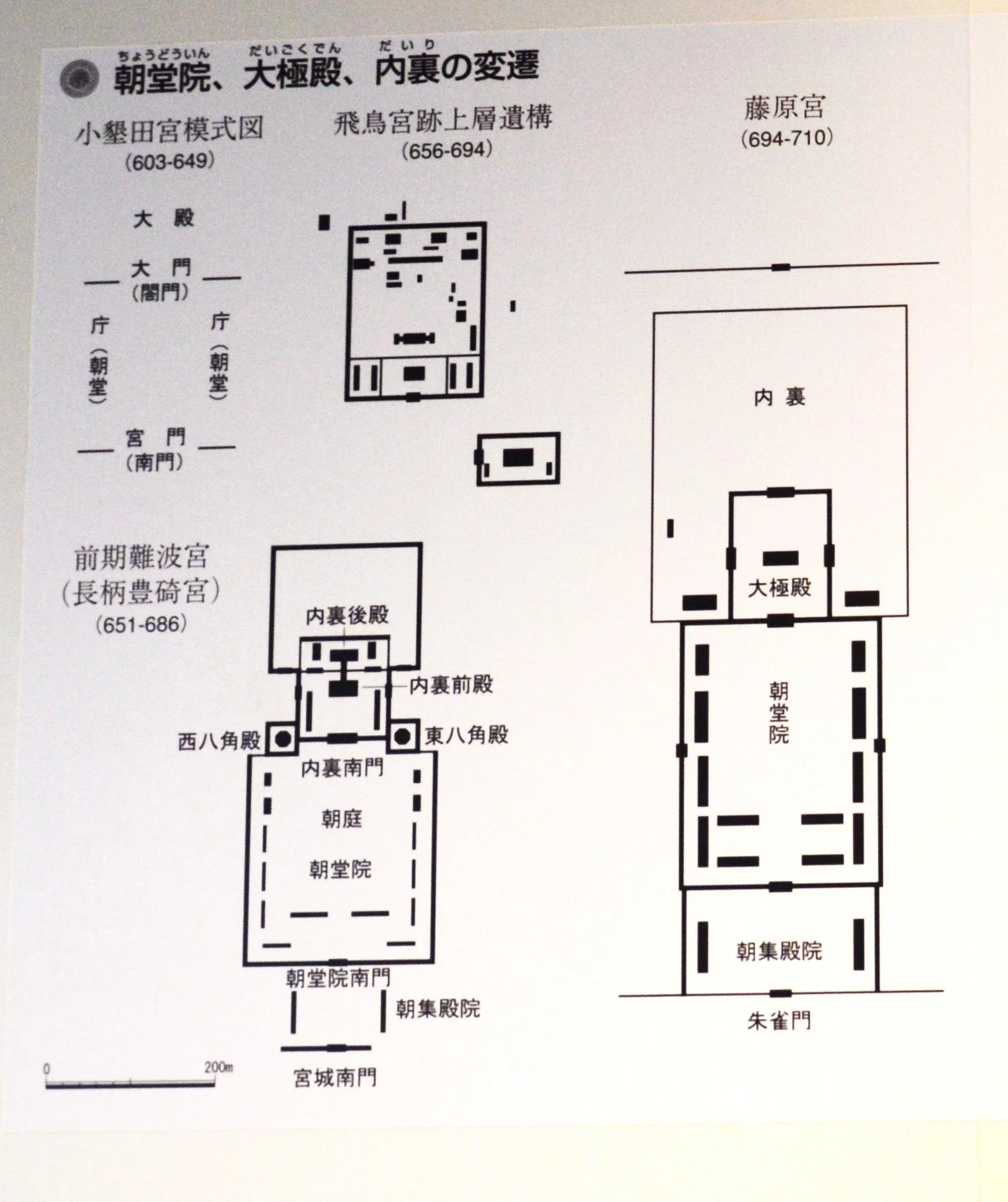
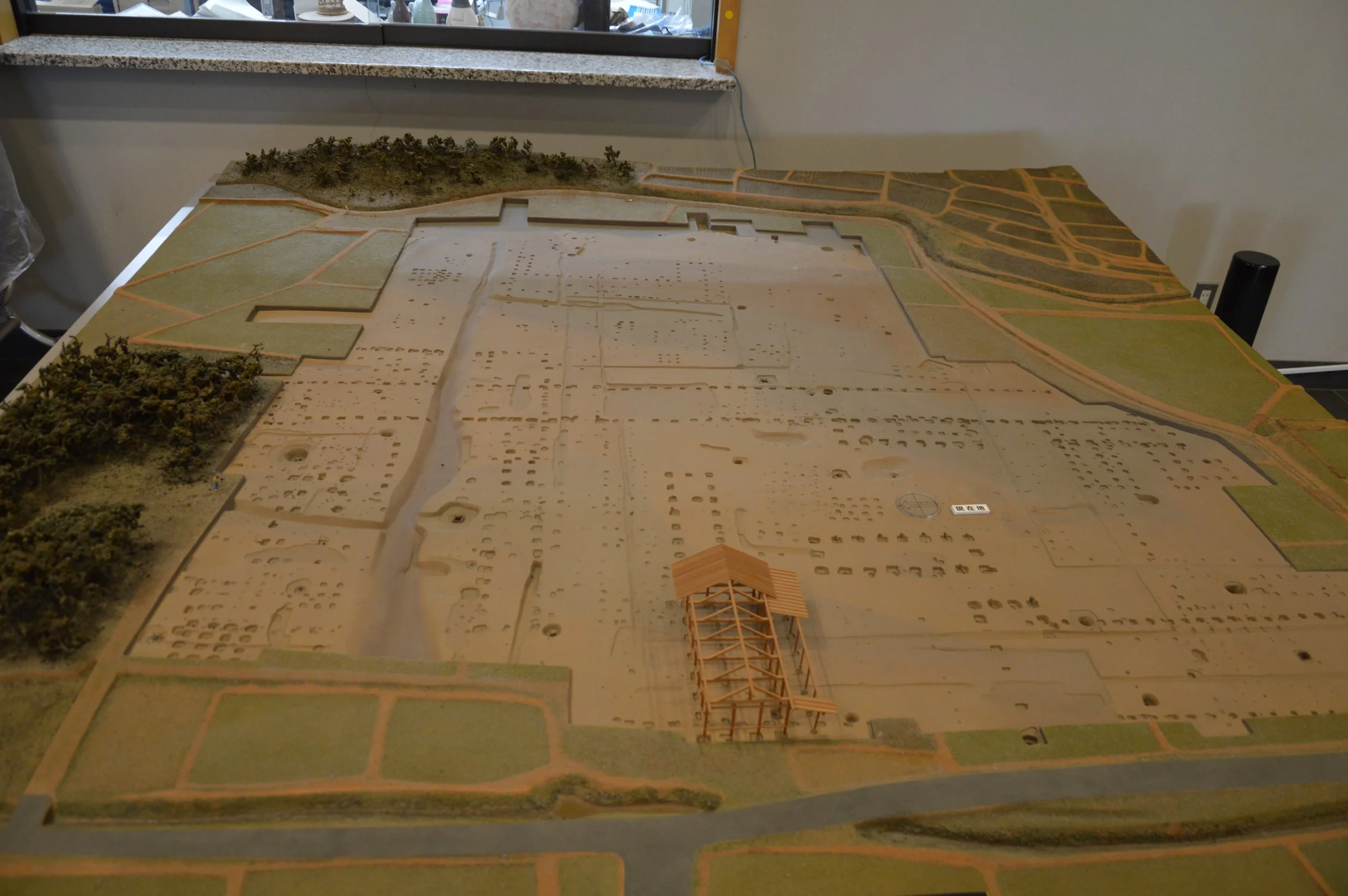
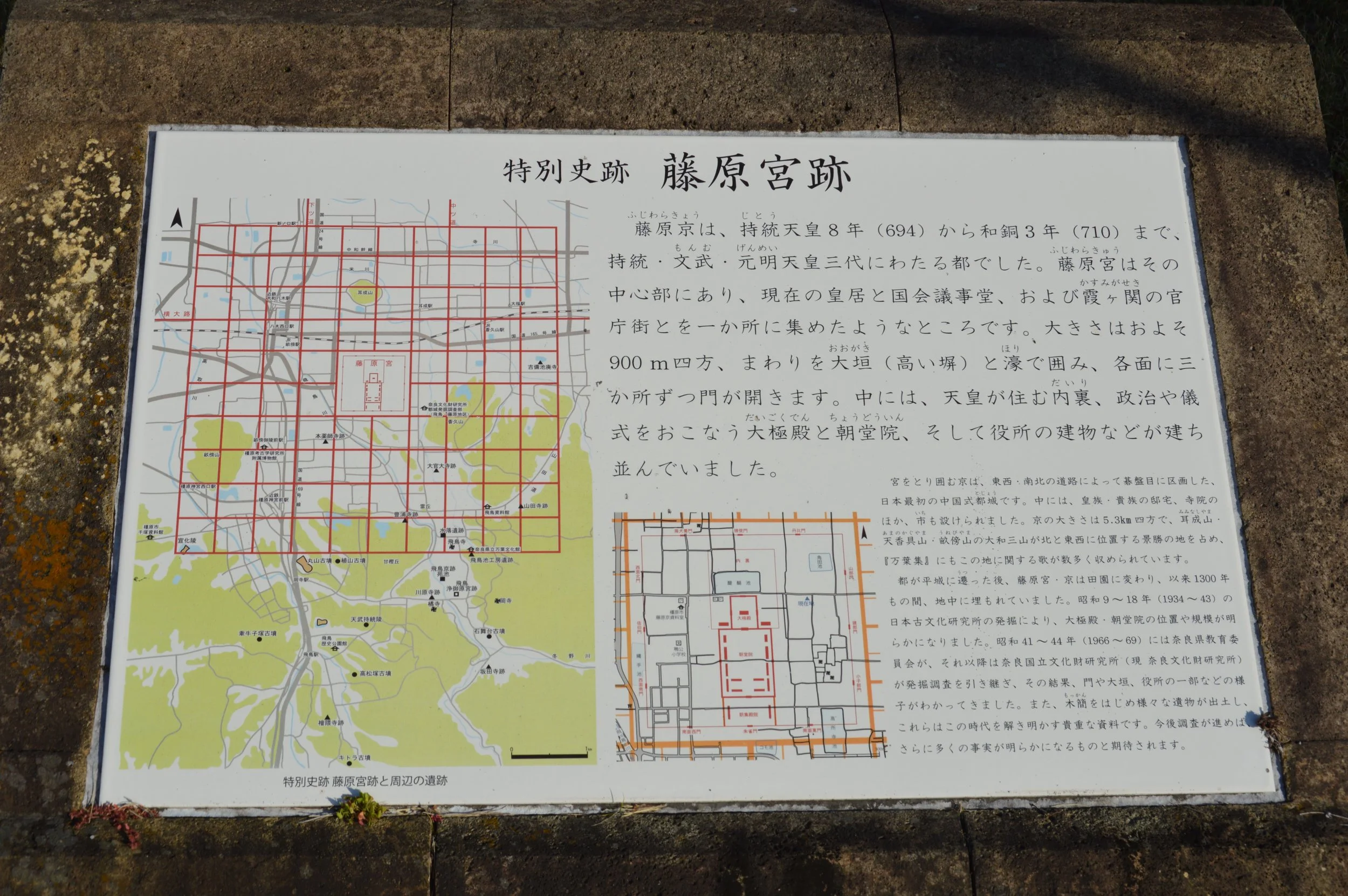
So that was what Uno no Sarara was doing when she wasn’t at the court. Otherwise, whether it was in the Asuka Kiyomihara palace or in the new Fujiwara Palace, she was dealing with the business of the state. Much of what is recorded are fairly common things—banquets, archery competitions, and similar events that are interesting in aggregate, perhaps, but maybe not so helpful in figuring out the larger trends that were occurring at the time. There were edicts and changes, but we can talk about those separately. There were natural disasters, as well.
Overall, she spent eleven years on the throne, from 686 to 697. In that time, she finished much of the work started by her husband, put her own stamp on the new government, and, perhaps most importantly, she set up her grandson for success. It is worth nothing that Uno no Sarara’s posthumous regnal name is Jitou Tennou, and while that was probably not something she chose for herself, it may give us some insight into how the Chroniclers viewed her. Remember that the brothers, Naka no Oe and Ohoama, were given the names “Tenji” and “Temmu”, respectively. Tenji is “Heavenly Wisdom”, and he is counted as the brains behind the Great Change, the Taika reforms, and much of the shape that the state took from 645 onwards. Temmu is something like “Heavenly Warrior”. The victor of the Jinshin no Ran was remembered for his military strategy, even though that was really only a small part of his overall reign. The characters of Jitou’s posthumous title are two characters. The first, “Ji”, means “to hold” or “to have”. The other character is “tou” and generally means “relationship” or “to control”. It can also refer to unification.
This is often considered to mean that her role was seen as continuing to hold the throne and continue the work of her husband and his line, his progeny. In this case, that means strengthening the state that Ohoama had built, following through on his national projects, and ultimately ensuring that the throne passed seamlessly to Ohoama’s grandson, ensuring that his line would continue. Of course, it probably should be noted that of course it was also her own bloodline that she was continuing as well, something that would become important in later years.
And it is easy for us to look at this as simply editorializing by the Chroniclers, who were, after all, trying to craft a national narrative as well as record the history. In many ways the use of these posthumous titles allowed them to do that—to summarize an entire reign into something that could be easily remembered. And yet, based on the actions that she has taken, there certainly seems to be something to this description of Uno no Sarara and her motivations.
We saw, early on, how she cleared the way for her own son, Crown Prince Kusakabe, getting rid of his potential rival for the throne, Prince Ohotsu, and thus potentially averting another conflict at the start of the reign. But then Kusakabe died, leaving her with his young son, and while placing a young infant on the throne might have become a thing in later centuries, that precedent had not quite been set just yet. Even as it was, Uno no Sarara likely had some concept that she could not know how many years she would get. A decade on the throne was nothing to sneeze at, and many sovereigns had much less.
And so, beyond setting up the structure of government that her grandson would inherit, she also had a few more things to ensure. She would want him to be old enough to be taken seriously, and she would need to make sure that there were no other claimants that could complicate matters. There was only one other serious candidate that fit that description, and that was Prince Takechi.
Remember, Prince Takechi was Ohoama’s eldest son. He was also a maternal descendant of the Munakata, meaning that he didn’t have the double-royal imprimatur that was presumably required to take the throne as the sovereign. And yet, Uno no Sarara was no doubt savvy enough to understand that those kinds of traditions changed quickly and easily in the past, as long as one had the right political backing.
At the same time, Uno no Sarara appears to have leaned heavily on Prince Takechi’s support. It was a risk, but his support for her efforts would help her do what she needed to do. Not only that, but if anything did happen to the young Prince Karu, Prince Takechi was the next in line. He was also the Dajou Daijin—the most powerful court position short of Uno no Sarara herself. For many reasons, it would have been difficult if the Queen felt she needed to take him out of the picture.
Perhaps then it was fortuitous that in 696 the issue resolved itself, when Royal Prince Takechi passed away.
This was no doubt a sad event, and yet it also may have set things in motion. Prince Karu had been born in 683, so he was fourteen years old—still quite young, but old enough. He was also surrounded by supporters, including his own mother, widow to the late Prince Kusakabe, Royal Princess Abe.
While it isn’t mentioned in the Nihon Shoki, we get a glimpse of how all this was planned in the Kaifuso, published in 751. There, in an entry for Prince Kadono, a son of Prince Ohotomo, we are told that after Prince Takechi’s death, Prince Kadono met with Uno no Sarara and others and suggested a course of action. He encourage Uno no Sarara to pass on the kingdom to Prince Karu, despite his youth. If true, this is quite the statement from someone whose own father was killed in the Jinshin no Ran, which brought Ohoama and Uno no Sarara to power in the first place. It appears as though she heeded his advice, setting up what would come next over the following year.
And so it is from the year after Prince Takechi’s death that we start to really see entries focused on Prince Karu. In the second month of 697, for instance, we see that Tahema no Mabito no Kunimi was appointed to be Prince Karu’s tutor. Likewise we see Michi no Mabito no Atomi and Kose no Ason no Ahamochi appointed as director and assistant director of the Spring Palace—the palace for the Crown Prince, the Heir Apparent. Interestingly, Aston notes that the Nihon Shoki never actually gives an entry for when Prince Karu was named Heir Apparent—it just seems to be assumed.
Ten days after the new directors were appointed, a public great-congregation was held at the Crown Prince’s palace—here called the Eastern Palace, and I’ll admit I’m not sure if “Eastern Palace” and “Spring Palace” were different names for the same place or what. I assume these were all part of the newly built Fujiwara Palace, though the most important part is the implications for Prince Karu. He was being introduced to the court, it seems, with a large congregation at his residence where the court would be expected to acknowledge his position as the crown prince and heir apparent.
Three months later, we are told that Uno no Sarara grew ill. The Ministers and various government officials made votive images of the Buddha in an attempt to make merit and help her to recover. While she would recover from whatever illness she experienced, I suspect that this was something of a wake-up call. Uno no Sarara was in her early 50s, and she wasn’t getting any younger. She also lived at a time where she had to realize that many others hadn’t made it as far, and perhaps her illness made her realize that if she was going to do something, she had better do it sooner, rather than later. And so, just a little more than a month later, on the first day of the 8th month, Uno no Sarara abdicated the throne in favor of her grandchild, Prince Karu, soon to become the next Tennou.
This isn’t the first time we’ve seen an abdication in the history of Yamato, but it is perhaps the first time we’ve seen it quite like this. When Takara Hime abdicated, I think we can agree that it was largely under duress. She had just seen her son lead a bloody coup against the most powerful court nobles, and that really does seem to have shaken her. No such bloody struggle was happening here, however. In fact, there is plenty to suggest that avoiding a bloody struggle was exactly Uno no Sarara’s point. By overseeing Prince Karu’s ascension while she was still around, Queen Uno no Sarara maintained significant control over the process.
Part of this rested on the fact that when she retired from the position of Tennou she didn’t just become some commoner or retreat to the position of Queen Mother or Dowager Queen or something similar. Instead, she took on a new titled: Retired Sovereign, or Dajou-Tennou. Technically this means that her own title was something like “Greater Sovereign”, compared to Karu’s “sovereign”.
This position was new, and may not have even been fully formed at the time of the initial abdication. Unlike when Takara Hime abdicated, effectively acknowledging that she wasn’t actually in charge, Uno no Sarara was planning to remain an active force in government. Her grandson would be set up as the formal sovereign, or Tennou. He would be responsible for the rituals and ensuring everything was properly carried out, but his mother, the Dajou-Tennou, would have a tremendous amount of clout and control.
By all accounts, this abdication and creation of the “Dajou-Tennou” position really does seem to have been specifically set up for this occasion, to ensure the smooth transition of power. This way, when Uno no Sarara eventually did pass away, there would be no question about who was seated on the throne. Given everything she had witnessed—from stories about her how her own father had come to power as well as the events of the Jinshin no Ran and then everything that happened in the aftermath of her own husband’s death—I can understand why Uno no Sarara would have been pre-occupied with the idea of ensuring a smooth transition to the next sovereign. She likely could not foresee how this new position would be used in the future, and yet it would become something of a staple in the politics of the Japanese court.
Initially, retired sovereigns were typically doing so for reasons similar to Uno no Sarara—to ensure a smooth transition of power from one to the other and to ensure that the next tennou could be established to avoid instability. However, it would become something even more. After all, why wait until your heir is actually ready? If you are going to be running things, anyway, why not remove yourself from the tedium of ritual while retaining your authority? And in later centuries we see the tennou retiring younger, leaving younger and younger heirs to hold the actual throne. There would also be a certain Buddhist aspect to it as well, allowing the retired tennou to be seen as a kind of Golden Wheel Turning Sovereign who was theoretically beyond the material cares of the day to day. The retired sovereigns would be referred to as “In”, which is likely a reference to the suffix given to their compounds, rather than the common “Miya” or “Gu”. And so the government under these retired sovereigns would become known as the Insei, or government by cloistered sovereigns, but that system was still in the future. For now, we are just seeing the seeds of what was to come, eventually.
To understand this later phase of Uno no Sarara’s life, we need to take our first few steps into a new source: The Shoku Nihongi. The Nihon Shoki ceases to describe anything after Uno no Sarara’s abdication, and the official history of Prince Karu’s reign—known to us as Monmu Tennou—is taken up by the Shoku Nihongi. This is literally the continued Japanese history, and we’ll talk about it in depth at some point. For now, I would note that it was compiled in 797 – so literally a century after the last entry in the Nihon Shoki. That said, it likely had much better records to go off of compared to the Nihon Shoki, though it was still likely compiled with a view that was still quite friendly towards the royal family and the position of the Tennou.
And so, when Uno no Sarara largely disappears from the narrative, I don’t know that we should assume that she had truly gone completely hands off. After all, with everything we’ve seen, do we think that this is a woman who would just hand the reins over to a fourteen or fifteen year old boy? And yet the first time she appears is in 701, when she is making a trip to her favorite vacation spot: the Palace at Yoshino.
That said, there were some pretty big events that happened during this period, after her abdication and assumption of the title of Dajou-Tennou. The biggest was the creation of the Taihou Code. Once again, this will need a fuller treatment, but the Taihou Code was an update to the Kiyomihara code. The Asuka-Kiyomihara code was 22 volumes, and focused on the laws, the “ryou”, but not necessarily the punishments, or “ritsu”. In contrast the Taihou code was 6 volumes of “ritsu” and 11 volumes of “ryou”, for 17 volumes in total. Unfortunately, we mostly have scraps of indications here and there, and the codes that came afterwards, which were each based on what came before. For instance, we do know that they completely overhauled the rank system yet again. Unlike the Kiyomihara code, which took years to develop, the compilation of the Taiho code is ordered in 700 and completed by 701—likely because it was really more of an update and a compilation of what was already on the books.
This was perhaps the most significant thing that happened while Uno no Sarara was still available to exert her influence. Karu was still only about 19 years old at this point. He would turn 20 the following year, 702. That same year, Uno no Sarara would travel all the way out to Mikawa no Kuni, which is the eastern half of the modern prefecture of Aichi. The royal procession, which started in the 10th month of 702, then made its way back through Owari a month later, and from there up to Mino, and then down to Ise and back through Iga. The royal procession is first recorded on the 10th day of the 10th month and returned on the 25th day of the 11th month—a round-trip time of roughly 45 days. Throughout we are told that various ranks and awards were given out to important individuals at each stop.
Unfortunately, that trip may have taken a toll. A few weeks later, on the 13th day of the 12th month, Uno no Sarara grew ill. There was a great amnesty pronounced throughout the realm, and one hundred men took Buddhist vows on her behalf. They even read the Sutra of Golden Light in the Home Provinces. Alas, it was all to no avail. Uno no Sarara passed away on the 22nd day of the 12th month—or January 13th in 703. It was roughly six years from her abdication. She would have died with at least some knowledge that the realm was largely in order. Her grandson was on the throne and had been ruling for the past six years. He had attained the age of majority, and things seemed relatively stable. There was even a new, grand, permanent capital city, just like on the continent.
But that closes out the life of Uno no Sarara. She lived in interesting times, experienced tremendous fortune and misfortune, and she put her indelible stamp on the state of Yamato and thus the future of Japan. There is still more to go over in this period—we have interactions with the Emishi, updates to society, and various impacts to Buddhism. We’ll also take a look at some more important people from this period, including Kakinomoto no Hitomaru, the famous poet, and the poems of the Man’yoshu, and Fujiwara no Fubito, the son of Nakatomi no Kamatari and the one largely responsible for making the Fujiwara house the most influential house in the entire court.
Until then if you like what we are doing, please tell your friends and feel free to rate us wherever you listen to podcasts. If you feel the need to do more, and want to help us keep this going, we have information about how you can donate on Patreon or through our KoFi site, ko-fi.com/sengokudaimyo, or find the links over at our main website, SengokuDaimyo.com/Podcast, where we will have some more discussion on topics from this episode.
Also, feel free to reach out to our Sengoku Daimyo Facebook page. You can also email us at the.sengoku.daimyo@gmail.com.
Thank you, also, to Ellen for their work editing the podcast.
And that’s all for now. Thank you again, and I’ll see you next episode on Sengoku Daimyo’s Chronicles of Japan.
References
Bender, Ross L. (2026). Emperors Monmu, Genmei, Genshō: Shoku Nihongi 697-724.
Bender, Ross L. (2025). SHOKU NIHONGI 697-791: A Translation of Maki 1-40.
Bentley, John R. (2025). Nihon Shoki: The Chronicles of Japan. ISBN 979-8-218634-67-4 pb
Duthie, T. (09 Jan. 2014). Man’yōshū and the Imperial Imagination in Early Japan. Leiden, The Netherlands: Brill. https://doi.org/10.1163/9789004264540
Ooms, H. (2009). Imperial Politics and Symbolics in Ancient Japan: The Tenmu Dynasty, 650-800. Honolulu: University of Hawai'i Press. https://muse.jhu.edu/book/8316.
Aston, W. G. (1972). Nihongi, chronicles of Japan from the earliest times to A.D. 697. London: Allen & Unwin. ISBN 0-80480984-4.
Websites
-, -. (last checked 7/30/2026). 熊野本宮大社. https://www.hongutaisha.jp/